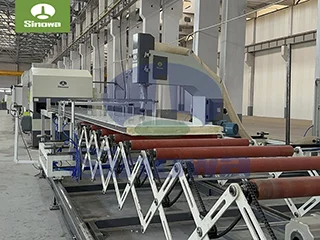
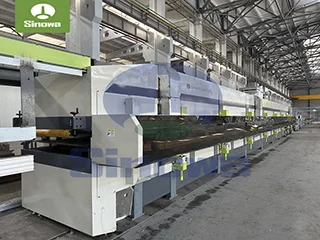
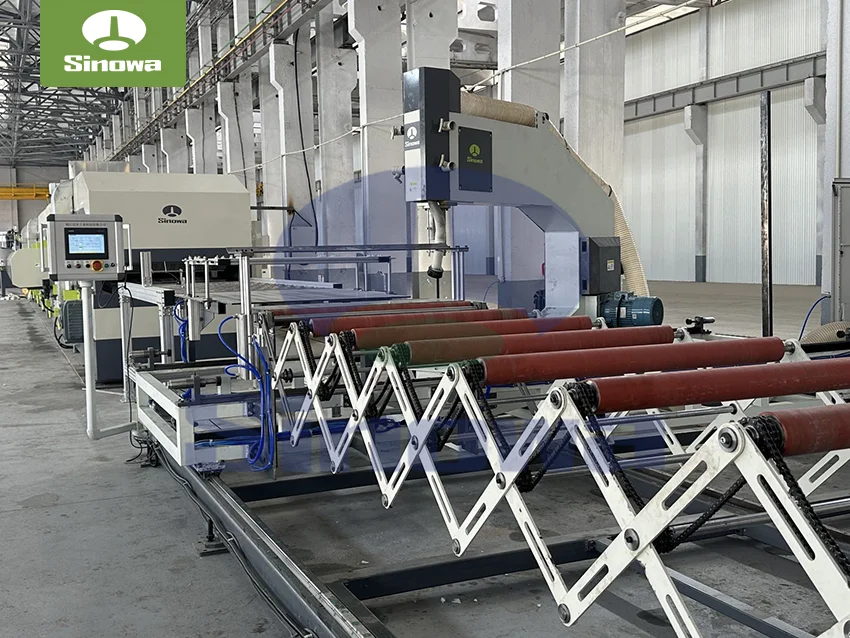
 sandwich panel line
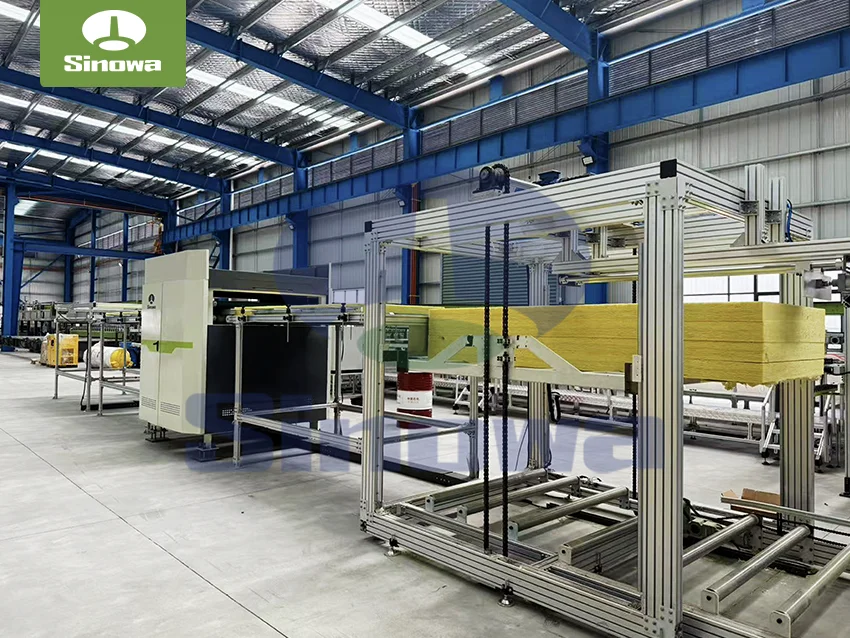
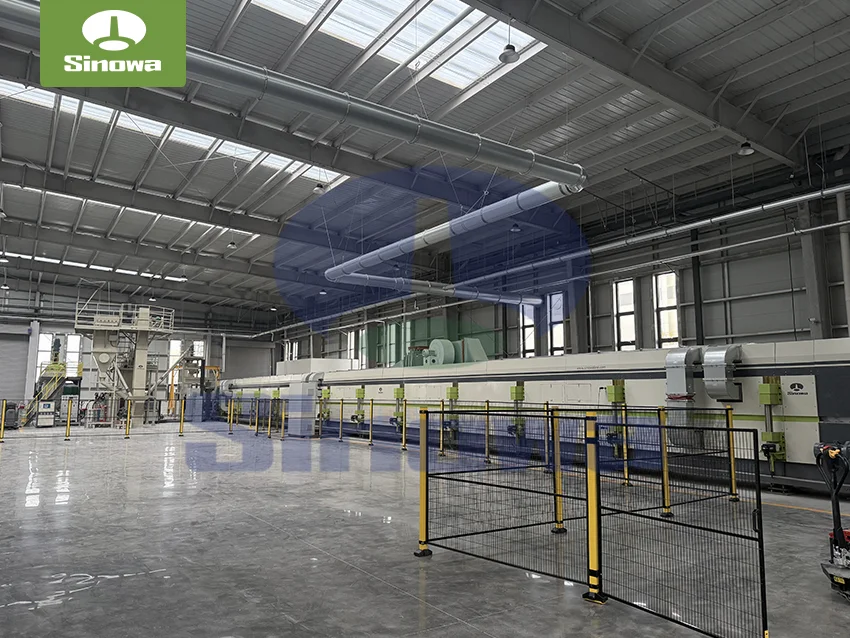
The core manufacturing logic of the PU sandwich panel line for roof insulation lies in the integrated composite molding of double-layer surface materials and polyurethane foam core materials through automated and continuous mechanical processes. Different from ordinary discontinuous production equipment, this professional production line realizes seamless connection from raw material feeding, surface material molding, foam mixing and pouring, thermal curing composite to finished product trimming and fixed-length cutting, forming a closed and efficient production loop. The entire manufacturing process minimizes manual intervention, effectively avoiding quality fluctuations caused by human operation errors, and ensures that every batch of roof insulation panels maintains consistent structural density, thermal insulation performance and dimensional accuracy, which is the fundamental guarantee for the stable application of panels in various roof construction scenarios.
The operation of the polyurethane sandwich panel production line starts with the unwinding and pretreatment of surface materials, which are the outer protective layers of roof sandwich panels and undertake the functions of weather resistance, pressure resistance and structural shaping. Common surface materials include various metal sheets with good toughness and corrosion resistance, which are stored in coiled form to adapt to continuous production rhythm. The unwinding system stably and uniformly outputs coiled materials at a constant speed, and the subsequent leveling and shaping mechanisms eliminate the bending deformation and surface wrinkles generated during material coiling and transportation. This pretreatment link is crucial for roof panels, as the flatness and structural uniformity of the surface material directly affect the fitting degree of the panel with the roof base and the overall waterproof and wind-resistant performance after installation. After pretreatment, the surface materials will be precisely shaped according to the structural requirements of roof panels, forming special groove and edge structures that facilitate on-site splicing and installation, improving the overall sealing performance of the roof system.
The foam mixing and pouring process is the core link that determines the thermal insulation performance of roof PU sandwich panels and is also the most sophisticated functional module of the entire production line. Polyurethane foam is formed by the high-pressure and high-speed mixing of two-component liquid raw materials and a variety of functional additives in a closed mixing system. The precision metering system of the production line can accurately control the proportion of each raw material, ensuring that the chemical reaction of raw materials is fully and uniform, which lays the foundation for forming a fine and closed-cell foam structure. Different from wall insulation panels, roof panels need to bear external wind pressure, snow load and other external forces for a long time, so the polyurethane sandwich panel line will adjust the foam reaction parameters and pouring density according to the stress characteristics of roof structures, making the core foam have moderate hardness, excellent compression resistance and uniform pore distribution. The mixed liquid foam is continuously and evenly poured on the surface of the lower layer material through a wide-range precision pouring device, which can cover the entire width of the panel without local accumulation or sparse voids, ensuring the consistency of the core structure of each panel section.
After the completion of foam pouring, the upper and lower surface materials and the intermediate foam core enter the integrated laminating and curing system together, which is the key stage for the composite molding of sandwich panels. The laminating system adopts a stable track conveying structure, which can maintain constant pressure and uniform conveying speed in the whole process. The closed thermal curing environment inside the system provides a stable temperature condition for the foaming expansion and solidification molding of polyurethane materials. In this process, the liquid foam fully expands and fills the gap between the upper and lower surface materials, and closely bonds with the inner surface of the surface materials to form an integrated composite structure without gaps. The scientific matching of pressure and temperature in the curing process effectively avoids common product defects such as hollowing, delamination and uneven thickness of panels. For roof insulation panels, the bonding strength between the core material and the surface layer is particularly important, as it directly affects the structural stability of the panel under long-term alternating temperature changes and external loads, and the automated curing process of the sandwich panel production line perfectly solves the problem of unstable bonding quality in traditional manual or semi-automatic production.
With the continuous advancement of the roof sandwich panel line, the initially cured semi-finished panels will enter the finishing processing section, including edge trimming, fixed-length cutting and surface finishing. The continuous molding process will produce regular margins on both sides of the panel, and the precision trimming mechanism can remove redundant parts evenly to ensure that the width of the panel meets the design standard and the edge section is flat and smooth, which is convenient for seamless splicing between panels during roof installation. The fixed-length cutting system can flexibly adjust the cutting size according to different building design requirements, realizing the production of panels of various specifications, and meeting the personalized needs of different roof spans and structural forms. The entire finishing process is completed synchronously with the production rhythm, without stopping the line for adjustment, which greatly improves the overall production efficiency while ensuring the dimensional accuracy of finished products.
The professional design of the roof insulation PU sandwich panel production line endows the finished panels with unparalleled comprehensive advantages in roof engineering applications. First of all, the efficient thermal insulation performance of the panels comes from the closed-cell structure of high-density polyurethane foam. A large number of tiny closed pores can effectively lock air, greatly reduce the heat conduction efficiency, and realize excellent heat preservation and heat insulation effects. In high-temperature seasons, it can block external heat from entering the building interior, reduce the energy consumption of indoor cooling equipment, while in low-temperature environments, it can prevent indoor heat loss, maintain stable indoor temperature, and create a comfortable building interior environment. This energy-saving characteristic makes the panels widely applicable to various industrial plants, public buildings, civil residential roofs, and has significant value in building energy conservation and emission reduction.
In terms of structural performance, the composite structure formed by the metal surface layer and polyurethane foam core gives the roof panels light weight and high strength. Compared with traditional concrete roof insulation layers and single-layer metal roof plates, PU sandwich panels produced by professional production lines have lower self-weight, which can effectively reduce the overall load of the building roof structure, reduce the structural design pressure of the building, and save construction materials and engineering costs. At the same time, through the precise parameter control of the production line, the panels have good compression resistance, bending resistance and impact resistance, can resist the erosion and impact of external natural factors such as strong wind, rain and snow for a long time, and maintain stable structural performance in complex outdoor environments. In addition, the integrated molding structure of the panels avoids the problem of easy peeling and damage of traditional layered insulation materials, and greatly extends the service life of roof insulation structures.
Weather resistance and waterproof performance are also prominent advantages of roof PU sandwich panels, which are closely related to the refined production process of the professional production line. The tight composite structure formed by high-pressure lamination and thermal curing can effectively block the penetration of rainwater and moisture. The smooth and compact surface of the panel can prevent rainwater from accumulating and seeping, and the precise splicing structure after trimming can reduce the gap between panels, avoiding roof water leakage caused by structural gaps. Moreover, the polyurethane core material has stable chemical properties, does not absorb water and is not easy to mildew and rot, and can maintain stable insulation and structural performance in humid and rainy environments for a long time, solving the problem that traditional roof insulation materials are easy to fail due to moisture absorption.
In terms of production efficiency and economic benefits, the fully continuous automated operation mode of the PU sandwich panel machine completely changes the low-efficiency and high-labor-cost situation of traditional panel production. The whole process from raw material input to finished product output is completed automatically by mechanical equipment, with fast production speed and large output per unit time, which can meet the large-scale material supply demand of large-area roof engineering projects. The precise raw material proportioning and quantitative pouring system of the polyurethane sandwich panel machine avoids raw material waste caused by manual operation, improves the utilization rate of production raw materials, and reduces the comprehensive production cost. At the same time, the standardized production process reduces the rate of defective products, improves the yield of finished products, and further optimizes the economic benefits of panel production.
With the continuous upgrading of building energy-saving standards and the continuous innovation of construction technology, the technical level of roof insulation sandwich panel production line is also constantly improving. Modern production lines are gradually developing towards higher automation, more precise parameter control and stronger flexible production capacity. The intelligent parameter adjustment system can automatically optimize production parameters according to different raw material characteristics and product specification requirements, realizing adaptive production of diversified panels. The optimized structural design of the production line reduces mechanical operation noise and energy consumption, making the production process more energy-saving and environmentally friendly. In addition, the streamlined production layout realizes the compact connection of each production link, saves production space, and improves the overall operational efficiency of the production system.
The application value of roof insulation PU sandwich panels produced by professional production line is reflected in the whole life cycle of building roof engineering. In the construction stage, the lightweight and standardized finished panels are easy to transport and install, which can greatly shorten the roof construction cycle and improve the construction efficiency compared with the traditional on-site spraying and laying insulation construction methods. In the use stage, the excellent thermal insulation and energy-saving performance can continuously reduce the daily energy consumption of the building, bringing long-term economic benefits for building operation. In the later maintenance stage, the stable structural performance of the panels reduces the frequency of maintenance and replacement, and the simple replacement and repair mode further reduces the maintenance cost of the roof system.
In the field of modern construction, the diversification of building forms and the complexity of application scenarios put forward higher requirements for roof insulation materials. Industrial buildings with large-span roofs, public buildings with high requirements for energy conservation and environmental protection, and special buildings with harsh service environments all need roof insulation materials with stable performance, strong adaptability and long service life. The continuous PU sandwich panel line for roof insulation can stably produce high-quality panels that meet various engineering needs through standardized and refined production processes. The produced panels not only meet the basic thermal insulation and weather resistance requirements, but also have good structural compatibility, can be perfectly matched with various building roof structures, and have strong scene adaptability.
It is undeniable that the advanced production technology of the PU sandwich panel line lays a solid foundation for the popularization and application of roof PU sandwich panels. Every link from raw material pretreatment, foam composite molding to finished product finishing has undergone precise mechanical control and process optimization, eliminating the quality instability factors in traditional production modes. The continuous innovation and upgrading of production line technology also promotes the continuous improvement of the comprehensive performance of roof insulation panels, making them more adaptable to the development needs of modern green buildings. In the context of global emphasis on building energy conservation and green environmental protection, this efficient and high-quality production mode and the superior building materials produced will surely play a more important role in the future construction industry, and continuously promote the upgrading and development of building roof insulation engineering.
https://www.cnsinowa.com/sandwich-panel-machines/pu-sandwich-panel-line-for-roof-insulation.html