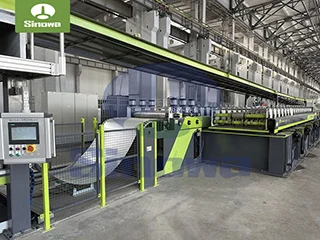
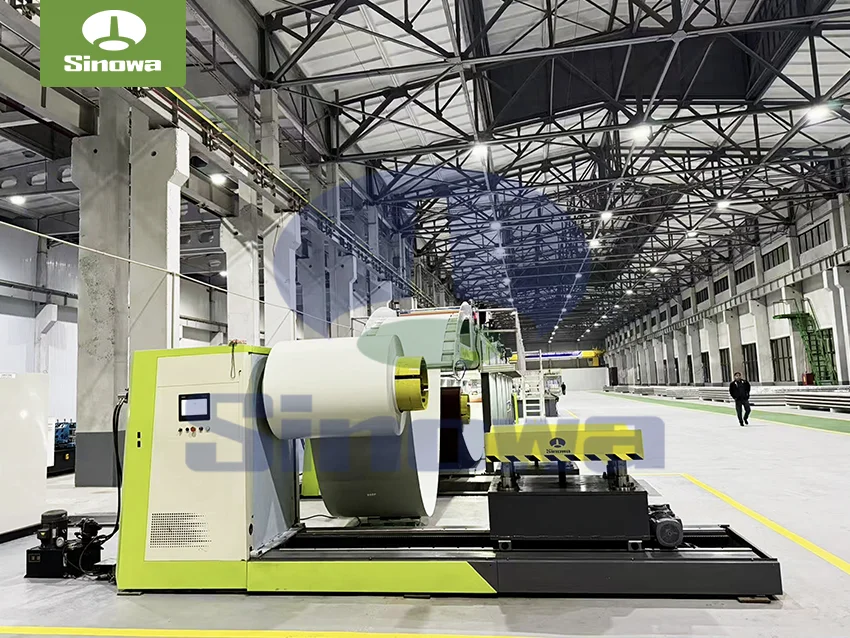
 sandwich panel machine
To fully comprehend the operational logic and industrial significance of the PU sandwich panel machine, it is essential to first clarify the structural characteristics of PU sandwich panels, as the entire equipment design and operational process are tailored to the molding requirements of this composite material. A standard PU sandwich panel consists of two layers of rigid outer surface materials and a middle core layer of foamed polyurethane thermal insulation material. The outer surface materials can be metal sheets, fiber cement boards, decorative composite sheets, and other rigid or semi-rigid substrates, which provide the panel with mechanical strength, surface flatness, and weather resistance. The middle polyurethane foam core layer, formed by the foaming and curing of polyurethane raw materials, endows the panel with excellent thermal insulation, sound insulation, shock resistance, and flame-retardant properties. The core function of the PU sandwich panel machine is to tightly bond the outer surface substrates with the polyurethane foam core through automated mechanical processes, completing continuous foaming, composite molding, and post-processing to produce integrated composite panels with stable structural performance and uniform specifications.
The overall structural composition of the polyurethane sandwich panel machine is sophisticated and systematic, with each functional module cooperating closely to form a complete closed-loop production system. The entire production line can be divided into multiple core functional units, including a substrate unwinding and conveying unit, raw material metering and mixing unit, automatic coating and distributing unit, constant-temperature composite molding unit, edge trimming and shaping unit, fixed-length cutting unit, and finished product conveying unit. Each unit has independent mechanical structures and parameter adjustment functions, and the coordinated operation of all units is realized through a unified control system, ensuring the continuity and stability of the entire production process. The substrate unwinding and conveying unit is the starting link of the entire production line, responsible for placing and stably conveying the upper and lower surface substrates required for panel production. This unit is equipped with tension adjustment structures to avoid substrate deviation, wrinkling, or uneven stretching during the conveying process, laying a foundation for the flat composite molding of subsequent panels. It can adapt to different types and thicknesses of flexible and rigid substrates, with adjustable conveying speeds to match the operating rhythm of subsequent processing units, realizing synchronous feeding of double-layer substrates.
The raw material metering and mixing unit is the core component that determines the foaming quality and performance of the polyurethane core layer, acting as the "heart" of the entire equipment. Polyurethane foaming molding requires the precise proportioning of multiple raw materials, including polyurethane resin, curing agent, foaming agent, and auxiliary additives. This unit adopts precision metering power structures to deliver various raw materials to the high-speed mixing head at a stable and accurate flow rate. The internal metering structure can realize micro-adjustment of raw material ratios according to different production needs, effectively avoiding product quality defects such as insufficient foaming, uneven bubble distribution, or poor curing caused by unreasonable raw material proportions. After entering the mixing head, all raw materials are subjected to high-speed stirring and instantaneous mixing to form a uniform and fine mixed material liquid. The entire mixing process is completed in a closed environment, which not only ensures the uniformity of raw material mixing but also prevents the volatilization of chemical raw materials and the impact of external dust on product quality, maintaining the stability of the foaming material’s chemical properties.
Following the mixing unit is the automatic coating and distributing unit, which undertakes the key task of evenly applying the mixed polyurethane material liquid to the surface of the lower substrate. Different from traditional manual gluing methods, the distributing structure of the PU sandwich panel machine adopts reciprocating mobile coating technology, which can uniformly cover the entire width of the substrate with the material liquid. The equipment can adjust the coating thickness and distribution density of the polyurethane material liquid according to the preset panel thickness and performance requirements, realizing accurate control of the core layer thickness. For panels with different thermal insulation and strength requirements, the coating volume and coating uniformity can be fine-tuned to ensure that the foamed core layer has consistent density and structural uniformity in all parts. Meanwhile, the coating unit is equipped with an anti-overflow structure to avoid excessive material liquid overflow, effectively reducing raw material waste and keeping the production environment clean and tidy.
The constant-temperature composite molding unit is the key link for the preliminary shaping and curing of PU sandwich panels, mainly composed of a double-belt conveyor and a constant-temperature heating system. After the upper and lower substrates are compounded with the polyurethane material liquid, they enter the closed double-belt molding cavity with the conveyor device. The double-belt structure can provide continuous and uniform pressure on the upper and lower surfaces of the composite panel, eliminating internal bubbles and gaps between the substrate and the foaming core layer, and ensuring tight bonding between layers. The built-in constant-temperature heating system of the molding cavity realizes multi-stage precise temperature control, creating a stable thermal environment required for polyurethane foaming and curing. Polyurethane materials undergo physical foaming and chemical cross-linking curing reactions under specific temperature and pressure conditions inside the molding cavity, gradually expanding, foaming, and solidifying to form a dense and uniform porous thermal insulation core layer. The temperature, pressure, and walking speed of the double-belt conveyor in the molding unit are mutually matched and adjustable, adapting to the curing characteristics of different polyurethane formulas and different panel thickness specifications, ensuring that the foaming core layer achieves the best structural density and bonding strength.
After completing the preliminary curing and molding in the composite unit, the semi-finished panels enter the edge trimming and shaping unit for precision finishing. Due to the inevitable slight deviation in the width of the substrate and the overflow of a small amount of foaming material during continuous production, the edges of the initially molded panels are irregular and require standardized trimming. The edge trimming unit is equipped with high-precision cutting and polishing structures, which can automatically trim the excess edge materials on both sides of the panel to ensure that the width of each finished panel is consistent and meets the preset dimensional standards. At the same time, this unit can complete fine shaping of the panel edges to make the edge structure flat and smooth, avoiding edge cracking, material peeling, and other quality problems in subsequent use. Some optimized equipment models are also equipped with edge sealing auxiliary structures, which can perform preliminary edge sealing treatment on the trimmed panel edges, further improving the overall sealing performance and structural stability of the panel.
The fixed-length cutting unit is responsible for cutting the continuously molded long strip panels into finished products of standard fixed lengths. This unit adopts automatic induction and positioning technology, which can accurately identify the conveying position of the panel and complete fixed-length cutting according to the preset length parameters. The cutting tool has high hardness and precision, ensuring flat and smooth cutting sections without burrs, cracks, or material delamination. The cutting speed is automatically matched with the panel conveying speed, realizing uninterrupted continuous cutting without stopping the production line, which greatly improves the overall production continuity and efficiency. After cutting, the finished panels are transported to the finished product area through the terminal conveying unit, completing the entire automated production process from raw material feeding to finished product output.
The working principle of the entire PU sandwich panel line revolves around the integration of chemical foaming reaction and physical composite molding, realizing the organic combination of material chemical change and mechanical processing. In the whole production process, the precise proportioning of raw materials provides the chemical basis for the excellent performance of the polyurethane core layer, uniform coating and stable pressure composite create favorable physical conditions for the tight combination of the substrate and the core layer, and constant-temperature precise control ensures the full progress of polyurethane foaming and curing reactions. All mechanical actions and parameter adjustments are coordinated by the central control system, which can monitor and adjust key parameters such as raw material ratio, coating thickness, molding temperature, conveying speed, and cutting length in real time. Once slight parameter deviations occur during production, the system can realize automatic fine adjustment, ensuring that the quality of each batch of panels remains stable and consistent.
Compared with traditional manual production and semi-automatic single-process equipment, the PU sandwich panel production line has prominent advantages in production efficiency, product quality, material utilization, and operational stability. In terms of production efficiency, the fully continuous automated production mode eliminates the intermediate handling and waiting links of semi-automatic production, realizing uninterrupted large-scale production. The entire production process from raw material input to finished product output is completed on one line, which multiplies the production capacity compared with traditional production methods and can fully meet the large-scale order demand of industrial production. In terms of product quality stability, the equipment realizes precise digital control of all production parameters, completely avoiding the quality fluctuation problems caused by manual operation errors. The produced panels have uniform core layer density, consistent thickness, tight bonding between layers, flat overall appearance, and stable mechanical and thermal insulation performance, which can meet the high-standard use requirements of engineering construction.
In terms of material utilization, the precise metering and quantitative coating design of the equipment effectively controls the usage of polyurethane raw materials, avoiding excessive raw material consumption caused by manual gluing inaccuracy. The closed foaming environment and precise pressure control reduce material loss caused by foaming overflow and defective products, greatly improving the comprehensive utilization rate of raw materials and reducing the unit material cost of products. In terms of operational safety and environmental protection, the entire production process is carried out in a closed mechanical structure, which reduces the volatilization of chemical raw materials and the generation of dust waste. The automated operation mode reduces the number of on-site operators, lowers the risk of personal injury caused by manual operation, and improves the overall safety and environmental protection level of production.
PU sandwich panels produced by professional PU sandwich panel production machine have extremely wide application scenarios, covering civil construction, industrial engineering, cold chain logistics, municipal engineering, and multiple other fields, which also explains the important industrial status of this equipment. In the field of building thermal insulation and decoration, PU sandwich panels are widely used for exterior wall thermal insulation, interior wall decoration, roof thermal insulation, and ceiling decoration of various buildings. The excellent thermal insulation performance of the polyurethane core layer can effectively reduce the heat exchange inside and outside the building, reduce building energy consumption, and achieve the effect of energy saving and emission reduction. The lightweight and high-strength characteristics of the panel can reduce the self-weight of the building structure, lower the construction difficulty, and shorten the construction cycle, making it very suitable for high-rise buildings, prefabricated buildings, and old building renovation projects.
In the field of industrial plant construction, especially for steel structure workshops, purification workshops, and constant-temperature workshops, PU sandwich panels have become the preferred building enclosure materials. The panels have good sound insulation, shock resistance, and dust-proof performance, which can create a stable and clean production environment for industrial production. At the same time, the panel has excellent structural stability and weather resistance, can adapt to different indoor and outdoor temperature and humidity environments, and is not easy to deform, crack, or age after long-term use, reducing the later maintenance cost of industrial plants. In the cold chain logistics industry, PU sandwich panels are the core materials for making cold storage walls, roofs, and cold transport vehicle compartments. Their ultra-low thermal conductivity can effectively isolate external heat transfer, maintain the low-temperature environment inside the cold storage and transport equipment, reduce the energy consumption of refrigeration equipment, and ensure the storage and transportation quality of cold chain goods.
In addition, PU sandwich panels are also widely used in municipal pipeline thermal insulation, ventilation pipeline wrapping, and special equipment thermal insulation protection. The flexible production performance of the PU sandwich panel machine enables it to produce panels of different thicknesses, densities, and structural specifications according to the needs of different application scenarios. For example, thickened high-density panels can be produced for industrial cold storage with high thermal insulation requirements, and lightweight thin panels can be produced for interior decoration with low load-bearing requirements, realizing the flexible adaptation of equipment production to market demand.
The daily operation and maintenance of the PU sandwich panel making machine is crucial to ensuring production stability, extending equipment service life, and maintaining product quality consistency. As a highly integrated automated production line, the equipment involves mechanical transmission, hydraulic pressure, pneumatic pressure, electrical control, and chemical metering systems, and each link requires standardized daily maintenance. In daily production, operators need to regularly check the operating status of the substrate conveying unit, ensure the flexibility of the tension adjustment structure, and clean the surface of the conveying roller to avoid substrate deviation and panel surface pollution caused by foreign matter adhesion. For the raw material metering and mixing unit, it is necessary to regularly clean the mixing head and metering pipeline to prevent residual raw materials from solidifying and blocking the pipeline, which may affect the accuracy of raw material proportioning and mixing uniformity. Regular calibration of the metering system is also required to ensure the stability of raw material delivery accuracy.
The constant-temperature molding unit is a key maintenance part of the equipment. The heating system and double-belt transmission structure need regular inspection and maintenance. It is necessary to check whether the heating temperature is uniform, whether the temperature sensing device is sensitive, and eliminate the hidden danger of local overheating or insufficient temperature. At the same time, the tension and flatness of the double belt should be adjusted regularly to avoid panel deformation and uneven thickness caused by loose or deviated transmission belts. The trimming and cutting unit needs regular maintenance of cutting tools and trimming structures, timely polishing and replacement of worn tools to ensure the flatness and accuracy of panel cutting and trimming. In addition, the central control system of the equipment needs regular program inspection and data calibration to ensure the sensitivity and accuracy of parameter adjustment and automatic control functions, avoiding production parameter deviation caused by system failure.
Standardized operation specifications are also important guarantees for efficient equipment operation. Operators need to master the matching rules of different production parameters, adjust raw material ratios, molding temperatures, and production speeds according to different substrate types and panel thickness specifications, and avoid equipment overload operation caused by parameter mismatch. Before equipment startup, a pre-production inspection must be carried out to check the integrity of each functional unit and the normal supply of raw materials; after production is completed, the equipment needs to be comprehensively cleaned and parameter reset to avoid residual materials affecting the next production. Scientific and standardized maintenance and operation management can not only effectively reduce the failure rate of the equipment, improve production continuity, but also ensure the long-term stability of product quality and reduce the comprehensive production and maintenance costs of enterprises.
With the continuous development of the global prefabricated construction industry and energy-saving environmental protection policies, the market demand for high-performance PU sandwich panels is constantly upgrading, which also promotes the continuous technological iteration and performance optimization of PU sandwich panel machines. Modern equipment is gradually developing towards higher automation intelligence, more precise parameter control, more diversified production adaptability, and better energy-saving and environmental protection performance. The upgraded intelligent control system can realize automatic matching of production parameters, one-key switching of different panel specifications, and real-time monitoring and early warning of equipment operating faults, further reducing the dependence on manual operation and improving production intelligence. The optimized mechanical structure design improves the production speed and molding accuracy of the equipment, and can adapt to more types of surface substrates and polyurethane material formulas, meeting the personalized and diversified production needs of the market.
In terms of energy saving and environmental protection, the new generation of PU sandwich panel manufacturing machine adopts optimized heating systems and raw material utilization structures, which effectively reduce equipment energy consumption and raw material waste. The closed production design further reduces the volatilization of chemical substances and the generation of production waste, making the entire production process more environmentally friendly and in line with the development trend of green industrial manufacturing. At the same time, the equipment’s continuous production performance and stable product quality provide strong technical support for the standardized and large-scale development of the PU sandwich panel industry, promoting the widespread application of energy-saving and environmentally friendly composite panels in the global construction and industrial fields.
In conclusion, the polyurethane sandwich panel machine is a highly professional and integrated industrial production equipment that connects raw material processing and finished panel manufacturing. Its perfect mechanical structure design and precise control logic realize the efficient and standardized production of high-performance PU sandwich panels. By virtue of its advantages of high production efficiency, stable product quality, wide application adaptability, and low comprehensive production cost, it has become a core supporting equipment for the modern energy-saving building material industry. With the continuous progress of industrial technology and the continuous expansion of the application market, the technological performance of PU sandwich panel machines will continue to be optimized, playing a more important role in promoting the upgrading of the building material industry, improving building energy-saving levels, and promoting green industrial development. Understanding its working principle, structural composition, operational characteristics, and maintenance essentials is not only conducive to enterprises giving full play to equipment performance and improving production benefits, but also helps to grasp the development trend of the composite building material manufacturing industry, laying a solid foundation for the long-term and stable development of related industrial chains.
https://www.cnsinowa.com/sandwich-panel-machines/what-is-pu-sandwich-panel-machine.html