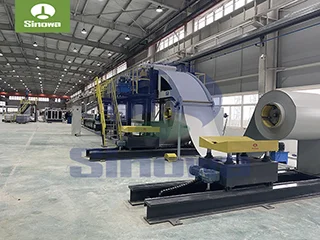
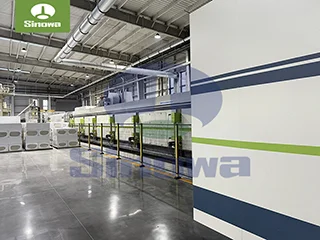
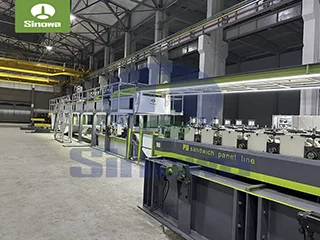
sandwich panel line
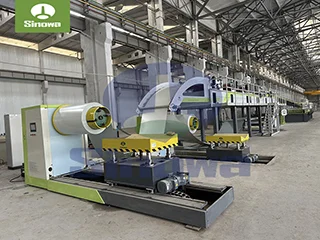
The structure of the polyurethane sandwich panel line with lubrication system is composed of several core modules that work in coordination to complete the entire production process from raw material feeding to finished product output. The unwinding module is the starting part of the line, responsible for supplying facing materials such as color steel sheets, aluminum sheets, or stainless steel sheets. This module typically includes two unwinding machines, each equipped with a material rack and a lifting trolley. The lifting trolley transports the coil materials to the unwinding machine through a hydraulic motor-driven sprocket mechanism, moving along guide rails for stable loading and unloading. The unwinding machine uses hydraulic cantilever tensioning to control the start and stop of the coil, with a spindle driven by a hydraulic motor to realize active unwinding. The base and frame of the unwinding machine are welded with rectangular pipes to ensure structural rigidity, while the opening of the unwinding mechanism is adjusted by a cylinder with a rotating distributor, which fixes the coil firmly through inclined slender pieces. A pressing mechanism, controlled by a cylinder, swings the pressing arm to keep the coil stable during unwinding, preventing slack or deviation that could affect product quality.
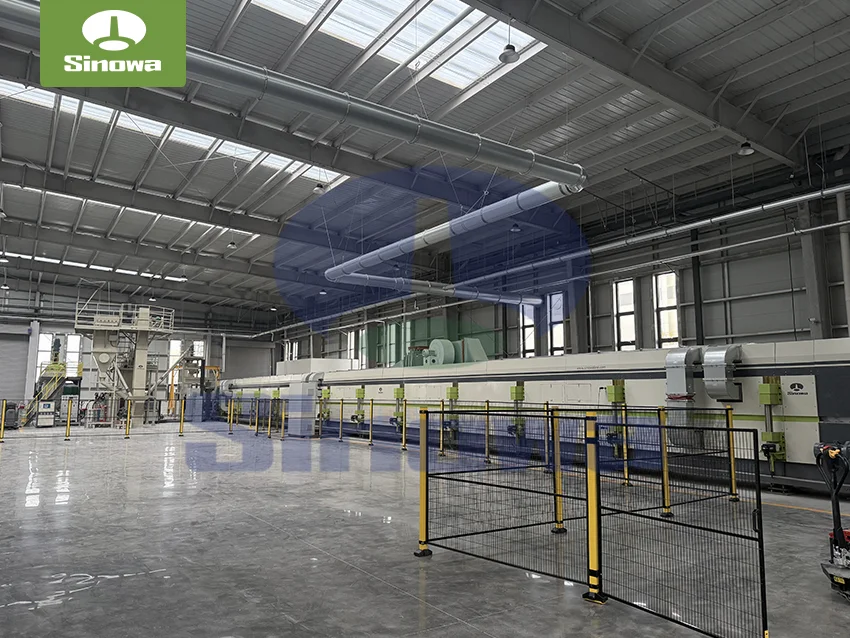
Following the unwinding module is the forming and preheating module. The forming system adopts a double-headed roll forming machine with adjustable width, using double-sided separate rolling shafts that can be adjusted within a specified range to shape the facing materials into the desired profiles. This progressive forming process ensures uniform shape and flatness of the panels, adapting to different design requirements. The preheating system is usually a hot air circulating heating furnace, which maintains the facing materials and subsequent foam core at an optimal temperature for polyurethane foaming and curing. Proper preheating is essential for improving the adhesion between the foam core and the facing materials, ensuring the structural integrity of the final panels. The temperature of the preheating furnace is adjustable to accommodate different material thicknesses and production speeds, maintaining consistency in product quality.
The foaming and laminating module is the core part of the production line, where the polyurethane foam core is formed and bonded with the facing materials. This module includes a high-pressure metering and mixing system that accurately controls the ratio of polyurethane raw materials, ensuring optimal foam density and uniform foaming. The liquid raw materials are mixed and reacted in real time before being continuously injected between the upper and lower formed facing materials. The double belt laminating system plays a key role here, consisting of two parallel conveyor belts that apply uniform pressure to the sandwich structure as it moves forward. This ensures perfect flatness of the panels, eliminates air bubbles between the core and facing materials, and enhances adhesion. The double belts are driven by a precision transmission mechanism, with speed adjustable to match the foaming and curing rate of the polyurethane core.
The lubrication system, an integral component of the entire production line, is designed to reduce friction between moving parts and protect critical components from excessive wear. This system typically adopts a centralized lubrication design, delivering lubricating oil or grease to key points such as the roll shafts of the forming machine, the conveyor belts of the laminating system, the sprockets of the unwinding module, and the cutting mechanism. The lubrication is supplied either continuously or at regular intervals through a controlled pump system, ensuring that all moving parts are adequately lubricated without excess oil affecting the production process or product quality. For parts in contact with facing materials or foam core, food-grade or inert lubricants are used to avoid contamination. The lubrication system also includes filters and oil level monitors to maintain the cleanliness and sufficient supply of lubricants, reducing maintenance frequency and extending the service life of the production line.
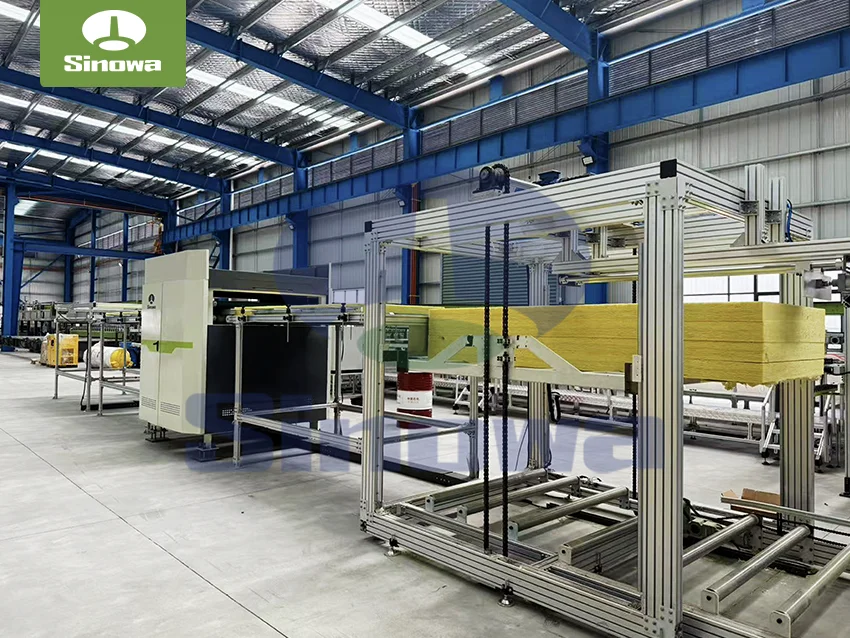
After the foaming and laminating process, the cooling and cutting module takes over. The cooling system usually adopts a horizontal air cooling design, where cold air is evenly blown onto the surface of the sandwich panels to accelerate the curing of the polyurethane foam core. Sufficient cooling ensures that the panels maintain their shape and structural strength during subsequent cutting and handling. The cutting mechanism is typically a band saw cutting system with automatic length adjustment, which cuts the continuous sandwich panel into fixed lengths according to production requirements. The cutting process is controlled by a computer system to ensure precision, with a dust collection device to remove debris generated during cutting, maintaining a clean production environment. The final modules of the production line are the stacking and packaging systems, which automatically stack the cut panels in an orderly manner and package them to prevent damage during storage and transportation. The stacking system uses a mechanical arm or lifting platform to handle the panels gently, avoiding surface scratches or structural deformation.
The performance of the polyurethane sandwich panel line with lubrication system is reflected in its efficiency, precision, stability, and adaptability. In terms of production efficiency, the continuous production design enables high-speed operation, with adjustable production speeds to meet different output requirements. The automated control system, integrated with advanced computer technology, allows for real-time monitoring and adjustment of key parameters such as foaming ratio, belt pressure, preheating temperature, and cutting length, minimizing human interference and ensuring consistent product quality. The high-pressure foaming system ensures that the polyurethane foam core has a high closed-cell rate, which enhances the thermal insulation and water resistance of the panels. The double belt laminating system guarantees uniform thickness and flatness of the panels, with no obvious defects such as warping or uneven bonding.
The lubrication system significantly contributes to the overall performance and durability of the production line. By reducing friction between moving parts, it lowers energy consumption and reduces the risk of component failure, ensuring stable long-term operation. This not only improves production efficiency by minimizing downtime for maintenance but also reduces operational costs by extending the service life of critical components such as roll shafts and conveyor belts. The precision of the production line is also enhanced by the lubrication system, as reduced friction prevents wear-induced deviations in the forming and laminating processes, maintaining the accuracy of panel dimensions and profile shapes. Additionally, the production line exhibits excellent adaptability, with customizable configurations to produce panels of different thicknesses, widths, and profiles. The panel thickness can typically be adjusted within a wide range, accommodating various insulation and structural requirements, while the forming system can be modified to produce panels for different applications such as roofs, walls, or partitions.
Polyurethane sandwich panel lines with lubrication systems can be classified into different types based on their production capacity, core material compatibility, and functional configurations. According to production capacity, there are small-scale and large-scale production lines. Small-scale lines are suitable for manufacturers with moderate output requirements, featuring a compact structure that occupies less space and requires lower initial investment. These lines typically have a production speed that can be adjusted within a moderate range, making them ideal for customized or small-batch production. Large-scale production lines, on the other hand, are designed for mass production, with longer conveyor belts, higher production speeds, and integrated automated systems for stacking, packaging, and quality inspection. These lines are widely used in large manufacturing facilities that supply panels for large-scale construction projects or industrial applications.
Based on core material compatibility, the production lines can be categorized into those specialized for polyurethane (PU) foam cores and those capable of processing multiple core materials such as polyisocyanurate (PIR) foam, rock wool, or glass cotton. Lines designed for PU cores focus on optimizing the foaming process to ensure the core has excellent thermal insulation and mechanical strength, while multi-material lines are equipped with interchangeable modules to handle different core materials. For example, the rock wool system can be integrated into the production line, including rock wool lifting, slitting, and turning devices, as well as upper and lower foam spraying systems for sealing the edges of rock wool cores. This versatility allows manufacturers to expand their product range to meet diverse market demands.
Another classification is based on functional configurations, including basic lines and integrated lines with additional processing modules. Basic lines cover the essential processes from unwinding, forming, foaming, cooling, to cutting and stacking. Integrated lines, however, include additional functions such as embossing, punching, inkjet printing, or edge sealing. The embossing module can create decorative patterns on the facing materials, enhancing the aesthetic appeal of the panels for architectural applications. The punching module allows for the prefabrication of holes or notches in the panels, facilitating on-site installation. These additional modules improve the functionality of the production line and enable the production of value-added panels tailored to specific project requirements.
The applications of polyurethane sandwich panels produced by these lines are extensive, covering construction, industrial, refrigeration, transportation, and other fields, driven by the panels’ excellent comprehensive performance. In the construction industry, they are widely used for the roofs, external walls, and internal partitions of industrial buildings, warehouses, prefabricated houses, and public buildings such as stadiums, exhibition centers, and stations. For industrial factory building and warehouses, the panels replace traditional materials such as precast concrete boards and asbestos boards, leveraging their lightweight nature to complement light steel structures, which enables fast construction, flexible layout, and reduced overall building weight. In public buildings, which require higher standards for insulation, fire resistance, sound absorption, and durability, the panels meet the strict requirements of large-space structures, providing energy-efficient and safe enclosure solutions. The customizable colors and profiles of the facing materials also allow the panels to enhance the architectural appearance of buildings.
In the refrigeration and cold chain logistics industry, polyurethane sandwich panels are indispensable due to their superior thermal insulation performance. They are used in the construction of cold storage facilities, refrigerated trucks, containerized cold boxes, and food processing plants. The high closed-cell rate of the polyurethane foam core minimizes thermal conductivity, ensuring stable internal temperatures and reducing energy consumption for refrigeration. The panels also exhibit excellent water resistance and moisture resistance, preventing condensation and maintaining the integrity of the insulation layer in humid environments. For clean rooms in the electronics, pharmaceutical, and aerospace industries, the panels are ideal for internal walls and ceilings due to their smooth surface, which is not easy to accumulate dust and is easy to clean. The minimal number of seams in the panels reduces the risk of contamination, meeting the high cleanliness requirements of these industries. Additionally, the panels can be easily disassembled and reassembled, making them suitable for flexible layout adjustments in clean room facilities.
The industrial sector also benefits from the application of these panels, particularly in sound insulation and noise control. They are used to construct sound insulation walls for factories, power plants, and highways, effectively reducing noise pollution. The polyurethane foam core has excellent sound absorption properties, while the dense facing materials block sound transmission, achieving comprehensive sound insulation effects. In the transportation industry, the panels are used for the interior and exterior of recreational vehicles (RVs), trailers, and ship cabins. Their lightweight nature reduces the overall weight of the vehicles, improving fuel efficiency, while their insulation and soundproofing properties enhance passenger comfort. The panels also exhibit good corrosion resistance, making them suitable for marine environments where they are exposed to moisture and salt spray.
Furthermore, polyurethane sandwich panels find applications in temporary buildings and modular structures, such as construction site offices, disaster relief shelters, and temporary exhibition halls. Their quick installation, lightweight, and reusability make them ideal for temporary use, as they can be disassembled and relocated easily without significant damage. In livestock breeding facilities, the panels are used to construct pens and barns, providing insulation to maintain stable indoor temperatures and a clean environment, which is beneficial for animal health and growth. With the continuous advancement of technology and the increasing emphasis on energy conservation and environmental protection, the application range of polyurethane sandwich panels is expected to expand further, driving the development of more advanced and efficient production lines with optimized lubrication systems.
In conclusion, the polyurethane sandwich panel line with lubrication system is a highly integrated and efficient manufacturing equipment that combines precise mechanical structures, advanced control systems, and reliable lubrication mechanisms. Its rational structural design ensures the smooth progress of each production process, while the lubrication system enhances operational stability and extends service life. The diverse types of production lines cater to different output, material, and functional requirements, enabling manufacturers to produce a wide range of panels. The extensive applications of these panels across multiple industries highlight their important role in modern construction and manufacturing, contributing to energy conservation, environmental protection, and efficient production. As market demands continue to evolve, the production line will undergo further improvements in automation, intelligence, and environmental performance, solidifying its position as a key equipment in the composite panel manufacturing industry.
https://www.cnsinowa.com/sandwich-panel-machines/polyurethane-sandwich-panel-line-with-lubrication-system.html