What Are The Main Noise Sources Of Insulation Board Production Line
Oct 13, 2026
Insulation board production lines combine material handling, thermal processing, cutting, and packaging into a continuous flow. Each stage relies on rotating, impacting, or compressing machinery that generates sound. Recognizing where this sound originates is the first step toward a quieter workplace and a more stable operation.
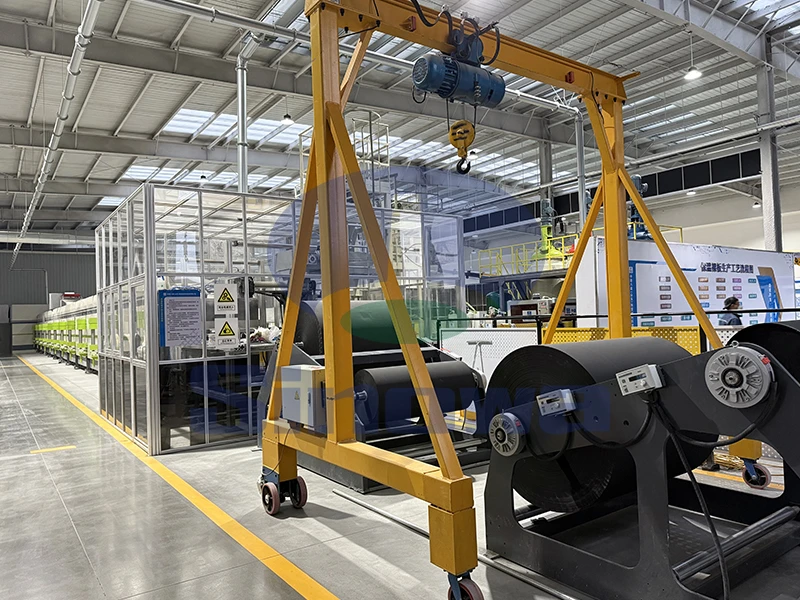
The feeding and conveying of raw ingredients are often the first places where noticeable noise appears on an insulation board manufacturing line. Silos, bulk bins, and screw feeders receive granular or powdery material such as beads, fibers, fillers, or binding agents, and the constant sliding and cascading of these particles against metal walls creates a low, rumbling clatter. Belt conveyors, bucket elevators, and vibrating feeders add their own character: belts thump against pulleys and idlers, buckets rattle as they engage the boot section, and vibrating trays produce a dense, high-frequency buzz that travels easily through nearby structures. Pneumatic transport lines, used to move light beads or loose fiber over distance, contribute a sharp hissing from airflow and occasional knocks as material impacts bends and cyclone receivers. Even the simple act of opening a gate or dosing a batch can produce a sudden blast of compressed air that startles operators. Because these devices run almost continuously, their combined output forms the background noise floor of the entire workshop, and if left unaddressed they mask the more diagnostic sounds of downstream equipment.
Mixing and kneading equipment represents one of the most intense sound sources on the line. High-speed mixers that blend resin, blowing agents, fillers, and reinforcing fibers use powerful motors driving sharp blades or impellers, and the turbulence inside the chamber generates a loud, broadband roar that increases with fill level and rotational speed. In kneaders or internal mixers, heavy counter-rotating arms shear thick compound against walls and rotors, producing deep mechanical groans interspersed with sharp scraping sounds as material drags across metal. Gearboxes directly coupled to these agitators add a characteristic whine from meshing teeth, and poorly sealed bearing housings transmit vibration into the surrounding frame. The noise here is not only loud but fluctuating, rising and falling with batch cycles, ingredient additions, and temperature changes, which makes it particularly fatiguing for workers stationed nearby. Because the mixer is enclosed, much of the sound escapes through unlined covers, inspection ports, and discharge gates, so even when the machine itself is well maintained, weak acoustic sealing turns the whole unit into a sounding board.
Once the compound is prepared, it moves into extrusion or molding machinery, where sound takes on a deeper, more structural quality. Single or twin-screw extruders rely on large drive motors, gear reducers, and heavily loaded screws that push viscous material through a heated barrel. The friction between the screw flights, the barrel wall, and the material generates a continuous low hum, while worn or misaligned barrels produce rhythmic thumping as the screw flexes under pressure. Dies at the discharge point introduce their own hissing as gases or excess material escape, and screen changers operated hydraulically produce sudden clunks during filter swaps. In molding-based lines, clamping units and press platens use heavy hydraulic cylinders that produce high-pressure whines from pumps and occasional hydraulic knocks as valves shift. The solid steel frame of an extruder or press acts as an efficient radiator, turning internal pressure fluctuations into audible noise across the entire hall. Cooling fans mounted on barrel zones, vacuum pumps attached to vent ports, and screen-pelletizer cutting wheels further extend the noise spectrum into higher frequencies, creating a mixed soundscape that is difficult to isolate by ear alone.
Cutting and trimming stations are typically the most recognizable noise sources on an insulation board production line. Hot-wire cutters, band saws, circular saw blades, and guillotine knives slice through foam boards or fiber panels at high speed, producing sharp whines, cracking sounds, and the high-pitched shriek of abrasive contact. Whereboard surfaces are trimmed to final dimension, spinning blades chip away small fragments that impact guards and hoods, adding a fine sizzling layer to the sound. Cross-cut saws that chop continuous slabs to length produce a staccato beat as the blade engages and disengages, while travelling saws that follow the board on a moving carriage add rushing mechanical noise from the motion system. Vacuum hoods and dust extraction ducts placed near these cutters help collect debris but also introduce fan noise and air turbulence that can become surprisingly loud if filters are clogged. Because operators often stand directly beside these stations to inspect edges and remove offcuts, the exposure here is among the highest on the line. Even small changes in blade sharpness, feed speed, or board density cause abrupt shifts in sound level, which means cutting stations also serve as early indicators of process drift.
Conveyor and transport systems that connect the various processing stages form a quieter but pervasive noise source. Roller conveyors, chain conveyors, and slat bands carry boards through cooling zones, inspection stations, and packaging areas, and each roller, chain link, and bearing contributes a small click or rattle that accumulates along long stretches. Dry chains produce a noticeable squealing when lubrication is inconsistent, while belt tracking issues create rhythmic thumping as the belt wanders across pulleys. Lift tables, tilting mechanisms, and stackers that accumulate finished boards use pneumatic cylinders and gear motors that add bursts of noise at regular intervals. Stacking arms that lift boards into bundles often impact end stops with a solid thud, and pneumatic escapements release small puffs of air that echo in empty zones. Although no single conveyor segment is extremely loud, lines that run for tens of meters create a continuous corridor of sound that raises the overall ambient level and makes conversation difficult across wide areas. In many facilities, workers report that conveyor noise is more annoying than the louder but intermittent machines, because it never stops and offers no recovery period during a shift.
Pneumatic and vacuum systems quietly underpin much of the line's operation and are often underestimated as noise sources. Compressors, whether rotary screw or piston type, generate a deep mechanical roar in their enclosures, and if acoustic insulation around the compressor room is poor, that sound radiates across the plant. Dryers, filters, and distribution loops introduce minor hissing at every joint and fitting, and solenoid valves that actuate grippers, pushers, and ejectors on the packaging line produce repeated sharp snaps. Vacuum pumps used for deaeration, board handling, or dust extraction contribute a steady mid-range whine, and separator cyclones add a rushing wind sound as laden air spins through them. Leaks in hoses and fittings are especially problematic: a small un-noticed hole can produce a piercing whistle that travels long distances and is frustratingly difficult to locate. Because pneumatic and vacuum equipment is often tucked away behind panels or in utility alleys, operators may not realize how much of the background noise comes from these secondary systems rather than the main process machinery.
Cooling, ventilation, and thermal processing systems add another distinct layer of sound to an insulation board line. Large cooling fans that remove heat from extruded boards or cure ovens produce a deep whooshing roar, and when fan blades accumulate dust or become slightly unbalanced, that roar develops a noticeable pulsating beat. Boiler or heater rooms, where thermal oil, gas burners, or electric heating elements maintain process temperatures, contribute combustion fan noise, burner whine, and the low throb of circulation pumps. Air-handling units that supply fresh air to the workshop and exhaust fumes from cutting stations create duct-borne rumble, and vibration from these fans is often transmitted into the building structure rather than radiated directly into the air. Where chilled water systems are used, chillers and cooling towers positioned outside the building send a low-frequency hum through walls and floors that is felt as much as heard. During hot seasons, these systems run at full capacity for entire shifts, making them a constant contributor to the overall acoustic environment and a significant factor in long-term fatigue.
Behind every major machine sits a train of motors, gearboxes, bearings, and couplings that generate their own share of sound. Electric motors, especially those with open cooling fans, produce a high-frequency whine that rises with load, and as bearings wear they develop a rough, gravelly texture that is easy to identify with a contact probe. Gearboxes transmit a rhythmic tooth-meshing whine that shifts pitch with speed, and misaligned or worn gears add clanking and side-play noise. Couplings between motor and reducer, when not properly aligned, transmit a side-to-side vibration that manifests as a low rumble across the mounting frame. Fans mounted on motor shafts, cooling pumps, and secondary drives multiply these sources, and because they are distributed along the entire length of the line, their combined contribution is significant. Maintenance teams often notice that a machine "sounds wrong" long before it fails, which means motor and drive noise is not merely a nuisance but also a condition-monitoring signal. Reducing one of these sources in isolation rarely has a dramatic effect on the overall sound level, but systematically addressing wear, alignment, and lubrication across the drive train produces a measurable and long-lasting improvement.
The final dimension of noise on an insulation board production line is structural and cumulative: sound that does not come from a single machine but from the way all machines interact with the building. Hard concrete floors, unlined metal walls, and high ceilings reflect sound instead of absorbing it, turning a row of moderate-level machines into a reverberant field where levels stay high even between production cycles. Vibration from heavy presses, extruders, and saws travels through foundations into nearby floors and walls, re-radiating as low-frequency hum in offices, control rooms, and adjacent spaces. Material handling errors, dropped boards, misaligned guides, and emergency stops introduce sharp impulse noises that are far more disruptive than steady sound at the same average level. Together, these effects explain why two lines with identical equipment can feel very different acoustically. The practical response is not to silence one machine at a time, but to treat the line as a whole: enclosing the noisiest stations, absorbing reflected surfaces, isolating vibrating foundations, maintaining lubrication and alignment, and planning operator positions away from the loudest spots. When these measures are combined, workers hear less of the line, the line itself reveals more about its own health, and the factory becomes a quieter and more productive environment in which to work.
Gallery
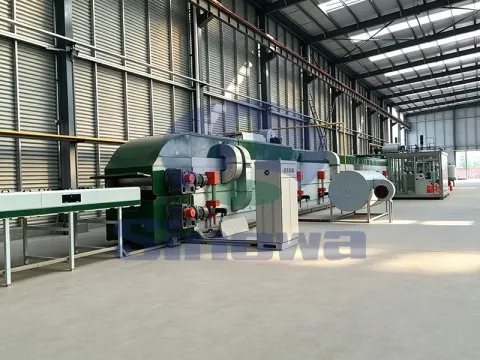
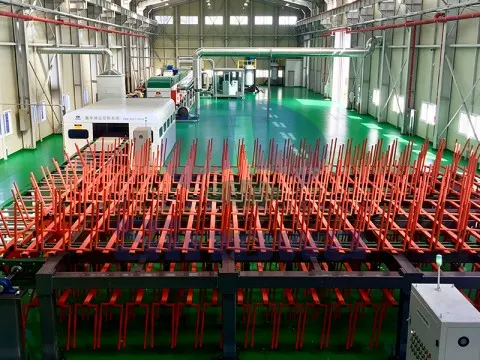
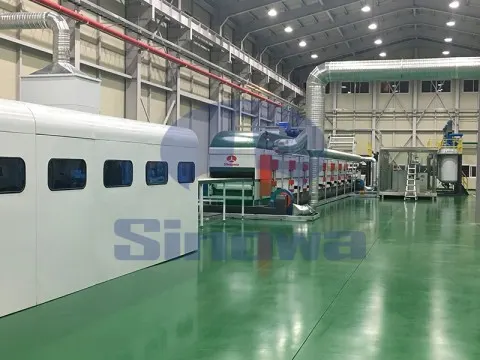
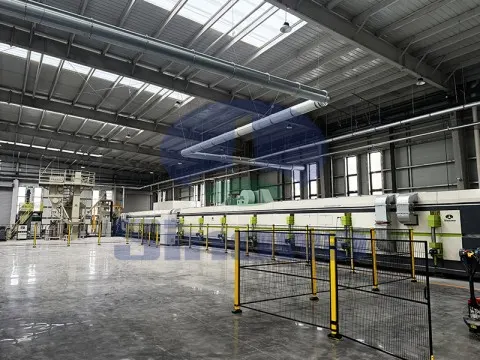
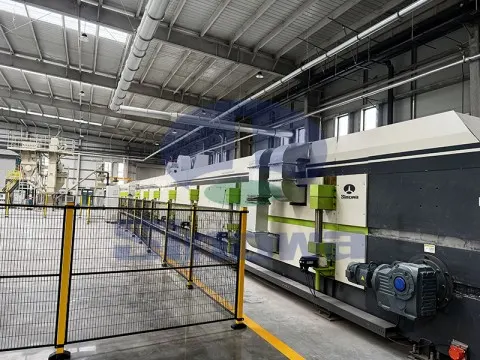
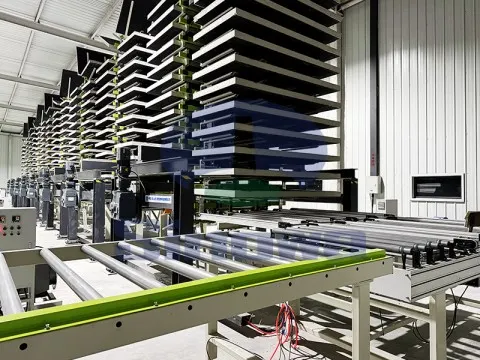
Sinowa is a professional manufacturer of sandwich panel machine in china, we provide diversified and high-performance sandwich panel production lines, including fully automatic continuous PU sandwich panel line and customized special lines to meet mass production and personalized order demands. These sandwich panel lines support processing multiple foam core materials, such as PU, PIR, mineral wool, rock wool and glass wool, covering different insulation and fireproof standards.
Featuring stable operation, high efficiency, energy saving and easy maintenance, our PU sandwich panel line deliver sandwich panels with excellent thermal insulation, fire resistance, sound insulation and lightweight durability. The finished panels are widely applied in industrial workshops, warehouse roofing and wall cladding, cold storage insulation, serving global construction and industrial insulation markets.
Main Products
-

Continuous PU Sandwich Panel Production Line
This continuous PU sandwich panel production line is an integrated automatic equipment. It covers uncoiling, forming, foaming, curing and cutting processes. With automatic raw material proportioning and precise temperature & pressure control, PIR sandwich panel production line continuously composites panels with double skins. Polyurethane sandwich panel production line stably produces steel and aluminum sandwich panels. Featuring high automation, the line makes fireproof and thermal-insulation panels for building enclosure and cold storage. -
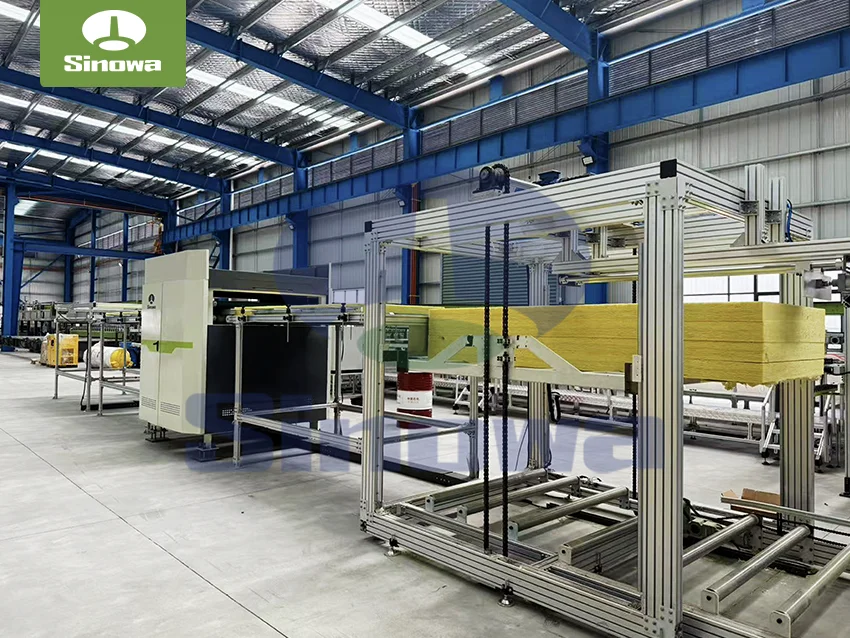
Rock Wool Sandwich Panel Production Line
Continuous rockwool sandwich panel production line is an automatic integrated production equipment, consisting of uncoiling, forming, gluing and compounding, heating curing, fixed-length cutting, automatic stacking and other modules. The mineral wool sandwich panel production line continuously conveys color steel plates and rock wool core materials to automatically complete lamination and curing, which can produce fireproof and thermal insulation sandwich panels. Featuring high automation degree and stable operation, this production line is suitable for mass production of panels used for building walls, roofs and other scenarios. -
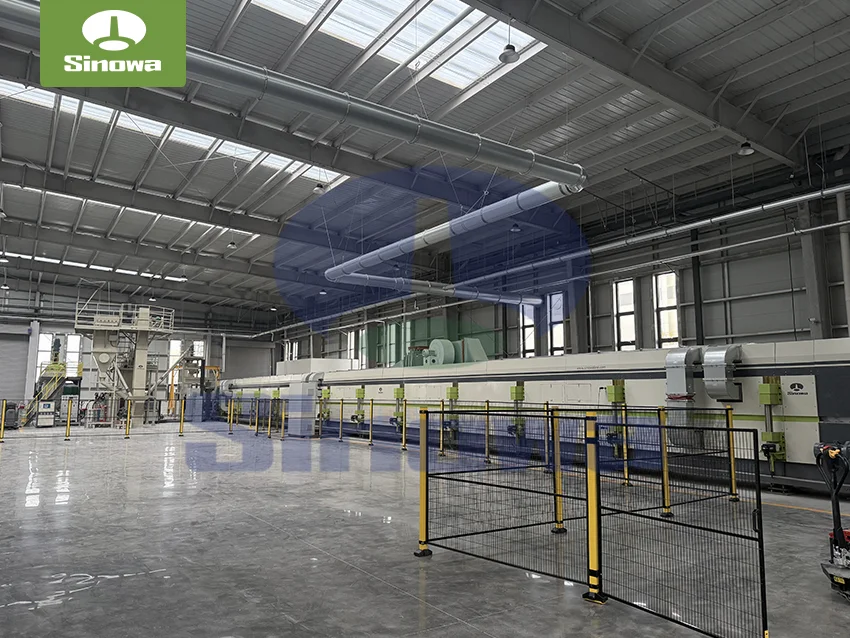
Phenolic Insulation Board Production Line
This integrated automatic production line continuously manufactures PU and phenolic insulation boards. The insulation board production line covers raw material proportioning, high-pressure foaming, laminating, curing and fixed-length cutting. Featuring high automation and stable molding, the insulation panel production line supports various surface materials. PU boards offer excellent thermal insulation, while phenolic boards have superior fire resistance. These products are widely used in construction, cold chain, ventilation ducts and other thermal insulation fields.
Other FAQs
- How To Improve The Flatness Of Boards From Insulation Panel Production Line
- Can PIR Sandwich Panel Production Line Produce Industrial Workshop Sound Insulation Panels
- Does The Continuous PU Sandwich Panel Manufacturing Line Support Automatic Stacking And Packing
- Can PIR Sandwich Panel Production Line Produce Prefabricated Container House Roof Panels
- Why Is The Foaming Expansion Rate Unstable On The PU Foam Production Line
- How Does A PUF Sandwich Panel Production Line Cut Panels To Fixed Lengths
- Automatic Error Correction Function Of Polyurethane Sandwich Panel Production Line
- Workshop Space Layout Requirement For PU Sandwich Panel Production Line
- Operator Professional Training Content For PU Sandwich Panel Line
- Energy Consumption Standard Of Automatic PU Sandwich Panel Production Equipment
Related Articles
- Continuous Sandwich Panel Machines
- Sandwich Panel Equipment
- Supplier Of Full-auto PU Sandwich Panel Production Line In China
- Wall Sandwich Panel Machines
- Heavy Duty Continuous Sandwich Panel Production Machinery
- Foam Sandwich Panel Machine
- PU Sandwich Panel Machine With Corrugated Surface Material
- Color Steel Sandwich Panel Composite Production Line
- Foam Sandwich Panel Manufacturing Machine
- Roofing Sandwich Panel Machine