 sandwich panel machine
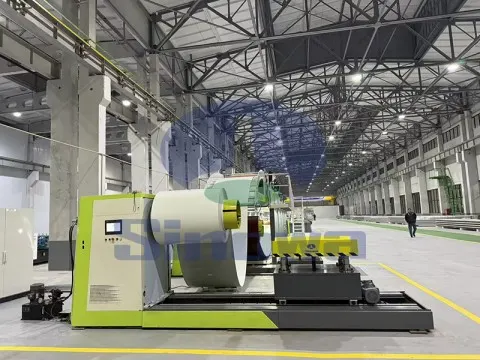
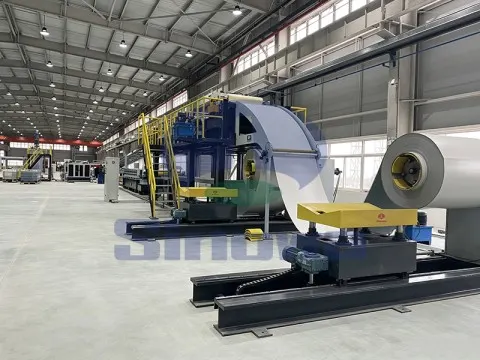
A complete roofing sandwich panel production system consists of multiple interconnected mechanical modules, each undertaking independent functional tasks while maintaining precise collaborative operation to ensure the continuity and stability of the entire production process. The raw material unwinding module serves as the starting point of the production line, mainly responsible for placing and releasing coiled metal sheets that act as the outer protective layer of sandwich panels. This module is equipped with damping adjustment structures to control the unwinding speed of metal coils, effectively avoiding material deviation, tension fluctuation, and surface scratch problems caused by uneven feeding during high-speed operation. The internal transmission structure of the unwinding unit adopts rigid mechanical connection components to bear the weight of large-volume raw material coils, and the auxiliary correction devices can fine-tune the material conveying angle in real time, laying a foundation for the subsequent standardized molding of metal plates. After the metal sheet is released from the unwinding module, it enters the surface pretreatment unit, where simple surface smoothing and impurity removal operations are completed to eliminate dust, oil stains, and tiny burrs on the metal surface. These pretreatment steps are essential to enhance the adhesion between the metal surface layer and the intermediate thermal insulation core material, preventing delamination and peeling of composite panels during long-term use.
The plate forming module is one of the core functional units of the roofing sandwich panel production machine, undertaking the task of stamping and bending flat metal sheets into specific roof-shaped profiles. This module is composed of multiple groups of precision rolling dies arranged in an orderly sequence, and the spacing and radian of the dies can be adjusted according to the morphological requirements of different roofing panels. Driven by servo transmission components, the rolling dies operate at a synchronous and stable speed, applying uniform pressure to the moving metal sheets to realize gradual cold bending forming without damaging the internal metal structure of the plates. For roofing panels with special grooves and overlapping structures, the forming module is equipped with auxiliary pressure groove and edge curling components to process the plate edges into interlocking structures, which facilitates seamless assembly and installation of subsequent building construction. The structural rigidity of the forming frame is strictly optimized during the equipment design process, using high-strength metal materials to resist vibration and deformation generated by long-term high-pressure stamping, so as to ensure the consistent dimensional accuracy of each batch of formed plates. After forming, the metal plates will go through the shaping unit to correct tiny deformations generated in the rolling process, further optimizing the flatness and structural symmetry of the plates.
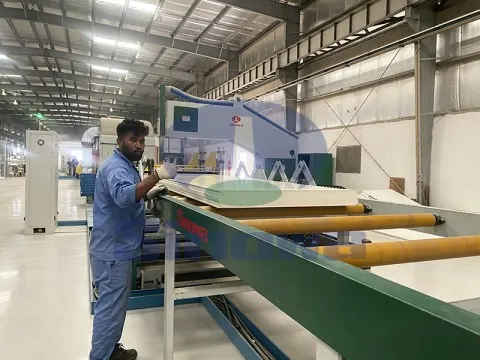
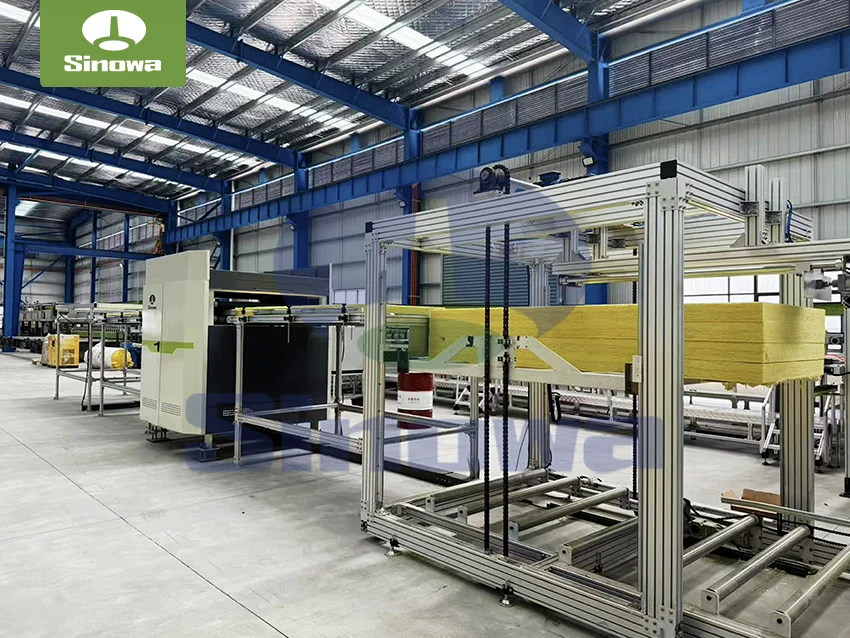
The core material feeding and gluing module is a key component to realize the composite structure of sandwich panels, which mainly completes the quantitative feeding of thermal insulation core materials and uniform coating of adhesive materials. Common applicable core materials include porous foam materials, rock wool, glass wool, and other lightweight thermal insulation fillers, all of which have low thermal conductivity and excellent sound insulation performance to meet the thermal protection needs of building roofs. The core material feeding device adopts a controllable conveying structure to adjust the feeding thickness and spacing of the core material according to the preset panel specifications, ensuring that the core material is evenly laid between the upper and lower metal plates without hollowing or accumulation. The gluing system is equipped with automatic dispensing components, which can evenly spray high-viscosity adhesive on the bonding surface of metal plates and core materials. The gluing dosage and spraying range can be dynamically adjusted according to the production speed to avoid excessive glue overflow or insufficient bonding area. In order to improve the curing efficiency of adhesives, this module is also equipped with a constant-temperature heating structure, which maintains a stable temperature environment in the composite area to accelerate the physical curing reaction of adhesives and enhance the bonding tightness between layers. The collaborative operation of feeding and gluing units effectively solves the problems of uneven core material distribution and weak interlayer bonding in traditional manual composite processes.
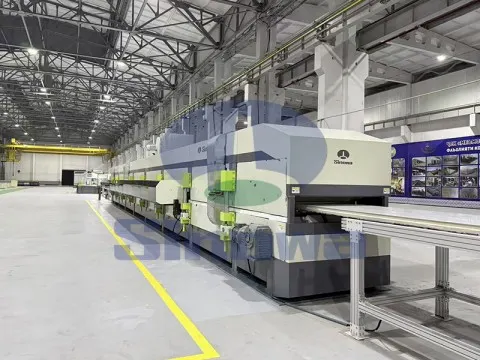
The composite pressing and curing module undertakes the final shaping and fixed bonding tasks of sandwich panels, which is directly related to the overall structural firmness of finished products. After the metal plates covered with adhesive and the thermal insulation core material are initially butted, they are sent to the pressing area composed of multi-layer pressure rollers. The pressure rollers are arranged symmetrically up and down, and the pressure value can be intelligently adjusted according to the thickness and material hardness of the composite panels. Moderate continuous pressure can eliminate tiny gaps between composite layers, making the combination of metal layers and core materials more compact, while avoiding core material crushing and metal plate deformation caused by excessive pressure. The interior of the pressing unit is equipped with a circulating temperature control system to maintain a constant curing temperature in the pressing channel, creating a stable reaction environment for adhesive solidification. With the slow movement of the conveyor device, the composite plates stay in the curing area for a fixed time to complete the bonding and shaping process. For production lines producing high-strength roofing panels, the curing module is also equipped with heat preservation and moisture-proof structures to isolate external temperature and humidity interference, ensuring that the adhesive can complete the curing reaction under optimal environmental conditions and improve the weather resistance of composite panels.
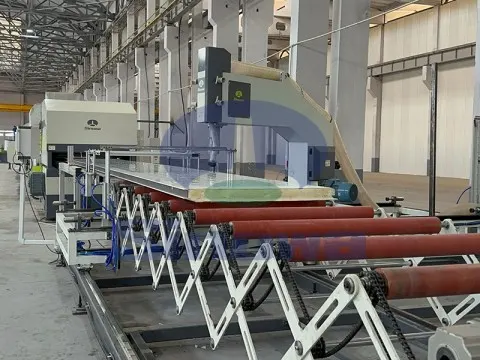
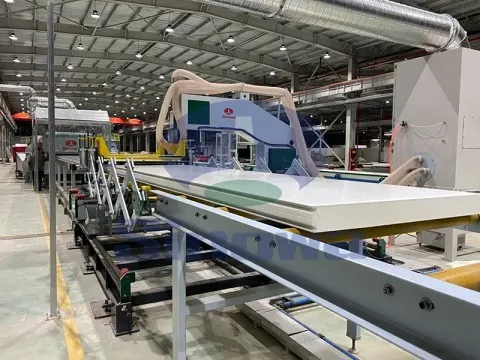
The precise cutting and post-processing module is responsible for cutting continuously produced long-strip composite plates into finished products of fixed specifications, which is the final processing link of the entire production line. This module adopts high-precision servo cutting components, and the cutting length is preset through an intelligent control system. The sensing device tracks the moving speed of the plates in real time to realize synchronous cutting without stopping the machine, which greatly improves the continuous production capacity of the equipment. The cutting tool is made of wear-resistant and high-hardness materials to ensure smooth and burr-free cutting sections, avoiding edge warping and material damage. After cutting, the edge trimming unit will polish and trim the plate edges to remove residual adhesives and tiny metal burrs, optimizing the appearance flatness of finished panels. Some advanced production lines are also equipped with grooving and flanging auxiliary structures in the post-processing module, which can process the plate edges into special connection structures to meet the rapid assembly requirements of different roof installation scenarios. The finished plates after post-processing are transported to the stacking area through the output conveyor belt to complete automatic sorting and temporary storage.
The intelligent control system runs through all functional modules of the roofing sandwich panel manufacturing machine and is the core command center to coordinate the operation of various mechanical units. The system adopts integrated programmable logic control components, which can centrally set production parameters such as plate thickness, cutting length, operating speed, and gluing amount through a human-computer interaction interface. During the production process, multiple sensor devices distributed in each module collect real-time data such as operating temperature, transmission speed, material tension, and pressing pressure, and feed the data back to the control terminal. The system automatically compares the collected data with preset parameters and dynamically adjusts the operating state of each executing component to keep the production process in a stable and balanced state. When abnormal conditions such as material jamming, equipment overload, and parameter deviation occur, the intelligent system will automatically trigger an early warning mechanism and execute emergency shutdown procedures to avoid equipment damage and material waste caused by faults. In addition, the control system has a data storage function, which can record daily production output, equipment operating status, and fault records, providing data support for subsequent production management and equipment maintenance.
The complete production flow of the roofing sandwich panel machine follows a logical and sequential processing logic, realizing the one-time molding of finished panels from raw material input to finished product output. At the initial stage of production, metal raw material coils are fixed on the unwinding support, and the equipment is started to drive the metal sheets to move forward along the conveying track. After surface pretreatment, the flat metal sheets enter the rolling forming area to complete the bending and shaping of the roof profile. Meanwhile, the thermal insulation core materials are transported to the designated composite position through the feeding mechanism, and the adhesive is evenly coated on the inner side of the formed metal plates. Subsequently, the upper and lower metal plates and the intermediate core material are butted and combined, and enter the pressing curing channel together. Under the dual action of constant pressure and constant temperature, the composite layers are tightly bonded and initially shaped. After reaching the set curing time, the integrated plates are transported to the cutting area, and the intelligent cutting device completes fixed-length cutting according to the preset size parameters. The cut finished plates are polished and trimmed by the post-processing unit, and finally transported to the finished product stacking area by the conveyor belt. The entire production process does not require excessive manual intervention, and the continuous assembly line operation mode effectively shortens the single-piece production cycle and improves the overall production efficiency.
Roofing sandwich panel machines have excellent material compatibility and can adapt to the production requirements of composite panels with different core materials to meet the diversified usage needs of the construction industry. When processing foam-based core materials, the equipment adjusts the feeding pressure and heating temperature to avoid foaming deformation and structural damage of low-density foam materials, ensuring that the foam core maintains a uniform porous structure and stable thermal insulation performance. For rock wool and glass wool inorganic fiber core materials, the feeding module adopts anti-compression conveying structures to prevent fiber scattering and density unevenness, and enhances the interlayer bonding effect through high-adhesion adhesives. The metal surface materials applicable to the equipment include various coated metal sheets with anti-corrosion and anti-rust treatments. The flexible adjustment of the rolling die structure enables the equipment to produce roofing panels with different wave heights and groove spacings, adapting to the drainage and load-bearing design requirements of different building roofs. In addition, the equipment can adjust the overall thickness of composite panels by changing the gap between pressing rollers, covering the thickness range required for conventional building roof thermal insulation projects.
In terms of mechanical performance design, modern roofing sandwich panel machines focus on operational stability, energy conservation, and durability. The main frame of the equipment is welded with thickened metal profiles, with reasonable stress distribution, which can resist mechanical vibration and structural fatigue generated by long-term continuous operation. The transmission parts adopt lubrication optimization design to reduce friction loss between mechanical components, lower operating noise, and extend the service life of vulnerable parts. The driving system uses energy-saving transmission components to convert electric energy into mechanical kinetic energy efficiently, reducing invalid energy consumption during equipment idling and low-load operation. The internal circuit and gas circuit of the equipment are arranged in a centralized and sealed manner, which can isolate external dust and moisture, reduce the failure probability of electrical components and pneumatic structures, and adapt to harsh industrial production environments such as dust and high humidity. The optimized mechanical structure not only improves the continuous working time of the equipment but also reduces the comprehensive operating cost of the production line.
The application value of roofing sandwich panel making machine is prominently reflected in the field of building industrialization and green construction. The panels produced by this equipment have the advantages of light weight, high strength, thermal insulation, sound insulation, and weather resistance, and can effectively reduce the self-weight of building roofs, lower the load-bearing design standard of building structures, and thereby save construction raw materials. The integrated composite structure of the panels avoids the complex procedures of separate laying of thermal insulation layers and waterproof layers in traditional roof construction, simplifies the on-site construction process, and shortens the construction cycle. In cold storage, constant-temperature workshops, and other buildings with high requirements for temperature control, the uniform core material structure of machine-made sandwich panels can effectively block heat conduction, reduce the energy consumption of building temperature regulation, and achieve energy-saving and emission-reduction effects. In temporary buildings and modular integrated houses, the standardized size and convenient assembly performance of finished panels improve the construction flexibility and reuse rate of buildings, conforming to the development concept of green and low-carbon construction.
Daily maintenance and standardized operation are crucial to maintain the long-term stable operation of roofing sandwich panel machines. In terms of daily operation, operators need to conduct pre-operation inspections on key components such as unwinding brackets, rolling dies, cutting tools, and transmission chains before starting the equipment to check for loose fasteners, aging seals, and residual impurities. During the operation, it is necessary to monitor the operating sound, temperature, and material conveying state of the equipment in real time, and adjust the operating parameters in time if abnormal material feeding and uneven gluing are found. After the daily production is completed, the residual adhesives, core material debris, and metal dust inside the equipment should be cleaned to prevent impurities from accumulating and affecting the processing accuracy of subsequent production. Regular maintenance includes quantitative lubrication of transmission bearings and gears, inspection and replacement of aging sealing parts and rubber rollers, calibration of cutting and forming precision, and detection of circuit and sensor sensitivity. Scientific maintenance management can effectively reduce equipment failure rates, avoid production interruptions caused by mechanical faults, and maintain stable production efficiency for a long time.
With the continuous development of industrial manufacturing technology, roofing sandwich panel machines are evolving towards higher automation, intelligent precision, and multi-functional integration. The upgraded intelligent control system realizes remote parameter monitoring and fault diagnosis functions, which can feed back equipment operating data to the terminal in real time, facilitating managers to grasp the production progress and equipment status remotely. The optimized rolling and pressing structure further improves the dimensional tolerance accuracy of finished panels, making the splicing gap between panels smaller and the overall sealing performance better. In terms of functional expansion, the new generation of equipment integrates surface embossing, anti-corrosion coating auxiliary processing, and multi-shaped plate switching production functions, breaking through the limitation of single product type of traditional production lines. In addition, combined with the green production concept, the equipment adds waste recycling structures to collect leftover materials generated in the cutting process, realizing secondary utilization of raw materials and reducing production waste.
In the industrial chain of building thermal insulation materials, roofing sandwich panel machines occupy an indispensable upstream production position, providing stable and high-quality raw material support for building roof enclosure engineering. The mature mechanical processing technology realizes standardized and batch production of sandwich panels, eliminates the quality difference of handmade products, and ensures the consistency and reliability of building roof materials. For building material processing enterprises, the integrated production line reduces labor input, simplifies the production management process, and improves the market competitiveness of products with efficient production capacity and stable product quality. From the perspective of the construction industry development trend, with the continuous promotion of prefabricated buildings and energy-saving buildings, the market demand for high-performance roofing sandwich panels will continue to rise, which will further drive the technological innovation and structural upgrading of supporting production equipment.
In conclusion, the roofing sandwich panel machine is a comprehensive industrial production equipment integrating mechanical transmission, material composite, intelligent control, and precision processing technologies. Its scientific structural composition and reasonable production process ensure the efficient and standardized production of roofing sandwich panels, and its excellent material adaptability and operational stability meet the diversified production needs of the modern construction material industry. From raw material unwinding to finished product output, each functional module cooperates efficiently to complete the composite processing of multi-layer materials, and the produced panels have comprehensive performance advantages such as thermal insulation, sound insulation, corrosion resistance, and easy assembly. With the progress of industrial manufacturing technology and the upgrading of construction industry standards, this type of equipment will continue to optimize in terms of intelligent control, energy-saving consumption reduction, and multi-product compatibility, continuously empowering the high-quality development of the prefabricated construction industry and green building engineering. Reasonable operation and scientific maintenance can maximize the service life and production efficiency of the equipment, providing long-term and stable technical support for the production of building roof thermal insulation materials.
Sinowa is a professional manufacturer of sandwich panel machine in china, we provide diversified and high-performance sandwich panel production lines, including fully automatic continuous PU sandwich panel line and customized special lines to meet mass production and personalized order demands. These sandwich panel lines support processing multiple foam core materials, such as PU, PIR, mineral wool, rock wool and glass wool, covering different insulation and fireproof standards.
Featuring stable operation, high efficiency, energy saving and easy maintenance, our PU sandwich panel line deliver sandwich panels with excellent thermal insulation, fire resistance, sound insulation and lightweight durability. The finished panels are widely applied in industrial workshops, warehouse roofing and wall cladding, cold storage insulation, serving global construction and industrial insulation markets.
https://www.cnsinowa.com/sandwich-panel-machines/roofing-sandwich-panel-machine.html