 sandwich panel machine
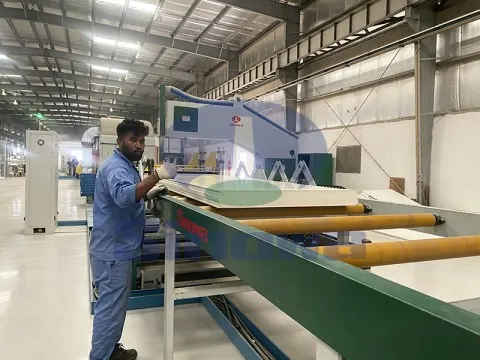
A complete sandwich panel manufacturing system consists of multiple interconnected mechanical subsystems, each undertaking independent production tasks while maintaining precise collaborative coordination to ensure the smooth progression of the entire production workflow. The basic structural composition of the equipment covers raw material feeding units, surface plate pretreatment mechanisms, adhesive coating systems, core material arranging and flattening devices, hot pressing compounding structures, constant-temperature curing modules, precise cutting assemblies, finished product conveying mechanisms, and centralized intelligent control systems. Every functional unit is designed based on mechanical ergonomics and production logic, with optimized structural layouts to minimize material transmission distances, reduce energy consumption during operation, and lower the probability of material deformation during processing. The overall mechanical framework of the equipment is fabricated with high-strength metal materials, which can withstand long-term continuous operation, high-pressure compounding, and cyclic temperature changes, effectively avoiding structural deformation or mechanical fatigue caused by prolonged production work. The internal transmission components adopt wear-resistant and corrosion-resistant processing technology, ensuring stable operating accuracy under long-term high-load working conditions and extending the overall service life of the production line.
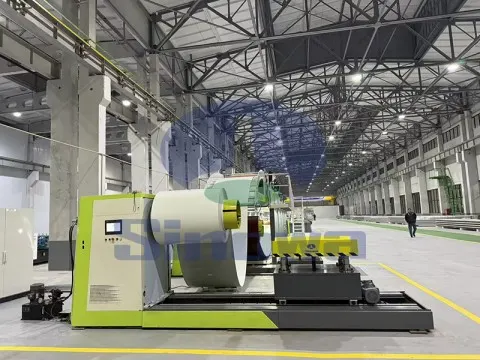
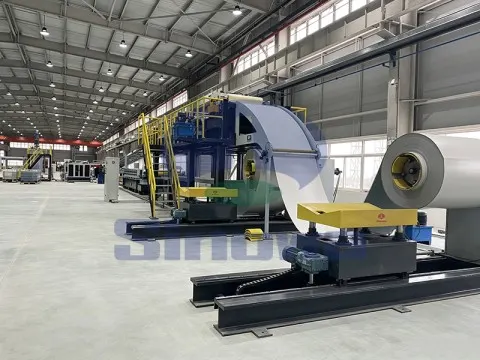
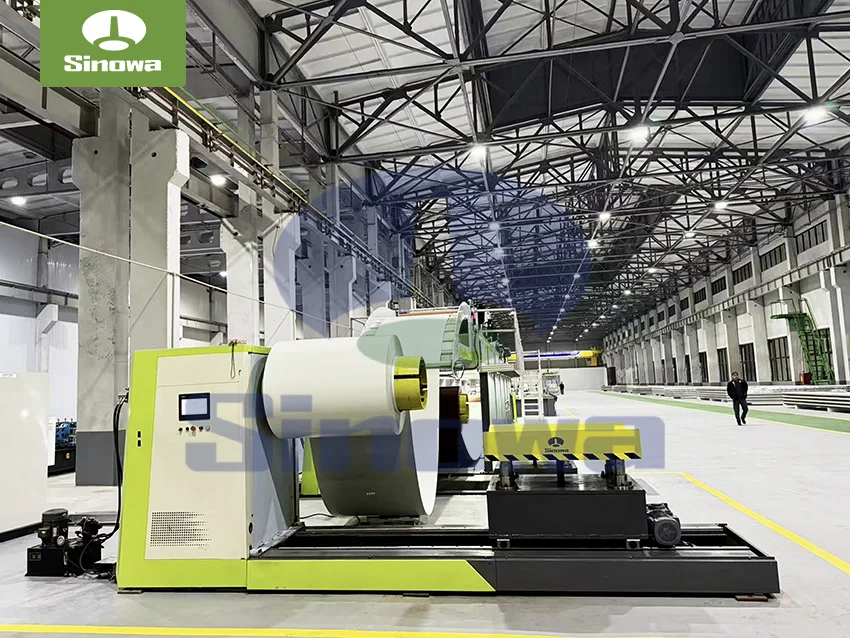
The raw material feeding system serves as the starting terminal of the entire sandwich panel production line, responsible for the ordered and quantitative supply of surface plates and core materials. For metal surface substrates commonly used in industrial production, the feeding mechanism adopts an automatic unwinding structure, which can fix coiled metal raw materials and achieve steady and low-tension feeding through hydraulic damping and mechanical braking structures. This design effectively prevents tensile deformation, wrinkling, and edge warping of thin metal plates during the unwinding process, maintaining the flatness and structural integrity of the surface plates. In terms of core material feeding, the equipment is compatible with multiple types of lightweight thermal insulation materials, including rock wool, mineral wool, polyurethane foam, polystyrene foam, and other porous thermal insulation substrates. The core material feeding unit is equipped with automatic sorting, spreading, and compaction components, which can evenly distribute fluffy blocky or strip-shaped core materials and eliminate internal gaps and loose structures inside the core materials. Some optimized feeding structures are fitted with adjustable spacing baffles and thickness limiters, allowing workers to flexibly adjust feeding specifications according to the production requirements of panels with different thicknesses, thereby realizing flexible switching of production specifications without extensive mechanical disassembly and replacement.
Before formal compounding, the surface plates need to go through a complete pretreatment process to remove surface impurities, oil stains, and oxide layers, so as to enhance the bonding firmness between the surface plates and adhesives. The pretreatment mechanism of the sandwich panel manufacturing machine includes surface dust removal, mechanical leveling, and edge trimming components. The dust removal device adopts high-pressure airflow circulation and static adsorption technology to thoroughly clean floating dust and fine particles attached to the surface of the plates, avoiding particle impurities from affecting the flatness of the subsequent composite interface. The leveling structure uses multi-group upper and lower pressing rollers arranged at equal intervals to perform repeated rolling calibration on the initially bent plates, eliminating microscopic bending and wavy textures generated during raw material coiling. The edge trimming part is equipped with high-speed rotating cutting blades, which can trim the uneven edges of the raw plates to ensure consistent width specifications of the upper and lower surface plates, preventing edge misalignment and irregularity in the finished sandwich panels. All pretreatment procedures are completed in a continuous automated flow, with no need for manual intervention in the intermediate process, which greatly improves pretreatment efficiency and ensures the uniformity of the surface treatment effect of each batch of plates.
The adhesive coating system is a key functional component that determines the bonding strength between the surface plate and the core material, and its coating uniformity and glue dosage control directly affect the overall structural stability and service life of finished sandwich panels. The manufacturing machine is equipped with an intelligent glue supply and spraying structure, which can quantitatively transport liquid adhesives to the spraying area through high-precision metering pumps. The spraying components adopt atomization spraying technology, which can uniformly distribute the adhesive on the inner surface of the surface plate in a fine mist form, forming a dense and continuous adhesive layer. Different from traditional manual glue spreading and simple roller gluing processes, the automated spraying system can accurately control the glue coating thickness within a reasonable range, avoiding product quality defects such as degumming and bulging caused by insufficient glue amount, as well as panel warping and glue overflow caused by excessive glue accumulation. In addition, the adhesive circulation structure is designed with constant temperature heating and stirring functions, which can maintain the fluidity of the adhesive within the optimal temperature range, prevent adhesive precipitation and solidification during long-term production, and ensure the stability of the adhesive’s physical properties throughout the production cycle. The redundant adhesive generated during the coating process can be recycled through the circulation pipeline, reducing raw material waste and improving the utilization rate of adhesive resources.
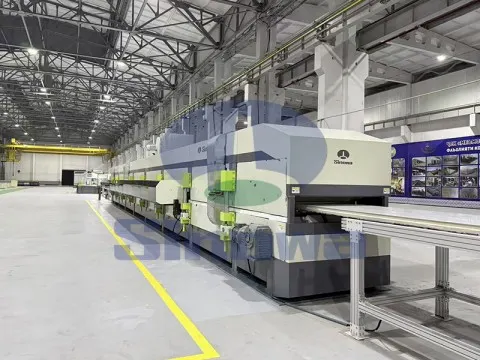
After the completion of glue coating and core material laying, the semi-finished panels enter the hot pressing compounding stage, which is the core processing link to realize the permanent bonding of composite structures. The hot pressing mechanism consists of multi-layer pressing plates, hydraulic power components, and constant temperature heating modules. During operation, the upper and lower pressing plates apply uniform static pressure to the stacked composite structure composed of surface plates, adhesives, and core materials. The internal heating system conducts heat conduction to the composite interface through metal pressing plates, activating the molecular activity of the adhesive and accelerating the curing reaction speed of the bonding medium. The internal sensing elements of the hot pressing unit can monitor the pressure value and temperature distribution in real time, maintaining the processing temperature within a stable medium-temperature range and keeping the pressure uniformly acting on every position of the plate surface. This balanced temperature and pressure environment enables the adhesive to fully penetrate the tiny gaps on the surface of the core material and the metal plate, forming a firm composite interface without internal hollow layers. The structural design of the hot pressing area takes into account the thermal expansion and contraction characteristics of different materials, reserving a reasonable deformation space to avoid structural cracking and core material compression damage caused by excessive thermal extrusion during the heating and pressing process.
The cured and shaped sandwich panels need to go through a slow cooling and constant-temperature maintenance process to stabilize the internal molecular structure and mechanical properties of the composite materials. The maintenance area of the production line is an independent closed space with thermal insulation and ventilation structures, which can adjust the internal temperature and humidity according to the material characteristics of different panels. For organic foam core materials, low-temperature slow cooling is adopted to prevent internal stress concentration caused by rapid temperature drop, which could lead to panel warping. For inorganic fibrous core materials such as rock wool, appropriate humidity maintenance is required to optimize the curing effect of the adhesive and enhance the tensile resistance of the composite interface. The maintenance time is automatically matched by the system according to the panel thickness and core material type, ensuring that each batch of panels completes stress relief and structural stabilization within the specified time. The closed maintenance space can also isolate external dust and moisture, preventing external environmental factors from interfering with the initial curing process of newly compounded panels and further improving the qualified rate of finished products.
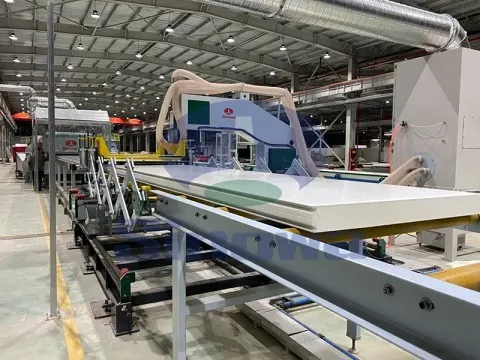
The precise cutting system undertakes the task of sizing and shaping the maintained finished panels, realizing the conversion of continuous long plates into standard-sized finished products. The cutting assembly is equipped with high-speed alloy cutting tools and servo transmission positioning structures. Before cutting, the laser sensing device accurately measures the length of the moving panels and transmits the position data to the intelligent control terminal. The system automatically locks the cutting position and drives the cutting tool to perform vertical high-speed cutting. The cutting process features smooth incision without burrs, no metal edge warping, and no core material shedding, which effectively guarantees the appearance flatness and dimensional accuracy of finished panels. In addition to fixed-length cutting, the cutting system also supports multi-angle trimming and grooving processing. The adjustable tool angle structure can complete edge grooving and chamfering operations on the panel edges, facilitating subsequent on-site assembly and occlusion connection between panels. All cutting parameters can be preset through the control panel, and the equipment can automatically store the parameter data of conventional specifications, realizing one-click switching of cutting sizes in batch production and greatly improving production flexibility.
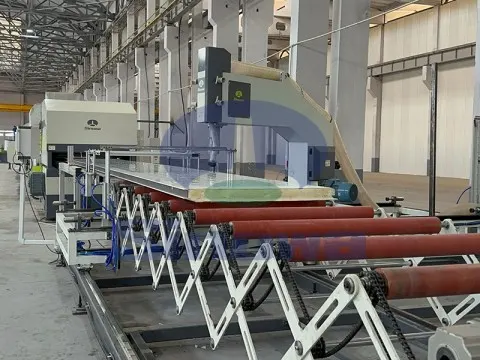
The finished product conveying and stacking system is responsible for the orderly output, temporary storage, and automatic stacking of cut standard panels. The conveying mechanism adopts anti-slip roller transmission, with buffer shock absorption structures installed at the turning and docking positions of the conveying pipeline to avoid collision and scratch damage to the surface of the panels during the conveying process. After the panels are transported to the finished product area, the mechanical grabbing structure automatically sorts and stacks the panels according to the preset stacking standards. The stacking height and spacing can be adjusted freely, and the stacked finished products are arranged neatly with uniform stress, which is convenient for subsequent packaging, transportation, and warehousing management. Some advanced conveying systems are also equipped with surface detection components, which can conduct real-time scanning detection on the flatness, surface defects, and dimensional errors of the output panels. Once unqualified products are identified, the system will automatically mark and isolate them to prevent defective products from entering the finished product storage area and ensure the overall quality consistency of delivered products.
The intelligent centralized control system is the brain of the entire sandwich panel machine, undertaking the functions of parameter setting, operation monitoring, fault diagnosis, and data statistics. The system adopts a modular programmable control structure, with a human-computer interaction touch screen installed on the external operation platform. Workers can complete the setting of production parameters such as feeding speed, glue coating amount, hot pressing temperature, cutting size, and maintenance time through a simple touch operation. A large number of high-precision sensors are distributed in each functional unit of the production line, which collect real-time data including equipment operating temperature, transmission speed, pressure value, and material consumption, and feed the data back to the control terminal in real time. The system analyzes the operating status of the equipment through data calculation. When abnormal parameters such as excessive temperature, blocked material transmission, and insufficient glue supply occur, the control terminal will automatically trigger an alarm prompt and perform emergency shutdown protection for faulty components to avoid equipment damage caused by abnormal operation. In addition, the control system has an automatic data storage function, which can record the production volume, material consumption, and equipment operating time of each production batch, providing accurate data support for production management, cost accounting, and equipment maintenance planning.
In terms of mechanical performance optimization, modern sandwich panel making machine focus on energy conservation, environmental protection, and operational stability, and have made a large number of optimized improvements in structural design and power configuration. In terms of energy consumption control, the equipment adopts frequency conversion power regulation technology. The motor power can be automatically adjusted according to the production load, avoiding the energy waste caused by the long-term high-power operation of the motor under no-load and low-load conditions. The hot pressing and heating system adopts circulating heat conduction design, which reduces heat loss during the heating process and improves the utilization rate of thermal energy. In terms of environmental protection optimization, the equipment is equipped with sealed dust collection and gas purification structures. The dust generated during core material cutting and trimming is collected through negative pressure airflow, and the volatile organic gas generated during adhesive curing is filtered and purified to reduce harmful substance emissions. The internal lubrication system of the transmission components adopts closed oil storage design, which prevents lubricating oil leakage from polluting raw materials and the production environment. These environmentally friendly optimization measures not only meet the sustainable production requirements of the modern manufacturing industry but also improve the safety and cleanliness of the production workshop.
Different types of sandwich panel manufacturing machines have obvious pertinence in structural design and functional configuration to adapt to the production requirements of different types of composite panels. Metal surface sandwich panel production lines are optimized for metal plate processing characteristics, with enhanced tensile resistance and anti-deformation capabilities of the feeding structure, and the hot pressing system is matched with high-temperature-resistant anti-corrosion pressing plates to adapt to the high-temperature compounding process of metal materials. For inorganic fireproof sandwich panels with rock wool as the core material, the equipment is equipped with a special fiber compaction and shaping structure, which can compress loose rock wool fibers into a uniform and dense integral structure to avoid fiber displacement and delamination during use. For lightweight foam insulation panels, the production line optimizes the pressure control system to reduce the extrusion force during hot pressing, preventing the porous foam core material from being crushed and deformed. This targeted differentiated design enables the same production line to adapt to multiple material combinations after simple parameter adjustment, greatly expanding the application scope of the equipment and reducing the equipment replacement cost for production enterprises.
Daily maintenance and standardized operation are crucial to maintaining the long-term stable operation of sandwich panel manufacturing machines. In terms of daily inspection, operators need to regularly check the tightness of connecting bolts of mechanical components, the flexibility of transmission rollers, and the residual amount of lubricating oil in the transmission structure every day. The adhesive circulation pipeline should be cleaned regularly to prevent adhesive solidification from blocking the pipeline and affecting the glue coating effect. The sensor components distributed in various positions need to be dedusted and calibrated regularly to ensure the accuracy of monitoring data. In terms of regular maintenance, the wearing parts such as cutting blades and pressing rollers should be inspected for wear degree periodically, and severely worn parts should be replaced in a timely manner to avoid affecting product processing accuracy. The hydraulic power system needs to replace hydraulic oil regularly and clean internal filter elements to prevent impurity accumulation from causing pipeline blockage and power attenuation. The electrical control box should keep the internal circuit dry and dust-free to avoid circuit short circuit and component aging caused by moisture and dust accumulation. Scientific maintenance management can effectively reduce the failure rate of the equipment, prolong the service life of mechanical components, and ensure the continuity and stability of production work.
In the industrial application field, sandwich panels produced by automated manufacturing machines cover multiple downstream industries such as industrial factory buildings, cold storage engineering, clean workshops, temporary construction facilities, and agricultural breeding buildings. In industrial factory construction, metal surface sandwich panels are widely used for factory wall enclosures and roof structures due to their lightweight, high strength, and weather resistance, which can shorten the construction cycle and reduce the load-bearing pressure of building structures. In cold storage construction, low-thermal-conductivity core material panels produced by professional production lines are adopted to build thermal insulation spaces, effectively reducing the internal and external heat exchange rate and lowering the energy consumption of refrigeration equipment. In clean workshop engineering, the smooth and seamless panels processed by precision cutting and edge sealing technology meet the dust-free and antibacterial requirements of pharmaceutical, electronic, and food processing production environments. The standardized production characteristics of sandwich panel manufacturing machines ensure that panels supplied to different industries have stable performance indicators, realizing the standardized application of composite building materials in diversified engineering scenarios.
From the perspective of industrial development trends, sandwich panel production machine is evolving towards higher automation intelligence, broader material compatibility, lower energy consumption, and higher production integration. With the continuous progress of sensor technology and industrial internet technology, the new generation of production equipment will realize remote monitoring and unattended operation. Production personnel can view the equipment operating status and production data in real time through remote terminals, and complete parameter adjustment and fault processing operations. In terms of material adaptation, future equipment will further expand the range of applicable raw materials, realizing the integrated production of new environmentally friendly composite materials such as biodegradable core materials and recycled metal plates. In terms of energy saving and consumption reduction, the equipment will adopt more efficient heat recovery systems and power feedback structures to minimize energy loss in the production process. In addition, the integrated compact structural design will become an important development direction, reducing the floor space of the production line and lowering the construction cost of production workshops for small and medium-sized production enterprises.
In conclusion, the sandwich panel manufacturing machine, as the core production equipment in the composite building material industry, integrates multiple advanced mechanical processing technologies and automatic control technologies. Its complete production flow covers raw material feeding, surface pretreatment, adhesive coating, hot pressing compounding, constant temperature curing, precise cutting, and finished product stacking. Each functional subsystem is closely connected and coordinated to realize efficient and standardized batch production of sandwich panels. With the advantages of stable mechanical performance, flexible production adjustment, convenient maintenance, and environmental friendly processing, this type of equipment provides reliable technical support for the iterative upgrading and large-scale application of sandwich panel products. Driven by the continuous innovation of industrial manufacturing technology, sandwich panel manufacturing machines will continue to optimize structural performance, expand production functions, and adapt to the increasingly diverse market demand for composite building materials. It will further promote the high-quality development of the construction material industry and create greater economic and social value for modern engineering construction and industrial manufacturing fields.
Sinowa is a professional manufacturer of sandwich panel machine in china, we provide diversified and high-performance sandwich panel production lines, including fully automatic continuous PU sandwich panel line and customized special lines to meet mass production and personalized order demands. These sandwich panel lines support processing multiple foam core materials, such as PU, PIR, mineral wool, rock wool and glass wool, covering different insulation and fireproof standards.
Featuring stable operation, high efficiency, energy saving and easy maintenance, our PU sandwich panel line deliver sandwich panels with excellent thermal insulation, fire resistance, sound insulation and lightweight durability. The finished panels are widely applied in industrial workshops, warehouse roofing and wall cladding, cold storage insulation, serving global construction and industrial insulation markets.
https://www.cnsinowa.com/sandwich-panel-machines/sandwich-panel-manufacturing-machine.html