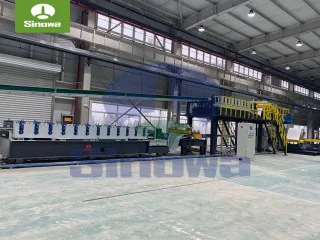
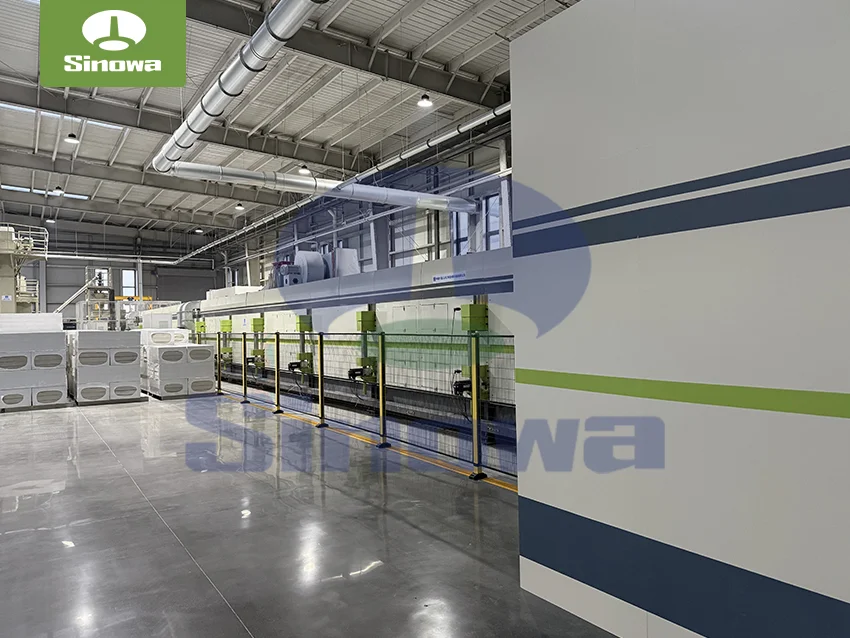
 sandwich panel machine
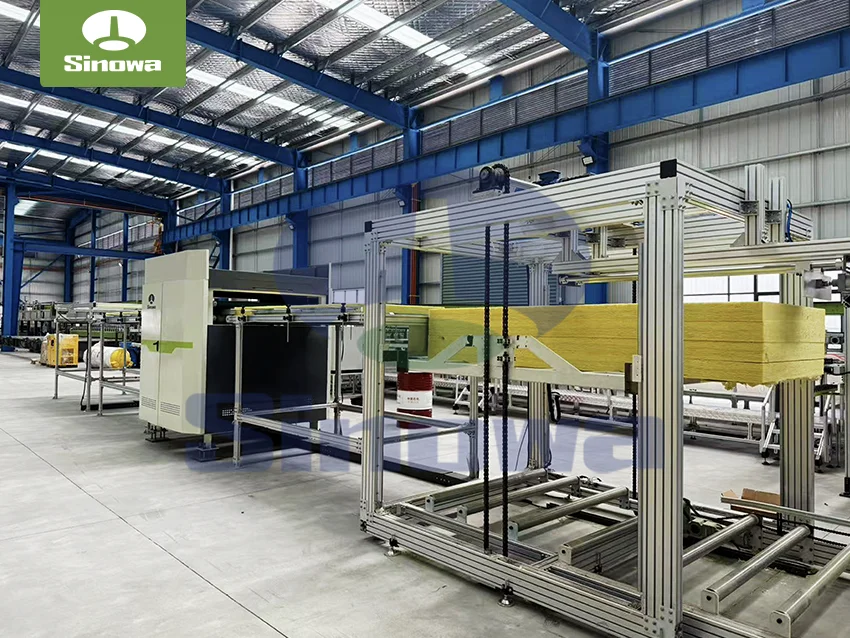
The internal structural composition of a foam sandwich panel machine follows a systematic and modular design concept, with each functional module cooperating closely to complete the entire production cycle. The raw material feeding and pretreatment module serves as the initial functional unit, responsible for the orderly delivery and surface treatment of upper and lower surface plates as well as foam raw materials. Surface plate raw materials are usually stored in roll-shaped structures, and the automatic unwinding device inside the module can release plate materials at a constant speed. Meanwhile, the surface leveling and dedusting components eliminate surface impurities and tiny protrusions, ensuring the flatness of the joint interface between the surface plate and the foam core layer. For foam raw materials, this module realizes accurate metering and preliminary mixing of different raw materials, controlling the proportion of various chemical components to stabilize the foaming density and viscosity of the subsequent foam materials. The precision of raw material metering directly affects the physical performance of finished panels, so this module is equipped with sensitive flow control components to avoid raw material waste and performance deviation caused by proportion imbalance.
Following the pretreatment unit is the core foaming and composite molding module, which determines the bonding quality and internal structural stability of sandwich panels. After being evenly mixed, the foam raw materials are transported to the movable pouring device, which moves back and forth at a constant speed to uniformly cover the surface of the lower flat plate. In the foaming reaction stage, the internal temperature of the sealed molding space is kept within a stable range to promote the full chemical reaction of foam materials, forming fine and uniform closed-cell structures. During the gradual foaming and expansion of the foam substrate, the upper surface plate is slowly covered and pressed by the mechanical pressing structure, realizing seamless bonding between the foam core layer and the double-sided surface plates. The horizontal composite molding method adopted by most mainstream machines can maintain the flat state of plates throughout the compounding process, effectively preventing lateral deviation and surface wrinkling. The internal pressure balancing device of the molding module can fine-tune the pressing force in real time according to the foaming expansion rate, ensuring that the bonding strength between layers reaches a stable level without damaging the surface texture of the plates.
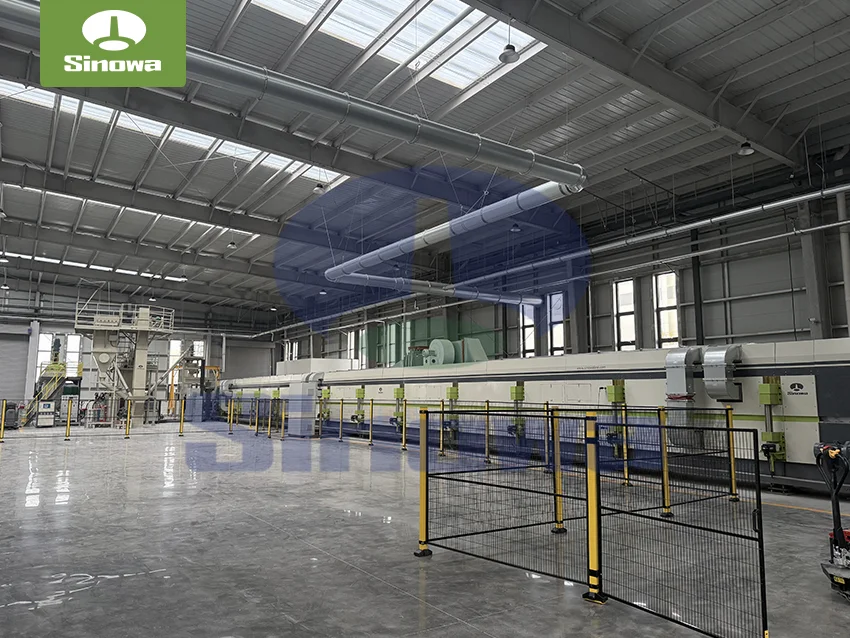
The constant-temperature curing and shaping module acts as a key link to solidify the structural performance of composite panels. After preliminary compounding, the semi-finished panels are transported to the internal closed heating channel of the curing module, where a circulating hot air system maintains a consistent internal temperature environment. This sustained temperature condition accelerates the complete curing reaction of the foam core material and the adhesive between layers, enhancing the overall compactness and tensile resistance of the panels. Different foam substrates correspond to matched curing temperature ranges and retention times; moderate high-temperature treatment can eliminate residual chemical activity inside the foam, reducing the probability of performance aging during later use. Moreover, the curing module is equipped with a slow cooling structure, which gradually reduces the surface temperature of the panels to room temperature after high-temperature curing. This gradual temperature change mode avoids structural cracks and internal stress concentration caused by rapid temperature difference, effectively improving the dimensional stability of finished panels in complex temperature environments.
The precision cutting and post-processing module undertakes the final shaping work of finished panels, realizing the conversion of continuously produced long plates into products with customizable dimensions. Driven by high-precision servo power components, the cutting system can complete transverse fixed-length cutting and longitudinal edge trimming according to preset dimensional parameters. The cutting tool adopts wear-resistant structural materials, maintaining smooth cutting sections without burrs or material delamination. Before cutting, the intelligent sensing component detects the running speed and surface flatness of the plates in real time, automatically adjusting the cutting rhythm to adapt to the continuous production pace. After cutting, the edge trimming mechanism polishes the plate edges to eliminate sharp corners and uneven sections, optimizing the appearance quality of finished products. Some advanced production lines are also equipped with simple surface protection mechanisms, which can attach thin protective films to the plate surfaces to prevent scratch damage during subsequent transportation and stacking.
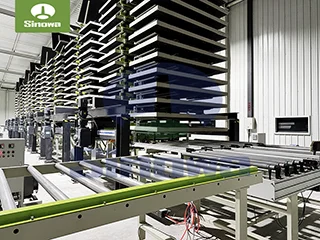
The auxiliary transmission and intelligent control system runs through all functional modules of the equipment, becoming the central nerve to ensure coordinated operation of the entire production line. The transmission structure adopts a chain-plate combined conveying mode, which has strong load-bearing capacity and friction resistance, capable of stably transporting plates of different thicknesses without sliding deviation. The intelligent control panel integrates parameter setting, data monitoring, and fault warning functions. Operators can adjust production parameters such as feeding speed, foaming temperature, pressing pressure, and cutting size through simple operation instructions. Built-in sensing elements collect real-time operating data of each module, including temperature changes, transmission speed, and raw material consumption. When abnormal parameters such as excessive temperature and blocked material transportation occur, the system will automatically trigger a reminder mechanism and perform mild self-adjustment to reduce equipment failure losses. The simplified human-computer interaction logic lowers the operation threshold, enabling ordinary operators to master production control skills after short-term training.
In terms of mechanical performance characteristics, modern foam sandwich panel production machine exhibit prominent advantages in operational stability and production adaptability. The overall frame of the equipment is made of thickened metal structural materials, which can resist vibration interference during high-speed operation and maintain the overall structural stability of the production line. All moving parts are equipped with lubrication and wear-resistant structures, reducing mechanical friction loss and extending the continuous service life of the equipment. In terms of production adaptability, the modular adjustable structure allows the equipment to produce sandwich panels with different thicknesses and surface materials. By replacing simple accessories and adjusting process parameters, the production line can adapt to foam raw materials of different densities, meeting the diversified product needs of the market. In addition, the equipment is designed with energy-saving optimization logic. The sealed heating structure reduces heat loss, and the variable-frequency power adjustment mode automatically matches energy consumption according to production load, effectively lowering the comprehensive energy consumption in the production process.
The production process guided by foam sandwich panel manufacturing machine has obvious advantages in raw material utilization and environmental protection performance. The closed raw material conveying system avoids volatile leakage of chemical raw materials during the production process, reducing the emission of harmful substances. The precise metering control technology minimizes redundant raw material consumption, and the residual edge materials generated during cutting can be recycled and reused after centralized collection, realizing efficient utilization of resources. The entire production process is carried out in a sealed pipeline and equipment space, with low noise vibration and no excessive dust pollution, which conforms to the environmental protection standards of modern industrial production. Compared with the intermittent production mode of traditional single machines, the continuous production mode of integrated production lines shortens the production cycle, reduces manual contact links, and not only improves production efficiency but also optimizes the on-site production environment.
The finished foam sandwich panels produced by professional manufacturing machines possess excellent comprehensive physical properties, benefiting from the precise process control of the equipment. The uniformly foamed internal structure endows the panels with outstanding heat insulation and sound insulation performance, which can effectively block external temperature conduction and noise transmission. The double-sided flat plates and foam core layer form an integrated composite structure, with good compression resistance and bending resistance, capable of resisting external mechanical impact and structural deformation. Meanwhile, the low-density foam material reduces the overall weight of the panels, making transportation, handling, and on-site installation more convenient. These performance advantages make foam sandwich panels widely used in the enclosure structures of industrial plants, the thermal insulation layers of cold storage warehouses, the temporary wall panels of mobile buildings, and the decorative insulation layers of civil buildings. The stable product consistency brought by mechanical standardized production ensures that different batches of panels maintain consistent performance indicators, which is conducive to large-scale engineering construction and standardized application.
With the continuous development of the building material industry and the acceleration of industrial upgrading, the technological evolution direction of foam sandwich panel making machine has become increasingly clear. Intelligent upgrading will remain the core development trend, and more advanced sensing and data analysis technologies will be applied to production lines to realize automatic identification of raw material states, real-time optimization of process parameters, and intelligent early warning of equipment aging. In terms of structural optimization, the equipment will develop towards compact integration, simplifying the pipeline layout between modules, reducing the occupied space of the production line, and improving the flexibility of factory layout. In addition, the equipment will strengthen the adaptation to new environmental protection raw materials, continuously optimizing the foaming and compounding process for low-carbon and pollution-free foam materials, so as to meet the increasingly stringent industrial environmental protection requirements. The continuous technological iteration of manufacturing machines will further expand the application boundary of foam sandwich panels and inject sustained power into the high-quality development of the building material manufacturing industry.
In the context of the booming global construction industry and the growing demand for energy-saving building materials, foam sandwich panel manufacturing machines occupy an important strategic position in the industrial chain. As a bridge connecting raw material processing and finished panel production, this type of mechanical equipment not only improves the industrial production efficiency of composite panels but also standardizes product quality, promoting the standardized and large-scale development of the foam sandwich panel industry. In the future, with the continuous breakthrough of mechanical manufacturing technology and the upgrading of market demand, foam sandwich panel manufacturing machines will keep optimizing in structural performance, intelligent level, and environmental protection capacity, providing more reliable technical support for the production of high-performance building insulation materials. The continuous maturity and popularization of such equipment will also further reduce the production cost of energy-saving panels, making lightweight and high-efficiency composite building materials more widely applied in various construction scenarios, and contributing to the sustainable development of the global construction industry.
https://www.cnsinowa.com/sandwich-panel-machines/foam-sandwich-panel-manufacturing-machine.html