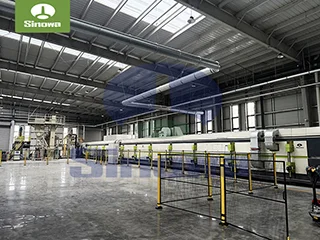
 sandwich panel machine
Raw material mixing and infusion
Raw material preparation: The production of pu sandwich panels requires the use of polyurethane raw material as the core material, and the upper and lower layer surface materials can be selected from color steel plates, cement cloth, aluminum foil, non-woven fabrics, and other materials.
Mixing and infusion: The polyurethane raw material is fed into the mixing head in a certain proportion through the metering pump of the infusion machine for mixing. After mixing evenly, pour it evenly onto the bottom surface material of the sandwich panel using a pouring machine.
Foam curing
Foaming process: After pouring, the polyurethane solution begins to foam on the bottom surface material. During this process, the temperature control system and reliable foaming process of the foaming machine ensure that the foam of the board is uniform, dense, and firmly adhered to the bottom surface material.
Laminated curing: At the same time, the upper surface material is covered with foamed polyurethane and transported together to the laminating machine. Polyurethane continues to foam and solidify between the upper and lower chain plates of the laminating machine. The chain plate of the laminating machine is refined from high-quality aluminum alloy, and the speed is variable frequency and infinitely adjustable, ensuring the uniform solidification of the plate.
Subsequent processing
Edge trimming and cutting: The cured sandwich panel is processed on the production line by two edge trimming machines to remove burrs, and then automatically tracked and cut into the required length of product by the cutting machine. Both trimming and cutting processes are equipped with bag vacuum cleaners to remove debris generated.
Packaging and Stacking: Finally, the cut polyurethane sandwich panels are transported through a fast conveyor roller, automatic flipping, palletizing, and packaging system to complete the product packaging and stacking. This process ensures that the product is undamaged during production and transportation.
Automated control system
The pu sandwich panel machine is equipped with advanced automation control systems, such as PLC human-machine control. These systems make it easy to adjust the parameters of the entire production line, effectively ensuring stable and efficient operation of the production line. Meanwhile, the user-friendly interface facilitates monitoring and operation by operators.
The production and manufacturing of polyurethane sandwich panels rely entirely on the coordinated operation of professional PU sandwich panel machine systems, which integrate mechanical transmission, fluid chemical reaction, constant temperature curing, precise forming and automatic cutting technologies into one continuous and uninterrupted production workflow. The core working principle of this type of equipment lies in realizing the perfect compound integration between metal surface materials and polyurethane foam core materials through mechanical automatic control and precise process parameter adjustment, completing the whole process from raw material input to finished panel output in a closed and stable production line, and finally forming composite building materials with excellent thermal insulation, structural strength and overall integrity. Unlike intermittent production equipment that relies on manual auxiliary operation and segmented processing, the mainstream PU sandwich panel production equipment adopts a fully continuous linear operation mode, and all functional units are closely linked and synchronized in operation rhythm, ensuring that every production link from surface material processing to core material foaming and final panel shaping is carried out under stable and controllable conditions, avoiding quality fluctuations caused by discontinuous production and human operation errors, and adapting to the large-scale and standardized production needs of building insulation and enclosure structure panels.
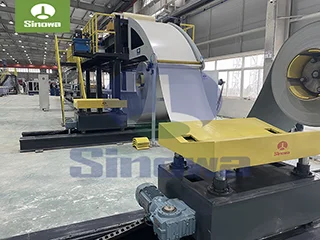
The entire working operation of the PU sandwich panel machine starts from the raw material feeding and preliminary processing stage of the upper and lower surface base materials. The surface materials used for producing sandwich panels are usually coiled metal substrates with uniform thickness and smooth surface texture, which are placed on the automatic uncoiling device of the equipment in advance before production starts. The uncoiling part is the initial power input unit of the entire production line, and its basic working function is to steadily release the coiled surface materials at a constant linear speed according to the production rhythm of the subsequent process, avoiding material stretching, wrinkling, deviation and other problems in the feeding process. Inside the uncoiling device, there is a matched tension adjusting structure, which can dynamically balance the tension of the surface material coil in real time according to the material consumption speed of the subsequent roll forming process. This tension balance adjustment is very critical, because too tight tension will cause irreversible deformation of the thin surface material, and too loose tension will lead to material accumulation and position deviation, affecting the subsequent forming accuracy and composite bonding effect. After the surface material is uncoiled, it first enters the surface cleaning and film covering auxiliary processing link. The equipment is equipped with a special surface trimming and cleaning mechanism, which can remove dust, oil stains and oxide layers attached to the surface of the metal substrate through physical contact and air blowing cleaning, ensuring that the surface of the subsequent composite bonding area is clean and dry, creating favorable basic conditions for the firm bonding between the surface material and the polyurethane foam core layer. In addition, according to the actual use needs of the finished panel, the equipment can complete the automatic laying and trimming of the protective film on the surface of the surface material in this link, cutting off the excess edge materials on both sides of the surface material through the edge slitting structure, making the width of the upper and lower surface materials completely consistent, and avoiding the phenomenon of core material exposure or edge irregularity after subsequent composite forming.
After the completion of preliminary trimming and cleaning, the upper and lower surface materials are respectively sent to the roll forming system of the equipment, which is one of the core mechanical forming units of the PU sandwich panel machine and undertakes the important task of pressing the flat metal sheet into the required structural profile shape. The roll forming system is composed of multiple groups of precision arranged forming roller sets, and each group of rollers is processed with precise profile grooves according to the design size of the sandwich panel. The working principle of roll forming is to rely on the gradual extrusion and bending of multiple roller pairs to carry out continuous cold bending processing on the moving metal sheet, so that the flat surface material is gradually deformed into the required corrugated or flat structural shape step by step, without damaging the structural performance and surface flatness of the metal substrate during the forming process. All forming rollers are installed on a stable mechanical base, and the spacing and gap between the rollers are precisely adjusted in advance to ensure that each forming deformation of the surface material is uniform and the deformation degree is moderate, avoiding plate cracking, surface indentation and dimensional deviation caused by one-time excessive deformation. In the working process, the forming rollers are driven by a synchronous transmission motor to rotate at a constant speed, driving the surface material to move forward synchronously with the production line speed, realizing continuous and uninterrupted profile forming. After roll forming, the upper and lower surface materials have the basic structural shape of the sandwich panel surface, and then enter the preheating treatment link arranged behind the roll forming system. The preheating unit is an essential functional part to ensure the foaming quality and bonding effect of polyurethane core material. The equipment heats the formed upper and lower surface materials to the set constant temperature through circulating hot air or contact heating mode. Appropriate surface temperature can accelerate the chemical reaction speed of polyurethane raw materials after spraying, make the foam expand evenly and rapidly, and enhance the adhesive force between the foam core material and the inner surface of the metal surface material, preventing the degumming and separation of the core layer and the surface layer in the later use of the sandwich panel.
Following the preheating process, the production process enters the key core material foaming and spraying injection stage, which is the most critical chemical reaction link in the entire working principle of the PU sandwich panel machine and directly determines the thermal insulation performance, internal compactness and overall bonding quality of the finished sandwich panel. The polyurethane foam used as the core layer is formed by the chemical reaction and foaming expansion of two different liquid chemical raw materials after precise proportioning and full mixing. The equipment is equipped with an independent high-precision raw material metering and mixing system, which stores the two components of polyurethane raw materials in separate sealed storage tanks respectively. Before foaming, the system automatically extracts the two liquid raw materials according to the preset accurate proportion through a high-pressure metering pump, and strictly controls the flow and output of each raw material to ensure that the proportion of the two components meets the chemical reaction requirements of foam forming. Any deviation in the proportion of raw materials will lead to insufficient foaming reaction, uneven foam density, poor solidification effect and other quality problems, so the metering and conveying structure maintains high-precision working state all the time during operation. After metering, the two liquid raw materials are transported to the high-pressure mixing head of the equipment through independent conveying pipelines. The mixing head has a special internal turbulent flow structure, which can make the two liquid materials collide and mix violently in a very short time, realizing uniform fusion at the molecular level without dead angles and uneven mixing areas. Immediately after mixing, the liquid mixed polyurethane material is continuously and evenly sprayed and injected between the moving upper and lower preheated surface materials through the spraying port of the mixing head. The spraying position and spraying amount are automatically adjusted according to the moving speed of the production line and the required core layer thickness of the sandwich panel, ensuring that the mixed liquid material is fully covered between the two surface materials without local accumulation or missing spraying.
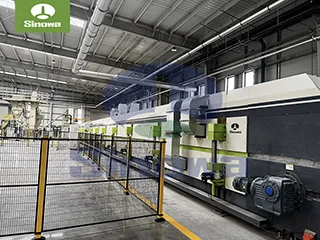
After the polyurethane mixed liquid is injected between the upper and lower surface materials, the semi-finished panel immediately enters the double-belt laminating and composite pressing curing system, which is the core equipment unit for realizing the composite forming and foam curing of the sandwich panel. The double-belt laminating machine consists of upper and lower circulating conveyor belts and a constant pressure and constant temperature cavity structure. The upper and lower formed surface materials with polyurethane liquid core material in the middle move forward synchronously with the circulating conveyor belt at a constant speed after entering the laminating machine. The conveyor belt maintains uniform and stable pressure on the upper and lower surfaces of the semi-finished panel under the action of the internal pressure adjusting device of the equipment. This stable pressing force can limit the free expansion range of the polyurethane foam in the thickness direction, accurately control the overall thickness of the final sandwich panel, and make the foam closely contact with the inner surface of the upper and lower surface materials in the expansion process. At the same time, the inside of the laminating machine is maintained at a constant curing temperature suitable for polyurethane foam reaction through a constant temperature circulation system. Under the dual action of constant pressure and constant temperature, the mixed polyurethane liquid undergoes rapid chemical foaming reaction, gradually expands, fills the entire gap between the two surface materials, and then gradually solidifies and cures to form a continuous and compact foam core layer. In this process, the foam not only forms a solid thermal insulation structure inside, but also produces strong adhesive force with the inner surface of the metal surface material, integrating the surface layer and the core layer into an inseparable whole composite structure. The running speed of the double-belt conveyor matches the foaming and curing reaction speed of polyurethane, ensuring that the foam completes all expansion, bonding and solidification reactions during the forward movement of the panel in the laminating machine, and the overall structure of the panel is stable and firm when exiting the laminating machine without deformation or core layer looseness.
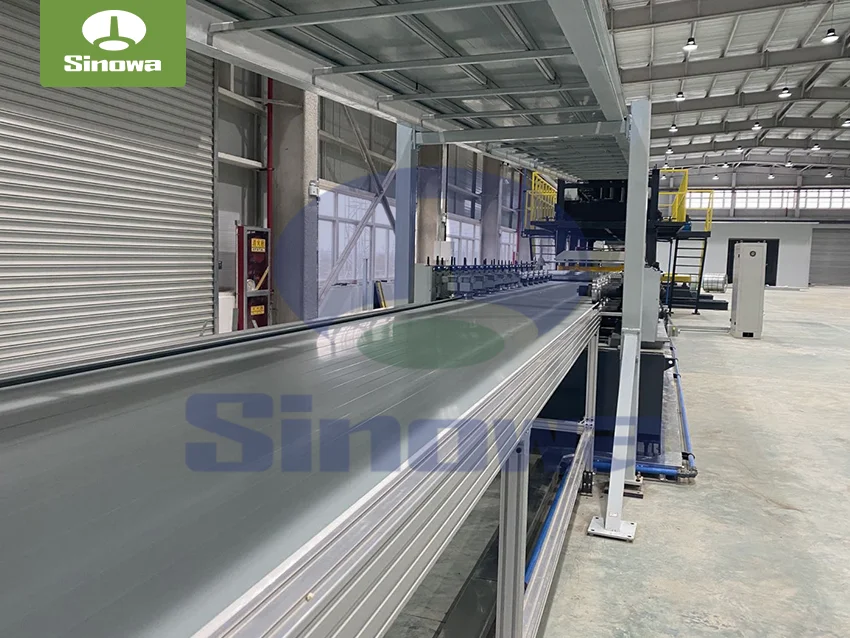
After completing composite pressing and primary curing in the laminating system, the initially formed PU sandwich panel is sent to the subsequent natural cooling and shaping area of the equipment. Although the polyurethane foam has completed the main chemical curing reaction in the laminating machine, the overall temperature of the panel is still relatively high after exiting the constant temperature cavity, and the internal structural stress has not been completely released. The cooling and shaping link relies on natural air circulation and slow heat dissipation to gradually reduce the surface and internal temperature of the panel to room temperature, allowing the internal molecular structure of the foam to be further stabilized and the bonding stress between the core layer and the surface layer to be fully released. This slow cooling process can effectively avoid panel bending, warping, surface unevenness and other deformation problems caused by rapid temperature change and stress concentration, and further improve the overall structural stability and flatness of the finished panel. The equipment is equipped with a continuous conveying roller table in the cooling area, which keeps the panel moving forward at a low and stable speed, ensuring that each position of the panel is evenly cooled without local temperature difference, and maintaining the consistent structural performance of the entire panel along the length direction.
After cooling and shaping, the continuous long-strip sandwich panel enters the automatic fixed-length cutting and edge finishing process of the equipment. The cutting unit adopts a high-speed precision cutting structure, which can automatically sense and position according to the preset length parameters of the finished panel. When the panel moves to the set cutting position, the equipment automatically completes the fixed-length cutting action in a short time, and the cutting blade maintains vertical and stable cutting movement to ensure that the cutting end face of the panel is flat and smooth without burrs, cracks and core material shedding. After cutting, the equipment completes the fine trimming and edge deburring treatment of the four sides of the single finished panel, trimming the uneven parts of the edges generated in the previous forming and composite processes, making the overall size and edge profile of each panel meet the unified production standards. After the completion of cutting and finishing, the qualified finished PU sandwich panel is transported to the automatic stacking area through the output conveyor table of the equipment. The stacking mechanism automatically arranges and stacks the finished panels neatly according to the set stacking sequence and quantity, realizing automatic collection and arrangement of finished products, reducing manual handling operations, and maintaining the neatness and integrity of the finished panels after production.
The entire operation process of the PU sandwich panel machine is uniformly scheduled and controlled by the central integrated control system, which is the brain core of the entire equipment operation and ensures the synchronous coordination and parameter stability of all functional units. The control system collects the operating speed, temperature, pressure, raw material flow and other real-time data of each link through multiple sensing components installed on each part of the equipment, and automatically adjusts the operating parameters of each unit according to the preset production process parameters. Once abnormal fluctuations such as uneven feeding, abnormal temperature, unstable raw material proportioning and inconsistent running speed occur in any production link, the control system will automatically fine-tune the relevant working parameters in real time, and even issue early warning prompts and protective shutdown actions when serious abnormalities occur, avoiding equipment failure and large-scale quality defects of products. The coordinated operation of mechanical transmission structure, chemical foaming system, constant temperature pressure maintaining system and automatic control system constitutes the complete working principle of the PU sandwich panel machine. Through the organic connection of each production stage from raw material pretreatment, roll forming, preheating, foaming spraying, composite pressing and curing to cooling shaping, fixed-length cutting and automatic stacking, the equipment efficiently and continuously produces high-performance polyurethane sandwich panels with stable quality, uniform structure and excellent comprehensive performance, meeting the widespread application needs of modern building thermal insulation, enclosure engineering, cold storage construction and other fields.
https://www.cnsinowa.com/sandwich-panel-machines/working-principle-of-pu-sandwich-panel-machine.html