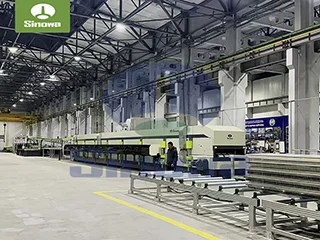
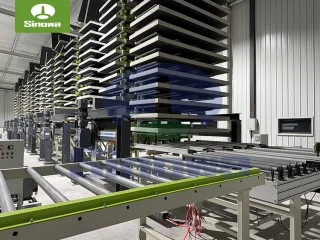
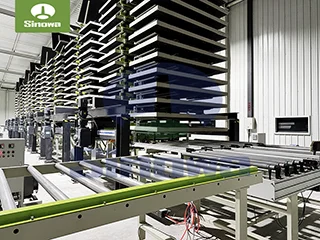
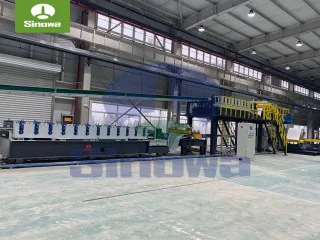
sandwich panel line
The foundation of a high-quality PU foam production line lies in the precise control of chemical reactions and mechanical processes, as PU foam is synthesized through the polymerization of polyol and isocyanate, the two core raw materials, along with additives such as catalysts, foaming agents, and stabilizers. Chinese factories have invested heavily in optimizing the entire production chain, from raw material selection to finished product testing, to ensure consistency and reliability. Raw material management is a critical first step; factories source high-purity polyols and isocyanates, and work closely with chemical suppliers to optimize formulations for different foam types—whether flexible, rigid, molded, or spray foam. This collaboration ensures that the raw materials are compatible with the production line equipment, reducing defects and improving the overall quality of the final product. Unlike early production methods that relied on manual material handling, modern Chinese factories use automated storage and feeding systems to maintain precise control over material ratios, as even minor deviations can affect foam density, cell structure, and mechanical properties.
The production process of PU foam in Chinese factories is a seamless integration of chemical engineering and mechanical precision, divided into several key stages that are optimized for efficiency and consistency. The first stage is material pre-treatment, where raw materials are heated to a specific temperature—usually between 22 to 25 degrees Celsius—to ensure optimal fluidity and reaction efficiency. Catalysts, foam stabilizers, and other additives are mixed in precise proportions using high-speed agitators, with mixing speeds adjusted based on the desired foam density; higher density foams typically require faster agitation to ensure uniform dispersion of components. This pre-mixed solution is then transferred to metering pumps, which are crucial for maintaining the correct ratio of polyol and isocyanate, as precise metering directly impacts the foam’s structural integrity and performance. Modern metering pumps in Chinese factories feature computerized control systems that monitor and adjust flow rates in real-time, minimizing waste and ensuring batch-to-batch consistency.
The mixing and foaming stage is the heart of the production process, where advanced mixing heads facilitate the reaction between polyol and isocyanate. Chinese factories widely use impingement mixing technology, where streams of the two raw materials collide at high velocity, ensuring thorough blending without premature reactions. This immediate and uniform mixing triggers a series of chemical reactions: gelation, where the mixture forms a solid structure, and foaming, where carbon dioxide is released to create the foam’s cellular structure. The foaming process is carefully controlled by adjusting temperature, pressure, and catalyst levels, with different parameters used for flexible and rigid foams. Flexible foams, used in furniture and automotive seating, require a high open-cell structure to ensure softness and breathability, while rigid foams, used for insulation, need a closed-cell structure to maximize thermal efficiency and structural strength. After foaming, the material is conveyed to a curing area, where it is left to solidify completely—typically 3 to 6 hours at room temperature, or shorter if heated—to achieve its final mechanical properties.
Post-curing processing is another essential step in ensuring the quality and versatility of PU foam products. Chinese factories use automated cutting machines to trim the foam into precise sizes and shapes, with advanced cutting systems capable of handling large batches efficiently. For specialized applications, additional processes such as lamination, coating, or shaping may be applied to enhance the foam’s performance—for example, adding a protective coating to improve water resistance or laminating with fabric for furniture upholstery. Quality control is integrated throughout the post-processing stage, with inspections for defects such as uneven density, surface irregularities, or insufficient curing. Factories use specialized equipment to test key properties, including density, compression strength, thermal conductivity, and flame resistance, ensuring that products meet the specific requirements of different industries and markets.
One of the key strengths of Chinese PU foam production line factories is their commitment to technological innovation and automation. Over the years, factories have upgraded their production lines with computerized control systems, robotics, and IoT technology to improve efficiency, reduce labor costs, and enhance product quality. Automated production lines can operate 24/7, with minimal human intervention, reducing the risk of human error and increasing production capacity. Computerized control systems allow operators to monitor and adjust every stage of the production process remotely, from raw material feeding to finished product testing, and can store hundreds of formulations for quick formula switching—enabling factories to produce multiple foam varieties in a single production run. This flexibility is crucial in meeting the diverse and changing demands of global customers, who often require customized foam solutions for specific applications.
Sustainability has become a key focus for Chinese PU foam production line factories, driven by global environmental regulations and growing demand for eco-friendly materials. Factories are adopting greener production practices, such as using water-based foaming agents instead of traditional chemical foaming agents, which reduce volatile organic compound (VOC) emissions. They are also optimizing energy consumption by improving insulation in production facilities, using energy-efficient motors and heating systems, and recycling waste materials. Waste foam, for example, is crushed and reused as a raw material additive, reducing landfill waste and lowering raw material costs. Additionally, factories are developing eco-friendly PU foam formulations, such as bio-based polyols derived from renewable resources like soybeans or castor oil, which reduce reliance on fossil fuels and minimize the carbon footprint of the production process. These sustainable practices not only help factories comply with global environmental standards but also enhance their competitiveness in the international market, where eco-friendliness is an increasingly important factor for buyers.
The versatility of PU foam means that Chinese factories cater to a wide range of industries, both domestic and international. In the construction industry, rigid PU foam is widely used for thermal insulation in buildings, pipelines, and cold storage facilities, thanks to its excellent heat retention properties that help reduce energy consumption. With the global focus on energy efficiency and “net-zero” carbon goals, demand for construction-grade PU foam is growing, and Chinese factories are well-positioned to meet this demand with high-performance insulation solutions. In the automotive industry, PU foam is used for seating, headrests, door panels, and battery insulation in electric vehicles—where its lightweight properties help improve fuel efficiency and range, and its cushioning and heat-resistant properties enhance safety and comfort. Chinese factories work closely with automotive manufacturers to develop customized foam solutions that meet the strict safety and performance standards of the industry.
The furniture industry is another major market for PU foam, with flexible foam used in sofas, mattresses, and chairs for its softness, durability, and rebound performance. Chinese factories produce a range of furniture-grade foams, from high-resilience foam for premium seating to slow-rebound foam for ergonomic products. In the packaging industry, PU foam is used as protective packaging for fragile items such as electronics, glassware, and industrial components, as its cushioning properties absorb shock during transportation. Additionally, PU foam finds applications in healthcare, sports equipment, and marine industries, demonstrating its wide-ranging utility.
The growth of China’s PU foam production line factories is also supported by a well-developed supply chain and favorable industrial policies. The country has a large base of chemical suppliers that provide high-quality raw materials, reducing dependence on imports and ensuring stable supply. Industrial clusters dedicated to PU foam production have been established in various regions, facilitating knowledge sharing, technological collaboration, and economies of scale. These clusters bring together factories, raw material suppliers, and equipment manufacturers, creating a comprehensive ecosystem that drives innovation and efficiency. Additionally, government policies supporting advanced manufacturing and green industry have encouraged factories to invest in technology upgrades and sustainable practices, further boosting the sector’s development.
Looking ahead, Chinese PU foam production line factories are poised to continue their growth and innovation, adapting to emerging trends and challenges. The rise of electric vehicles, smart buildings, and sustainable packaging is expected to drive demand for high-performance, eco-friendly PU foam products. Factories will continue to invest in research and development to develop new formulations and production technologies, such as bio-based foams, fire-retardant foams, and foam with enhanced thermal and mechanical properties. Automation and digitalization will remain key focus areas, with factories integrating more advanced IoT and AI technologies to optimize production processes, predict maintenance needs, and improve quality control. Additionally, as global demand for sustainable products grows, Chinese factories will further strengthen their commitment to green production, developing circular economy models that minimize waste and reduce environmental impact.
In conclusion, China’s PU foam production line factories have established themselves as global leaders through their focus on technology, quality, efficiency, and sustainability. These factories have built advanced production systems that can manufacture a wide range of PU foam products tailored to diverse industry needs, supported by a robust supply chain and a culture of innovation. By integrating automation, optimizing production processes, and adopting green practices, Chinese factories are well-equipped to meet the evolving demands of the global market. As the PU foam industry continues to grow, China will remain a key player, driving innovation and shaping the future of this versatile material. Whether for construction, automotive, furniture, or packaging, Chinese PU foam production line factories deliver reliable, high-quality products that play an essential role in powering industries around the world.
https://www.cnsinowa.com/sandwich-panel-machines/pu-foam-production-line-factory-in-china.html