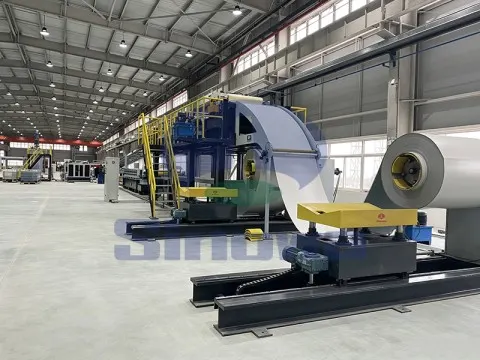
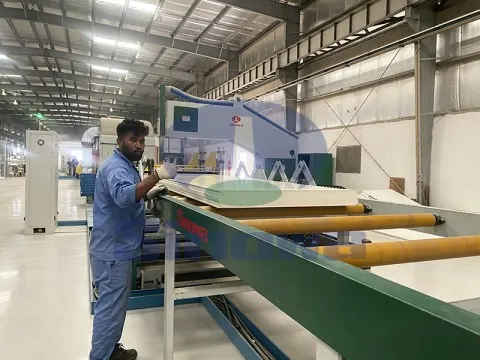
sandwich panel line
A custom-built PU sandwich panel production line is not merely a modified version of a standard line; it is a fully integrated system designed from the ground up to address the distinct requirements of a particular industry. The customization process begins with a comprehensive analysis of the industry’s needs, including the intended application of the panels, the environmental conditions they will be exposed to, performance standards, production volume, and any unique constraints such as space limitations or material compatibility. This initial assessment is critical, as it lays the foundation for every component and process of the production line, ensuring that every element works in harmony to deliver the desired end product.
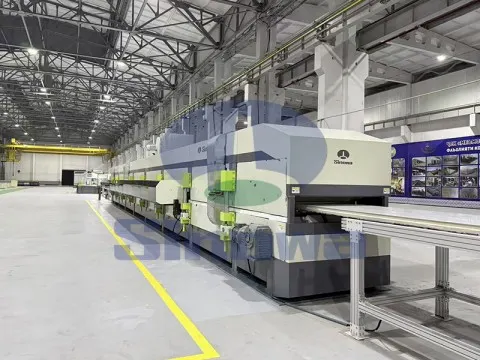
One of the key aspects of customizing a PU sandwich panel line is the adaptation of the core foaming process. PU foam, the heart of the sandwich panel, is known for its excellent thermal insulation and cushioning properties, but its composition and density can be adjusted to meet specific industry requirements. For example, industries operating in extreme temperature environments, such as cold storage or aerospace, require PU foam with enhanced thermal resistance and low thermal conductivity. In such cases, the production line is customized to use specialized raw materials and adjust the foaming parameters—including temperature, pressure, and mixing ratios—to produce foam with the desired density and thermal performance. Conversely, industries that prioritize structural strength, such as construction or automotive manufacturing, may require a higher density foam with improved compressive and tensile strength, which can be achieved by modifying the formulation and foaming process to create a more rigid core.
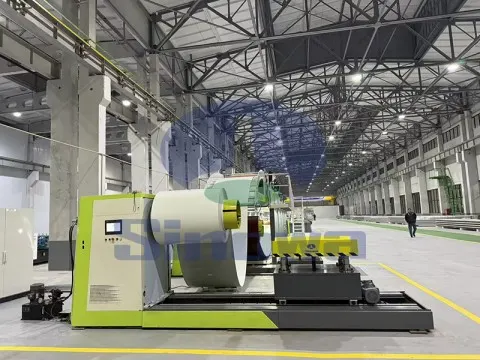
Another critical element of customization is the selection and processing of the facing materials. The facing materials of PU sandwich panels serve as the outer layer, providing protection, structural support, and aesthetic appeal. Different industries require different facing materials based on their specific needs. For instance, the food processing industry demands facing materials that are non-toxic, corrosion-resistant, and easy to clean, such as stainless steel or food-grade aluminum. The production line is therefore customized to handle these materials, incorporating specialized uncoiling, cutting, and surface treatment equipment to ensure the facing materials meet the industry’s hygiene and durability standards. In contrast, the construction industry may prefer facing materials like galvanized steel or fiber-reinforced cement, which offer excellent weather resistance and structural stability, and the production line is adjusted to accommodate the handling and processing of these heavier or more rigid materials.
The modular design of custom-built production lines is another key advantage, allowing for flexibility and scalability to meet changing industry demands. Unlike standard production lines, which are often fixed in their capabilities, custom lines are designed with modular components that can be easily added, removed, or modified as needed. This modularity is particularly beneficial for industries that experience fluctuations in production volume or require periodic updates to their panel specifications. For example, a pharmaceutical manufacturing facility may initially require a small production line to produce panels for cleanrooms, but as the facility expands, additional modules can be integrated to increase production capacity without the need for a complete overhaul of the line. Similarly, if the industry’s performance standards change—such as stricter fire resistance requirements—the production line can be modified to incorporate new processes or equipment, ensuring continued compliance.
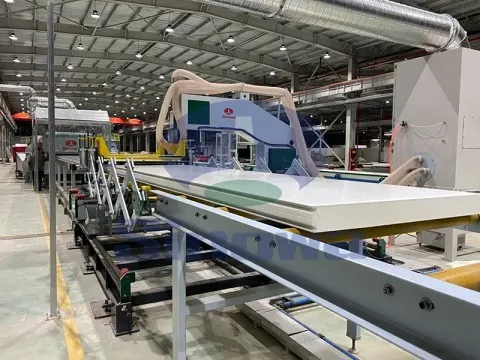
Automation is also a crucial component of custom-built PU sandwich panel production lines, especially for industries that require high precision, consistency, and efficiency. Custom lines can be equipped with advanced automation technologies, including computer numerical control (CNC) systems, robotic arms, and real-time monitoring sensors, to streamline the production process and reduce human error. For example, in the aerospace industry, where even minor deviations in panel dimensions or foam density can compromise performance, automated cutting and foaming systems ensure that every panel meets the exact specifications. Automation also improves production efficiency, reducing cycle times and labor costs, while ensuring consistent quality across all products. Additionally, automated systems can be integrated with data collection and analysis tools, allowing manufacturers to monitor production metrics, identify bottlenecks, and make data-driven adjustments to optimize performance.
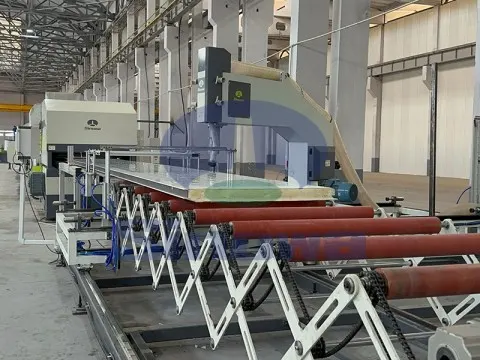
The adaptability of custom-built production lines extends to the handling of specialized panel designs and configurations. Many industries require PU sandwich panels with unique shapes, sizes, or features that standard lines cannot produce. For example, the marine industry often needs curved or irregularly shaped panels to fit the hulls of ships or offshore structures, while the automotive industry may require panels with integrated cutouts or channels for wiring and components. Custom production lines are designed with specialized forming, cutting, and shaping equipment to accommodate these unique designs, ensuring that the panels fit perfectly into their intended applications. This level of customization not only improves the functionality of the panels but also reduces the need for additional processing or modifications after production, saving time and cost.
Industry-specific environmental and safety requirements also drive the customization of PU sandwich panel production lines. Many industries operate under strict environmental regulations, requiring production processes that minimize waste, reduce energy consumption, and limit emissions. Custom lines can be designed to incorporate eco-friendly technologies, such as waste recycling systems, energy-efficient heating and cooling units, and low-emission raw materials, to meet these regulations. For example, the renewable energy industry, which prioritizes sustainability, may require a production line that uses recycled materials for the facing or core, or that captures and reuses excess foam or heat generated during the production process. Similarly, industries with strict safety standards, such as the oil and gas industry, may require production lines that are explosion-proof or designed to handle flammable materials safely, with additional safety features such as fire suppression systems and emergency shutdown mechanisms.
The integration of quality control systems is another essential aspect of custom-built production lines, ensuring that every panel meets the industry’s strict performance and safety standards. Custom lines are equipped with specialized quality control equipment, such as thickness gauges, density meters, and tensile strength testers, to monitor the production process at every stage. Real-time monitoring allows for immediate adjustments if any parameters deviate from the set standards, ensuring that defects are identified and corrected before the final product is completed. Additionally, custom quality control systems can be tailored to the specific requirements of the industry—for example, the pharmaceutical industry may require additional testing for contamination or chemical composition, while the construction industry may focus on testing for weather resistance and structural integrity.
To understand the practical application of custom-built PU sandwich panel production lines, it is helpful to consider specific industry examples. In the cold storage industry, for instance, PU sandwich panels are used to insulate warehouses, refrigerated trucks, and shipping containers, requiring exceptional thermal insulation to maintain low temperatures while minimizing energy consumption. A custom production line for this industry would be designed to produce panels with a high-density PU core that has low thermal conductivity, paired with facing materials that are moisture-resistant and durable. The line would also incorporate specialized foaming processes to ensure uniform foam distribution, eliminating gaps that could compromise insulation performance. Additionally, the line would be automated to produce panels of varying sizes to fit different cold storage structures, with quality control systems that test thermal conductivity and moisture resistance to ensure compliance with industry standards.
Another example is the cleanroom industry, which is critical in sectors such as pharmaceuticals, electronics, and biotechnology. Cleanrooms require PU sandwich panels that are non-porous, easy to clean, and resistant to chemicals and bacteria, to maintain a sterile environment. A custom production line for this industry would use food-grade or medical-grade facing materials, such as stainless steel or specialized plastic, and incorporate surface treatment processes to ensure the panels are smooth and free of crevices where bacteria can accumulate. The foaming process would be adjusted to produce a closed-cell foam that is impermeable to moisture and contaminants, and the production line would be designed to minimize dust and debris during manufacturing, ensuring the panels meet the strict cleanliness standards of cleanrooms.
The automotive industry also benefits significantly from custom-built PU sandwich panel production lines. PU sandwich panels are used in vehicle interiors, exteriors, and structural components, requiring a balance of lightweight properties, structural strength, and crash resistance. A custom line for this industry would be designed to produce panels with a lightweight yet rigid PU core, paired with facing materials that are durable and impact-resistant, such as carbon fiber or high-strength plastic. The line would incorporate specialized forming equipment to create panels with complex shapes that fit the contours of different vehicle models, and automation technologies to ensure precise cutting and assembly. Additionally, the line would be optimized to produce panels in high volumes, meeting the automotive industry’s demand for efficiency and consistency.
The success of a custom-built PU sandwich panel production line depends on close collaboration between the manufacturer and the industry client. The manufacturer must have a deep understanding of the industry’s needs, including its technical requirements, regulatory constraints, and long-term goals. This collaboration begins with a detailed consultation, where the client outlines their specific needs, and the manufacturer develops a customized solution that addresses these needs. Throughout the design and construction process, the manufacturer works closely with the client to make adjustments and ensure that the line meets their expectations. After installation, the manufacturer provides training and support to ensure that the client’s team can operate and maintain the line effectively, maximizing its performance and lifespan.
As industries continue to evolve and demand more specialized materials, the role of custom-built PU sandwich panel production lines will only grow. These lines offer a level of flexibility, precision, and adaptability that standard production lines cannot match, allowing industries to produce panels that are perfectly tailored to their unique needs. Whether it is enhancing thermal insulation for cold storage, ensuring sterility for cleanrooms, or improving structural strength for automotive applications, custom-built lines enable industries to achieve optimal performance and efficiency. Additionally, as technology advances, custom lines will continue to incorporate new innovations, such as advanced automation, eco-friendly processes, and real-time data analytics, further improving their capabilities and value.
In conclusion, custom-built PU sandwich panel production lines are a critical solution for industries with specific needs that cannot be met by standard production lines. By tailoring every aspect of the production process—from foaming and facing materials to automation and quality control—to the unique requirements of the industry, these lines ensure that the resulting PU sandwich panels deliver optimal performance, durability, and efficiency. The customization process, driven by close collaboration between manufacturer and client, ensures that the line is perfectly aligned with the industry’s goals, whether it is meeting regulatory standards, improving product functionality, or increasing production efficiency. As industries continue to innovate and demand more specialized solutions, custom-built PU sandwich panel production lines will remain an essential tool for achieving success in a competitive and ever-changing market.
Sinowa is a professional manufacturer of sandwich panel machine in china, we provide diversified and high-performance sandwich panel production lines, including fully automatic continuous PU sandwich panel line and customized special lines to meet mass production and personalized order demands. These sandwich panel lines support processing multiple foam core materials, such as PU, PIR, mineral wool, rock wool and glass wool, covering different insulation and fireproof standards.
Featuring stable operation, high efficiency, energy saving and easy maintenance, our PU sandwich panel line deliver sandwich panels with excellent thermal insulation, fire resistance, sound insulation and lightweight durability. The finished panels are widely applied in industrial workshops, warehouse roofing and wall cladding, cold storage insulation, serving global construction and industrial insulation markets.
https://www.cnsinowa.com/sandwich-panel-machines/custom-built-pu-sandwich-panel-production-line-for-specific-industry.html