sandwich panel line
The color steel sandwich panel line is a kind of continuous composite molding production equipment specially designed for the manufacturing of color steel sandwich panels. Its core design concept is to realize the automatic combination of color steel metal plates and different core insulation materials through mechanical equipment, and complete a series of processing procedures such as surface molding, adhesive bonding, constant temperature compounding, fixed-size cutting and post-processing in a continuous production line. Compared with the scattered manual processing and semi-automatic single-process processing mode in the early stage, the integrated production line has obvious advantages in production continuity, product consistency and labor cost control. The overall structural design of the production line follows the principles of compact layout, smooth material transmission and convenient operation and maintenance. Each functional unit is closely connected in sequence, and the transmission speed, processing temperature and pressing pressure can be adjusted synchronously according to different production raw materials and product specifications, so as to adapt to the production requirements of diversified sandwich panels. In the actual industrial production scenario, the production line can realize uninterrupted operation for a long time, and the overall production efficiency is significantly improved compared with traditional processing methods, which provides a reliable equipment guarantee for large-scale engineering material supply.
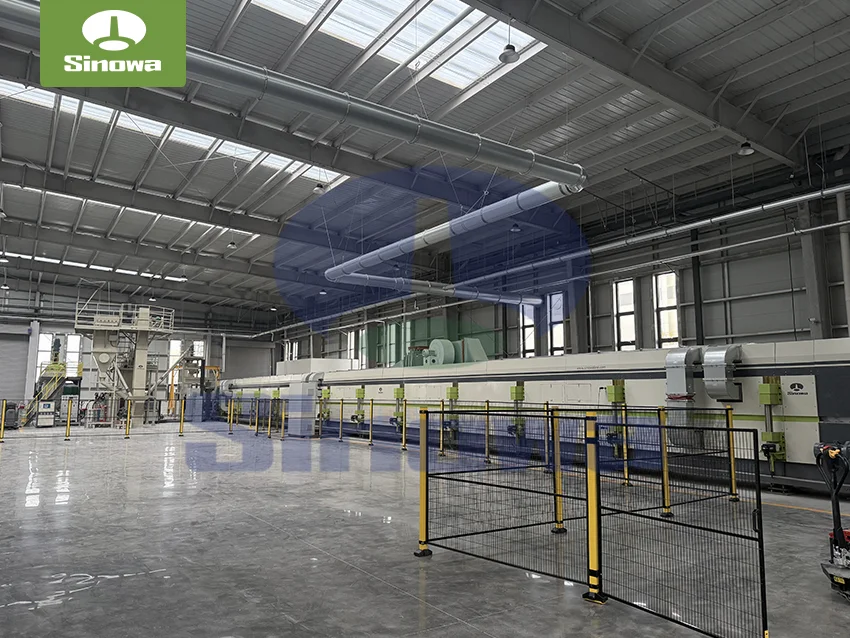
From the perspective of overall structural composition, a complete color steel sandwich panel line is composed of multiple interconnected functional modules, and each module undertakes independent processing tasks while cooperating with other modules to form a closed-loop production system. The main functional modules include raw material unwinding unit, surface pretreatment unit, cold bending forming unit, glue coating unit, core material feeding unit, constant temperature pressing composite unit, leveling shaping unit, fixed-size cutting unit, finished product output and stacking unit. In addition, the production line is equipped with auxiliary systems such as electrical automatic control system, circulating heating system and pneumatic transmission system to ensure the stable operation of each processing link. The layout of all modules follows the linear production logic, and the raw materials move forward along the fixed transmission track, realizing one-time molding without repeated handling, which effectively reduces the material loss and processing time consumption in the production process. Each mechanical component of the production line is made of high-strength wear-resistant metal materials. After precision processing and surface anti-corrosion treatment, it can adapt to long-term high-load industrial production environments and maintain stable mechanical performance for a long time.
The raw material unwinding unit is the starting link of the entire production line, which is mainly responsible for placing and slowly releasing the coiled color steel plates used for the upper and lower surface layers of the sandwich panel. This unit is equipped with a stable unwinding support structure and an automatic tension adjustment device. In the working process, the tension sensor can monitor the tightness of the steel plate in real time, and automatically adjust the unwinding speed according to the transmission speed of the subsequent production line, so as to avoid the problems of steel plate deviation, wrinkling and stretching deformation caused by uneven tension. Most unwinding structures adopt a double-station alternating unwinding design. When one coil of steel plate is about to be consumed, the other standby steel coil can be quickly connected to the production line. The seamless switching of raw materials effectively avoids the production interruption caused by material replacement and ensures the continuity of the production process. In addition, the unwinding unit is equipped with a deviation correction mechanism. By adjusting the horizontal position of the steel coil, it can ensure that the color steel plate always moves along the central track of the production line in the transmission process, laying a foundation for the consistent dimensional accuracy of subsequent molded products.
After being released from the unwinding unit, the color steel plate will enter the surface pretreatment unit. Although the color steel plate has completed surface coating in the early rolling and coating process, there will still be tiny dust, oil stains and oxide residues on the surface during transportation and storage. These impurities will seriously affect the bonding firmness between the steel plate and the intermediate core material. Therefore, surface pretreatment is an essential process to improve the product quality. The pretreatment unit mainly completes two core processes of surface cleaning and surface activation. The cleaning process adopts combined physical cleaning methods such as high-pressure air blowing and soft brush rolling to remove floating dust and particulate impurities on the surface of the steel plate. For the stubborn oil stains attached to the surface, the equipment is equipped with a mild solvent spraying device. The solvent can quickly decompose oil stains without corroding the color coating on the surface of the steel plate. After cleaning, the surface activation process is carried out. The micro-roughness treatment is carried out on the inner side of the color steel plate by mechanical grinding, which increases the contact area between the steel plate and the adhesive, so that the adhesive can be more closely attached to the metal surface. After pretreatment, the surface of the color steel plate is dry, clean and moderately rough, which creates excellent bonding conditions for the subsequent gluing process.
The cold bending forming unit is responsible for processing the flat color steel plate into a specific geometric shape that meets the installation and assembly requirements. This unit adopts multi-group roller pressing structure, and the internal rollers are arranged in an orderly manner according to the gradual deformation principle. Each group of rollers corresponds to a deformation process, and the flat steel plate is gradually bent, pressed and grooved to form edge structures such as plug-in ports and hemming ports. The core advantage of the cold bending forming technology lies in that it completes the plate forming at room temperature without heating the metal plate, which can effectively avoid the deformation and performance attenuation of the color coating caused by high temperature. The roller hole type of the forming roller is precisely calculated and designed. According to the mechanical rebound characteristics of different thicknesses of steel plates, a certain rebound compensation space is reserved in the pressing process to ensure that the dimensional error of the formed plate is controlled within a tiny range. In addition, the surface of the forming roller is polished smoothly and coated with anti-scratch coating, which can prevent the hard metal roller from scratching the color coating on the surface of the steel plate during the extrusion process, so as to maintain the flatness and aesthetic degree of the outer surface of the finished sandwich panel. After cold bending forming, the edge of the color steel plate forms a stable assembly structure, which is convenient for seamless splicing and fixing between plates in the later construction and installation process.
The glue coating unit is the key functional area to realize the composite bonding of color steel plate and core material, and its working parameters directly determine the bonding strength and service life of the sandwich panel. This unit is equipped with an automatic quantitative glue spraying system, which can evenly spray high-viscosity polymer adhesive on the inner surface of the formed color steel plate. The adhesive selected for the production line has excellent weather resistance and bonding activity, which can produce stable bonding reaction with both metal plates and organic or inorganic core materials. The glue spraying system adopts multi-nozzle synchronous spraying design. By adjusting the nozzle aperture, spraying pressure and moving speed, the uniform distribution of adhesive on the plate surface is realized, and the problems of degumming and hollowing caused by uneven glue amount are avoided. Before glue spraying, the equipment will preheat the adhesive to reduce the viscosity of the glue liquid, improve the fluidity and permeability of the adhesive, so that the glue liquid can penetrate into the tiny gaps on the surface of the core material and the steel plate, and form a dense bonding layer after curing. Moreover, the glue coating unit is equipped with a waste glue recovery device, which can collect the excess adhesive flowing down during the spraying process, filter and purify it for secondary use, effectively reducing the waste of raw materials and improving the economic efficiency of production.
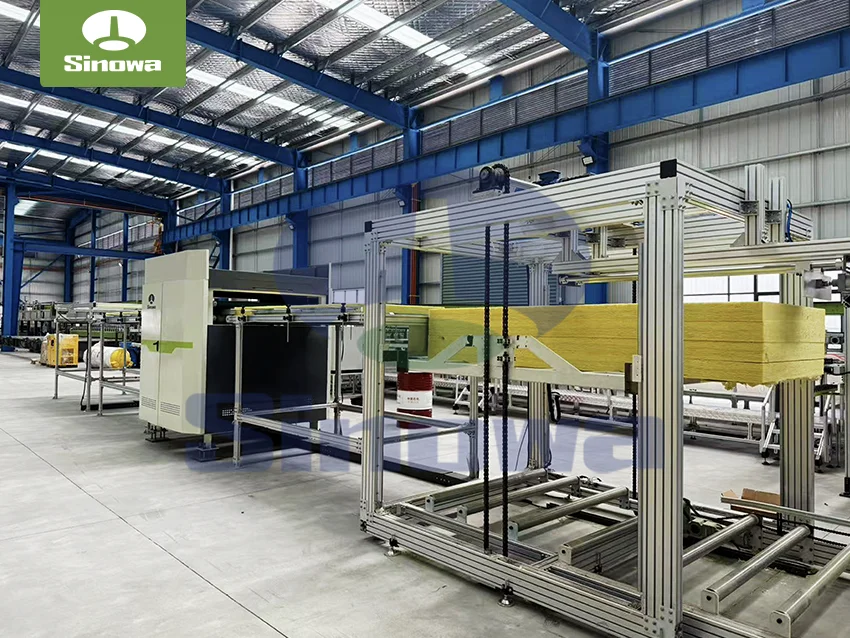
The core material feeding unit is specially used for the automatic conveying and positioning of the intermediate thermal insulation core material. The common core materials processed by the production line include rock wool, polyurethane foam, polystyrene foam and other thermal insulation and sound insulation materials. Different core materials have different physical characteristics. For fibrous rock wool materials, the feeding unit is equipped with a anti-loosening pressing structure to compress the scattered rock wool fibers into a continuous plate structure to avoid fiber scattering and material breakage during transmission. For rigid foam core materials, the unit adopts a flexible clamping and conveying mode to prevent the rigid plates from being squeezed and cracked. The core material feeding speed keeps synchronous linkage with the transmission speed of the upper and lower color steel plates. Through the infrared positioning sensor, the equipment accurately controls the feeding position of the core material, so that the core material is completely aligned with the upper and lower steel plates in the horizontal direction, ensuring that the thickness of the intermediate core layer of each finished plate is uniform and the overall structure is symmetrical. In addition, the feeding unit is equipped with a dust removal device for core materials, which can remove the floating debris generated by cutting and processing the core materials, so as to prevent the debris from mixing into the bonding layer and affecting the bonding quality.
The constant temperature pressing composite unit is the core processing section of the entire production line, which completes the three-in-one composite molding of upper color steel plate, core material and lower color steel plate. This unit adopts a double-crawler pressing structure, and the upper and lower crawlers are equipped with heating modules and pressure sensing components. After the glued steel plate and the positioned core material enter the pressing area together, the crawler clamps the composite plate tightly and applies stable and uniform mechanical pressure. At the same time, the internal heating system raises the ambient temperature of the pressing area to the optimal curing temperature of the adhesive. Under the dual action of constant pressure and constant temperature, the adhesive undergoes rapid chemical cross-linking reaction. The molecular structure is tightly combined to form a high-strength adhesive layer, which firmly bonds the steel plate and the core material into an integrated structure. The pressing pressure and heating temperature can be adjusted intelligently according to the types of core materials and adhesives. For fibrous core materials with large gaps, the pressing pressure is appropriately increased to discharge the internal air and make the structure denser; for foam core materials with low heat resistance, the heating temperature is reduced to avoid thermal deformation of the core material. The length of the pressing crawler is reasonably designed to ensure that the composite plate has enough curing time in the pressing area, so as to prevent the incomplete curing of the adhesive from causing degumming of the finished product.
After the composite pressing is completed, the sandwich panel enters the leveling shaping unit for fine processing. In the high-pressure composite process, the plate may have slight surface unevenness, edge warping and local deviation due to mechanical extrusion. The leveling shaping unit eliminates the internal stress of the plate through multi-group fine pressing rollers. The horizontal pressing rollers smooth the upper and lower surfaces of the composite plate to ensure that the flatness of the plate meets the industrial production standards. The vertical shaping rollers trim the edges of the plate to remove redundant burrs and excess adhesive residues, making the edge of the plate neat and smooth. At the same time, this unit is equipped with a groove processing mechanism. According to the installation requirements of different engineering scenarios, it can cut assembly grooves with specific specifications on the side of the sandwich panel, which is convenient for the later clamping and fixing between plates. All shaping processes are completed in a continuous transmission state, without stopping the machine for processing, which ensures the integrity of the production rhythm and improves the processing precision of the finished product.
The fixed-size cutting unit realizes the precise cutting of the continuous long-strip composite plate according to the preset production specifications. This unit adopts advanced flying shear cutting technology. Different from the traditional static cutting mode, the flying shear mechanism keeps synchronous forward movement with the composite plate during the cutting process. There is no relative displacement between the cutting tool and the plate, which effectively avoids the plate deformation and dimensional error caused by the pulling force during cutting. Before cutting, the high-precision length measuring sensor will monitor the moving distance of the plate in real time. When the plate reaches the preset cutting length, the system automatically sends a cutting instruction, and the hydraulic driving tool completes the vertical cutting action in an instant. The cutting blade is made of high-hardness alloy material. After special sharpening treatment, it can cut the metal steel plate and internal core material at one time. The cutting section is flat and smooth without debris falling off. In addition, the cutting unit is equipped with a dust collection and debris cleaning device, which can collect the cutting residues generated in the cutting process in time to keep the production environment clean and avoid residues from affecting the subsequent transmission of the plate.
The finished product output and stacking unit is the final link of the production line, undertaking the tasks of finished product transmission, temporary storage and automatic stacking. The cut single sandwich panels are transported to the output platform through the low-speed buffer conveyor belt. The buffer design can reduce the vibration of the plate in the transmission process and prevent the surface coating from being scratched by collision. The unit is equipped with an automatic sorting and stacking mechanical arm. According to the production batch and product specifications, the mechanical arm neatly stacks the finished plates on the fixed material rack. The stacking height and spacing can be adjusted intelligently to avoid excessive extrusion causing plate deformation. Before stacking, the staff will conduct simple manual sampling inspection on the finished plates, focusing on observing whether there are defects such as surface scratches, edge cracks and degumming, and eliminating unqualified products in time. After stacking to the preset height, the material rack is transported out of the production area by the handling equipment, and the empty material rack is automatically sent back to the stacking position to complete the cyclic feeding of the material rack. The whole stacking process realizes unmanned automatic operation, which greatly reduces the labor intensity of workers.
In the actual production operation, the stable operation of the color steel sandwich panel line is inseparable from the intelligent electrical control system. The control system takes the programmable logic controller as the core, and connects all functional modules of the production line through the signal transmission circuit to realize the integrated linkage control of the entire production process. The operation interface is simple and intuitive. The staff can set parameters such as transmission speed, pressing pressure, heating temperature and cutting length on the touch screen. The system automatically stores the parameter data of different product specifications, which is convenient for one-click calling in subsequent batch production. In the production process, the system monitors the operating status of each mechanical component in real time through sensors. Once abnormal conditions such as equipment jamming, excessive temperature and material deviation occur, the system will automatically trigger the alarm device and suspend the production operation, and display the fault location and cause on the operation interface, providing a clear maintenance direction for the maintenance personnel. In addition, the control system has a power-off protection and emergency stop function. In case of sudden power failure and accidental failure, the equipment can quickly cut off the power supply to avoid mechanical damage and safety accidents.
The daily maintenance and regular maintenance of the color steel sandwich panel line are crucial to extending the service life of the equipment and maintaining stable production efficiency. Daily maintenance mainly includes surface cleaning, lubrication treatment and routine inspection. After the daily production work is completed, the staff needs to clean the adhesive residues, metal debris and dust on the surface of each module to prevent the residues from corroding the mechanical components and affecting the transmission accuracy. The rotating parts such as transmission rollers and bearings need to be regularly coated with high-temperature resistant lubricating oil to reduce mechanical friction loss and avoid abnormal noise and jamming during operation. Routine inspection focuses on checking the tightness of connecting bolts, the sensitivity of sensors and the sealing performance of the heating system, so as to eliminate minor faults in advance. Regular maintenance is carried out every few months, including disassembly and cleaning of the glue spraying nozzle, calibration of the forming roller position, detection of the hydraulic system pressure and replacement of the aging sealing parts. For the heating crawler and cutting blade with high loss rate, regular wear detection is carried out, and the severely worn parts are replaced in time to ensure the processing precision of the equipment. Scientific maintenance management can effectively reduce the failure rate of the equipment, avoid production interruption caused by equipment failure, and reduce the long-term operation cost of the production line.
From the perspective of production performance advantages, the color steel sandwich panel line has prominent characteristics in production efficiency, product quality and resource utilization. In terms of production efficiency, the integrated continuous production mode eliminates the intermediate handling and waiting links of semi-finished products. The linear transmission structure enables the raw materials to complete all processing procedures in one pass. The stable operating speed enables the production line to maintain a high production capacity under normal working conditions. In terms of product quality, the unified parameter setting and standardized processing flow make the thickness, flatness, bonding strength and other indicators of each batch of finished panels highly consistent. The intelligent deviation correction and positioning technology effectively reduces the product defect rate, and the qualified rate of finished products is far higher than that of semi-automatic processing equipment. In terms of resource utilization, the production line is equipped with a variety of recovery and energy-saving devices. The waste adhesive and cutting debris can be recycled, and the circulating heating system reduces the heat loss in the production process. The reasonable structural layout reduces the occupied area of the equipment, which not only saves production raw materials, but also reduces the energy consumption and site cost of production.
Color steel sandwich panels produced by professional production lines have excellent comprehensive performance and are widely used in multiple fields of the construction industry. In industrial construction, the panels are used for the wall and roof enclosure of factory buildings. The internal porous core material has good heat insulation and sound insulation effects, which can reduce the temperature fluctuation in the factory building and weaken the external noise interference, creating a comfortable production environment. In cold storage and constant temperature storage projects, the low thermal conductivity of the core material can effectively block the heat exchange between the internal and external environment of the warehouse, reduce the energy consumption of refrigeration equipment, and maintain the stable low-temperature environment in the warehouse. In purification workshops such as medical treatment and biochemistry, the smooth and seamless surface of the color steel plate is not easy to accumulate dust and bacteria, which is convenient for daily cleaning and disinfection, meeting the high environmental cleanliness requirements of the workshop. In addition, the lightweight characteristics of the sandwich panel reduce the bearing load of the building foundation, and the convenient assembly mode shortens the construction cycle, which is also widely used in temporary construction facilities such as mobile isolation rooms and temporary office buildings.
With the continuous progress of industrial manufacturing technology and the upgrading of environmental protection requirements in the construction industry, the color steel sandwich panel line is also developing in the direction of intelligence, energy conservation and diversification. In terms of intelligent upgrading, the production line is gradually introducing artificial intelligence monitoring technology. Through visual identification equipment, it automatically detects surface defects and internal bonding voids of finished panels, realizing unmanned quality inspection. The remote data transmission function enables the management personnel to monitor the operating status of the equipment and production data in real time outside the production workshop, which is convenient for remote scheduling and management. In terms of energy conservation and environmental protection, the new generation of production lines adopts high-efficiency heat insulation materials to optimize the heating system structure, reduce heat loss in the production process, and select low-odor and non-toxic environmental protection adhesives to reduce the emission of harmful gases in the production process. In terms of diversified production, the improved production line can quickly replace the forming rollers and adjust the feeding structure, realizing the switching production of sandwich panels with different core materials and different cross-sectional shapes, meeting the personalized customization needs of different engineering projects.
In the future development process, the color steel sandwich panel line still needs to make continuous breakthroughs in key technological links. At present, there is still room for optimization in the high-precision forming of special-shaped plates and the low-temperature rapid curing technology of adhesives. The research and development personnel need to combine material science and mechanical engineering technology to develop more efficient composite molding processes. At the same time, in response to the market demand for high-strength and fire-resistant sandwich panels, the production line needs to be upgraded in a targeted manner to adapt to the processing requirements of high-performance core materials. In terms of industrial supporting facilities, it is necessary to build a complete production data management system, realize the traceability of production parameters and product quality, and provide data support for product performance optimization. With the continuous expansion of the application scope of color steel sandwich panels in the construction field, the market demand for high-efficiency and intelligent production lines will continue to grow, which also promotes the continuous technological iteration and performance upgrading of the production line.
To sum up, the color steel sandwich panel production line is a comprehensive and systematic mechanical processing equipment integrating multiple processing technologies. From raw material unwinding to finished product stacking, each functional module has clear division of labor and close cooperation, realizing the standardized and efficient production of color steel sandwich panels. The reasonable mechanical structure design, intelligent control system and scientific production process ensure the excellent quality of finished panels, and lay a solid foundation for the wide application of sandwich panels in the construction industry. With the continuous development of industrial technology, the production line will gradually realize intelligent production, energy-saving operation and diversified processing, and continuously improve production efficiency and product quality. In the future construction material manufacturing industry, the color steel sandwich panel line will continue to exert important industrial value, provide reliable equipment support for the production of high-quality building composite materials, and make important contributions to the high-quality development of the modern construction industry.
https://www.cnsinowa.com/sandwich-panel-machines/color-steel-sandwich-panel-line.html