sandwich panel machine
The basic working principle of a PU sandwich panel manufacturing machine with a cooling system revolves around the continuous and automated production of composite panels consisting of two outer facing materials (usually metal sheets such as color steel, galvanized steel, or aluminum) and a middle core of PU foam. The entire production process is a seamless integration of multiple technological links, including uncoiling of facing materials, preheating, PU foam mixing and injection, lamination, cooling, cutting, and stacking. Each link is closely coordinated, and the cooling system plays a crucial role in bridging the gap between foam curing and panel shaping, ensuring that the panels maintain their structural integrity and performance characteristics from production to application. Without an efficient cooling system, the PU foam may not cure uniformly, leading to defects such as uneven thickness, surface warping, poor adhesion between the foam core and facing materials, and reduced mechanical strength, all of which can significantly affect the quality and service life of the panels.
The cooling system in these manufacturing machines is designed to address the unique characteristics of PU foam curing, which is an exothermic reaction. When the liquid PU raw materials (isocyanate and polyol) are mixed and injected between the two facing sheets, they undergo a chemical reaction that releases a large amount of heat. If this heat is not dissipated in a timely and uniform manner, the foam core will expand and cure unevenly, resulting in internal stress and structural defects. The cooling system effectively controls the temperature during the curing process, ensuring that the PU foam cures at an optimal rate and temperature, thereby achieving uniform density, strong adhesion, and consistent thickness across the entire panel. Additionally, the cooling system helps to accelerate the curing process, reducing the production cycle and improving overall production efficiency, which is particularly important for large-scale continuous production.
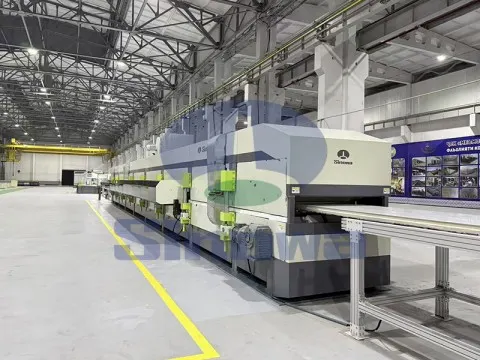
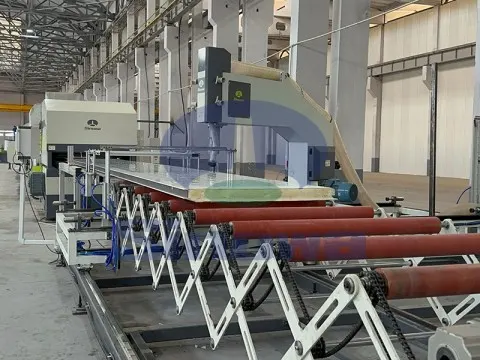
The structure of the cooling system in a PU sandwich panel machine is typically composed of several key components, each working together to achieve precise temperature control. One of the core components is the cooling conveyor belt, which is usually made of high-temperature resistant and corrosion-resistant materials to withstand the heat released during PU foam curing. The conveyor belt is equipped with internal cooling channels through which a cooling medium (such as water or air) circulates. As the newly formed sandwich panel moves along the conveyor belt, the cooling medium absorbs the excess heat from the panel, gradually reducing its temperature to a stable level. The speed of the conveyor belt can be adjusted according to the production requirements, ensuring that the panel has sufficient time to cool and cure completely before entering the next processing link.
Another important component of the cooling system is the cooling fan or air cooler, which provides forced air circulation to further enhance the heat dissipation effect. These fans are strategically installed along the conveyor line, directing cool air evenly over the surface of the sandwich panel. This forced air cooling not only accelerates the heat dissipation process but also ensures that the surface temperature of the panel is uniform, preventing local overheating or insufficient cooling. In some advanced machines, the air cooling system is equipped with temperature sensors that monitor the surface temperature of the panel in real-time, adjusting the fan speed and air flow automatically to maintain the optimal cooling temperature. This intelligent control ensures consistent cooling performance even when production conditions change, such as variations in ambient temperature or production speed.
In addition to the conveyor belt and air cooling system, some high-end PU sandwich panel manufacturing machines are equipped with a water cooling system, which is particularly effective for large-scale production or when dealing with thicker panels. The water cooling system uses a closed loop of cooling water that flows through pipes embedded in the conveyor belt or around the production line. Water has a higher heat capacity than air, making it more efficient at absorbing large amounts of heat in a short period of time. The cooling water is continuously circulated through a heat exchanger, where the heat absorbed from the panels is transferred to the environment, ensuring that the water temperature remains stable. This type of cooling system is especially suitable for producing panels with a thick PU foam core, which generates more heat during curing and requires more efficient heat dissipation to ensure uniform curing.
The integration of the cooling system into the PU sandwich panel manufacturing machine also brings significant advantages in terms of product quality and consistency. By precisely controlling the cooling rate and temperature, the machine ensures that the PU foam core has a uniform density, which directly affects the thermal insulation and sound insulation performance of the panel. A uniformly cured foam core also has better adhesion to the facing materials, preventing delamination and ensuring the structural stability of the panel. Furthermore, the cooling system helps to maintain the dimensional stability of the panel, reducing the risk of warping, bending, or shrinkage after production. This is particularly important for panels used in construction and cold storage, where dimensional accuracy is critical for proper installation and long-term performance.
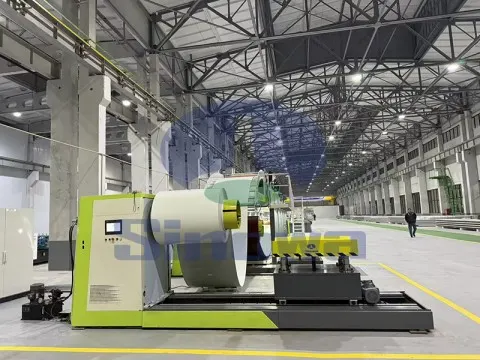
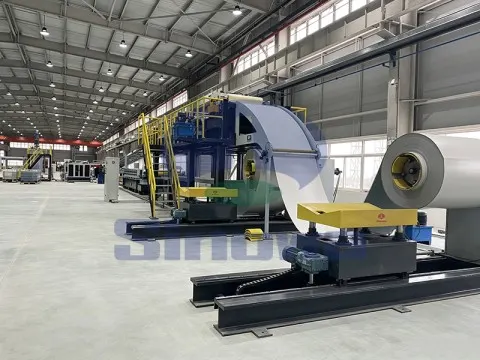
Apart from the cooling system, the overall design of the PU sandwich panel manufacturing machine also plays a vital role in ensuring production efficiency and product quality. The machine is typically equipped with an automatic uncoiling system for the facing materials, which ensures smooth and consistent feeding of the metal sheets. The uncoiling system is equipped with tension control devices to prevent the sheets from wrinkling or tearing during feeding, which could affect the final appearance and quality of the panel. After uncoiling, the facing materials are preheated to a specific temperature, which helps to improve the adhesion between the foam core and the sheets. The preheating temperature is carefully controlled to avoid overheating, which could damage the surface of the sheets or affect the PU foam reaction.
The PU foam mixing and injection system is another key component of the manufacturing machine. This system accurately mixes the isocyanate and polyol raw materials in the correct ratio, ensuring that the foam has the desired properties such as density, thermal conductivity, and mechanical strength. The mixing process is carried out in a high-pressure mixing head, which ensures thorough and uniform mixing of the raw materials. The injection system then delivers the mixed PU foam evenly between the two preheated facing sheets, ensuring that the foam fills the entire gap between the sheets without any gaps or bubbles. The amount of foam injected is precisely controlled according to the desired thickness of the panel, ensuring consistent thickness across all panels.
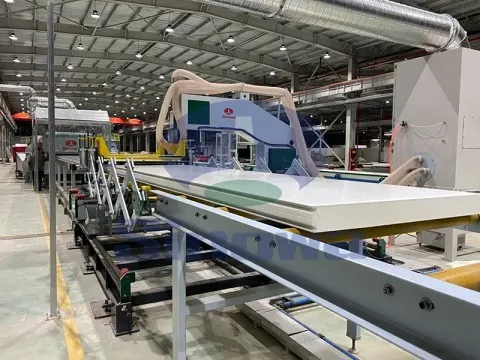
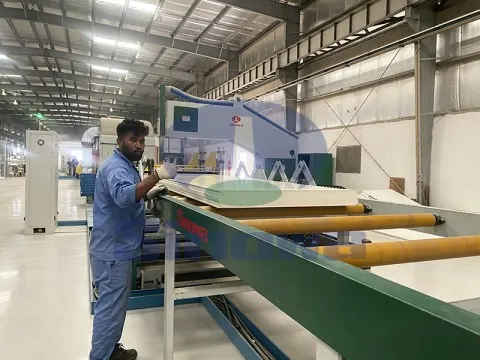
After the foam is injected, the sandwich panel moves into the lamination and cooling section. The lamination system applies uniform pressure to the panel, ensuring that the facing materials are tightly bonded to the foam core. At the same time, the cooling system starts to dissipate the heat generated by the foam curing reaction. The combination of pressure and cooling ensures that the panel maintains its shape and thickness during the curing process. Once the panel is fully cooled and cured, it moves to the cutting section, where it is cut into the desired length using an automatic cutting machine. The cutting machine is equipped with precision blades that ensure clean and accurate cuts, minimizing material waste and ensuring that the panels meet the required dimensional specifications.
The operation and maintenance of a PU sandwich panel manufacturing machine with a cooling system are relatively straightforward, but they require strict adherence to operational guidelines to ensure optimal performance and longevity. Before starting the machine, operators must check the cooling system to ensure that the cooling medium (water or air) is sufficient and that all components are functioning properly. The temperature settings for the cooling system should be adjusted according to the type of facing materials, the thickness of the foam core, and the ambient temperature. During operation, operators should monitor the temperature of the panel and the cooling system in real-time, making adjustments as needed to maintain optimal cooling conditions.
Regular maintenance of the cooling system is also essential to prevent breakdowns and ensure consistent performance. This includes cleaning the cooling channels, replacing the cooling medium (if necessary), checking for leaks in the water cooling system, and inspecting the cooling fans for wear and tear. The conveyor belt should also be cleaned regularly to remove any foam residue or debris, which could affect the cooling efficiency and the surface quality of the panels. Additionally, the entire machine should be inspected regularly for any signs of wear or damage, and any faulty components should be replaced promptly to avoid affecting production.
The application of PU sandwich panel manufacturing machines with cooling systems is widespread across various industries. In the construction industry, these machines are used to produce panels for walls, roofs, and partitions in residential, commercial, and industrial buildings. The excellent thermal insulation performance of PU sandwich panels helps to reduce energy consumption for heating and cooling, making buildings more energy-efficient. In the cold chain logistics industry, the panels are used to construct cold storage warehouses, refrigerated trucks, and containers, where their thermal insulation properties help to maintain a stable low temperature, ensuring the quality and freshness of perishable goods.
In addition to construction and cold chain logistics, these machines are also used in the manufacturing of prefabricated buildings, which are becoming increasingly popular due to their quick construction time and cost-effectiveness. PU sandwich panels produced by these machines are lightweight yet strong, making them ideal for prefabricated structures that can be easily transported and assembled on-site. They are also used in the automotive industry for the production of interior components and insulation materials, as well as in the aerospace industry for lightweight and high-performance insulation.
As the demand for energy-efficient and high-performance building materials continues to grow, the development of PU sandwich panel manufacturing machines with advanced cooling systems is also evolving. Manufacturers are constantly improving the design of the cooling system to enhance its efficiency and precision, using advanced technologies such as intelligent temperature control, variable frequency fans, and improved cooling mediums. These advancements not only improve the quality and consistency of the panels but also reduce energy consumption and production costs, making the machines more environmentally friendly and cost-effective.
Another trend in the development of these machines is the integration of automation and digitalization. Modern PU sandwich panel manufacturing machines are equipped with advanced control systems that allow for fully automated production, from raw material feeding to final product stacking. These control systems can monitor and adjust all production parameters in real-time, including the cooling temperature, conveyor speed, and foam injection amount, ensuring consistent production quality. Digitalization also allows for remote monitoring and maintenance of the machine, reducing downtime and improving overall production efficiency.
In conclusion, the PU sandwich panel manufacturing machine with a cooling system is a critical piece of equipment in the production of high-quality PU sandwich panels. Its integrated cooling system addresses the challenges of PU foam curing, ensuring uniform cooling, consistent product quality, and improved production efficiency. The machine’s advanced design, which includes components such as the cooling conveyor belt, air or water cooling systems, automatic uncoiling, and precise foam injection, makes it suitable for large-scale continuous production across various industries. With ongoing technological advancements, these machines are becoming more efficient, intelligent, and environmentally friendly, meeting the growing demand for energy-efficient and high-performance composite materials. Whether in construction, cold chain logistics, or prefabricated building manufacturing, the PU sandwich panel manufacturing machine with a cooling system plays an indispensable role in driving innovation and progress in the industry.
Sinowa is a professional manufacturer of sandwich panel machine in china, we provide diversified and high-performance sandwich panel production lines, including fully automatic continuous PU sandwich panel line and customized special lines to meet mass production and personalized order demands. These sandwich panel lines support processing multiple foam core materials, such as PU, PIR, mineral wool, rock wool and glass wool, covering different insulation and fireproof standards.
Featuring stable operation, high efficiency, energy saving and easy maintenance, our PU sandwich panel line deliver sandwich panels with excellent thermal insulation, fire resistance, sound insulation and lightweight durability. The finished panels are widely applied in industrial workshops, warehouse roofing and wall cladding, cold storage insulation, serving global construction and industrial insulation markets.
https://www.cnsinowa.com/sandwich-panel-machines/pu-sandwich-panel-manufacturing-machine-with-cooling-system.html