 sandwich panel line
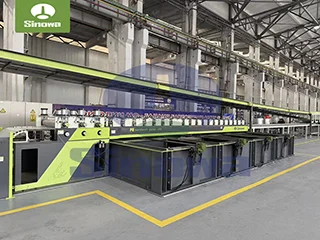
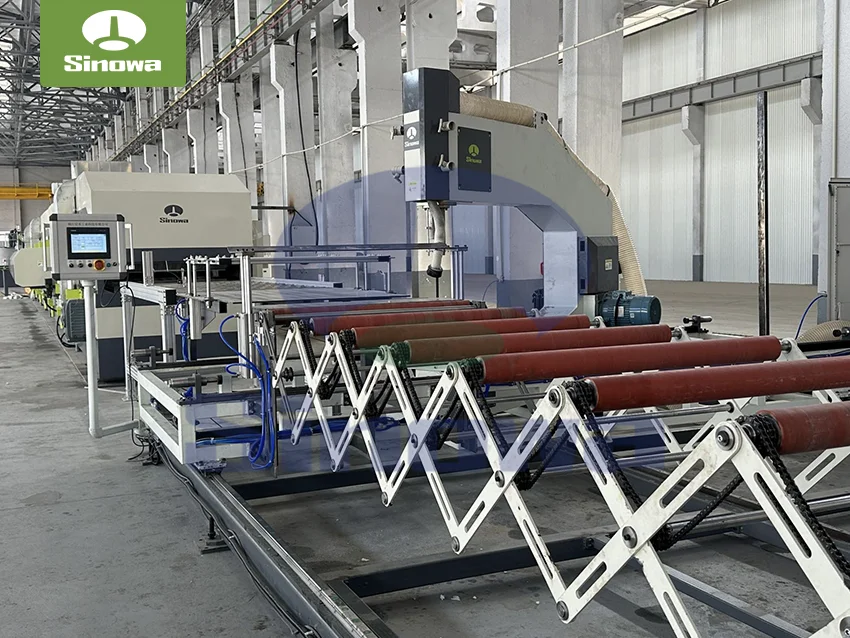
The entire production workflow of the high-speed automatic PU sandwich panel production line is structured as a closed-loop continuous operation, covering raw material pretreatment, surface profile forming, polyurethane core foaming and injection, high-pressure lamination curing, precise fixed-length cutting, cooling shaping, and automatic stacking. Every functional module operates in synchronous coordination under unified automated scheduling, ensuring that each production stage proceeds in an orderly and uninterrupted manner. The core design concept focuses on optimizing production rhythm and material utilization, while maintaining the structural stability, thermal insulation performance, and surface flatness of finished roofing panels, addressing the common pain points of traditional production modes such as inconsistent panel thickness, uneven foaming density, low production efficiency, and high material waste.
Raw material processing serves as the foundational stage that determines the overall quality of roofing PU sandwich panels, and the polyurethane sandwich panel production line is equipped with a fully automatic raw material feeding and pretreatment system tailored for roofing panel production characteristics. Metal coil materials used for panel surface layers are loaded onto hydraulic decoiling devices, which achieve stable and tension-free unwinding through intelligent tension regulation. This tension control mechanism effectively avoids surface wrinkling, stretching, and deformation of metal sheets during high-speed operation, a critical detail for ensuring the waterproof and wind-resistant performance of finished roofing panels. After unwinding, the metal sheets pass through multi-stage leveling units to eliminate internal stress generated during coil rolling, achieving flat and uniform surface flatness. Meanwhile, the system supports automatic film pasting and surface protection treatment, preventing scratches and abrasions on the metal surface during subsequent high-pressure lamination and transmission processes, which preserves the decorative and anti-corrosion properties of the roofing panels for long-term outdoor use.
Following raw material pretreatment, the roll forming system executes precise profile shaping for roofing panel surface layers, a key process that differentiates roofing panels from ordinary wall panels. Roofing panels require specialized wave-shaped or trapezoidal profiles to enhance drainage capacity, wind resistance, and structural load-bearing performance, and the high-speed roll forming system is configured with high-strength alloy roller sets with adjustable spacing and pressure parameters. Through multi-pass gradual pressing and forming, the metal sheets are molded into standard roofing profiles with accurate dimensional accuracy and smooth edge transitions. The entire forming process is completed at a consistent high speed without pause or secondary processing, ensuring that each panel profile maintains uniform specifications. The modular forming structure allows flexible adjustment of profile parameters to adapt to different roofing design requirements, realizing diversified production of single-panel and multi-wave roofing panels without extensive equipment modification, greatly improving the production flexibility of the line.
The polyurethane foaming and injection system stands as the core functional unit of the entire production line, directly defining the thermal insulation, sound insulation, and structural bonding performance of finished roofing panels. This system adopts high-precision proportional metering and high-pressure mixing technology to process the two-component polyurethane raw materials. Strict temperature and pressure control is implemented throughout the material conveying and mixing process to ensure thorough and uniform reaction of the chemical components. The precisely mixed polyurethane foam liquid is evenly injected between the upper and lower formed metal sheets through a multi-point distributed injection structure. This uniform injection method avoids local foaming voids, uneven density, and insufficient filling that often occur in traditional single-point injection processes. The injected foam undergoes rapid micro-expansion to fully fill the cavity between the metal layers, forming a dense and integrated foam core structure after curing. The foaming density and expansion ratio can be dynamically adjusted according to production requirements, enabling the production of roofing panels with different thermal insulation grades to adapt to diverse climatic conditions and building energy-saving standards.
High-pressure lamination and constant-temperature curing processes are essential for realizing the integrated composite structure of PU sandwich roofing panels. After foam injection, the semi-finished panels enter the double-belt laminating and curing system, which provides stable continuous pressure and graded heating temperature. The double-belt structure ensures uniform pressure coverage on the entire panel surface, eliminating local bulges or depressions caused by uneven stress. The segmented temperature control system adopts staged heating and constant-temperature heat preservation strategies, matching the foaming reaction and curing cycle of polyurethane materials. In the early stage, moderate temperature promotes full foaming and expansion of the polyurethane core, while the later constant-temperature curing stage accelerates the solidification and bonding reaction between the foam core and metal surface layers. This precise thermoforming process achieves seamless bonding between the foam core and metal sheets, avoiding delamination, cracking, or poor adhesion in long-term outdoor use. The length of the curing section is scientifically designed to match the high-speed production rhythm, ensuring that panels complete sufficient curing within the continuous transmission process without affecting production efficiency.
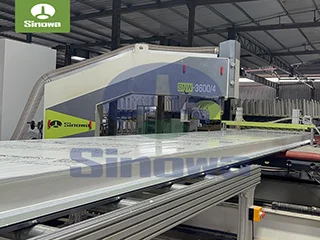
Precision fixed-length cutting and edge trimming processes ensure the dimensional standardization and assembly adaptability of finished roofing panels. After full curing and preliminary shaping, the continuous integrated panel strip is transmitted to the high-speed flying cutting unit. Equipped with intelligent tracking and positioning technology, the cutting system automatically identifies panel length parameters and executes synchronous cutting following the PU sandwich panel line operating speed, achieving zero-stop fixed-length cutting. This dynamic cutting mode completely avoids the efficiency loss caused by traditional static cutting and ensures consistent length accuracy of each finished panel. Meanwhile, the automatic edge trimming mechanism calibrates the panel edges to remove excess foam and metal burrs, ensuring neat and straight panel edges. Standardized edge treatment enables seamless splicing and assembly during on-site roofing construction, effectively improving the installation efficiency and overall sealing performance of the roof system, and reducing the risk of water leakage at splicing joints.
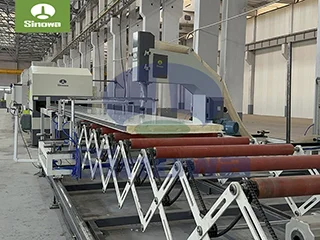
Post-processing systems including cooling shaping and automatic stacking further optimize the finished product quality and production automation level. Newly cut panels retain residual curing temperature, and the intelligent cooling conveying system adopts natural air cooling and auxiliary uniform heat dissipation to gradually reduce the panel temperature to room temperature. This slow cooling process effectively eliminates internal stress generated during high-temperature curing, preventing panel warping, bending, and deformation after molding and ensuring long-term structural flatness of roofing panels in outdoor environments. After cooling and shaping, the qualified finished panels are automatically transported to the stacking area, where the mechanical stacking system completes orderly stacking and arrangement according to set specifications. The entire process from raw material feeding to finished product stacking realizes unmanned continuous operation, greatly reducing manual labor investment and avoiding quality fluctuations caused by human operation.
The outstanding advantages of the high-speed automatic polyurethane sandwich panel line are fully reflected in production efficiency, product performance stability, and operational cost control. In terms of production efficiency, the continuous non-stop production mode breaks the throughput limit of traditional intermittent equipment, achieving stable high-speed output while maintaining consistent product quality. The highly automated control system integrates real-time monitoring of material proportion, forming pressure, curing temperature, cutting size, and other core parameters. All operating data is dynamically collected and analyzed, with automatic parameter adjustment and fault early warning functions, which effectively reduces equipment failure rates and production downtime. For roofing panel production, this real-time precise control ensures that key indicators such as panel thickness, foam density, bonding strength, and surface flatness remain within the optimal range for every batch of products.
In terms of product performance, the panels produced by this professional roofing panel production line have excellent comprehensive performance adapted to outdoor roofing working conditions. The compact polyurethane foam core structure provides superior thermal insulation and heat preservation effects, effectively blocking external heat transfer and reducing building energy consumption. Meanwhile, the integrated composite structure formed by high-pressure curing has excellent overall rigidity and load-bearing capacity, enabling the panels to resist external forces such as strong wind, snow pressure, and hail impact, suitable for long-term outdoor exposure use. The tight bonding interface between the foam core and metal layers avoids water penetration and moisture accumulation, endowing the roofing panels with good waterproof and anti-corrosion capabilities. In addition, the uniform foam structure has excellent sound absorption and noise reduction effects, improving the indoor acoustic environment of buildings.
In terms of production economy and operational flexibility, the high-speed automatic PU sandwich panel machine achieves efficient utilization of raw materials through precise metering and uniform injection control, greatly reducing material waste compared with traditional production equipment. The automated operation mode reduces reliance on skilled workers, lowering long-term labor production costs. The modular equipment structure supports flexible switching of production specifications, meeting the customized production needs of different thicknesses, lengths, and profile types of roofing panels. This flexibility enables manufacturers to quickly respond to market demand changes and undertake diversified building material production orders, improving market competitiveness.
In the context of the rapid development of modern green buildings and industrialized construction, high-performance PU sandwich roofing panels have become the mainstream choice for large-scale industrial and commercial building roofing systems due to their light weight, high strength, energy saving, and environmental protection characteristics. As the core production equipment, the high-speed automatic PU sandwich panel production line provides reliable technical and equipment support for the standardized and large-scale production of roofing panels. Its highly automated, high-efficiency, and high-precision production features perfectly match the development trend of building material manufacturing towards intelligence, refinement, and greening. With the continuous upgrading of building energy-saving standards and construction quality requirements, this professional polyurethane sandwich panel machine will continue to play an important role in the building material industry, promoting the continuous improvement of roofing panel production technology and product performance, and providing high-quality basic materials for modern building roof engineering construction.
https://www.cnsinowa.com/sandwich-panel-machines/high-speed-automatic-pu-sandwich-panel-production-line-for-roofing-panels.html