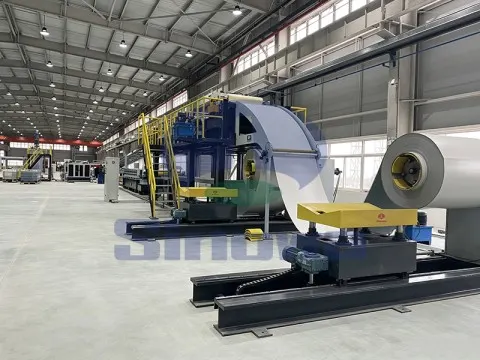
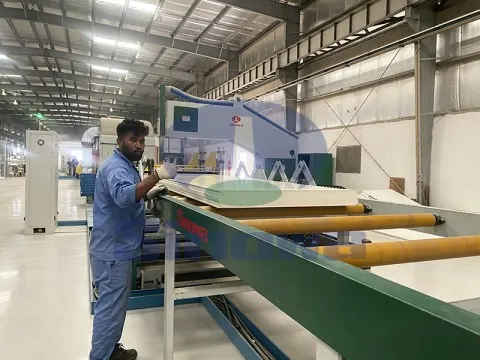
sandwich panel line
The core purpose of a PU sandwich panel line for waterproof roofs is to transform raw materials into a three-layer composite panel that acts as a robust barrier against water penetration, while also meeting the structural and functional demands of modern roofing systems. Unlike basic panel production equipment, this specialized line is optimized to enhance the waterproof characteristics of the final product at every stage of manufacturing, from material preparation to final finishing. Each component of the production line is calibrated to work in seamless coordination, eliminating weak points that could compromise waterproof performance, such as uneven foam distribution, poor bonding between layers, or surface imperfections. By prioritizing precision and consistency, the line ensures that every PU sandwich panel leaving the production floor possesses the tight, closed-cell structure and seamless layer adhesion that are critical for effective waterproofing in roofing applications.
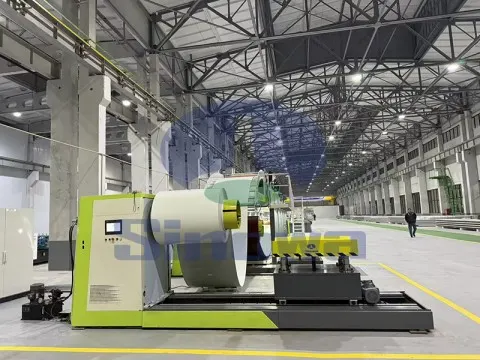
The production process of PU sandwich panels for waterproof roofs via this dedicated line unfolds in a continuous, automated sequence, with each phase designed to reinforce the panel’s waterproof integrity. The process commences with the unwinding and pretreatment of the outer facing materials, which are typically corrosion-resistant metal sheets selected for their water-repellent properties and durability. These sheet rolls are loaded onto precision unwinding stations that feed the material steadily into the line, equipped with automatic deviation correction systems to maintain perfect alignment throughout processing. Any misalignment during this stage could create gaps or uneven surfaces in the final panel, which would compromise waterproofing, so the unwinding and feeding mechanism is engineered for maximum stability and accuracy. Following unwinding, the facing sheets undergo surface treatment to boost adhesion with the PU foam core; this step removes contaminants, enhances surface roughness, and ensures a permanent, watertight bond between the outer layers and the inner foam, preventing water from seeping between the layers over time.
Next, the treated facing sheets move through a roll forming section, where they are shaped into the specific profiles required for waterproof roofing. Roof-specific profiles, such as raised ribs, overlapping edges, and tapered surfaces, are carefully formed to facilitate water runoff, prevent pooling, and create tight interlocking joints when installed on a roof. This roll forming process is highly precise, with custom-designed rollers that bend and shape the metal sheets without causing cracks, scratches, or thin spots that could become entry points for water. The uniformity of the profiled sheets is paramount, as consistent shaping ensures that panels fit together seamlessly during installation, eliminating gaps that would allow rainwater, snowmelt, or humidity to penetrate the roof structure. After roll forming, the sheets pass through a preheating station, which raises the material temperature to an optimal level for foam bonding; this controlled heating not only accelerates the curing process of the PU foam but also strengthens the adhesive bond, further sealing the panel against moisture intrusion.
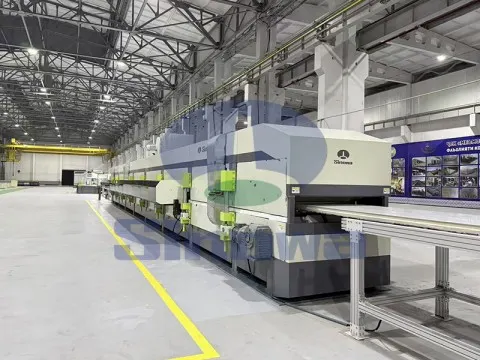
The heart of the PU sandwich panel making line is the PU foaming and laminating section, where the waterproof core of the panel is created. This stage involves the precise mixing and metering of polyurethane raw materials—polyol and isocyanate—along with specialized additives that enhance the foam’s closed-cell structure, hydrophobic properties, and structural stability. The mixing system is fully automated, with digital controls that regulate the ratio of raw materials, flow rate, and pressure with extreme accuracy, ensuring the foam expands uniformly and cures to a consistent density across the entire panel. A uniform, high-density closed-cell PU foam core is the cornerstone of the panel’s waterproof performance, as closed cells prevent capillary action and moisture absorption, unlike open-cell foams that can trap water and degrade over time. The mixed liquid PU is injected continuously between the two preheated, profiled facing sheets, and the assembly immediately enters a double-belt laminating system that applies consistent pressure to compress the layers and set the panel thickness. This pressure ensures full contact between the foam and the facing sheets, eliminating air pockets and voids that would compromise waterproofing, while also shaping the panel to exact dimensional specifications.
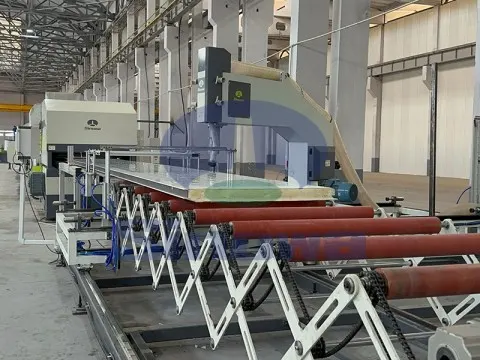
As the laminated panel moves through the double-belt system, the PU foam undergoes a controlled curing process, where it solidifies into a rigid, lightweight core that bonds permanently to the outer facings. The curing environment is carefully regulated in terms of temperature and speed, matching the line’s production rate to the foam’s curing kinetics to avoid under-curing or over-curing. Under-cured foam may remain soft and porous, reducing waterproof efficiency, while over-cured foam can become brittle and prone to cracking, creating pathways for water. The continuous movement through the curing section ensures that every section of the panel cures evenly, resulting in a homogeneous core with consistent waterproof and insulating properties. Once curing is complete, the rigid PU sandwich panel exits the laminating section and proceeds to the cooling and shaping phase, where it is cooled to ambient temperature to stabilize its structure and dimensions. This cooling step prevents warping or distortion, which could affect the panel’s fit and waterproof performance during installation, ensuring the panel remains flat and true to its intended profile.
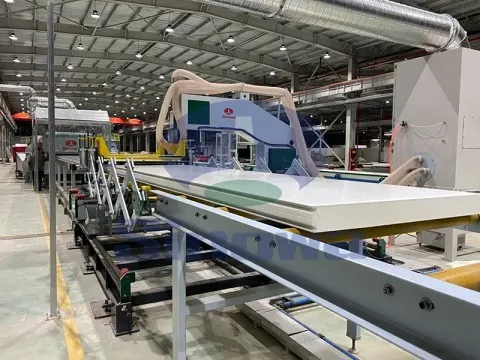
After cooling, the continuous panel is directed to the precision cutting station, where it is cut to custom lengths based on roofing project requirements. The cutting system is equipped with high-speed, clean-cutting tools that produce smooth, burr-free edges without damaging the panel’s layers or compromising its waterproof seal. Unlike rough or uneven cuts, which can create vulnerable edges that absorb water, the precision cuts ensure that each panel’s end surfaces are sealed and intact, maintaining the panel’s waterproof integrity from edge to edge. The cutting process is fully automated, with digital length settings that allow for quick adjustments to meet diverse roofing specifications, from small residential structures to large commercial warehouses and industrial facilities. Once cut, the finished panels are transferred to a stacking and packaging station, where they are carefully stacked to prevent surface damage and packaged for transport. The packaging is designed to protect the panels from moisture and physical harm during shipping and storage, ensuring that the panels retain their full waterproof properties until they are installed on the roof.
One of the most significant advantages of using a dedicated PU sandwich panel making line for waterproof roofs is the consistent quality it delivers across all production volumes. Manual or semi-automated production methods often result in variations in foam density, layer bonding, and panel dimensions, which create inconsistent waterproof performance and increase the risk of leaks. In contrast, the fully automated, continuous operation of this production line minimizes human intervention, reducing the potential for errors and ensuring that every panel meets strict quality standards for waterproofing. The closed-loop control systems monitor every stage of production in real time, adjusting parameters such as material flow, temperature, pressure, and speed to maintain optimal conditions. This real-time monitoring not only guarantees uniform product quality but also enhances production efficiency, allowing for high-volume output without sacrificing the waterproof performance that is critical for roofing applications.
Beyond consistent quality, the PU sandwich panel making line is engineered to enhance the inherent waterproof features of the final product, making it uniquely suited for roof installations. The closed-cell PU foam core, produced with precise foaming parameters, is inherently water-resistant, absorbing minimal moisture and preventing the growth of mold, mildew, and rot that can weaken roofing structures. The strong, permanent bond between the foam core and the outer metal facings creates a monolithic composite structure that eliminates delamination, a common issue that leads to water infiltration in lower-quality panels. Additionally, the roof-specific profiling formed during the roll forming stage is designed to work in harmony with the panel’s waterproof properties, directing water away from the roof surface and ensuring efficient drainage. When installed correctly, panels produced by this line form a continuous, watertight membrane across the entire roof, with interlocking joints that seal out rain, snow, and humidity even in harsh climatic conditions, from heavy downpours to freezing winters.
The versatility of the PU sandwich panel making line further adds to its value for waterproof roofing production, as it can accommodate various facing materials, foam densities, and panel profiles to suit different roofing needs. For projects requiring enhanced weather resistance, corrosion-resistant metal facings with protective coatings can be used, adding an extra layer of waterproofing and UV protection. For specialized applications such as cold storage roofs or industrial facilities, the line can produce panels with higher foam densities to boost both waterproofing and thermal insulation, maintaining interior temperatures while keeping moisture out. The ability to customize panel thickness, profile design, and dimensions makes the line adaptable to a wide range of building types, including residential homes, commercial complexes, industrial warehouses, agricultural buildings, and public infrastructure. This versatility ensures that construction professionals can source waterproof PU sandwich panels that align with their specific project requirements, without compromising on performance or durability.
In addition to waterproof performance, PU sandwich panels produced by this line offer a host of secondary benefits that make them ideal for roofing, all of which are preserved and enhanced by the precision manufacturing process. The lightweight nature of the panels reduces the structural load on buildings, simplifying installation and lowering overall construction costs, while still providing exceptional structural strength to withstand wind, snow, and other environmental stresses. The excellent thermal insulation properties of the PU foam core help regulate indoor temperatures, reducing energy consumption for heating and cooling and promoting sustainable building practices. The panels are also highly durable, resistant to fading, corrosion, and physical damage, ensuring a long service life with minimal maintenance. Unlike traditional roofing materials that may require frequent repairs or replacements due to water damage, these PU sandwich panels maintain their waterproof integrity for years, providing reliable long-term protection for buildings and reducing lifecycle costs.
The environmental impact of the PU sandwich panel making line is another key consideration in modern construction, and the line is designed to operate efficiently with minimal waste. The continuous production process optimizes material usage, reducing scrap from off-cuts and unused raw materials, while the automated systems minimize energy consumption compared to outdated manufacturing methods. The PU foam used in the panels is also environmentally stable, resisting moisture absorption and degradation, which extends the panel’s lifespan and reduces the need for frequent replacements, ultimately lowering construction waste. Additionally, the thermal insulation provided by the panels contributes to energy efficiency in buildings, reducing carbon emissions associated with heating and cooling systems and aligning with global sustainability goals for green construction. By combining high-performance waterproofing with eco-friendly production and operational benefits, the PU sandwich panel making line supports the development of sustainable, resilient building envelopes.
As the construction industry continues to prioritize durable, low-maintenance, and weather-resistant roofing solutions, the role of the PU sandwich panel making line for waterproof roofs becomes increasingly indispensable. This specialized production system bridges the gap between high-quality material performance and efficient mass production, addressing the most pressing challenge in roofing—waterproofing—while delivering additional benefits such as thermal insulation, structural strength, and design flexibility. Every aspect of the line, from material pretreatment to final packaging, is focused on creating panels that provide uncompromising protection against moisture, ensuring that buildings remain dry, safe, and structurally sound for decades. Whether for small-scale residential projects or large-scale industrial developments, the panels produced by this line set a standard for reliable waterproof roofing, offering a cost-effective, long-lasting solution that meets the evolving needs of the construction sector.
In conclusion, the PU sandwich panel making line for waterproof roofs is a cornerstone of modern roofing manufacturing, combining advanced automation, precision engineering, and material expertise to produce panels that excel in waterproof performance, durability, and functionality. By streamlining the production process, ensuring consistent quality, and enhancing the inherent water-resistant properties of PU sandwich panels, this production line meets the growing demand for high-performance roofing solutions worldwide. As buildings continue to require superior protection against the elements, the innovation and reliability of this manufacturing system will remain essential, driving the development of safer, more sustainable, and more resilient roofing structures across residential, commercial, and industrial applications. The integration of this specialized production line not only elevates the quality of waterproof roofing panels but also reinforces the importance of advanced manufacturing in building a more durable and efficient built environment.
Sinowa is a professional manufacturer of sandwich panel machine in china, we provide diversified and high-performance sandwich panel production lines, including fully automatic continuous PU sandwich panel line and customized special lines to meet mass production and personalized order demands. These sandwich panel lines support processing multiple foam core materials, such as PU, PIR, mineral wool, rock wool and glass wool, covering different insulation and fireproof standards.
Featuring stable operation, high efficiency, energy saving and easy maintenance, our PU sandwich panel line deliver sandwich panels with excellent thermal insulation, fire resistance, sound insulation and lightweight durability. The finished panels are widely applied in industrial workshops, warehouse roofing and wall cladding, cold storage insulation, serving global construction and industrial insulation markets.
https://www.cnsinowa.com/sandwich-panel-machines/pu-sandwich-panel-making-line-for-waterproof-roof.html