What Leads To Slow Foaming Speed On The PU Foam Production Line
Oct 13, 2026
Polyurethane foam production depends on a delicate balance of chemical reactions, raw material quality, and process control. When the foaming speed drops below expected levels, production throughput suffers, product consistency degrades, and downstream trimming or curing operations fall out of rhythm.
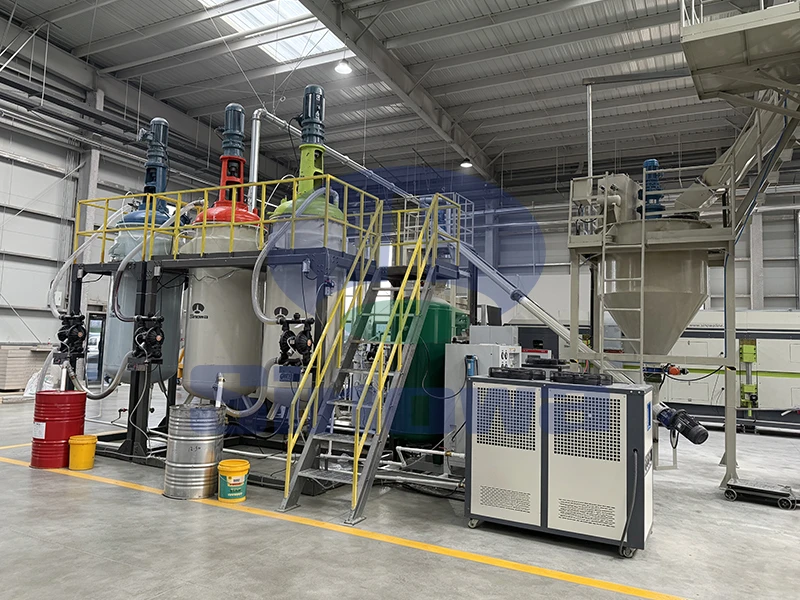
Raw material selection and storage condition form the foundation of any stable foam reaction. Polyol systems, isocyanates, catalysts, surfactants, and blowing agents each play a defined role in determining how quickly the mixture expands and cures. If polyol has been stored too long, exposed to moisture, or held at an elevated temperature before metering, its hydroxyl reactivity can shift noticeably. Water absorbed into the polyol blend reacts prematurely with isocyanate, consuming the reactive sites that should drive the controlled blow reaction and slowing the visible rise. Isocyanate that has aged or partially reacted with ambient moisture forms dimers and reduces the effective NCO index, which lengthens cream time and extends the overall rise profile. Similarly, blowing agents that have degraded, volatilized prematurely, or been dosed at a lower ratio than designed simply do not generate enough gas to push the foam upward at the intended rate. Even the trace impurities carried over from bulk drum transfer or line flushing can act as mild chain terminators, neutralizing a portion of the catalyst charge and flattening the reaction curve.
Catalyst package composition is one of the most sensitive levers governing foaming speed. A typical polyurethane system relies on a blend of gelling catalysts and blowing catalysts, each tuned to align the urethane reaction with the CO₂ generation from water-isocyanate chemistry. If the catalyst lot has been mismatched, diluted, or incorrectly proportioned between batches, the line may observe a delayed onset of cream, a prolonged rise plateau, or a tack-free time that stretches well beyond the mould opening window. Temperature swings in the catalyst storage tank further complicate dosing: catalysts held too cold can crystallize or separate, so the metering pump draws a non-uniform concentration and the reaction behaves inconsistently shot to shot. In production environments where operators compensate by increasing catalyst dosage manually, the balance between gel and blow can tip the wrong way, producing slow rise followed by internal splitting or poor surface skin. Understanding which catalyst family is responsible for the observed slowdown—gelling delay versus blowing delay—matters because corrective dosing in one direction may worsen the other.
Metering and mixing accuracy directly translate chemical intent into physical foam behavior. High-pressure mixing heads rely on precise hydraulic pressure, clean impingement ports, and sharp shot cutoff to deliver the correct ratio of each stream in a matter of milliseconds. If the metering units drift in calibration, the polyol-to-isocyanate ratio can shift away from the target index without anyone noticing at the gauge panel. A slightly lower isocyanate index means fewer reactive groups available, so the system spends longer reaching gel point and the foam rises sluggishly. Conversely, worn mixhead seals, obstructed return lines, or partial blockage in the nozzle cause incomplete impingement, leaving pockets of under-mixed material that lag behind the main reaction front. The resulting foam often shows streaks, weak spots, or an uneven rise across the mould. Low-pressure dispensing systems face their own set of problems: static mixing elements that have degraded, air entrainment from leaky suction lines, or agitator speed that no longer matches the shot volume all reduce mixing quality and slow the visible foaming response. Regular calibration of the metering pumps and visual inspection of the mixhead internals are therefore not optional maintenance items—they are direct controls on foam speed.
Temperature control across the entire material path has a disproportionately large effect on reaction kinetics. Polyurethane chemistry accelerates roughly with every rise in component temperature, so a line that runs polyol at a few degrees below specification will consistently deliver slower cream and rise times than a line held at the design setpoint. Chilled water passing through the polyol day tank on a summer day, a failing heater cartridge on the isocyanate circuit, or uninsulated pipes between the conditioning unit and the mixhead all create localized cold spots that the operator may only notice as a general sluggishness. Mould temperature is equally important: a cold mould absorbs heat away from the reacting cream, delaying surface cure and slowing overall rise, while an overheated mould can scorch the skin and prematurely gel the surface before the interior has expanded fully. The conveyor or belt speed must also remain coordinated with these temperatures, because a faster belt on a cold line simply moves under-reacted foam further down the tunnel before it has developed enough strength to accept trimming. Heat balance charts that track component, mould, and oven temperatures together reveal whether the line is running cold or hot across the board rather than at one isolated point.
Environmental conditions in the plant hall are often overlooked contributors to slow foaming, yet they exert a steady, cumulative drag on line performance. Ambient air temperature and relative humidity influence both the conditioned material temperature and the moisture that lands on exposed mould surfaces or mixes with the dispensed cream. In a poorly ventilated workshop, drafts from an open loading door can cool the mixhead region and produce a thin, slow-rising outer skin on every bun. High humidity means water condensing on the polyol return line or sitting on mould surfaces, which perturbs the designed water-isocyanate balance and can either accelerate blowing locally or, when moisture overwhelms the catalyst ratio, lead to an unstable, slow-rising collapse. Seasonal changes amplify these effects: lines that run smoothly in mild months may suddenly appear sluggish on the first cold morning, because the same setpoints that worked at twenty-five degrees no longer compensate for a building that has cooled overnight. Operators who chase the slowdown by cranking heater temperatures often overshoot and create a new set of defects, so the more durable solution is better building climate control and predictable warm-up routines before production starts.
Mould and release agent management may seem peripheral to chemical speed, but it shapes how the foam perceives its own expansion. Release agents that are too dilute, applied too heavily, or incompatible with the foam system can form a film that retards surface reaction, making the cream appear to lag as it contacts the mould wall. Conversely, a mould that has not been adequately cleaned between runs carries residue from previous shots—partially cured crust, accumulated release agent buildup, or flaking liner material—which acts as a physical barrier and as a contaminant that locally consumes catalyst. Metal moulds that have warped, worn liners that are delaminating, or gaskets that leak also change the effective volume and heat transfer during rise, so the foam does not expand as expected. In continuous slabstock lines, the paper or film lining the trough, the bottom paper speed relative to the mixhead traversing speed, and the damper positions all determine whether the rising foam is free to grow vertically or is being mechanically restrained. A trough that is too narrow, a paper drag that is too high, or a top paper that is too loose will all look on the display like a slow foam, when in fact the chemistry is fine and the physics is holding the bun back.
Operator practice and line tuning habits introduce variability that shows up as inconsistent foaming speed. Small procedural choices—how long the mixhead purges between shots, whether the pump is primed before a colour change, how aggressively the operator flushes the circuit after a stoppage—accumulate into meaningful differences in reaction time. A line that has been sitting idle for a lunch break, for instance, will dispense a first shot that has cooler mixhead parts and residual material that has partially gelled inside the nozzle, so the early shots rise slowly until the equipment has cycled a few times. Operators who compensate by running slower belt speeds or lengthening dwell in the oven may be masking a condition that should be corrected at the chemical or temperature level. Shot size changes, new colour masterbatch introductions, and batch changes from the raw material warehouse are also common triggers: each new batch of polyol or isocyanate carries slight reactivity differences, and if the line is not re-characterized against the new lot, foaming speed will drift until the next planned review. Keeping a simple log of lot numbers, ambient conditions, and observed rise times lets the team separate true process problems from normal batch-to-batch variation.
Equipment wear over months of continuous operation gradually degrades the very functions that make fast, consistent foaming possible. Pump seals that have hardened, check valves that no longer seat cleanly, and filter elements that have become loaded with tramp material all reduce the effective delivery pressure and introduce pulsation into the streams. The mixhead impingement energy drops as the port faces erode, so even when the ratio is correct the components no longer meet at the designed velocity and the reaction takes longer to homogenize. Temperature sensors that drift out of calibration give the control system a false reading, so the heater believes the material is warmer than it is and the line runs colder than the setpoint suggests. Conveyor chain stretch, cooling fan imbalance, and oven zone dampers that stick all change the thermal profile the foam experiences as it travels down the tunnel. None of these failures announce themselves loudly; they show up as a gradual, week-by-week slowdown in rise speed and a quiet expansion of the processing window. A scheduled preventive-maintenance plan that inspects these wear items on a fixed cadence is far cheaper than diagnosing the drift after it has already rejected several shifts of product.
Diagnosing slow foaming speed effectively means working through these layers in a disciplined order rather than guessing at a single cause. Start with the materials: verify lot numbers, storage dates, tank temperatures, and component condition against the most recent batch release. Move next to the metering and mixing system: confirm pump calibration, inspect the mixhead, and run a ratio check with catch cups if the line permits. Then examine the thermal picture—polyol temperature, isocyanate temperature, mould or trough temperature, oven zone temperatures, and ambient hall temperature—because a small cumulative gap across all of these can add up to a major reaction delay. Finally, look at the physical handling: release agent application, mould cleanliness, paper and trough setup, and operator procedures for warm-up and shot transition. Only after ruling out these known contributors should the team consider reformulating the catalyst package or changing raw material suppliers. Treating slow foam as a single-variable problem usually leads to overcorrection and new defects, while a structured review identifies the combination of small drifts that together have slowed the line. With that disciplined approach, most slowdowns can be traced to a small number of fixable causes and brought back to the designed rise profile without major capital expenditure.
Gallery
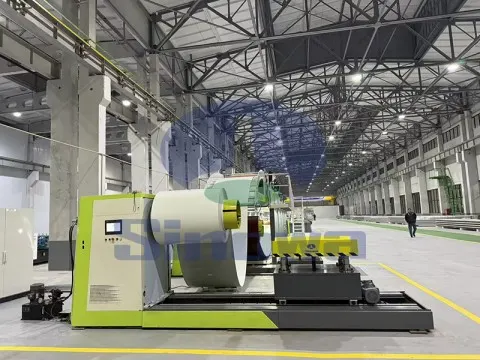
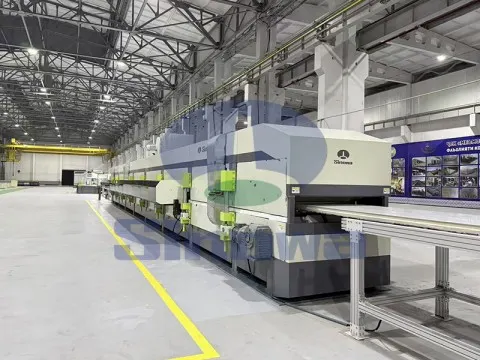
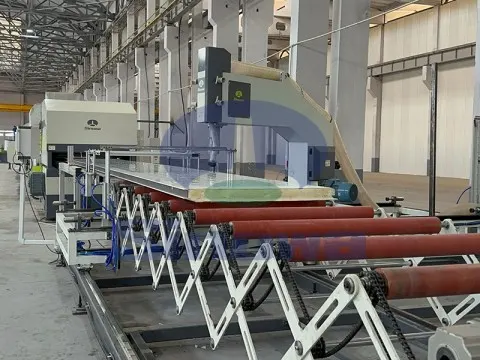
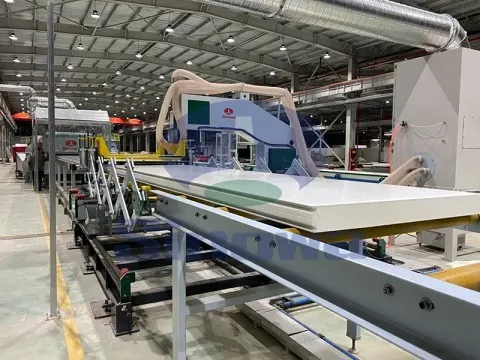
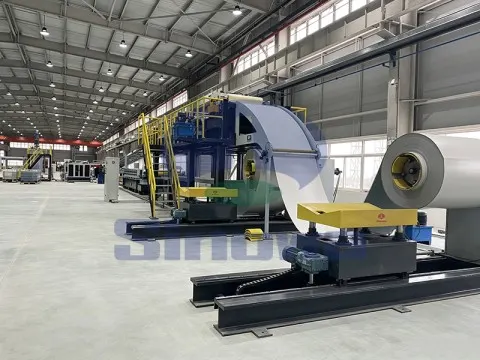
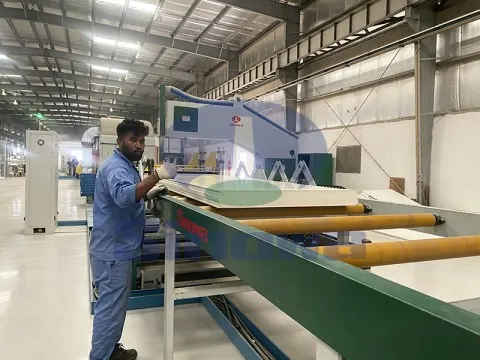
Sinowa is a professional manufacturer of sandwich panel machine in china, we provide diversified and high-performance sandwich panel production lines, including fully automatic continuous PU sandwich panel line and customized special lines to meet mass production and personalized order demands. These sandwich panel lines support processing multiple foam core materials, such as PU, PIR, mineral wool, rock wool and glass wool, covering different insulation and fireproof standards.
Featuring stable operation, high efficiency, energy saving and easy maintenance, our PU sandwich panel line deliver sandwich panels with excellent thermal insulation, fire resistance, sound insulation and lightweight durability. The finished panels are widely applied in industrial workshops, warehouse roofing and wall cladding, cold storage insulation, serving global construction and industrial insulation markets.
https://www.cnsinowa.com/faqs/what-leads-to-slow-foaming-speed-on-the-pu-foam-production-line.html
Main Products
-

Continuous PU Sandwich Panel Production Line
This continuous PU sandwich panel production line is an integrated automatic equipment. It covers uncoiling, forming, foaming, curing and cutting processes. With automatic raw material proportioning and precise temperature & pressure control, PIR sandwich panel production line continuously composites panels with double skins. Polyurethane sandwich panel production line stably produces steel and aluminum sandwich panels. Featuring high automation, the line makes fireproof and thermal-insulation panels for building enclosure and cold storage. -
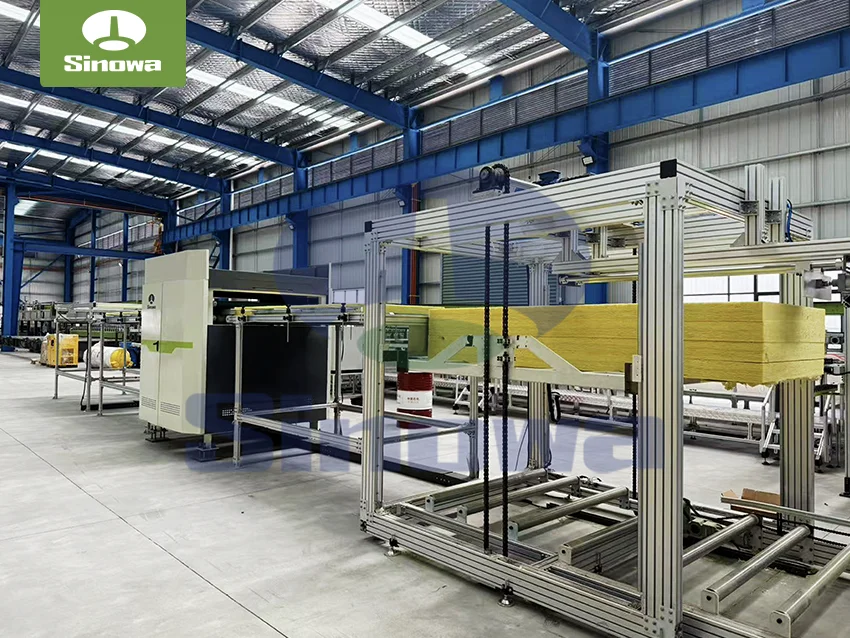
Rock Wool Sandwich Panel Production Line
Continuous rockwool sandwich panel production line is an automatic integrated production equipment, consisting of uncoiling, forming, gluing and compounding, heating curing, fixed-length cutting, automatic stacking and other modules. The mineral wool sandwich panel production line continuously conveys color steel plates and rock wool core materials to automatically complete lamination and curing, which can produce fireproof and thermal insulation sandwich panels. Featuring high automation degree and stable operation, this production line is suitable for mass production of panels used for building walls, roofs and other scenarios. -
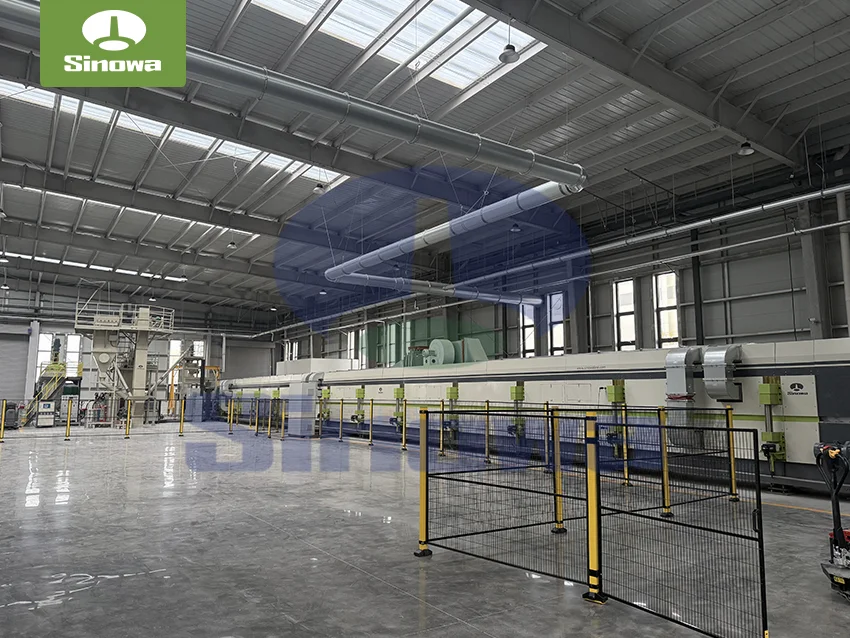
Phenolic Insulation Board Production Line
This integrated automatic production line continuously manufactures PU and phenolic insulation boards. The insulation board production line covers raw material proportioning, high-pressure foaming, laminating, curing and fixed-length cutting. Featuring high automation and stable molding, the insulation panel production line supports various surface materials. PU boards offer excellent thermal insulation, while phenolic boards have superior fire resistance. These products are widely used in construction, cold chain, ventilation ducts and other thermal insulation fields.
Other FAQs
- How To Adjust The Foaming Ratio Of The PUR Sandwich Panel Production Line
- What Safety Protection Measures Are Needed For A Polyurethane Sandwich Panel Manufacturing Line
- What Regular Maintenance Does A Polyurethane Sandwich Panel Line Need
- How To Fix Uneven Foam Density On The PU Foam Production Line
- What Raw Materials Are Required For The PUR Sandwich Panel Production Line Operation
- Emergency Fault Handling Process For PU Sandwich Panel Line Shutdown
- Polyurethane Sandwich Panel Production Equipment Lubrication Maintenance Standard
- Troubleshooting For Sandwich Panel Production Line Frequent Shutdown Failure
- How To Maintain The Mixing Head Of A PUF Sandwich Panel Production Line
- How To Solve Surface Bubble Problems Of Panels From PU Foam Core Sandwich Panel Line
Related Articles
- PU Sandwich Panel Machine With Auto Packer
- PU Sandwich Panel Machine Manufacturer From China
- PU Sandwich Panel Machine With Fire Retardant Foam Core
- Sandwich Panel Line For Cold Storage
- PUF Sandwich Panel Line With Automatic PU Mixing Head And Injection System
- PIR Insulated Sandwich Panel Machine
- PU Sandwich Panel Line For Fire-Proof Panels
- Cold Room Panel Production Line
- PU Sandwich Panel Line With Automatic Thickness Adjustment
- PU Sandwich Panel Continuous Production Line