How To Solve Foaming Instability Issues In Insulation Panel Production Line
Sep 29, 2026
Foaming instability is a prevalent and disruptive defect in the insulation panel production line, triggering uneven foam density, cell collapse and surface flaws that compromise panel thermal performance.
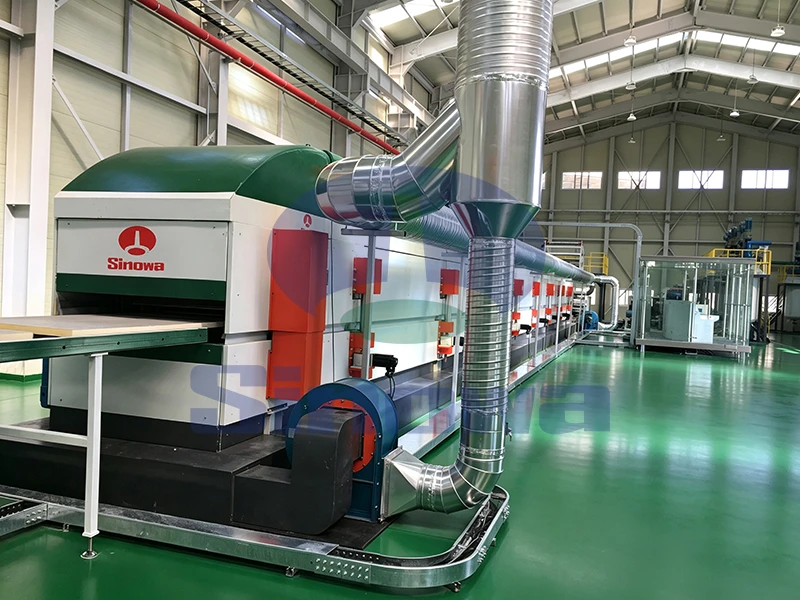
Foaming instability in the insulation panel production line manifests in diverse visible and hidden defects, all of which severely undermine the overall quality and yield of finished insulation panels. Common problematic phenomena include irregular foam cell sizes, partial foam collapse, inconsistent panel thickness, local hollow areas, and fluctuating foam density across different production batches. These issues not only lead to poor surface flatness of insulation panels but also greatly weaken their thermal insulation and structural stability, resulting in unqualified finished products that fail to meet basic usage requirements. In the continuous operation of the insulation panel production line, foaming is the core molding process that determines the key performance of insulation panels. Unlike intermittent production, the continuous running mode of the production line requires highly stable reaction states and parameter coordination. Once subtle deviations occur in raw material reaction, equipment operation or environmental conditions, foaming imbalance will immediately emerge and spread in mass production. Many production workshops frequently encounter recurring foaming instability problems due to lack of systematic cause analysis, relying only on simple parameter adjustments which cannot fundamentally eliminate defects, leading to long-term low production efficiency and high product scrap rates.
Unreasonable raw material formulation and component state deviation are the primary triggers of foaming instability in the insulation panel production line. Polyol and isocyanate, as the core reactive raw materials for foam molding, require precise proportioning and stable activity to ensure balanced gelling and blowing reactions during foaming. A common problem in actual production is the unbalanced ratio of the two core components, which either causes premature gelation that locks foam cells before full expansion or leads to slow curing that fails to support foam structure, resulting in collapse and shrinkage. Meanwhile, the moisture content in raw materials is easily overlooked; excessive moisture will trigger additional side reactions, generate redundant gas, and break the uniformity of foam nucleation. In addition, the activity of catalysts and surfactants directly affects foaming stability. Degraded or improperly dosed catalysts will disrupt the reaction rate, while insufficient surfactant dosage cannot effectively stabilize tiny foam bubbles, causing bubble merging and local hollowing. Raw material contamination caused by long-term storage or unclosed feeding systems also introduces impurities that interfere with the foaming reaction, forming inconsistent foam structures on the insulation panel surface.
Precision deviations and abnormal operation of production equipment are key mechanical factors inducing foaming instability in the insulation panel production line. The mixing system is the most critical equipment link for foam molding, and blocked or worn static mixers will lead to insufficient and uneven mixing of raw material components. Incomplete mixing makes partial areas of the foam raw material lack effective reaction components, resulting in inconsistent reaction degrees and uneven foaming height across the panel. The feeding and metering system also plays a decisive role; unstable metering pump pressure and inaccurate flow calibration will cause real-time fluctuations in raw material delivery volume, breaking the fixed proportion reaction mode required for stable foaming. Moreover, the running speed of the conveyor belt in the insulation panel production line must match the foam curing speed. If the belt speed is too fast, the uncured foam will be stretched and deformed, while excessive speed difference will cause foam layer delamination. The temperature control system of the equipment also cannot be ignored; uneven heating of the mold and conveyor leads to inconsistent reaction speeds of foam in different areas, further exacerbating foaming differences and producing defective panels with uneven density and thickness.
Fluctuations in production environment conditions are indirect but persistent factors that cause foaming instability in the insulation panel production line. Foaming reaction is highly sensitive to ambient temperature and humidity, and small environmental changes will interfere with the dynamic balance between blowing and gelling reactions. In low-temperature production environments, the overall reaction rate of raw materials slows down, the foam expansion process is delayed, and the curing speed cannot match the expansion speed, easily causing incomplete foam molding and loose cell structure. In high-temperature environments, the reaction proceeds too rapidly, leading to premature surface curing of the foam, which traps internal gas and forms internal voids or surface bulges. Excessive air humidity increases the moisture content on the substrate surface and in the production air, inducing side reactions during foaming and reducing the bonding tightness between the foam layer and the base panel. In addition, unstable air circulation in the production workshop causes inconsistent heat dissipation speeds on different parts of the panel during foaming and curing. Poor workshop cleanliness also allows floating dust and impurities to adhere to the uncured foam surface, damaging the integrity of the foam structure and causing local foaming failure in continuous production.
Scientific parameter optimization and real-time process adjustment are core measures to eliminate foaming instability in the insulation panel production line. First, enterprises need to establish standardized raw material management procedures, strictly controlling raw material proportioning, and regularly testing raw material activity and moisture content to eliminate quality deviations from the source. It is necessary to optimize the dosage of catalysts and surfactants according to real-time production conditions, ensuring that the foam nucleation, expansion and curing processes are synchronized and balanced. Second, regular calibration and maintenance of core production equipment should be implemented, including cleaning mixer blockages, correcting metering pump flow errors, and debugging conveyor speed and mold temperature. Matching equipment operating parameters with foam reaction characteristics can effectively avoid structural defects caused by mechanical deviations. Meanwhile, dynamic parameter adjustment should be adopted according to environmental changes, appropriately increasing catalyst dosage or raising preheating temperature in low-temperature and low-humidity seasons, and reducing reaction speed and enhancing ventilation heat dissipation in high-temperature and high-humidity environments, to maintain stable foaming reaction state throughout the year.
Standardized daily operation management and regular production system maintenance are fundamental guarantees for long-term stable foaming quality in the insulation panel production line. Many foaming instability problems stem from irregular manual operations and neglected daily maintenance. Production operators need to follow unified operation specifications to avoid arbitrary adjustment of equipment parameters and raw material ratios, and master real-time judgment methods for foaming states to detect subtle abnormalities in the early stage of production. It is essential to establish a daily equipment inspection mechanism, focusing on checking the operating status of metering systems, mixing systems and temperature control systems, and replacing worn parts regularly to prevent equipment aging from affecting production accuracy. In addition, strengthening workshop environmental management, maintaining constant temperature and humidity, improving air circulation and cleanliness, and avoiding substrate and raw material moisture contamination can effectively reduce external interference on foaming reactions. Through standardized operation, regular maintenance and refined process management, the insulation panel production line can maintain consistent foaming effects, significantly reduce defective rates, and realize stable and high-quality continuous production of insulation panels.
Gallery
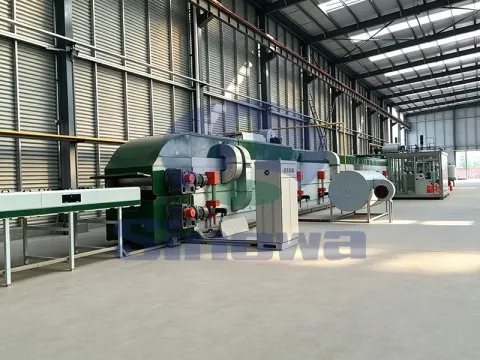
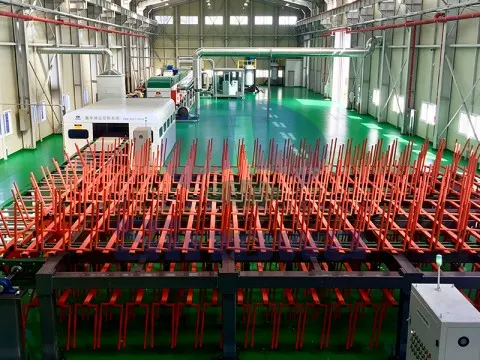
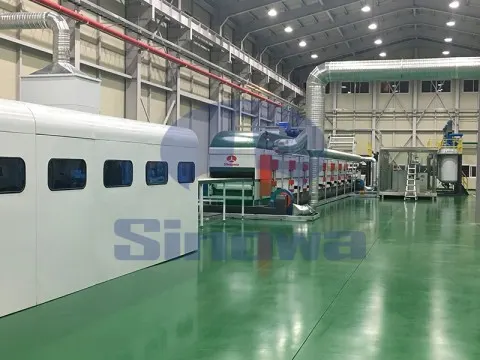
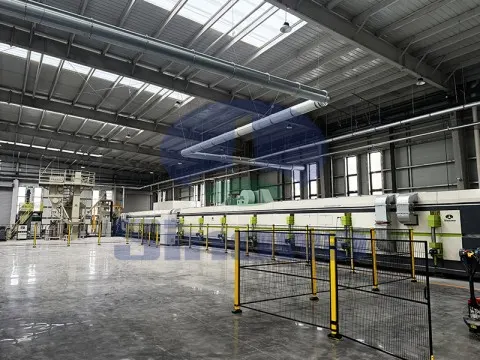
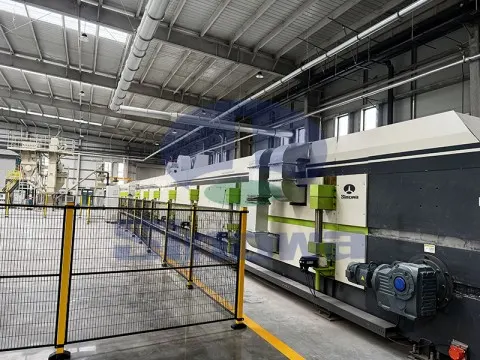
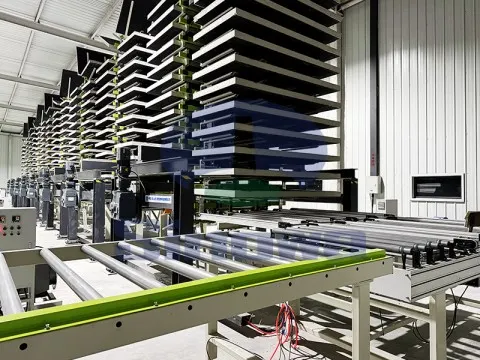
Sinowa is a professional manufacturer of sandwich panel machine in china, we provide diversified and high-performance sandwich panel production lines, including fully automatic continuous PU sandwich panel line and customized special lines to meet mass production and personalized order demands. These sandwich panel lines support processing multiple foam core materials, such as PU, PIR, mineral wool, rock wool and glass wool, covering different insulation and fireproof standards.
Featuring stable operation, high efficiency, energy saving and easy maintenance, our PU sandwich panel line deliver sandwich panels with excellent thermal insulation, fire resistance, sound insulation and lightweight durability. The finished panels are widely applied in industrial workshops, warehouse roofing and wall cladding, cold storage insulation, serving global construction and industrial insulation markets.
Main Products
-

Continuous PU Sandwich Panel Production Line
This continuous PU sandwich panel production line is an integrated automatic equipment. It covers uncoiling, forming, foaming, curing and cutting processes. With automatic raw material proportioning and precise temperature & pressure control, PIR sandwich panel production line continuously composites panels with double skins. Polyurethane sandwich panel production line stably produces steel and aluminum sandwich panels. Featuring high automation, the line makes fireproof and thermal-insulation panels for building enclosure and cold storage. -

Rock Wool Sandwich Panel Production Line
Continuous rockwool sandwich panel production line is an automatic integrated production equipment, consisting of uncoiling, forming, gluing and compounding, heating curing, fixed-length cutting, automatic stacking and other modules. The mineral wool sandwich panel production line continuously conveys color steel plates and rock wool core materials to automatically complete lamination and curing, which can produce fireproof and thermal insulation sandwich panels. Featuring high automation degree and stable operation, this production line is suitable for mass production of panels used for building walls, roofs and other scenarios. -

Phenolic Insulation Board Production Line
This integrated automatic production line continuously manufactures PU and phenolic insulation boards. The insulation board production line covers raw material proportioning, high-pressure foaming, laminating, curing and fixed-length cutting. Featuring high automation and stable molding, the insulation panel production line supports various surface materials. PU boards offer excellent thermal insulation, while phenolic boards have superior fire resistance. These products are widely used in construction, cold chain, ventilation ducts and other thermal insulation fields.
Other FAQs
- How To Improve The Flatness Of Panels Made By PIR Foam Core Sandwich Panel Line
- What Is A PU Sandwich Panel Machine And How Does It Work
- Why Is The Curing Effect Poor In Insulation Board Production Line
- How To Adjust The Foaming Ratio Of A Polyurethane Sandwich Panel Production Line
- Continuous PU Sandwich Panel Production Line Speed Adjustment Synchronization Method
- Compressed Air Supply Requirement For PU Sandwich Panel Line Operation
- Polyurethane Sandwich Panel Production Line Fault Alarm System Debugging Method
- Sandwich Panel Production Line Startup And Shutdown Standard Operating Procedures
- Maximum Production Capacity Of Polyurethane Sandwich Panel Production Line
- How Much Does A Full Automatic Sandwich Panel Machine Cost
Related Articles
- Sandwich Panel Assembly Line
- Insulation Panel Production Line
- PU Sandwich Panel Production Line With Rock Wool-PU Composite Core
- Continuous PU Sandwich Panel Production Equipment
- Thermal Insulation Panel Machines
- Continuous PUR PIR Sandwich Panel Production Line
- High-speed Sandwich Panel Machine
- Continuous PU Sandwich Panel Production Machinery
- PU Sandwich Panel Production Line
- PIR Panel Machine