Maximum Production Capacity Of Polyurethane Sandwich Panel Production Line
Sep 17, 2026
The maximum production capacity of a polyurethane sandwich panel production line refers to its optimal output under stable automated operation, constrained by line speed, structural configuration and processing parameters.
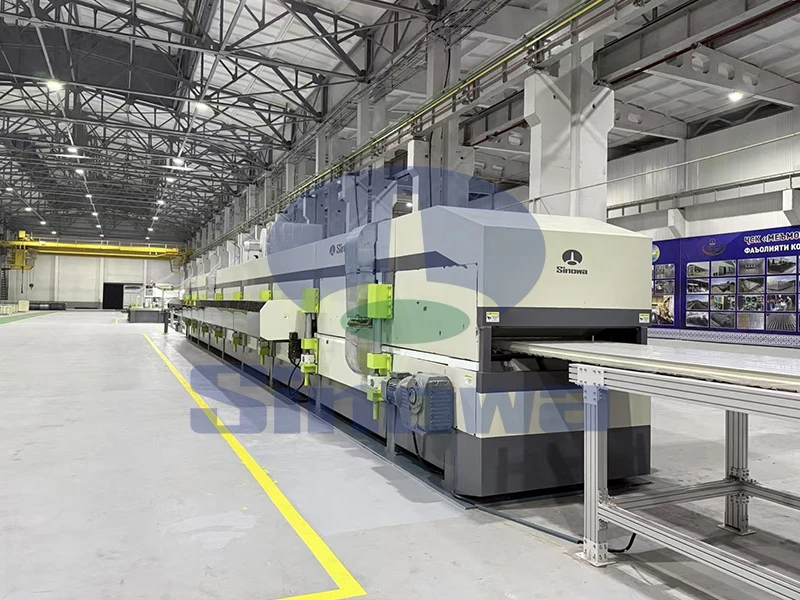
The maximum production capacity of a polyurethane sandwich panel production line is fundamentally defined by its continuous operating speed, which serves as the core indicator of overall production efficiency. Industrial continuous production lines feature adjustable operating speeds that vary according to panel specifications and foaming curing requirements, with conventional stable operating speeds ranging from 3 to 15 meters per minute under standard production conditions. This speed range is not arbitrarily set but matched to the entire line’s processing rhythm, covering uncoiling, roll forming, high-pressure foaming, composite molding, cutting and stacking procedures. Each functional unit must maintain synchronous operation to avoid bottlenecks that restrict overall capacity. For conventional medium-thickness polyurethane sandwich panels widely used in construction and cold storage insulation, the line can sustain a steady medium-to-high speed operation, achieving efficient continuous output. When producing standard 50mm thick panels, the line can generate a considerable hourly output area, and long-term stable operation translates to substantial daily and annual production volumes. It is worth noting that the extreme maximum speed is only applicable to standard-sized panels with simple structures, while special thickened or customized panels require reduced speed to ensure foaming uniformity and composite bonding quality, which directly adjusts the actual maximum effective capacity of the equipment.
Equipment structural configuration and functional unit coordination are critical internal factors that determine the upper production capacity limit of polyurethane sandwich panel lines. A complete automated production line integrates multiple interconnected modules, including decoiling systems, roll forming units, preheating devices, high-pressure foaming systems, double-belt molding machines, fixed-length cutting mechanisms and automatic stacking devices. The matching performance of each module directly restricts the overall operational efficiency. High-capacity production lines adopt extended double-belt track designs, which effectively prolong the foaming and curing time of polyurethane materials, allowing the line to maintain high-speed operation while ensuring full material reaction and stable panel molding. In addition, advanced multi-component online foaming systems support precise adjustment of material ratios and spraying volumes, eliminating foaming defects that may result from high-speed production and avoiding capacity losses caused by defective products. The automation level of the line also affects maximum capacity: fully automated lines with intelligent synchronization control reduce manual intervention and equipment standby time, enabling long-term uninterrupted operation. In contrast, semi-automatic lines require frequent manual adjustment and inspection, which limits continuous operating time and lowers the actual maximum effective output despite similar theoretical speed parameters.
Product specification diversity imposes significant restrictions on the maximum practical production capacity of polyurethane sandwich panel production lines. Panel thickness, width, length and core material density all alter the line’s load and processing cycle, thus adjusting the achievable maximum output. Standard thin and medium-thickness panels with uniform specifications allow the production line to run at the highest stable speed, realizing peak theoretical capacity. However, ultra-thick panels for special insulation scenarios require longer foaming curing and molding time, forcing the line to reduce operating speed to prevent incomplete material curing and surface unevenness. Similarly, customized ultra-long panels increase the load of the cutting and stacking units, slowing down the overall production rhythm. The density of the polyurethane core material also plays a key role: high-density formulas require more precise material supply and foaming control, which slightly reduces production speed to guarantee product consistency. Production lines with strong specification adaptability can quickly switch operating parameters according to product requirements, minimizing capacity fluctuations during product conversion, while single-functional lines face obvious capacity attenuation when producing non-standard products, failing to reach the optimal production state.
Operational stability and maintenance cycles are key factors bridging theoretical maximum capacity and actual industrial output. The theoretical maximum speed and annual output of polyurethane sandwich panel lines are calculated based on ideal continuous operation conditions, while actual production is affected by equipment wear, routine maintenance and parameter debugging. Long-term high-speed operation will cause slight wear on transmission components and molding belts, which may lead to operational jitter and product quality deviations if not maintained in a timely manner, forcing temporary speed reduction or equipment shutdown. Scientific daily maintenance mechanisms, including regular lubrication of transmission parts, calibration of foaming spraying systems and inspection of electrical control systems, can effectively extend the continuous stable operation cycle of the line and maximize effective production time. In addition, standardized operational procedures avoid parameter misoperation and abnormal equipment shutdowns. Production lines with mature maintenance and operation management can maintain high-capacity operation for most of the working cycle, with only short reserved downtime for regular maintenance, achieving an actual output close to the theoretical maximum value. Poorly managed lines often face frequent equipment failures and debugging pauses, resulting in a huge gap between actual output and theoretical maximum capacity.
Working mode and production scheduling strategies directly optimize the utilization of the maximum capacity of polyurethane sandwich panel production lines. As automated continuous production equipment, these lines are most suitable for long-cycle uninterrupted operation, and reasonable scheduling can fully release their capacity potential. Round-the-clock shift production modes make full use of the line’s continuous operation advantages, greatly increasing daily effective production time compared with single-shift operation. Enterprises can formulate targeted scheduling plans according to order demand and equipment status: for bulk orders of standard panels, the line is set to operate at stable high speed to sustain peak capacity output; for mixed orders of multiple specifications, flexible parameter switching and segmented production are adopted to balance production efficiency and product quality, avoiding capacity waste caused by frequent line shutdowns and debugging. Meanwhile, reasonable production interval arrangement can prevent equipment overloading and thermal accumulation from long-term high-speed operation, ensuring stable performance of core components and maintaining long-term maximum effective capacity. Scientific scheduling eliminates idle time and unreasonable load fluctuations, realizing the maximum economic benefit of the equipment’s production capacity.
Technological upgrading and intelligent optimization are core approaches to continuously break through the capacity limit of traditional polyurethane sandwich panel production lines. With the iteration of automated manufacturing technology, modern production lines have realized intelligent synchronous control of all functional modules, solving the bottleneck of asynchronous operation of individual units that restricts capacity improvement. Intelligent sensing systems can monitor foaming status, molding pressure and line operating speed in real time, automatically adjusting operational parameters to maintain optimal production efficiency under different product specifications. Upgraded high-efficiency foaming equipment improves material reaction speed and molding efficiency, shortening the single-panel processing cycle and further lifting the upper limit of production speed. In addition, the integrated design of automatic stacking and packaging units reduces post-processing time, realizing seamless connection between front-end molding and back-end finished product processing, and eliminating capacity bottlenecks in the final production link. Continuous technological optimization not only improves the theoretical maximum operating speed of the production line but also enhances the stability of high-capacity operation, enabling the equipment to maintain efficient and high-quality output for a long time and effectively expanding the overall production capacity level.
Main Products
-

Continuous PU Sandwich Panel Production Line
This continuous PU sandwich panel production line is an integrated automatic equipment. It covers uncoiling, forming, foaming, curing and cutting processes. With automatic raw material proportioning and precise temperature & pressure control, PIR sandwich panel production line continuously composites panels with double skins. Polyurethane sandwich panel production line stably produces steel and aluminum sandwich panels. Featuring high automation, the line makes fireproof and thermal-insulation panels for building enclosure and cold storage. -

Rock Wool Sandwich Panel Production Line
Continuous rockwool sandwich panel production line is an automatic integrated production equipment, consisting of uncoiling, forming, gluing and compounding, heating curing, fixed-length cutting, automatic stacking and other modules. The mineral wool sandwich panel production line continuously conveys color steel plates and rock wool core materials to automatically complete lamination and curing, which can produce fireproof and thermal insulation sandwich panels. Featuring high automation degree and stable operation, this production line is suitable for mass production of panels used for building walls, roofs and other scenarios. -

Phenolic Insulation Board Production Line
This integrated automatic production line continuously manufactures PU and phenolic insulation boards. The insulation board production line covers raw material proportioning, high-pressure foaming, laminating, curing and fixed-length cutting. Featuring high automation and stable molding, the insulation panel production line supports various surface materials. PU boards offer excellent thermal insulation, while phenolic boards have superior fire resistance. These products are widely used in construction, cold chain, ventilation ducts and other thermal insulation fields.
Other FAQs
- Production Efficiency Improvement Measures Of Sandwich Panel Production Line
- Production Line Operation Steps For Continuous PU Sandwich Panel Molding
- Price Composition Of Complete PU Sandwich Panel Production Line
- Energy Consumption Standard Of Automatic PU Sandwich Panel Production Equipment
- Troubleshooting For Sandwich Panel Production Line Frequent Shutdown Failure