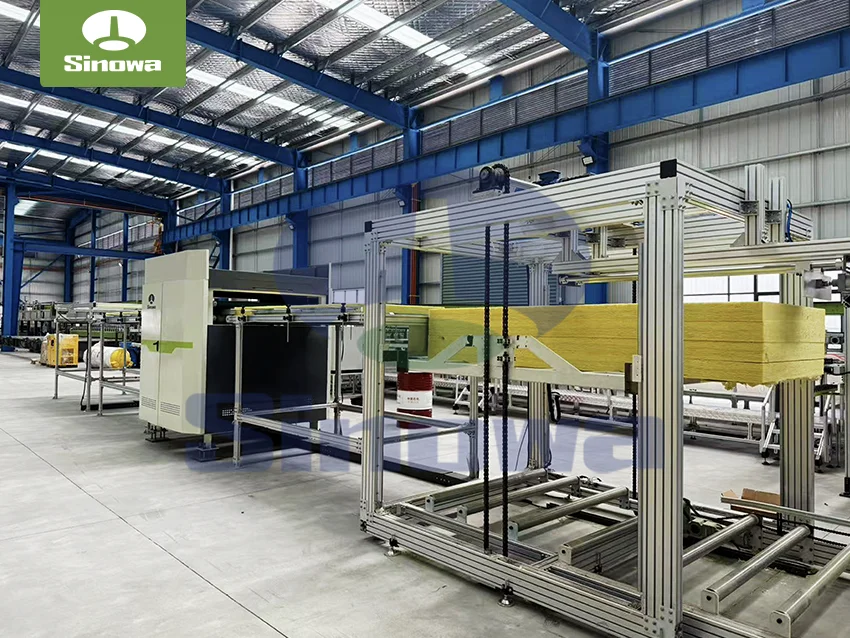
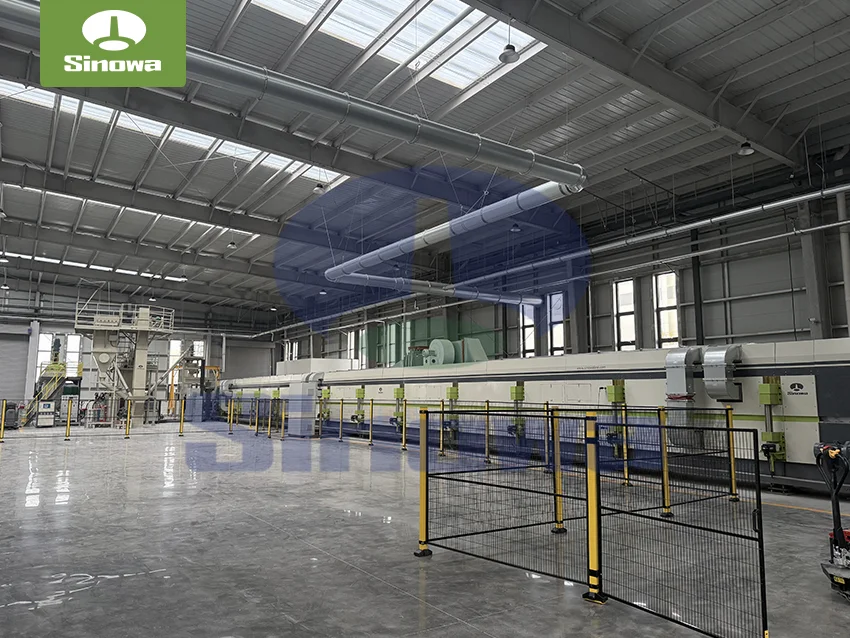
sandwich panel line
The essential value of the energy-saving PU sandwich panel line lies in its dual energy-saving advantages covering the entire product lifecycle, including production manufacturing and terminal application. Different from ordinary sandwich panel production line for architectural decoration, cold storage-specific PU sandwich panels require ultra-low thermal conductivity, uniform foam density, strong interfacial bonding strength, and excellent low-temperature resistance to adapt to long-term low-temperature working environments. ordinary production lines often adopt fixed-speed operation modes and open production structures, which not only consume large amounts of electric energy during equipment operation but also cause uneven foaming reactions due to unstable temperature and pressure control, resulting in local thermal bridges inside the panels. These defective panels will lead to frequent cold air leakage and temperature fluctuation in cold storage, forcing refrigeration equipment to run at high load for a long time and causing massive energy waste. The upgraded energy-saving production line fundamentally optimizes the production mechanism, taking energy efficiency and product performance stability as the core design goals, and builds a closed, precise, and low-consumption full-process production system.
In terms of mechanical structure and power system optimization, the energy-saving PU sandwich panel production line abandons the traditional hydraulic driving structure with high energy consumption and high maintenance loss, and adopts a full servo power drive and frequency conversion speed regulation system. The traditional hydraulic system will generate continuous power loss during long-term operation, and problems such as oil leakage and pipeline aging will further reduce transmission efficiency and increase energy consumption. The servo drive mechanism adopted by the energy-saving line realizes stepless speed regulation and precise power output according to production load changes, avoiding invalid energy consumption caused by constant-speed full-load operation of equipment. The whole set of power equipment maintains high transmission efficiency under different production speeds and raw material feeding amounts, reducing idle power consumption and running loss in the production process. Meanwhile, the equipment is equipped with an integrated closed insulation structure for the production area, which can quickly raise and stabilize the production temperature required for PU foaming reaction within a short time after startup. Compared with the open production environment of traditional equipment, this structure greatly reduces heat loss in the production space, shortens the preheating cycle of equipment startup, and effectively cuts down the energy consumption of repeated heating in batch production.
The core process optimization of the polyurethane sandwich panel production line focuses on the precise control of PU foaming and curing links, which is the key to realizing product energy-saving performance and production energy consumption reduction. The thermal insulation capacity of cold storage PU sandwich panels mainly depends on the uniformity and compactness of the internal polyurethane foam core layer. Uneven material injection and unstable reaction temperature will lead to inconsistent foam density, forming sparse pores and thermal bridge areas inside the panel, which greatly weakens the thermal insulation effect. The energy-saving production line is equipped with a high-precision material proportional injection system, which can realize dynamic matching of raw material ratio and injection volume according to different panel thickness specifications and production speeds. The system maintains stable pressure and flow in the raw material conveying process, ensuring that the polyurethane raw materials are fully and evenly mixed before injection, avoiding material waste and incomplete reaction caused by unreasonable proportioning. In the foaming and curing stage, the equipment adopts segmented constant-temperature control technology, forming a gradient temperature field suitable for PU low-temperature foaming reaction. This precise temperature control mode not only ensures that the foam expands evenly and forms a compact and uniform cellular structure but also avoids excessive energy input caused by blind high-temperature heating.
The continuous laminating and curing system of the polyurethane sandwich panel line further optimizes product forming quality and overall energy utilization efficiency. The double-belt laminating mechanism runs synchronously with the front-end feeding and foaming system, maintaining constant and uniform pressure on the panel during the foam curing process. Stable pressure environment enables the polyurethane foam to form a firm bonding interface with the upper and lower surface materials, eliminating degumming, warping and other quality defects that easily occur in traditional production processes. The fully enclosed curing channel reduces external air interference, maintains the stability of the internal reaction environment, and shortens the curing cycle of the panel. Efficient curing molding reduces repeated processing and defective product rework in production, indirectly saving raw material and energy consumption caused by waste products. In addition, the flying cutting system matched with the production line realizes synchronous tracking and fixed-length cutting of continuous plates, with high cutting precision and no edge loss, maximizing the utilization rate of raw materials and avoiding resource waste in the production process.
From the perspective of terminal application energy-saving effect, the panels produced by this energy-saving polyurethane sandwich panel machine have extremely low thermal conductivity and excellent overall thermal insulation performance. The precise process control enables the internal foam density of the panel to be kept in the optimal stable range, with uniform pore structure and no local loose areas, which effectively blocks the heat exchange between the inside and outside of the cold storage. In actual cold storage operation, high-quality PU sandwich panels can significantly reduce the heat transfer rate of the enclosure structure, reduce the startup frequency and operating load of refrigeration units, and maintain long-term stable low-temperature environment inside the cold storage. Compared with panels produced by traditional production lines, the finished products of the energy-saving line can effectively reduce the cooling load of cold storage, greatly cut down the long-term operating energy consumption of cold chain equipment, and create sustained energy-saving benefits for cold storage operation enterprises. This terminal energy-saving value far exceeds the energy consumption saved in the production process, forming a full-cycle energy-saving system from manufacturing to application.
The intelligent control system configuration of the energy-saving PU sandwich panel machine is an important guarantee for stable energy-saving operation. The integrated intelligent control module realizes full-process automatic monitoring and parameter adjustment of feeding, foaming, laminating, curing, cutting and finished product output. The system can automatically identify production specification changes, adjust operating parameters such as equipment speed, raw material injection volume, and curing temperature in real time, and maintain the optimal production state under different working conditions. It avoids parameter deviation and energy waste caused by manual operation errors and experience differences. Meanwhile, the system has an automatic energy-saving standby function. When there is no material feeding or temporary production pause, the equipment will automatically reduce operating power and enter the low-energy standby state, avoiding continuous high-power operation energy consumption of traditional equipment in idle state. The real-time data monitoring function can also record the energy consumption and production status of each link, providing data support for subsequent production energy consumption optimization and process adjustment.
In terms of operational stability and environmental adaptability, the energy-saving sandwich panel manufacturing line is optimized for long-term continuous industrial production scenarios. The core mechanical components adopt low-wear and high-efficiency structural design, which reduces equipment failure rate and maintenance frequency, and avoids energy consumption loss and production shutdown waste caused by equipment failure. The whole production process realizes closed operation, with stable reaction and no excessive raw material volatilization, which not only improves the utilization rate of polyurethane raw materials but also reduces the impact of production links on the surrounding environment. The equipment can maintain stable energy-saving operation in different temperature and humidity environments, adapt to the continuous production needs of different production bases, and ensure the consistency of product quality and energy-saving effect in mass production.
With the global emphasis on energy conservation, emission reduction and green low-carbon development, the cold storage industry is accelerating the transformation and upgrading of energy-saving and low-consumption operation modes. As the key manufacturing equipment of cold storage thermal insulation materials, the energy-saving PU sandwich panel line plays an indispensable role in promoting the green development of the cold chain industry. It solves the two major industry problems of high production energy consumption of panel products and high operating energy consumption of terminal cold storage through technological optimization and process innovation. On the one hand, it reduces the energy consumption and resource waste in the panel manufacturing process and realizes green and efficient production of building materials; on the other hand, it provides high-performance thermal insulation panels for cold storage facilities, effectively reducing the overall energy consumption of cold chain operation and helping the cold storage industry achieve low-carbon operation goals.
In the future, with the continuous upgrading of cold storage construction standards and the continuous improvement of energy-saving requirements, the energy-saving PU sandwich panel making line will further develop in the direction of higher intelligence, lower energy consumption and higher efficiency. The continuous optimization of process technology and control system will further narrow down the energy consumption per unit of production, improve the uniformity and stability of finished product performance, and provide more reliable equipment support for the large-scale and high-quality construction of green energy-saving cold storage. This type of energy-saving production equipment not only improves the economic benefits of panel manufacturing enterprises by reducing production costs and improving product quality but also brings long-term social benefits for energy conservation and emission reduction in the cold chain logistics industry, becoming an important driving force for the iterative upgrading of the entire cold storage building materials manufacturing field.
https://www.cnsinowa.com/sandwich-panel-machines/energy-saving-pu-sandwich-panel-making-line-for-cold-storage.html