 sandwich panel line
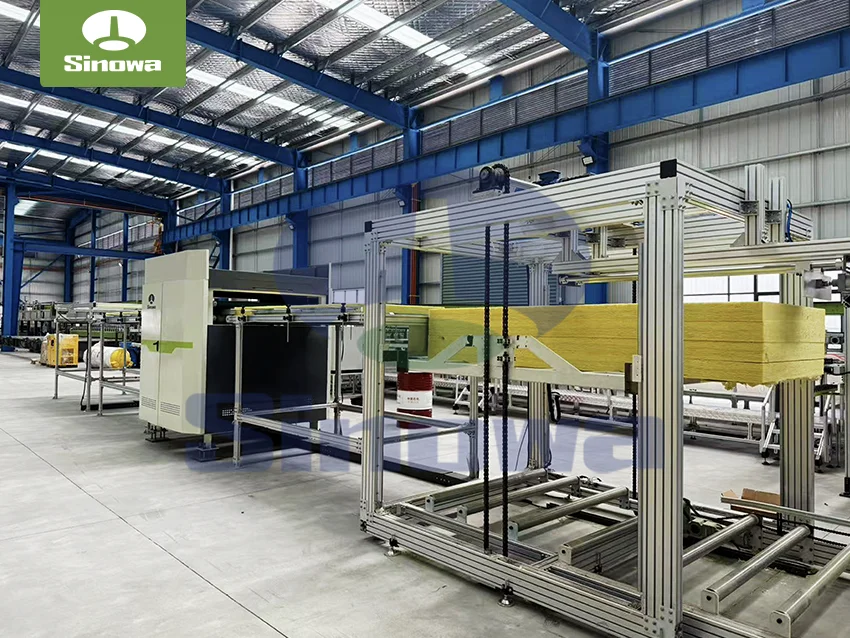
The primary core principle of continuous PU sandwich panel line layout design is process continuity and rational process sequence arrangement, which is the key to eliminating production dead zones and improving overall operational efficiency. The entire production process follows the inherent physical and chemical processing logic of PU sandwich panel manufacturing, starting from the orderly feeding of upper and lower base materials, including color steel plates, aluminum plates, and other surface materials, as well as PU foam raw materials. The layout arranges feeding equipment, pretreatment devices, and material leveling mechanisms at the initial production section to ensure flat and stable delivery of base materials, avoiding material deviation and wrinkling that may affect subsequent lamination quality. After material pretreatment, the PU raw material spraying and high-pressure foaming area is closely connected to realize instant mixing and uniform pouring of polyurethane materials, ensuring that the foam raw materials fully fill the gap between the upper and lower base materials. Subsequent continuous lamination, constant-temperature curing, and shaping processes are arranged in a linear and continuous trajectory to ensure that the foaming and curing reactions proceed stably without interruption. This sequential layout eliminates intermediate material handling and turnover links, reduces production cycle intervals, and realizes seamless connection of the entire production process from raw material input to semi-finished product shaping.
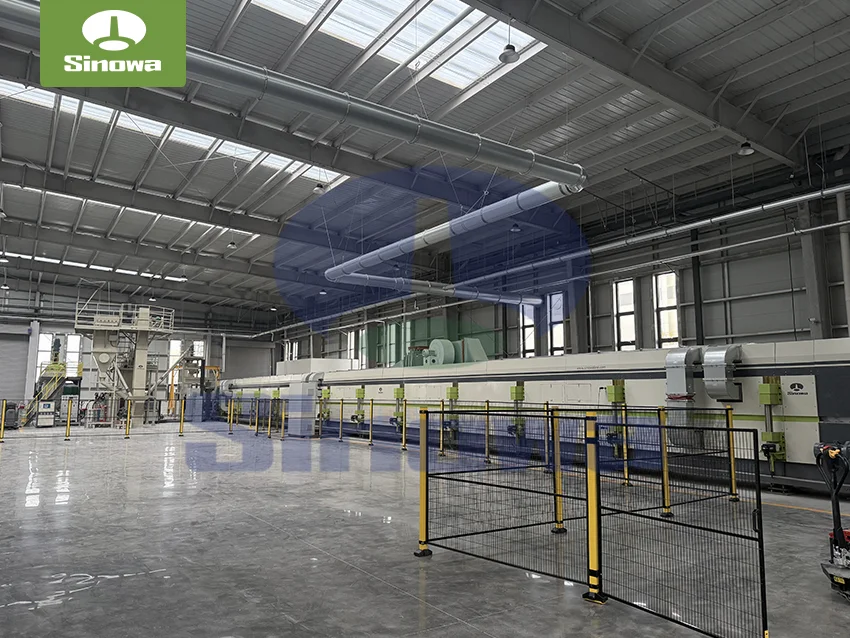
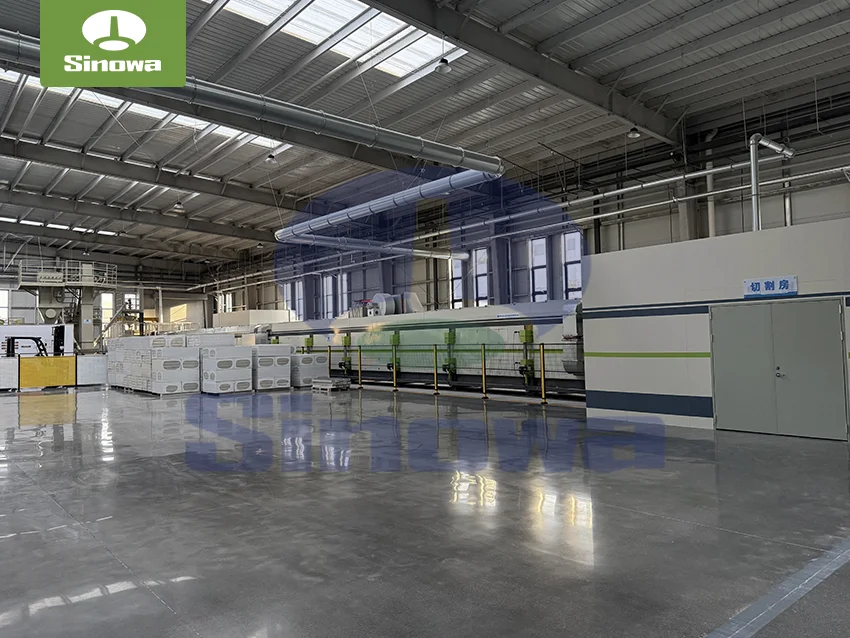
Spatial utilization optimization is a crucial part of continuous PU sandwich panel line layout design, aiming to maximize the use of factory building space while ensuring standardized and safe production operations. Different from discrete production equipment layout, the continuous production line adopts an overall linear layout as the main body, with functional auxiliary equipment reasonably distributed on both sides of the main line, which avoids the waste of longitudinal space and the confusion of cross-process operations. In the longitudinal direction of the production line, the equipment spacing is accurately reserved according to the curing time requirements of PU materials and the running speed of the production line, ensuring sufficient reaction space for panel foaming and shaping without redundant idle space. In the transverse direction, independent operation channels, equipment maintenance areas, and raw material temporary storage areas are reasonably divided on both sides of the main production line. The operation channels are set to meet the daily patrol and manual auxiliary operation needs of workers, while the maintenance areas reserve sufficient space for equipment disassembly, repair, and daily debugging. The temporary storage area is close to the feeding end, which facilitates rapid material replenishment and avoids long-distance material transportation. This hierarchical and partitioned spatial layout effectively solves the problems of crowded equipment placement, chaotic on-site management, and low space utilization in traditional layout schemes.
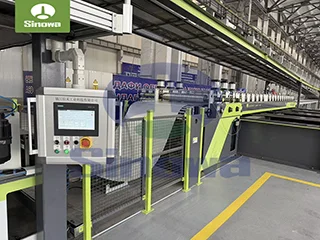
Automation coordination and production rhythm matching are important indicators to measure the rationality of continuous PU sandwich panel line layout design. Modern continuous PU sandwich panel production relies on highly automated integrated systems, and the layout design needs to fully adapt to the collaborative operation of mechanical transmission, automatic spraying, intelligent constant temperature control, and precise cutting systems. The layout uniformly plans the transmission speed matching of each section of the production line, ensuring that the feeding speed, foaming spraying speed, lamination transmission speed, and final cutting and stacking speed maintain a synchronous and stable rhythm, avoiding product quality defects such as uneven foaming and panel deformation caused by speed mismatch. Meanwhile, the layout integrates automatic detection equipment into each key production link, including material deviation detection, foam thickness detection, and curing temperature monitoring devices, which are arranged at fixed nodes of the production line to realize real-time monitoring of the production process. The signal transmission lines and control circuits of all automated equipment are arranged in a centralized and standardized manner along the production line, which reduces circuit disorder and signal interference, improves the stability of automatic system operation, and lays a foundation for unmanned and intelligent continuous production.
Operational safety and maintenance convenience are indispensable optimization dimensions in continuous PU sandwich panel line layout design, ensuring long-term stable and low-failure operation of the production line. PU foaming production involves chemical raw material mixing and thermal reaction processes, so the layout design strictly distinguishes the chemical operation area, thermal curing area, and finished product output area to form independent functional safety zones. The raw material mixing and spraying area is arranged in a well-ventilated and relatively independent space, with reserved safety operation intervals to avoid potential safety hazards caused by raw material splashing and volatile gas accumulation. The high-temperature curing area is isolated from manual intensive operation areas, with protective space reserved around the constant-temperature curing equipment to prevent scalding risks during equipment operation and debugging. In terms of equipment maintenance, the layout avoids embedded and fully enclosed equipment arrangement, and all core equipment and vulnerable parts are set in accessible positions. The maintenance channels and operation gaps are uniformly standardized to facilitate daily cleaning, parts replacement, and fault troubleshooting. In addition, the layout reserves dedicated channels for daily equipment inspection and emergency disposal, which can quickly respond to sudden production faults and effectively reduce production downtime losses.
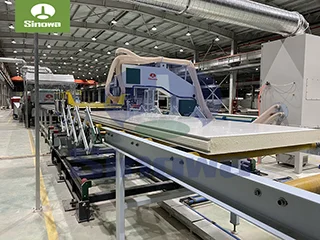
Product quality stability control is deeply embedded in the layout design of continuous PU sandwich panel production lines, realizing whole-process quality optimization through scientific equipment collocation and process layout. The core factors affecting the quality of PU sandwich panels include foaming uniformity, lamination compactness, curing adequacy, and overall flatness, and the layout design targets these key links for targeted optimization. The raw material spraying and foaming area adopts a centralized symmetric layout, which ensures that the polyurethane foam materials are evenly distributed in the transverse direction of the panel, avoiding local hollowing and uneven density. The continuous lamination equipment is arranged in parallel with the transmission track, with multiple groups of pressing rollers arranged in sections to realize gradual compression and shaping, ensuring the bonding compactness between the foam layer and the base material. The constant-temperature curing section adopts an extended integrated layout, which ensures that the panels maintain a stable temperature environment during the continuous transmission process, realizing sufficient and uniform curing reactions and avoiding panel deformation and performance attenuation caused by incomplete curing. The subsequent trimming and cutting area is closely connected with the curing outlet, realizing one-time precise shaping of the finished panel and avoiding secondary processing errors caused by intermediate turnover.
Production flexibility and scalable upgrade design are forward-looking contents of modern continuous PU sandwich panel line layout design, adapting to the diversified and customized development trend of the sandwich panel market. Traditional fixed layout production lines can only adapt to single-specification product production, which has poor adaptability to market demand changes. The optimized modern layout adopts a modular combined layout mode on the premise of ensuring the continuity of the main production line. Each functional section of feeding, foaming, lamination, and cutting is set with adjustable installation positions and reserved equipment expansion interfaces, which can adapt to the production of sandwich panels with different thicknesses, widths, and surface materials by adjusting equipment parameters and partial component positions. Meanwhile, the overall layout reserves sufficient expansion space on the basis of meeting current production needs, which can meet the subsequent upgrading of automated equipment, increase of auxiliary production processes, and expansion of production capacity. This flexible layout design enables the production line to switch production specifications efficiently and quickly, reduces the transformation cost of production equipment, and greatly improves the long-term service value and market adaptability of the production system.
Energy consumption optimization and environmental adaptation are key optimization directions for the iterative upgrading of continuous PU sandwich panel line layout design. In actual production operation, the layout structure directly affects the energy consumption level of equipment operation and the on-site environmental control effect. The optimized layout shortens the transmission distance of raw materials and finished products, reduces the energy consumption of mechanical transmission equipment, and realizes energy-saving operation of the whole line. The high-temperature curing area adopts a centralized closed layout, which reduces heat loss, improves the utilization rate of thermal energy, and effectively reduces the comprehensive energy consumption of thermal equipment. In terms of environmental protection, the layout centrally arranges waste gas collection, residual material recovery, and dust removal equipment at the key links of foaming and trimming, realizing centralized treatment of production waste and reducing the impact of production links on the on-site environment. In addition, the overall layout fully adapts to the ventilation, lighting, and space height conditions of the factory building, makes full use of the inherent environmental conditions of the plant to assist production operation, further optimizes the production operating environment, and realizes the coordinated development of high-efficiency production, energy saving, and environmental protection.
https://www.cnsinowa.com/sandwich-panel-machines/continuous-pu-sandwich-panel-line-layout-design.html