sandwich panel line
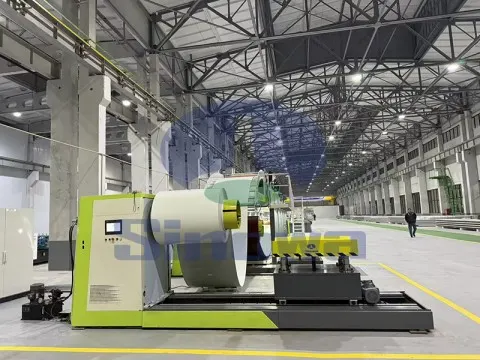
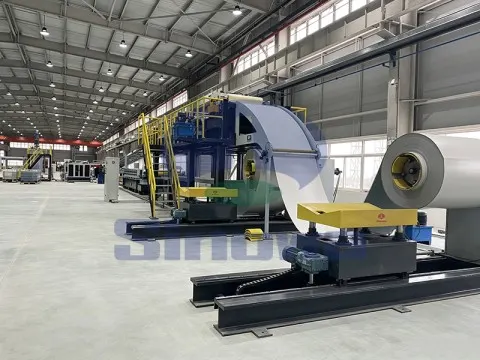
The core engineering challenge of a dual-substrate line lies in the difference in mechanical and thermal behaviour between galvanized steel and aluminum. Galvanized coils are stiffer, heavier and have a higher heat capacity, meaning they absorb more thermal energy before the surface reaches the activation temperature needed for good polyurethane adhesion. Aluminum, by contrast, is roughly one third the density of steel and has a much higher thermal conductivity, so it heats up quickly but also cools rapidly once it leaves the pre-heating oven. A line designed for both substrates therefore needs a pre-heating section whose temperature profile and dwell time can be tuned per material, rather than fixed at a single set point. Infrared or forced-convection ovens with zone-by-zone control allow the operator to dial in a steel recipe and an aluminum recipe, store them in the PLC, and switch between them in minutes. The lower stiffness of aluminum also affects coil handling: decoiler mandrels must be sized with adjustable expansion jaws and adequate back-tension control, because aluminum coils are more prone to edge wave, coil set and scratching if tension is applied unevenly. Pay-off carts with hydraulic loading, peeler tables and accumulator loops become essential so that coil changes can be made without stopping the continuous foam injection and laminating process.
Once the two coil skins are prepared and fed into the line, the polyurethane dispensing and mixing section is where panel quality is determined. High-pressure impingement mixing heads, typically mounted on a traversing carriage that oscillates across the width of the bottom skin, must deliver a consistent blend of polyol, isocyanate and blowing agent regardless of whether the skin below is steel or aluminum. The key variable is not the chemistry itself but the temperature and viscosity of the liquid mix, because aluminum surfaces cool faster than steel surfaces and can prematurely skin the foam before it has risen to fill the panel cavity. Lines built for dual substrates usually include heated material circulators, insulated day tanks and dynamic temperature compensation in the dosing unit, so that pour rate, output pressure and mix ratio stay within a tight window across ambient seasons. The traversing speed of the mixing head is also tied to line speed via a common encoder signal, ensuring that the foam bead pattern — often a figure-eight or zig-zag — deposits the correct weight of foam per square metre. Because galvanized and aluminum panels are often produced in different densities and thicknesses, the dosing computer should store recipe tables keyed to panel thickness, width and substrate type, so that an operator switching from a 50-millimetre steel cold-room panel to a 40-millimetre aluminum roof panel does not have to manually recalibrate pour weight, head oscillation or conveyor speed from scratch.
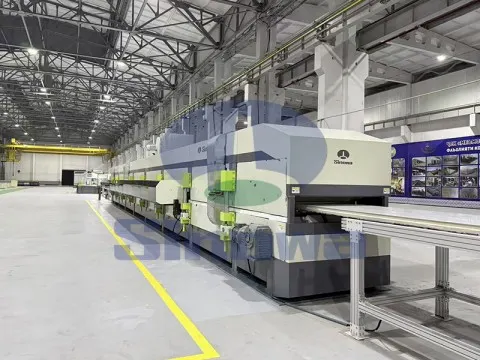
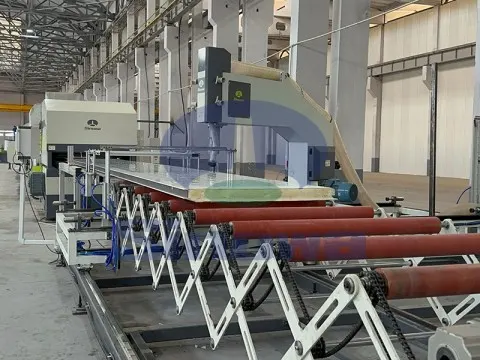
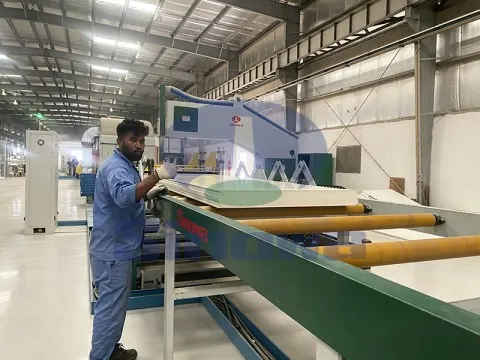
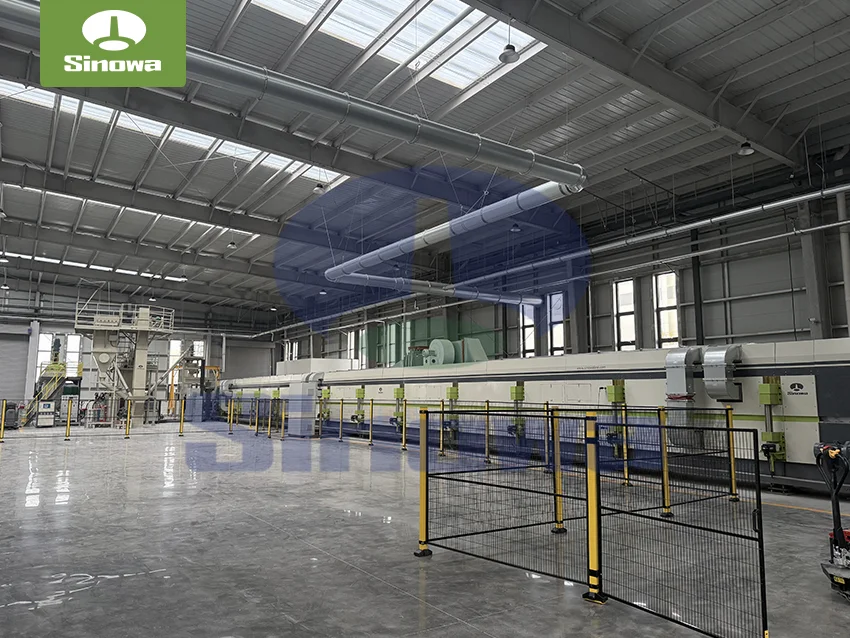
The laminating and curing conveyor section must handle the dimensional mismatch between steel and aluminum skins as the foam expands. Galvanized steel skins behave predictably under pressure because they are rigid and do not creep, but aluminum skins are thinner and can bulge, wrinkle or delaminate if the top and bottom belt pressures are not perfectly balanced across the panel width. A dual-substrate line therefore typically uses a double belt laminator with independently adjustable upper and lower belt height, driven by precision screws or servo cylinders rather than hand-wheels, so that panel thickness can be set to within a fraction of a millimetre. The belt surface itself is usually a polished, non-stick PTFE or stainless steel band, but the support rollers beneath must be spaced more closely for aluminum jobs to prevent local deflection under foam expansion pressure. Side sealing systems — either automatic side shuttles or fixed side rails — must also accommodate the different edge profiles that galvanized and aluminum coils produce after roll forming. Temperature control along the curing tunnel is equally important: aluminum reaches cure temperature faster, so the oven zones are often programmable in stages, allowing the line to run at a shorter heat-up profile and a longer dwell at peak temperature for steel, versus a gentler ramp for aluminum to avoid thermal shock and surface blistering. The exit end of the laminator feeds into a cooling conveyor that brings the panel down to handling temperature, and the speed of this section is again recipe-driven so that aluminum panels do not arrive at the saw still soft and deformable.
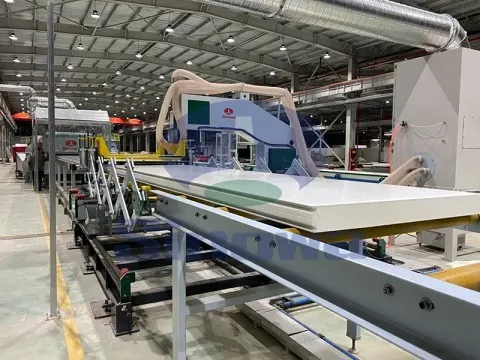
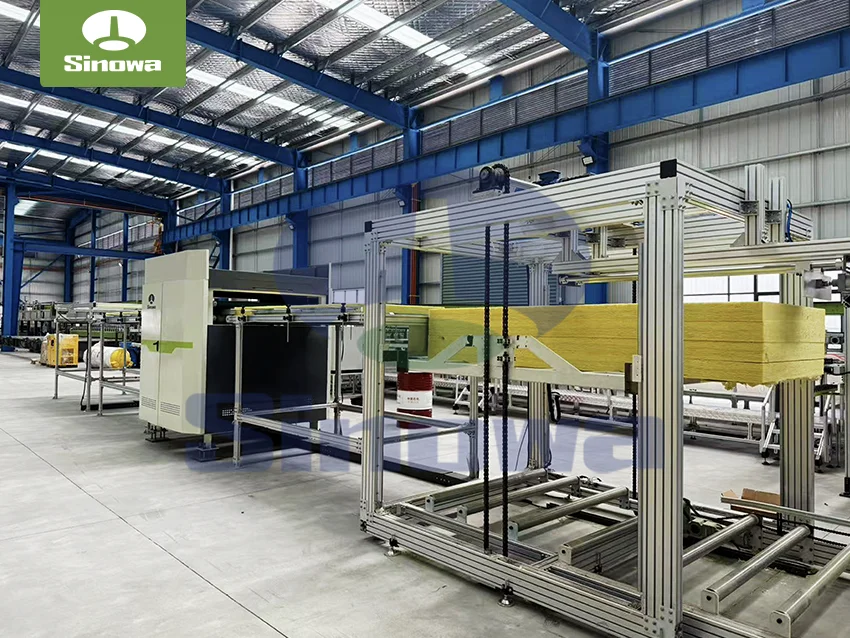
Cutting, stacking and post-processing complete the line, and here the substrate difference matters just as much as in the forming stages. A panel saw that works cleanly on galvanized steel will leave burrs or torn edges on aluminum if the blade speed and feed rate are not adjusted, because aluminum has a tendency to gum up saw teeth unless the blade geometry and cutting speed are matched. Modern dual-substrate lines use a flying cut-off saw with servo positioning and a blade lubrication system, plus a recipe selector that switches between a steel blade speed and an aluminum blade speed. After the cut, panels pass into a stacking system: steel panels are heavy and require vacuum or magnetic grippers, while aluminum panels are light enough for vacuum cups but more easily dented, so gripper pressure and pad spacing must be adjustable. Many lines also include optional notchers, rabbet cutters, tongue-and-groove mills and profile punches that are substrate-agnostic but whose tooling speeds are stored per recipe. Quality control at the exit end — thickness gauges, weight checkers, vision systems for surface defects — should log data against both the recipe name and the coil batch, because a galvanized panel with poor adhesion and an aluminum panel with delamination are symptoms of different upstream problems. Traceability across steel and aluminum batches helps the plant isolate whether a defect came from substrate variation, foam chemistry or laminator settings, rather than lumping all scrap into a single bin.
The economic case for running both substrates on one line hinges on utilisation and changeover discipline. A single line producing only steel panels leaves the plant exposed when aluminum demand rises, because adding a second dedicated line doubles capital cost, floor space and overhead. Conversely, two separate lines for steel and aluminum waste the high-pressure foam machine, which is the most expensive piece of equipment in the installation, when one substrate is slow. A well-designed dual line amortises the foam machine, laminator and saw across both product families, provided that changeover between substrates is planned and fast. This means not only recipe storage in the PLC but also physical workflow: a separate coil storage area for steel and aluminum, colour-coded decoiler mandrels, designated roll-forming stands for each substrate profile, and a cleaning station between runs to remove aluminum swarf from the line before steel panels are produced, to avoid scratching the galvanized surface. Maintenance schedules should also recognise the different wear patterns: steel coils are harder on roll-forming rollers and decoiler mandrels, while aluminum tends to leave residual oxide dust on belts and guides that requires more frequent wiping. Energy use is another consideration: aluminum runs benefit from lower oven set points and shorter dwell, so a dual line that can switch recipes automatically reduces gas or electric consumption compared with a line that always runs at steel parameters. Over a typical equipment life, the flexibility to quote and ship either substrate within the same week — rather than turning away one customer while the other is running — often justifies the modest extra engineering cost of a compatible line.
Ultimately, a PU sandwich panel line that is genuinely compatible with both galvanized and aluminum coils is more than a decoiler that can hold two widths. It is an integrated system in which coil handling, pre-heating, foam dosing, laminating pressure, curing temperature, sawing and stacking have all been engineered to absorb the physical differences between the two substrates without forcing the operator to choose one material as the primary product and treat the other as a compromise. The lines that perform best are those where every major parameter — temperature, pressure, speed, blade rate, gripper force — is stored as a named recipe and recalled with one button, and where the mechanical hardware (mandrels, belts, side rails, saw blades) is specified so that neither substrate is penalised. For fabricators serving cold storage, commercial building, industrial roofing and clean-room markets, this flexibility translates directly into shorter lead times, broader quotation capability and a plant that can respond when project specifications shift from galvanized steel to aluminum or back again, without a second capital investment.
Sinowa is a professional manufacturer of sandwich panel machine in china, we provide diversified and high-performance sandwich panel production lines, including fully automatic continuous PU sandwich panel line and customized special lines to meet mass production and personalized order demands. These sandwich panel lines support processing multiple foam core materials, such as PU, PIR, mineral wool, rock wool and glass wool, covering different insulation and fireproof standards.
Featuring stable operation, high efficiency, energy saving and easy maintenance, our PU sandwich panel line deliver sandwich panels with excellent thermal insulation, fire resistance, sound insulation and lightweight durability. The finished panels are widely applied in industrial workshops, warehouse roofing and wall cladding, cold storage insulation, serving global construction and industrial insulation markets.
https://www.cnsinowa.com/sandwich-panel-machines/pu-sandwich-panel-line-compatible-with-galvanized-and-aluminum-coils.html