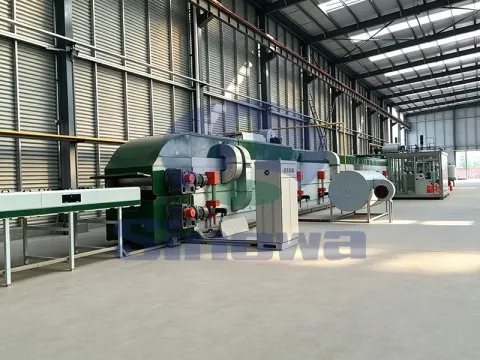
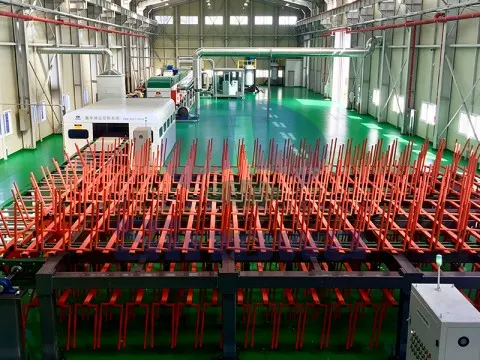
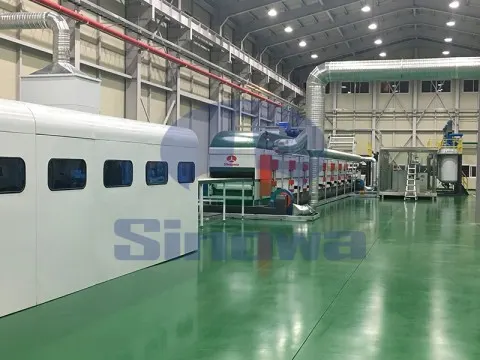
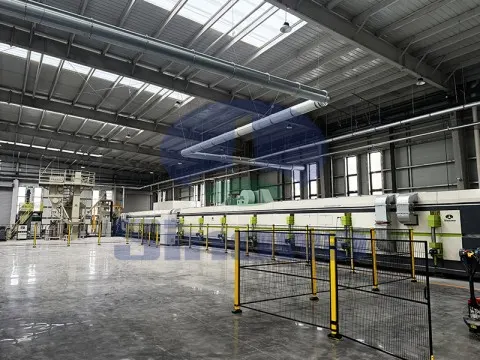
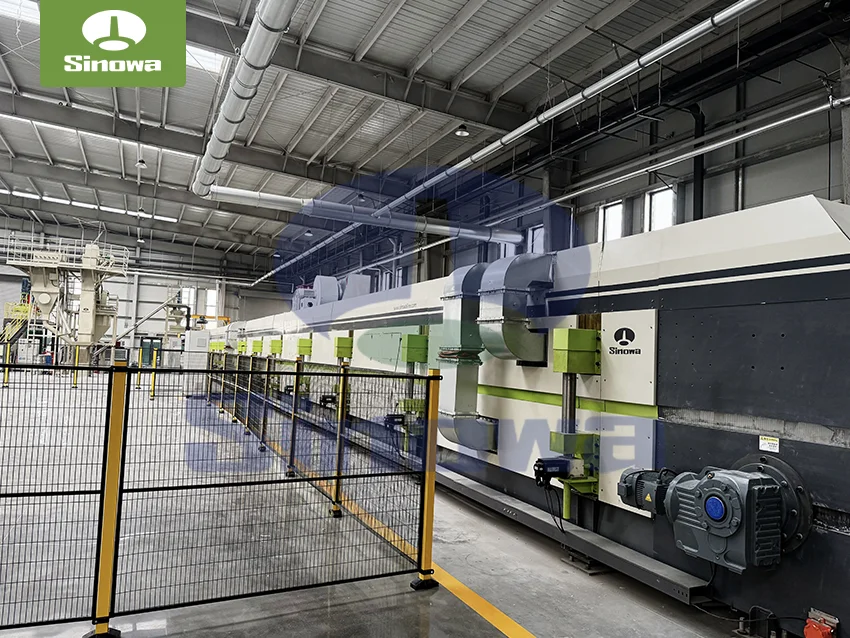
 sandwich panel machine
The raw materials feeding an insulation board line are carefully selected to balance thermal performance, mechanical strength, fire behavior, and cost. Depending on the board type, the primary ingredients may include expanded or extruded polystyrene beads, polyurethane or polyisocyanurate chemical systems, mineral wool fibers bound with resin, perlite or vermiculite, calcium silicate, or cementitious mixtures combined with lightweight aggregates. Each formulation also incorporates auxiliary components such as blowing agents, flame-retardant additives, surfactants, catalysts, cross-linking agents, and, in some cases, hydrophobic treatments. The proportions of these ingredients directly affect the final board's density, pore structure, compressive strength, water absorption, and long-term thermal resistance. Modern plants typically store incoming materials in silos, sealed tanks, or climate-controlled warehouses to prevent moisture contamination, degradation of reactive chemicals, and segregation of granular components. Material handling systems use closed pneumatic conveyors, screw feeders, and automated weighing stations so that every batch is dosed with high repeatability, reducing run-to-run variation and minimizing the risk of off-spec boards.
Once the formulation is prepared, the materials move into a mixing and preparation stage where homogeneity and reactivity are established. For bead-based boards, polystyrene beads are first pre-expanded with steam, aged in fluidized bins to stabilize their internal pressure, and then blended with additives before entering the molding station. For chemical systems such as polyurethane or polyisocyanurate, the polyol and isocyanate components are pumped from temperature-controlled tanks, metered by high-precision piston or gear pumps, and combined with blowing agent, catalyst, and flame retardant in a high-speed impingement mixing head. The mixing head must deliver a fine, uniform emulsion in a fraction of a second so that the chemical reaction begins evenly across the entire mold or conveyor width. For mineral wool boards, molten rock or slag is fiberized by spinning wheels or high-pressure air, and the resulting fibers are collected on a conveyor while a phenolic resin binder is spray-applied in precise quantities. In cementitious boards, dry powders are blended in intensive mixers and combined with water, foam agents, and fibers to produce a pourable or spreadable slurry. In all cases, the mixing stage is instrumented with temperature sensors, flow meters, density monitors, and feedback loops that adjust pump speeds, steam pressure, and conveyor speeds in real time, ensuring that the material reaching the forming section is always within the process window.
The forming and shaping stage is where the mixed material takes its final board geometry. In discontinuous or batch processes, the material is poured or injected into large mold boxes that are then closed and compressed; chemical foaming or steam expansion fills the cavity and sets the board to the desired thickness and density. In continuous processes, the mixed material is deposited onto a moving belt or between facing layers — often reinforced fiberglass tissues or metal facings — and passes through a series of calibrated rollers, double belts, or calibrating presses that control thickness, surface smoothness, and width. The double-belt press, common in continuous polyurethane and polyisocyanurate lines, uses heated or cooled steel belts and independently controlled pressure zones to keep the board flat while the reaction completes. For extruded boards, molten polymer is combined with blowing agents under high pressure in an extruder and then pushed through a flat die, where it expands and calibrates as it exits. For mineral wool boards, the fiber felt is compressed to target thickness and passed through a curing oven where the binder is heat-activated. Throughout forming, the line speed, belt temperature, roll gap, and mold pressure are synchronized so that density gradients are minimized and boards emerge flat, square, and free of voids, blowholes, or surface defects.
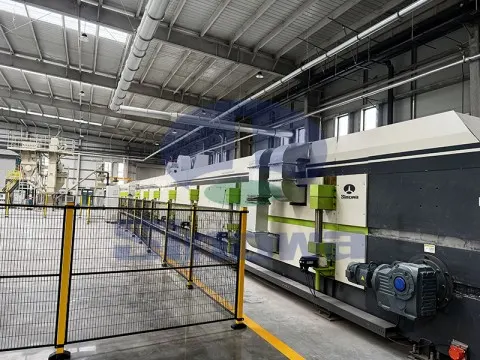
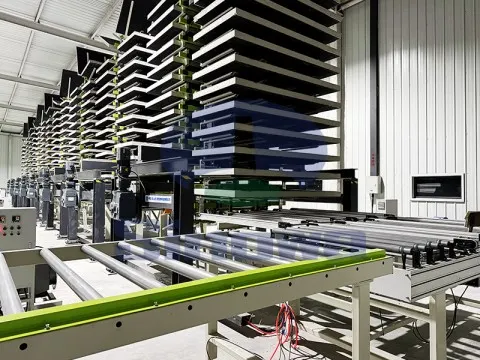
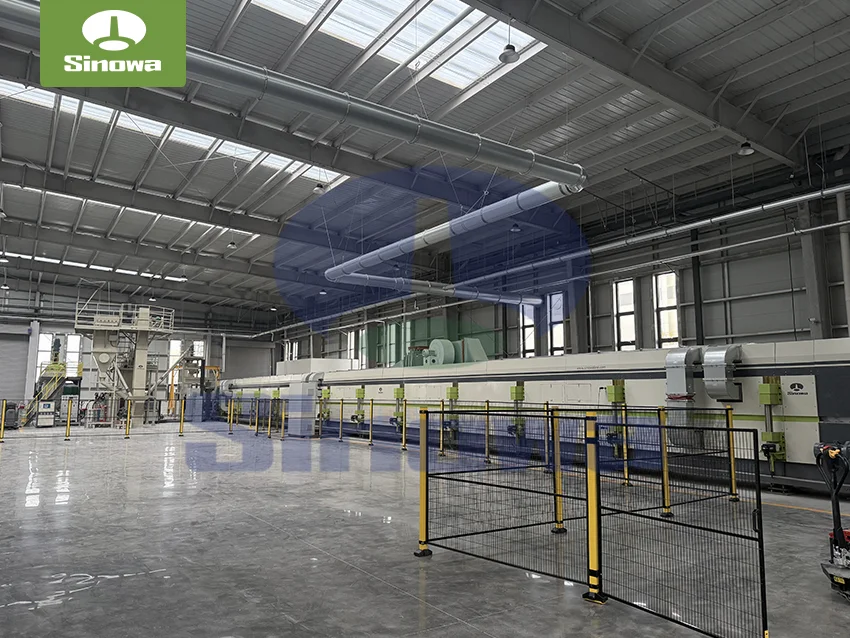
After forming, the board must be stabilized through curing, cooling, or drying before it can be handled. Chemical boards such as polyurethane and polyisocyanurate continue to react internally for some time after leaving the press, so they are stacked in curing rooms or on accelerated cooling racks where controlled temperature and humidity allow residual exothermic heat to dissipate and cross-linking to complete. Premature cutting or packing before curing can cause dimensional movement, warping, or internal stress. For extruded and bead boards, the boards pass through long cooling tunnels or aging bins where steam-driven expansion is relieved and surface moisture is removed. Cementitious and perlite-based boards require controlled drying ovens that gradually reduce moisture content without causing surface cracking or internal shrinkage. The drying curve — air temperature, humidity, airflow rate, and residence time — is tuned to the board thickness and formulation so that moisture is removed evenly through the cross-section. Sensors at the oven outlet measure board temperature and residual moisture, and batches that have not reached the target condition are diverted for additional treatment rather than sent downstream. This stabilization stage is often the longest portion of the plant in terms of floor space, but it is essential because it locks in the dimensional stability that end users rely on during installation and service life.
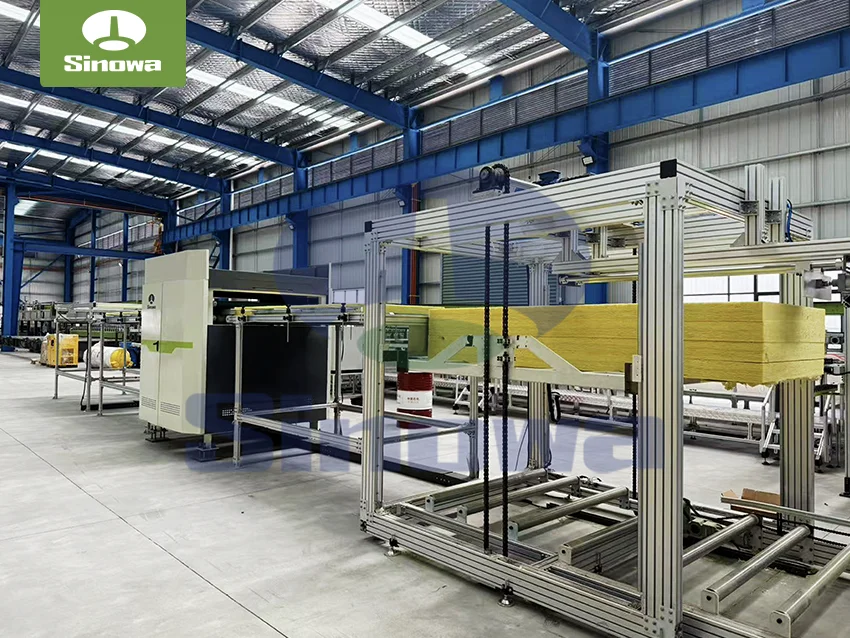
Once cured and stabilized, boards move into cutting, finishing, and packaging operations. Multi-band saws, diamond wire cutters, hot-wire cutters, or guillotine knives trim the boards to precise lengths and widths, while edge routers or profiling tools can create tongue-and-groove, shiplap, or beveled edges for easier installation. Surface treatments may include sanding, coating, lamination with additional facings, or printing of product information. Off-cuts and edge trimmings are collected by suction systems and, where formulation allows, ground and recycled back into the production process to reduce waste. Quality inspection at this stage combines mechanical gauges, laser dimensional scanners, weight-per-area checks, and visual or automated optical inspection to detect thickness variation, bowing, delamination, surface damage, and contamination. Sampled boards are taken to an on-site laboratory for periodic checks of density, compressive strength, thermal conductivity, water absorption, and fire-related behavior, and the results are used to calibrate the upstream mixing and forming settings. Boards that pass inspection are stacked, strapped, wrapped in moisture-resistant film, and labeled with production batch information so that traceability is maintained from raw material lot to shipped product.
Operating an insulation board plant responsibly requires close attention to energy use, emissions, worker safety, and material recovery. The plant is typically energy-intensive because of steam generation, oven heating, compression, and material drying, so modern facilities recover heat from exhaust streams, curing rooms, and refrigeration systems to preheat incoming air or water, reducing both utility costs and environmental impact. Emission controls for dust, volatile organic compounds, binder fumes, and blowing agent vapors are integrated into the line, with bag filters, scrubbers, and thermal or catalytic oxidizers ensuring that air discharge remains within safe operating limits. Blowing agent selection has shifted over time toward systems with lower atmospheric warming potential, and closed-loop recovery systems capture unused agent from foaming operations. On the safety side, moving belts, hot ovens, high-pressure chemical pumps, and molten mineral streams are guarded with interlocked enclosures, emergency stops, gas detection, and personal protective equipment stations. Maintenance programs focus on mixing head cleaning, belt calibration, knife replacement, and seal inspection to prevent unplanned downtime and product defects. Plants also increasingly prioritize circular-economy practices by recycling production scrap, accepting clean post-consumer board waste for reprocessing where compatible, and designing formulations so that end-of-life boards can be diverted from landfill.
In summary, an insulation board production plant is a tightly integrated sequence of material preparation, mixing, forming, curing, cutting, and inspection steps, each dependent on the others to produce a board that is thermally efficient, dimensionally stable, and safe to install. The plant's performance is measured not only by output volume, but by how consistently it can hold density, thickness, and thermal properties across thousands of boards while minimizing waste, energy consumption, and environmental release. As buildings continue to demand higher energy performance and lower operating emissions, the insulation board plant remains a critical link between raw material innovation and the construction industry's ability to deliver comfortable, efficient, and durable built environments.
Sinowa is a professional manufacturer of sandwich panel machine in china, we provide diversified and high-performance sandwich panel production lines, including fully automatic continuous PU sandwich panel line and customized special lines to meet mass production and personalized order demands. These sandwich panel lines support processing multiple foam core materials, such as PU, PIR, mineral wool, rock wool and glass wool, covering different insulation and fireproof standards.
Featuring stable operation, high efficiency, energy saving and easy maintenance, our PU sandwich panel line deliver sandwich panels with excellent thermal insulation, fire resistance, sound insulation and lightweight durability. The finished panels are widely applied in industrial workshops, warehouse roofing and wall cladding, cold storage insulation, serving global construction and industrial insulation markets.
https://www.cnsinowa.com/sandwich-panel-machines/insulation-board-production-plant.html