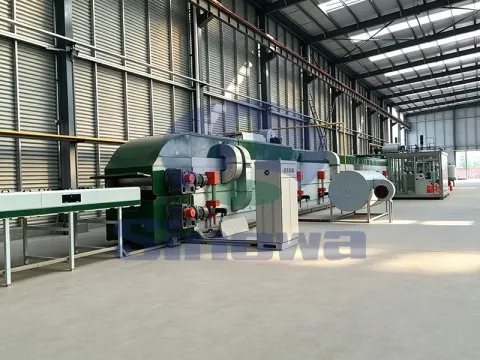
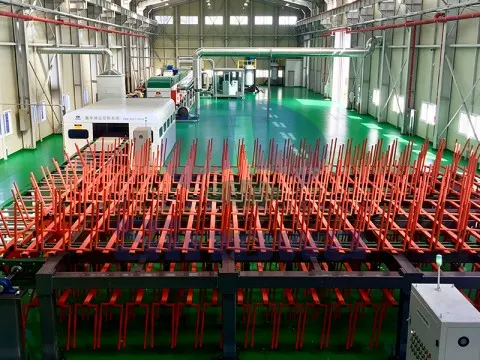
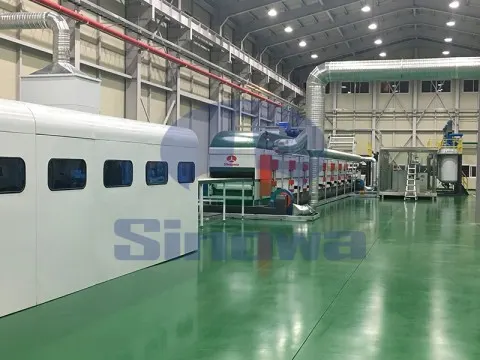
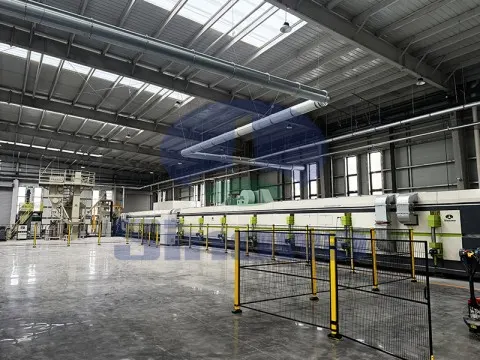
sandwich panel line
The foundation of any insulation board lies in its raw material composition, and the production line begins with carefully selected ingredients that determine the board's density, thermal resistance, mechanical strength, and dimensional stability. A typical formulation combines a hydraulic binder—most commonly ordinary Portland cement—with lightweight aggregates that create the porous structure responsible for insulation. Common lightweight aggregates include expanded perlite, vermiculite, exfoliated shale, and expanded clay, each contributing different pore sizes and thermal properties. Organic fillers such as expanded polystyrene beads or polyurethane foam granules may also be incorporated to further reduce weight and enhance thermal performance, though their inclusion introduces considerations around fire resistance and long-term durability. Fibrous reinforcement is another essential component: short cellulose fibers, alkali-resistant glass fibers, or polypropylene synthetic fibers are added to control cracking during the drying phase and to improve impact resistance once the board is installed. These fibers bridge microcracks that naturally form as the binder hydrates and shrinks, preventing structural failure and extending the service life of the panel. Chemical additives round out the formulation: water-reducing agents improve workability while lowering the water-to-binder ratio, set accelerators or retarders adjust the curing timeline to match production speed, and foaming agents create additional air pockets within the matrix for enhanced insulation. Raw materials are typically delivered in bulk and stored in silos or covered warehouses to protect cement and lime from moisture and to keep lightweight aggregates dry. Aggregates are often pre-wetted or conditioned before mixing to prevent uneven water absorption during the production process. The line's automated batching system draws materials from storage according to pre-programmed recipes, ensuring that each batch maintains the same proportions regardless of production volume. This consistency is critical because even small deviations in aggregate grading or binder content can shift the board's density by several percentage points, directly affecting both insulation performance and structural reliability.
The batching and mixing stage is where raw materials are precisely measured and combined into a homogeneous slurry or moldable compound. Modern production lines employ fully automated batching systems that use load cells and gravimetric weighing to deliver accurate proportions of cement, aggregates, fibers, and additives into the mixer. Liquid ingredients such as water and chemical admixtures are metered by flow meters or volumetric pumps, and the entire sequence is controlled by a programmable logic controller that logs every batch for traceability and quality auditing. The choice of mixer depends on the board formulation and production volume. Planetary mixers are widely used for cement-based insulation boards because they provide vigorous, multidirectional agitation that prevents lightweight aggregates from floating or segregating. Paddle or ribbon mixers handle larger volumes and are suitable for less demanding formulations. The mixing sequence itself is carefully orchestrated: dry ingredients are first blended for a short period to distribute fibers uniformly, then water and liquid additives are introduced gradually while mixing continues until the slurry reaches the desired consistency. Over-mixing can damage delicate fibers or over-aerate the mix, while under-mixing leaves pockets of dry binder that cause weak spots in the finished board. Controlling slurry consistency is one of the most sensitive tasks in the batching process. Too much water prolongs curing time, increases drying energy, and can cause aggregates to settle unevenly, creating density gradients through the thickness of the board. Too little water results in poor flowability, incomplete mold filling, and surface defects. Production lines often incorporate real-time consistency monitoring—either by measuring mixer torque, using microwave moisture sensors, or by sample testing at regular intervals—to maintain the target rheology. The water-to-binder ratio also influences the board's final porosity: higher water content leaves more capillary voids after drying, which can improve insulation but reduce compressive strength. Air content is another parameter managed during mixing. Some formulations introduce controlled foam or gas into the slurry to create additional microscopic air cells, while others rely solely on the natural porosity of lightweight aggregates. The production line may include a foam generator that injects pre-formed foam into the mixer, allowing operators to dial in the exact density target by adjusting foam volume. This level of control enables the same line to produce boards with different insulation-to-strength trade-offs simply by changing the recipe and mixing parameters.
Once the slurry is prepared, it moves to the forming stage, where it is shaped into flat panels of consistent thickness and dimensions. The forming method varies depending on the board type and production philosophy, but two approaches dominate the industry: casting into stationary molds and continuous deck casting. In the casting method, the prepared slurry is poured into large, shallow molds lined with a release agent. The molds may be made of steel or composite materials and are sized to produce multiple boards from a single cast block. After pouring, the mold passes under a vibrating table or a vibrating conveyor that settles the slurry, removes trapped air bubbles, and ensures uniform compaction. Vibration frequency and amplitude are tuned to the specific mix: too vigorous vibration causes heavy aggregates to sink and lightweight beads to rise, creating stratification, while insufficient vibration leaves voids and surface imperfections. After vibration, the surface of the cast block is screed level to achieve the target thickness, and the block is moved to a curing area. Once the binder has set sufficiently, the block is demolded and later cut into individual boards. Continuous forming lines, by contrast, deposit the slurry onto a moving conveyor belt or deck that is lined with a release film. The slurry spreads across the belt width under controlled spreading knives or rollers, which determine the board thickness. This method allows for uninterrupted production and is common for boards with organic insulating components such as expanded polystyrene beads. The belt carries the wet sheet through a pre-curing zone where it gains enough strength to be cut or stacked without deformation. Extrusion lines, which force the mix through a shaped die, are less common for flat interior wall boards but are used for certain high-density formulations where precise dimensional stability is required. Release agents play a crucial role in both methods. They prevent the wet board from adhering to molds or belts, which would damage surfaces and slow demolding. Modern lines use water-based or biodegradable release agents applied by spray nozzles or roller coaters, minimizing residue buildup on equipment and reducing environmental impact. The forming stage also includes edge control: side rails on the casting belt or mold walls define the width of the board, and trimming stations remove uneven edges after the material has set. Throughout this stage, operators monitor visual quality—checking for streaks, bubbles, or thickness variations—and adjust spreading parameters on the fly to maintain product uniformity.
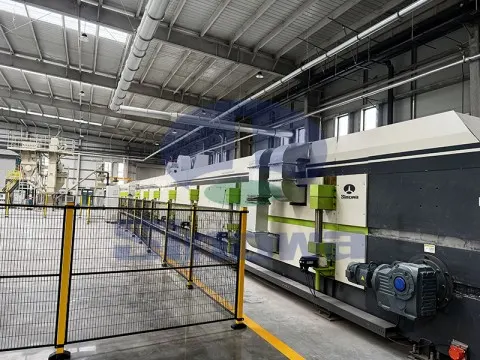
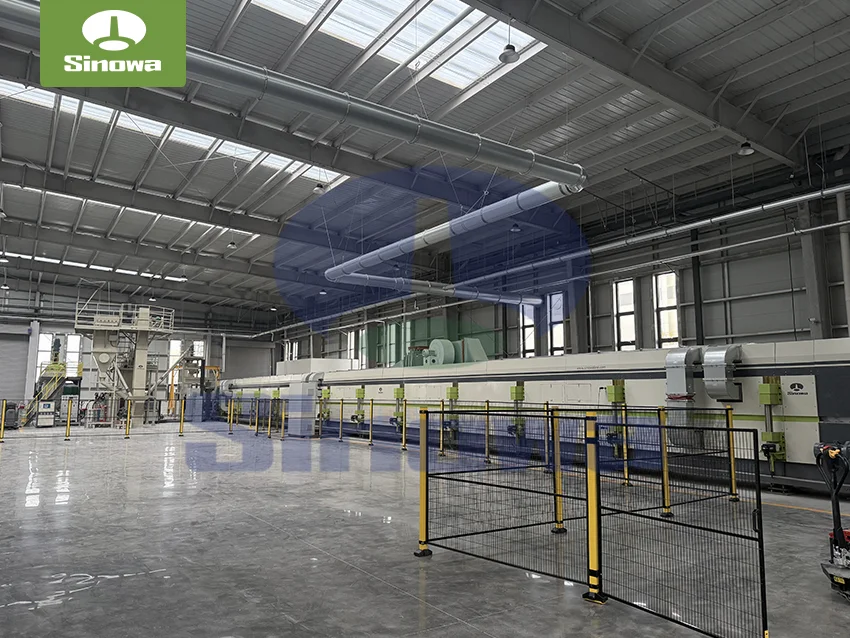
After forming, the green boards—so called because they have not yet developed full strength—enter the curing and drying phase, which is arguably the most energy-intensive and time-consuming stage of the production line. Curing refers to the chemical hydration of the binder, while drying removes free moisture that would otherwise cause dimensional instability and poor adhesion during installation. Both processes must be managed carefully to achieve the right balance of strength, low weight, and dimensional accuracy. Curing begins immediately after forming. Cement-based boards require adequate moisture and temperature for hydration to proceed. Many production lines use enclosed curing chambers or tunnels where temperature and humidity are maintained at elevated levels, typically through steam injection or heated air circulation. This accelerated curing allows boards to develop enough strength for demolding or handling within hours rather than days. The chamber environment is precisely controlled: relative humidity stays high to prevent surface drying and cracking, while temperature is raised to speed hydration without causing thermal stress. Some lines use a two-stage curing approach: an initial high-temperature pre-cure to set the board quickly, followed by a cooler, longer maturation period that lets the binder develop its full crystalline structure. Once the boards are strong enough to handle, they move to drying tunnels or kilns where residual moisture is driven off. Drying is typically performed with heated air that flows over and through the stacked boards. The drying profile is staged: high temperatures at the start rapidly remove surface moisture, then temperatures are lowered and humidity increased to prevent cracking as interior moisture slowly diffuses outward. Rapid drying causes differential shrinkage that warps the board or creates surface checks, so the tunnel's temperature and humidity zones are carefully sequenced. Heat recovery systems capture exhaust heat to pre-heat incoming air, significantly reducing the energy cost of drying. For certain board types, particularly those using autoclaved aerated concrete technology, the curing process takes place in high-pressure steam vessels. These autoclaves expose the boards to saturated steam at elevated pressure, accelerating hydration and producing a distinct crystalline structure that offers excellent dimensional stability and strength. However, autoclaving represents a significant capital and operating investment and is typically reserved for high-volume, premium product lines. Regardless of the method, the end goal is the same: boards that have reached a stable moisture content, developed their target strength, and are ready for precision cutting and finishing.
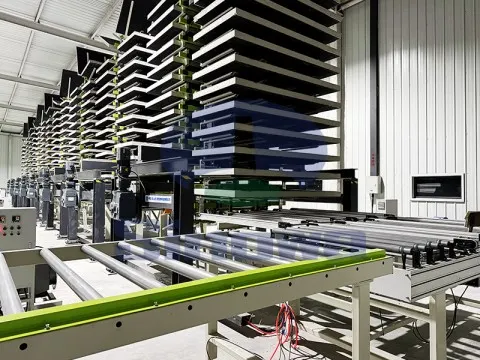
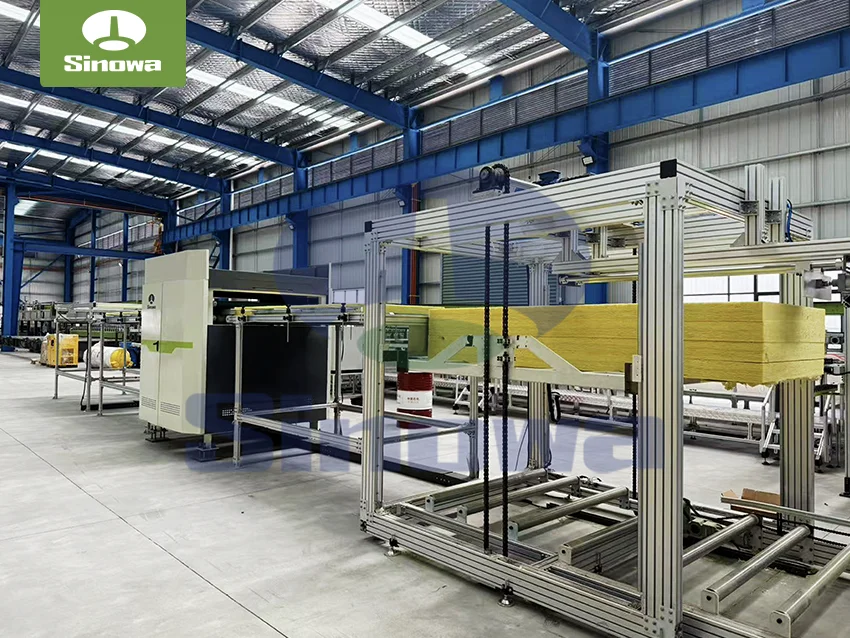
After curing and drying, most products arrive as large cast blocks or oversized sheets that must be cut to specification. The cutting and finishing stage transforms these intermediate forms into clean, dimensionally accurate, ready-to-use panels. For cast-block production, the first step is to slice the cured block into individual boards of the desired thickness. Multi-wire cutting machines or diamond saws make parallel cuts through the block, producing slabs with consistent thickness. These slabs then pass through cross-cut saws that trim the length to standard dimensions. For continuous belt production, the wet sheet is cut to length with guillotine cutters before it enters the curing zone, and final sizing is performed after drying with rotating saw blades. Edge trimming removes irregular side edges and ensures straight, square corners. Precision is critical here: boards that will be joined with joint compounds or adhesive in wall systems must fit together without gaps, so dimensional tolerances are held tightly by servo-driven cutting equipment. Surface finishing is the next consideration. Depending on the intended application, boards may receive a light sanding or grinding pass to smooth the face and remove any surface imperfections or excess slurry. This step also ensures uniform thickness across the panel. Some production lines apply a primer, coating, or tissue facing to one or both faces, particularly for boards that will receive decorative finishes or that need enhanced moisture resistance. Profiling stations may shape the edges with tongue-and-groove or shiplap profiles for easier installation and improved joint performance. After finishing, boards move to inspection and packaging. Automated vision systems scan the surfaces for cracks, chips, or discoloration, and laser measurement systems verify thickness, width, and length. Boards that fall outside tolerance are rejected or routed for rework. Acceptable boards are stacked, strapped, and packaged—often with edge protection to prevent damage during transport. The packaging area may include automated palletizing robots that build stable stacks ready for shipping. Throughout this stage, the line's control system tracks batch numbers, production timestamps, and quality results, creating a complete digital record for each pallet of boards that leaves the factory.
A modern interior wall insulation board production line is not merely a sequence of machines; it is an integrated quality and operations system that ensures every board meets consistent performance requirements while minimizing waste and environmental impact. Quality control begins with incoming raw material inspection—cement is tested for fineness and setting time, aggregates for grading and moisture content, and additives for potency—before materials are accepted into silos. This upstream screening prevents formulation problems that would otherwise propagate through the entire production run. In-process quality monitoring is distributed throughout the line. Batching systems weigh each ingredient with load cells calibrated against reference standards, and the control system flags any batch that deviates from recipe limits. Mixing consistency checks are performed either automatically via sensor feedback or through periodic manual sampling. After forming, operators inspect the wet board for surface quality and thickness. After curing, density samples are taken by cutting small test specimens and weighing them, which confirms that the board falls within the target density range. Dimensional checks with laser micrometers or coordinate measuring machines verify flatness and thickness across multiple points on each board. Thermal conductivity samples may be sent to a laboratory for periodic validation, though this is typically performed on a sampling basis rather than for every production run. Automation and data integration elevate the line's efficiency. Programmable logic controllers coordinate conveyors, mixers, curing zones, and cutting equipment so that material flows smoothly without bottlenecks. Human-machine interfaces allow operators to adjust recipes, change board dimensions, and monitor production status from a central control room. Supervisory data acquisition systems log energy use, material consumption, downtime, and defect rates, enabling continuous improvement through production analytics. Predictive maintenance schedules are generated based on equipment runtime and vibration or temperature sensors, reducing unplanned breakdowns. Sustainability considerations are increasingly built into the line design. Dust collection systems at every material transfer point protect air quality and recover fine particles for reuse. Wastewater from mixer cleaning and surface processing is treated in sedimentation tanks and recirculated, reducing freshwater consumption. Heat recovery from dryer exhaust and autoclave condensate lowers thermal energy demand. Many lines also incorporate recycled materials—crushed returned boards, recycled fly ash as a partial cement replacement, or reprocessed aggregate—into the formulation, reducing both waste and raw material costs. Together, these features allow the production line to operate as a closed-loop system that delivers consistent insulation boards with a minimized environmental footprint.
An interior wall insulation board production line represents a carefully orchestrated convergence of materials science, mechanical engineering, and process control. From the precise batching of raw materials to the final packaged stack, every stage influences the board's thermal performance, strength, and dimensional reliability. As building practices continue to demand higher energy efficiency and healthier indoor environments, these production lines evolve with formulations that incorporate lighter aggregates, lower-carbon binders, and smarter automation. The result is a manufacturing system that consistently delivers insulation boards essential to comfortable, energy-efficient interior walls.
Sinowa is a professional manufacturer of sandwich panel machine in china, we provide diversified and high-performance sandwich panel production lines, including fully automatic continuous PU sandwich panel line and customized special lines to meet mass production and personalized order demands. These sandwich panel lines support processing multiple foam core materials, such as PU, PIR, mineral wool, rock wool and glass wool, covering different insulation and fireproof standards.
Featuring stable operation, high efficiency, energy saving and easy maintenance, our PU sandwich panel line deliver sandwich panels with excellent thermal insulation, fire resistance, sound insulation and lightweight durability. The finished panels are widely applied in industrial workshops, warehouse roofing and wall cladding, cold storage insulation, serving global construction and industrial insulation markets.
https://www.cnsinowa.com/sandwich-panel-machines/interior-wall-insulation-board-production-line.html