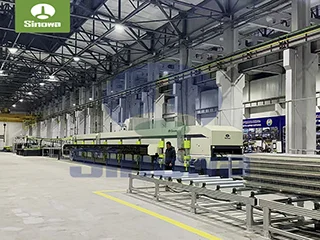
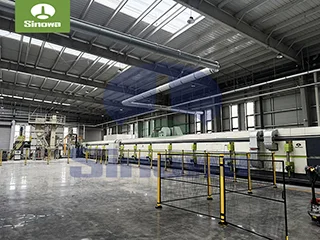
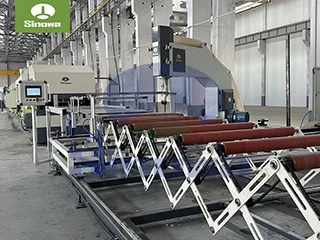
sandwich panel line
The construction industry is one of the largest and most prominent users of PU foam production line, as the material’s excellent thermal insulation, soundproofing, and structural properties make it ideal for a wide range of building applications. In modern construction, energy efficiency and environmental sustainability have become top priorities, and PU foam has emerged as a key material in achieving these goals. PU foam produced by specialized production lines is widely used for thermal insulation in walls, roofs, floors, and windows, helping to reduce heat transfer between the interior and exterior of buildings. This insulation capability not only lowers energy consumption for heating and cooling but also improves indoor comfort by maintaining a stable temperature year-round. Unlike traditional insulation materials such as fiberglass or mineral wool, PU foam has a closed-cell structure that prevents moisture absorption, reducing the risk of mold growth, structural damage, and indoor air quality issues. The production line’s ability to produce foam with varying densities allows manufacturers to tailor the insulation performance to different climate zones—for example, higher-density foam for cold regions requiring superior heat retention and lower-density foam for warmer areas where ventilation and heat dissipation are more important. Additionally, PU foam from these production lines is used as a structural adhesive and sealant in construction, providing strong bonding between different building materials such as concrete, steel, and wood, while also sealing gaps and cracks to prevent air leakage and water infiltration. This dual function of insulation and sealing enhances the overall durability and longevity of buildings, reducing maintenance costs over time.
Another major application area of PU foam core sandwich panel line is the automotive industry, where the demand for lightweight, comfortable, and safe materials continues to grow. Modern automobiles are designed with a focus on fuel efficiency, which requires reducing vehicle weight without compromising structural integrity or passenger comfort. PU foam, being lightweight and having excellent cushioning properties, is widely used in automotive interiors and exteriors, and its production is highly dependent on specialized PU foam sandwich panel line. In automotive interiors, flexible PU foam produced by these lines is used to manufacture seat cushions, backrests, headrests, and armrests, providing optimal comfort and support for drivers and passengers during long journeys. The production line’s ability to control foam density and resilience allows manufacturers to create seat foam that balances comfort with durability, resisting compression set and maintaining its shape even after years of use. Rigid PU foam, on the other hand, is used in automotive exteriors and structural components, such as bumper cores, door panels, and roof liners, contributing to vehicle lightweighting and improving fuel efficiency. Additionally, PU foam is used as a soundproofing material in automotive cabins, reducing noise from the engine, road, and wind, and creating a quieter and more pleasant driving environment. The production line’s precision mixing and molding processes ensure that the foam meets the strict quality standards of the automotive industry, including requirements for fire resistance, low VOC emissions, and durability under extreme temperatures and humidity conditions. With the rise of electric vehicles, the demand for PU foam production lines in the automotive industry is expected to grow further, as electric vehicles require even more lightweight materials to extend battery life and range.
The furniture and bedding industry is also a significant consumer of PU foam produced by specialized production lines, as the material’s comfort, durability, and versatility make it ideal for a wide range of furniture products. From sofas and armchairs to mattresses and pillows, PU foam has become a staple material in modern furniture manufacturing, replacing traditional materials such as cotton, wool, and latex in many applications. Flexible PU foam produced by these lines is used to create cushioning for sofas and chairs, providing a soft yet supportive seating experience that adapts to the user’s body shape. The production line’s ability to produce foam with different levels of firmness allows furniture manufacturers to cater to diverse consumer preferences, from soft and plush to firm and supportive. In the bedding industry, high-density flexible PU foam is used to manufacture mattresses, offering excellent pressure relief and support, which helps to reduce back pain and improve sleep quality. Unlike traditional mattress materials, PU foam is resistant to dust mites, mold, and mildew, making it a more hygienic option for consumers. Additionally, PU foam production lines can produce foam in various shapes and sizes, allowing for the creation of custom furniture pieces and bedding products that fit specific design requirements. The efficiency of these production lines also enables furniture manufacturers to meet high demand while maintaining consistent quality, reducing production costs and improving market competitiveness.
The packaging industry is another key sector where PU sandwich panel production line play a vital role, leveraging the material’s excellent shock absorption, cushioning, and protective properties to safeguard fragile and valuable products during transportation and storage. In today’s globalized market, products are often transported over long distances, and the risk of damage during transit is a major concern for manufacturers and retailers. PU foam produced by specialized production lines provides an effective packaging solution, as it can be easily molded to fit the shape of any product, creating a custom protective barrier that absorbs shocks and vibrations. Rigid PU foam is commonly used for packaging heavy and fragile items such as electronics, appliances, glassware, and industrial components, while flexible PU foam is used for lighter items such as toys, cosmetics, and medical devices. The production line’s ability to produce foam with varying densities and thicknesses allows packaging manufacturers to tailor the protective performance to the specific needs of the product—for example, higher-density foam for heavy electronics and lower-density foam for delicate glassware. Additionally, PU foam is lightweight, which helps to reduce packaging weight and shipping costs, while also being recyclable in many cases, aligning with the growing demand for sustainable packaging solutions. Unlike traditional packaging materials such as Styrofoam, which is often non-biodegradable, many PU foams produced by modern production lines are designed to be environmentally friendly, using water-based foaming agents and biodegradable raw materials to reduce their environmental impact.
The medical industry is an emerging and increasingly important application area for PU sandwich panel line, as the material’s biocompatibility, hypoallergenic properties, and customizable characteristics make it suitable for a wide range of medical devices and products. Medical-grade PU foam, produced under strict quality control by specialized production lines, is used in applications such as wound dressings, orthopedic supports, medical mattresses, and surgical instruments. In wound care, flexible PU foam is used to create absorbent dressings that wick away moisture from the wound, promoting healing while providing a soft and comfortable barrier against friction and infection. The production line’s ability to produce foam with controlled porosity allows for optimal breathability, ensuring that the wound remains dry and well-ventilated. In orthopedics, rigid PU foam is used to manufacture casts, braces, and supports, providing stable and comfortable immobilization for injured limbs while being lightweight and easy to adjust. Medical mattresses made from PU foam are designed to prevent pressure ulcers in bedridden patients, using pressure-relieving foam that distributes the patient’s weight evenly, reducing pressure on sensitive areas such as the hips, shoulders, and heels. The production lines used to produce medical-grade PU foam must adhere to strict hygiene and quality standards, ensuring that the foam is free from harmful contaminants, has low VOC emissions, and is biocompatible with human skin and tissue. This requires the integration of advanced quality inspection systems into the production line, including real-time monitoring of raw materials and production processes, as well as post-production testing to ensure compliance with medical regulations.
The aerospace industry also relies on PU sandwich panel machine for the manufacturing of lightweight and high-performance components, where every gram of weight reduction can significantly improve fuel efficiency and aircraft performance. PU foam is used in aerospace applications such as cabin insulation, seat cushions, and structural components, leveraging its excellent strength-to-weight ratio, thermal insulation, and soundproofing properties. In aircraft cabins, PU foam is used for thermal insulation, helping to maintain a comfortable temperature at high altitudes where external temperatures can be extremely low. It is also used as a soundproofing material, reducing noise from the engines and outside environment, creating a quieter and more comfortable cabin for passengers and crew. Flexible PU foam is used to manufacture aircraft seat cushions, providing comfort and support during long flights while being lightweight enough to contribute to overall aircraft weight reduction. Rigid PU foam is used in structural components such as wing panels and fuselage parts, providing strength and rigidity while reducing weight compared to traditional materials such as metal. The production lines used to produce aerospace-grade PU foam must meet extremely strict quality and performance standards, as the material must withstand extreme temperatures, pressure changes, and mechanical stress during flight. This requires precise control over foam density, cell structure, and mechanical properties, as well as rigorous testing to ensure that the foam meets the aerospace industry’s stringent requirements for safety and durability.
In addition to these major industries, polyurethane sandwich panel production line has a wide range of other applications across various sectors, including the textile industry, where PU foam is used to create waterproof and breathable fabrics for outdoor clothing and footwear; the refrigeration industry, where rigid PU foam is used for insulation in refrigerators, freezers, and cold storage facilities; and the marine industry, where PU foam is used for buoyancy aids and hull insulation, thanks to its water-resistant properties. In the textile industry, PU foam is applied as a coating on fabrics to create a waterproof barrier while maintaining breathability, making it ideal for outdoor jackets, pants, and shoes. The production line’s ability to produce foam with controlled thickness and porosity allows textile manufacturers to create fabrics with varying levels of waterproofing and breathability, catering to different outdoor activities and weather conditions. In the refrigeration industry, rigid PU foam is used to insulate the interior of refrigerators and freezers, reducing energy consumption by preventing cold air leakage and heat infiltration. The closed-cell structure of PU foam makes it an excellent insulator for cold storage facilities, helping to maintain low temperatures efficiently and reduce operational costs. In the marine industry, PU foam is used to create buoyancy aids such as life jackets and floatation devices, as it is lightweight, buoyant, and water-resistant. It is also used for hull insulation, protecting the ship’s structure from corrosion and improving energy efficiency by reducing heat transfer between the water and the ship’s interior.
The versatility of polyurethane sandwich panel line is further enhanced by their ability to adapt to new technologies and materials, driving innovation across industries. Modern production lines are increasingly integrated with automation and digitalization technologies, such as PLC control systems, real-time monitoring, and data analytics, which improve production efficiency, reduce human error, and ensure consistent product quality. These advanced systems allow operators to control key production parameters remotely, monitor the production process in real-time, and identify potential issues before they affect product quality. Additionally, many PU foam production lines are designed to be flexible, allowing for quick changes in foam formulation and production parameters to meet the evolving needs of different industries. For example, a production line used to produce automotive seat foam can be easily reconfigured to produce furniture foam or packaging foam by adjusting the mixing ratio of raw materials, foaming temperature, and molding process. This flexibility makes PU foam production lines a cost-effective investment for manufacturers, as they can adapt to changing market demands without the need for significant capital expenditure on new equipment.
Sustainability is another key trend driving the evolution of PU foam production lines, as industries and consumers increasingly demand environmentally friendly materials and manufacturing processes. Modern production lines are designed to reduce energy consumption, minimize waste, and use eco-friendly raw materials. For example, many production lines now use water-based foaming agents instead of traditional chemical foaming agents, which reduce VOC emissions and are more environmentally friendly. Additionally, production lines are equipped with waste recycling systems that collect and reuse excess foam and raw materials, reducing waste and lowering production costs. The development of bio-based PU foam, made from renewable raw materials such as soybeans, corn, and castor oil, is also being supported by advanced production lines, offering a more sustainable alternative to traditional petroleum-based PU foam. These bio-based foams have similar properties to traditional PU foam but have a lower carbon footprint, making them ideal for industries looking to reduce their environmental impact. As sustainability becomes an increasingly important factor in manufacturing, PU foam production lines will continue to evolve to incorporate more eco-friendly technologies and processes, further expanding their applications across industries.
In conclusion, PU foam sandwich panel production line is versatile and essential pieces of equipment that play a critical role in numerous industries, from construction and automotive to furniture and medical. Their ability to produce foam with tailored properties—such as density, hardness, elasticity, and insulation performance—makes them indispensable for manufacturing a wide range of products that enhance our daily lives. By integrating multiple processes into a single, efficient system, these production lines ensure consistent quality, reduce production costs, and improve operational efficiency, making them a valuable investment for manufacturers. As technology advances and sustainability becomes a top priority, PU foam production lines will continue to evolve, incorporating automation, digitalization, and eco-friendly technologies to meet the changing needs of industries and consumers. Whether it is creating energy-efficient buildings, lightweight automobiles, comfortable furniture, or life-saving medical devices, PU foam production lines are at the forefront of innovation, driving progress and improving the quality of products across the globe. Their widespread applications and adaptability make them a key component of modern manufacturing, and their importance is only expected to grow in the years to come as new industries and applications emerge.
https://www.cnsinowa.com/sandwich-panel-machines/applications-of-pu-foam-production-line.html