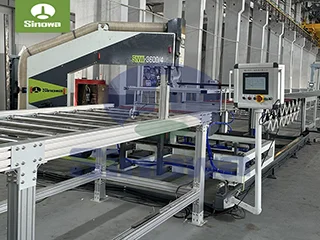
sandwich panel line
One of the most prominent advantages of PU foam production line is their exceptional production efficiency, which stems from continuous operation capabilities and optimized process design. Unlike traditional batch production methods that involve frequent start-stop cycles, modern production lines are engineered for uninterrupted manufacturing, significantly reducing downtime and maximizing output. Continuous foaming processes allow for a steady flow of raw materials, mixing, foaming, curing, and cutting, ensuring a consistent production rhythm that meets high-volume demands. For instance, advanced lines can achieve production speeds that enable the fabrication of foam products at a continuous rate, with minimal interruptions for equipment adjustments or material replenishment. This continuous operation not only boosts overall productivity but also reduces the waste associated with batch processing, such as start-up and shutdown losses that often occur when initiating new production runs. Additionally, the integration of high-performance mixing systems and precise material delivery mechanisms ensures that raw materials are processed efficiently, minimizing processing time while maintaining product integrity. The efficiency of these production lines is further enhanced by their compact design, especially in vertical foaming configurations, which occupy significantly less floor space compared to traditional horizontal setups. This space-saving feature allows manufacturers to optimize their factory layout, accommodate higher production capacity within existing facilities, and reduce overhead costs associated with space utilization.
Precision and consistency in product quality are another key advantage offered by PU foam core sandwich panel line. These lines are equipped with advanced control systems that enable meticulous regulation of every stage of the production process, from raw material metering to foam curing. Programmable Logic Controller (PLC) systems paired with user-friendly human-machine interface (HMI) touchscreens allow operators to set and adjust critical parameters with high accuracy, including material flow rates, mixing ratios, temperature, pressure, and foaming time. Each component in the production line is independently controlled, ensuring that raw materials are metered precisely and mixed uniformly, which is essential for achieving consistent foam density, hardness, and structural properties. For example, the ability to control foam density within a wide range—from low-density foams used for packaging to high-density foams for structural applications—ensures that products meet the specific requirements of different end uses. The precise temperature control during curing also plays a vital role in enhancing product quality, as it promotes uniform foam cell formation and prevents defects such as uneven density distribution, cracking, or surface irregularities. Furthermore, modern production lines incorporate real-time monitoring systems that track process parameters continuously, allowing for immediate adjustments if deviations occur. This proactive quality control minimizes the production of defective products, reduces material waste, and ensures that every batch of PU foam meets the same high standards. The consistency achieved by these production lines is particularly valuable for industries that require uniform performance, such as construction, where insulation panels must have consistent thermal properties to meet energy efficiency standards, and automotive manufacturing, where foam components must fit precisely and perform reliably.
Versatility is a significant advantage that makes PU sandwich panel production line adaptable to a wide range of applications and product requirements. These lines are designed with modular components that can be easily reconfigured or upgraded to produce different types of PU foam products, eliminating the need for separate equipment for each product variant. Modular design allows manufacturers to switch between foam types—such as flexible foam, rigid foam, high-resilience foam, memory foam, and specialized technical foams—with minimal downtime and adjustments. For example, a single production line can be reconfigured to produce foam for furniture cushions, automotive seating, building insulation panels, packaging materials, or shoe components by adjusting parameters, changing mixing formulas, or modifying cutting mechanisms. This versatility is further enhanced by the ability to process multiple raw materials simultaneously, with some advanced lines capable of handling up to 12 different components independently. This capability supports the creation of complex foam formulations, including flame-retardant, anti-static, or bio-based foams, to meet the unique needs of specific industries. Additionally, production lines can be customized to produce foam products of varying sizes, shapes, and thicknesses, from large insulation panels to small precision components. The flexibility to adapt to changing market demands allows manufacturers to expand their product portfolios, enter new market segments, and respond quickly to customer requests without significant capital investment in new equipment.
Cost-effectiveness is a crucial advantage of PU foam sandwich panel production line, driven by reduced material waste, lower labor requirements, and optimized energy consumption. Advanced production lines minimize material waste through precise metering, uniform mixing, and efficient cutting processes. For instance, vertical foaming technology ensures that foam blocks have regular dimensions, reducing the amount of material lost during trimming to as low as 4-6%, compared to higher waste rates in traditional production methods. The precise control of foam density also prevents overuse of raw materials, as manufacturers can produce foams with exactly the required density without excess material. Furthermore, automated processes reduce the need for manual intervention, lowering labor costs and minimizing the risk of human error that can lead to waste or defective products. Tasks such as raw material handling, mixing, foaming, curing, and cutting are automated, allowing operators to oversee multiple processes simultaneously and focus on monitoring and quality control rather than manual labor. Energy efficiency is another factor contributing to cost savings, as modern production lines are designed with energy-saving features such as efficient insulation for curing chambers, variable-speed drives for motors, and heat recovery systems that reuse heat generated during the foaming process. These features reduce overall energy consumption, particularly during continuous operation, leading to significant cost reductions over time. Additionally, the durability and reliability of modern production lines minimize maintenance costs and downtime, ensuring consistent production and maximizing return on investment.
Environmental sustainability has become a key priority for industries worldwide, and PU sandwich panel line offer several advantages in this regard. These lines are engineered to reduce environmental impact through lower energy consumption, reduced emissions, and support for sustainable raw materials. Energy-efficient designs not only cut operational costs but also decrease greenhouse gas emissions associated with energy production. Many production lines are designed to operate with minimal volatile organic compound (VOC) emissions, improving indoor air quality in manufacturing facilities and reducing atmospheric pollution. The use of closed-loop systems for raw material handling and processing also minimizes the release of harmful substances into the environment. Furthermore, modern production lines support the integration of bio-based raw materials, reducing reliance on fossil fuels and lowering the carbon footprint of PU foam production. Bio-based PU foams, made from renewable resources such as plant oils, offer similar performance to traditional foams while reducing environmental impact throughout the product lifecycle. Production lines also facilitate the recycling and reuse of waste materials, such as trimmings and defective foam, which can be ground down and incorporated into new foam formulations or used for other applications. This circular approach to production reduces landfill waste and conserves resources, aligning with global sustainability goals. Additionally, the energy efficiency of PU foam products themselves—particularly rigid foam used for insulation—contributes to long-term environmental benefits by reducing energy consumption in buildings and other applications, further enhancing the sustainability credentials of PU foam production lines.
Intelligent operation and ease of maintenance are additional advantages that enhance the practicality and reliability of polyurethane sandwich panel production line. Modern lines are equipped with advanced control systems that offer intuitive operation, recipe management, and remote monitoring capabilities. Operators can store hundreds of different formulations in the system, allowing for quick recipe switching and easy recall of previously used settings, which is particularly beneficial for manufacturers producing multiple product variants. Remote communication capabilities enable operators to monitor and adjust production processes from a distance, facilitating real-time troubleshooting and reducing the need for on-site presence. Fault self-diagnosis features are also integrated into the control systems, automatically detecting equipment malfunctions and providing alerts and diagnostic information to operators. This proactive maintenance capability reduces downtime by enabling quick identification and resolution of issues, preventing minor problems from escalating into major breakdowns. The modular design of production lines also simplifies maintenance, as individual components can be easily accessed, removed, and replaced without disrupting the entire system. Key components are designed for durability and long service life, minimizing the frequency of maintenance and replacement. Additionally, user-friendly interfaces and simplified operating procedures reduce the need for extensive operator training, lowering training costs and ensuring that staff can operate the equipment effectively with minimal experience.
The ability to scale production capacity according to business needs is another valuable advantage of polyurethane sandwich panel line. Modular design allows for easy expansion of production capabilities by adding new components or upgrading existing ones, without the need to replace the entire line. This scalability is particularly beneficial for growing businesses or those experiencing fluctuating demand, as it enables them to increase output gradually as needed, avoiding overinvestment in underutilized equipment. For example, a manufacturer can start with a basic production line to meet initial demand and later add additional mixing stations, curing chambers, or cutting equipment to increase capacity. This flexibility also allows for the integration of new technologies and processes as they become available, ensuring that the production line remains up-to-date and competitive. Furthermore, the compatibility of modern production lines with both continuous and batch processing enables manufacturers to adjust production methods based on order volume, optimizing efficiency for both high-volume runs and small-batch, custom orders.
In conclusion, PU foam production lines offer a comprehensive range of advantages that make them indispensable for modern manufacturing operations. Their exceptional efficiency, precision, and versatility enable manufacturers to produce high-quality PU foam products for diverse applications while optimizing costs and reducing environmental impact. The integration of intelligent control systems and modular designs enhances operational flexibility, ease of maintenance, and scalability, allowing businesses to adapt to changing market demands and achieve long-term growth. As industries continue to prioritize sustainability, efficiency, and product quality, PU foam production lines will remain at the forefront of innovation, driving advancements in PU foam technology and expanding their applications across global markets. Whether for large-scale industrial production or specialized custom manufacturing, these production lines provide a reliable and efficient solution that delivers consistent value to businesses and end-users alike.
https://www.cnsinowa.com/sandwich-panel-machines/advantages-of-pu-foam-production-line.html