Polyurethane Sandwich Panel Production Line Cleaning Cycle And Operation Standard
Sep 22, 2026
Regular and standardized cleaning of polyurethane sandwich panel production lines is critical to ensuring product quality, extending equipment service life and maintaining stable production efficiency.
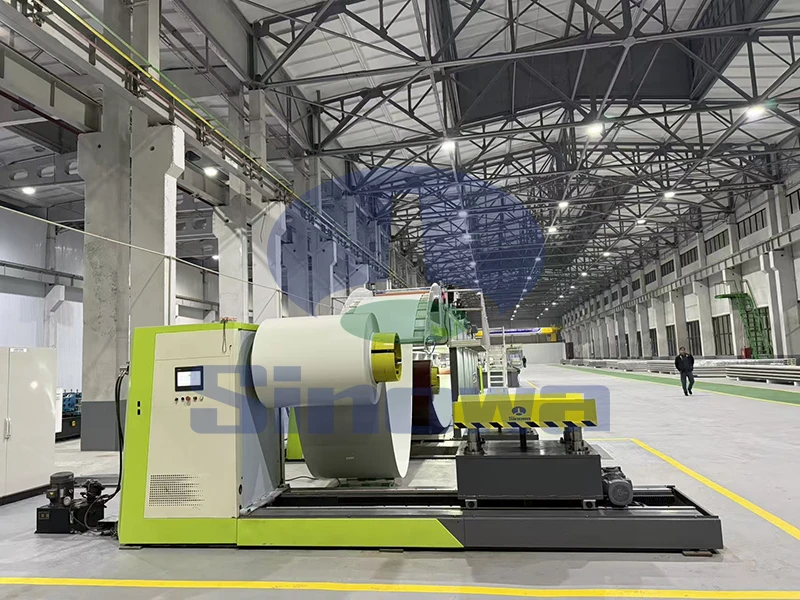
The formulation of a reasonable cleaning cycle for the polyurethane sandwich panel production line is based on the operating frequency of equipment, production environment and material characteristics, which avoids excessive cleaning causing equipment wear and insufficient cleaning leading to production defects. In conventional continuous production scenarios with daily operating time exceeding eight hours, the basic daily cleaning work needs to be completed after each production shift ends, focusing on surface residue removal of key molding and feeding equipment. Polyurethane raw materials are prone to residual curing, dust accumulation and debris adhesion during high-temperature foaming and molding processes, and daily cleaning can effectively prevent tiny residual materials from accumulating and solidifying on equipment surfaces, which would otherwise affect the flatness and compactness of subsequent sandwich panel products. For medium-term cyclic cleaning, a thorough deep cleaning of the entire production line should be arranged every two weeks. This cycle targets hidden parts that are difficult to clean daily, including equipment gaps, conveyor belt bottom layers and pipeline inner walls where residual foaming materials and dust are easily hidden. Long-term cyclic maintenance cleaning is implemented on a monthly basis, focusing on disassembling and cleaning semi-enclosed components of the production line to eliminate potential dirt accumulation risks. For production lines with intermittent operation and low daily output, the cleaning cycle can be appropriately adjusted according to actual production volume, but daily surface dust and residue cleaning cannot be omitted to maintain basic equipment cleanliness.
Standardized pre-cleaning preparation work is the premise to ensure efficient and safe cleaning of the PU sandwich panel production line, and all operational steps must be implemented in strict accordance with unified norms. Before starting any cleaning operation, the first step is to cut off all power supplies of the production line equipment and implement power-off locking measures to prevent accidental equipment start-up during cleaning and cause safety accidents. After power cut, operators need to wait for the high-temperature parts of foaming machines, molding tables and heating equipment to cool completely to avoid scald injuries and prevent cleaning water or agents from contacting high-temperature components to damage equipment parts. Next, operators shall sort out professional cleaning tools including soft fiber brushes, non-scraping scrapers, dust-free cloths and low-pressure cleaning water guns, and check the integrity of all tools to avoid hard tools scratching equipment surfaces and affecting subsequent production precision. Meanwhile, special cleaning agents suitable for polyurethane material residue removal shall be prepared, avoiding corrosive chemical agents that may damage equipment metal parts and rubber accessories. Before formal cleaning, the production site shall be sorted out to remove scattered raw materials, finished products and sundries, ensuring unobstructed cleaning operation space and avoiding secondary pollution of cleaned equipment parts.
Daily standardized cleaning operations for the production line focus on surface dirt removal and basic equipment maintenance, covering all visible and frequently used production components. The cleaning sequence follows the principle of from top to bottom and from inside to outside to ensure no dead angle of surface cleaning. Firstly, clean the feeding system including raw material storage tanks, feeding pipelines and discharge ports, using soft brushes to sweep away accumulated dust and residual powder materials, and wipe the pipeline ports with dust-free cloths to prevent material blockage. Then clean the foaming and molding equipment surfaces, gently scrape the thin cured polyurethane residual layers on the molding table with non-scraping scrapers, and wipe the equipment shell and operating panels with damp cleaning cloths to remove dust and oil stains. The conveyor belt system is a key daily cleaning link; operators need to wipe the belt surface thoroughly to remove adhered tiny debris and ensure the flat transmission of sandwich panel base materials. After surface cleaning, simple inspection and maintenance shall be carried out, including checking whether there is residual dirt in equipment gaps and whether the cleaning tools are clean and stored in order. All daily cleaning work must be completed within the specified time after production shutdown, and cleaning records shall be simply registered to facilitate subsequent cycle inspection and management.
Medium-term deep cleaning operations need to break down daily cleaning blind spots and conduct thorough dirt removal and equipment inspection for hidden parts of the production line. Different from daily surface cleaning, medium-term cleaning focuses on disassembly and cleaning of semi-hidden equipment structures. Operators need to disassemble detachable parts of the foaming equipment such as mixing heads and auxiliary material delivery components, and remove thoroughly the cured polyurethane residues accumulated inside the components that cannot be cleaned daily. For the conveyor belt system, it is necessary to clean the bottom of the belt, transmission rollers and bearing gaps, use low-pressure water guns to flush fine dust and debris, and dry the parts completely after cleaning to prevent moisture from causing metal rust. The internal dust of heating and drying equipment shall be cleaned with professional dust removal tools to avoid accumulated dust affecting heating efficiency and causing local overheating during production. In addition, the production line safety protection facilities and peripheral operating platforms need to be thoroughly wiped and cleaned to keep the entire production area tidy. After deep cleaning, operators need to check the assembly accuracy of disassembled parts to ensure no installation deviation, and test the flexible operation of movable equipment components to guarantee normal operation of the production line after cleaning.
Monthly maintenance cleaning focuses on equipment internal overhaul and aging dirt removal, which plays a key role in prolonging the service life of the polyurethane sandwich panel production line. This cyclic cleaning work involves more comprehensive equipment inspection and fine cleaning, covering core operating components and internal pipeline systems of the production line. Operators need to clean the internal circulation pipelines of raw materials, use professional flushing tools to remove thick residual materials attached to the pipe walls, prevent pipeline narrowing and material circulation blockage, and ensure stable raw material supply during production. For the hydraulic and transmission systems of the production line, remove surface oil dirt and dust, and check whether there is dirt accumulation in the lubrication parts to ensure good lubrication effect of equipment. At the same time, thoroughly clean the ventilation and dust removal system of the production workshop, remove accumulated dust in ventilation ducts and filter screens, maintain smooth workshop air circulation, and reduce dust pollution to the production line and products. After the completion of monthly cleaning, a comprehensive equipment operation test shall be carried out to verify the cleaning effect, and potential equipment faults caused by long-term dirt accumulation shall be eliminated in a timely manner.
Standardized cleaning management and post-cleaning maintenance specifications are essential to sustain the long-term cleaning effect and stable operation of the production line. After all cleaning operations, operators need to uniformly sort and clean all cleaning tools, dry and store them in designated positions to avoid tool contamination affecting subsequent cleaning work. The waste residues, dirt and waste cleaning materials generated during cleaning shall be classified and disposed of in accordance with on-site environmental protection norms, and shall not be randomly stacked to cause secondary pollution to the production environment. Enterprises need to establish complete cleaning operation records, truthfully recording cleaning time, cleaning links, operator information and equipment operation status after cleaning, so as to form traceable cleaning management files. In addition, regular professional training shall be carried out for operators to standardize their cleaning operation habits, avoid irregular cleaning behaviors such as random scrubbing and blind disassembly, and ensure all cleaning work is carried out in accordance with unified standards. Long-term standardized cleaning management can effectively reduce equipment failure rate, stabilize product quality consistency and improve the overall operational efficiency of the polyurethane sandwich panel production line.
Main Products
-

Continuous PU Sandwich Panel Production Line
This continuous PU sandwich panel production line is an integrated automatic equipment. It covers uncoiling, forming, foaming, curing and cutting processes. With automatic raw material proportioning and precise temperature & pressure control, PIR sandwich panel production line continuously composites panels with double skins. Polyurethane sandwich panel production line stably produces steel and aluminum sandwich panels. Featuring high automation, the line makes fireproof and thermal-insulation panels for building enclosure and cold storage. -

Rock Wool Sandwich Panel Production Line
Continuous rockwool sandwich panel production line is an automatic integrated production equipment, consisting of uncoiling, forming, gluing and compounding, heating curing, fixed-length cutting, automatic stacking and other modules. The mineral wool sandwich panel production line continuously conveys color steel plates and rock wool core materials to automatically complete lamination and curing, which can produce fireproof and thermal insulation sandwich panels. Featuring high automation degree and stable operation, this production line is suitable for mass production of panels used for building walls, roofs and other scenarios. -

Phenolic Insulation Board Production Line
This integrated automatic production line continuously manufactures PU and phenolic insulation boards. The insulation board production line covers raw material proportioning, high-pressure foaming, laminating, curing and fixed-length cutting. Featuring high automation and stable molding, the insulation panel production line supports various surface materials. PU boards offer excellent thermal insulation, while phenolic boards have superior fire resistance. These products are widely used in construction, cold chain, ventilation ducts and other thermal insulation fields.
Other FAQs
- Overload Protection Function Detection Of Polyurethane Sandwich Panel Production Equipment
- Wearing Parts Replacement Cycle Of PU Sandwich Panel Production Line Equipment
- Sandwich Panel Production Line Upgrade And Expansion Feasible Solutions
- Standard Panel Thickness Range Of PU Sandwich Panel Line
- Equipment Foundation Construction Standard For PU Sandwich Panel Line