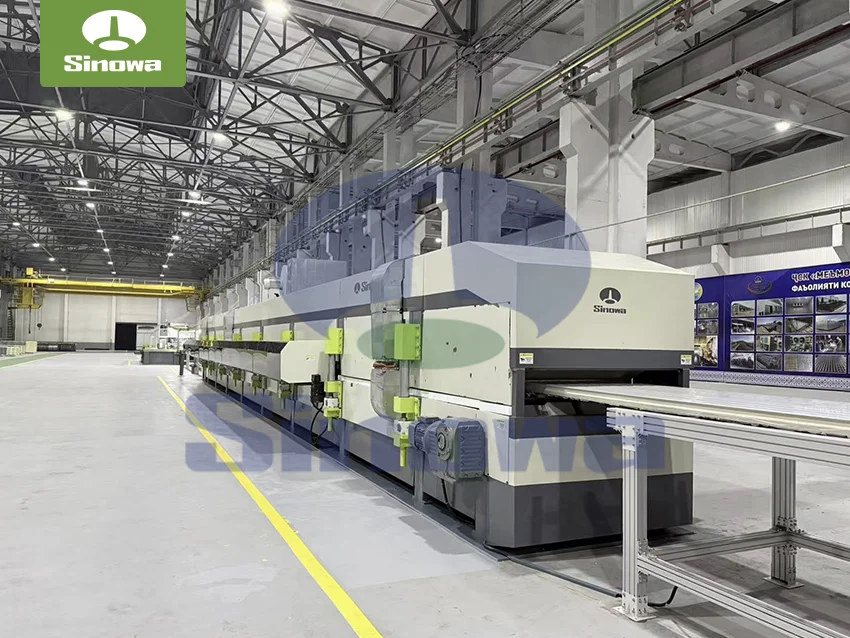
 sandwich panel line
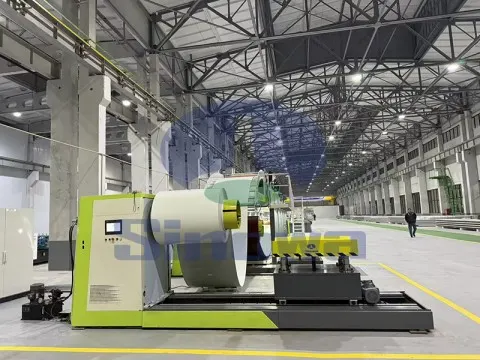
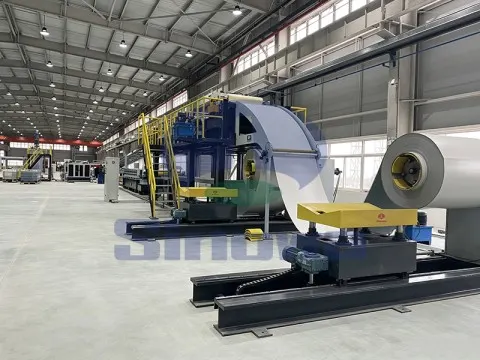
A PU sandwich panel line begins with the uncoiling and feeding of two metal facings, typically galvanized or pre-painted steel. The top and bottom coils are loaded onto separate decoilers, each equipped with a coil car, expansion mandrel, and automatic stitching or welding device that splices the leading edge of a new coil to the trailing end of the running one. This splice continuity is critical: any unplanned stop here halts the entire downstream process and creates a scrap section. After decoiling, the sheet passes through a leveler that removes coil set and cross-camber, then into a roll-forming station where a series of contoured rolls progressively bend the flat strip into the desired profile—whether a flat micro-ribbed interior liner, a trapezoidal external wall sheet, or a narrow-ribbed roofing panel. Each roll station is driven independently or grouped by a gearbox line, and the forming clearance is carefully set so that the metal is not over-stressed or scratched. Modern lines use servo-driven roll changes or cassette-based forming units that reduce profile-changeover time from hours to minutes, which is essential for factories running multiple building profiles per shift.
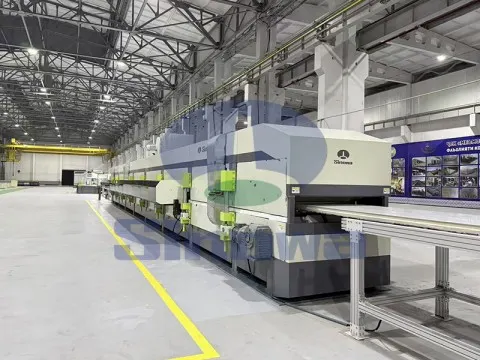
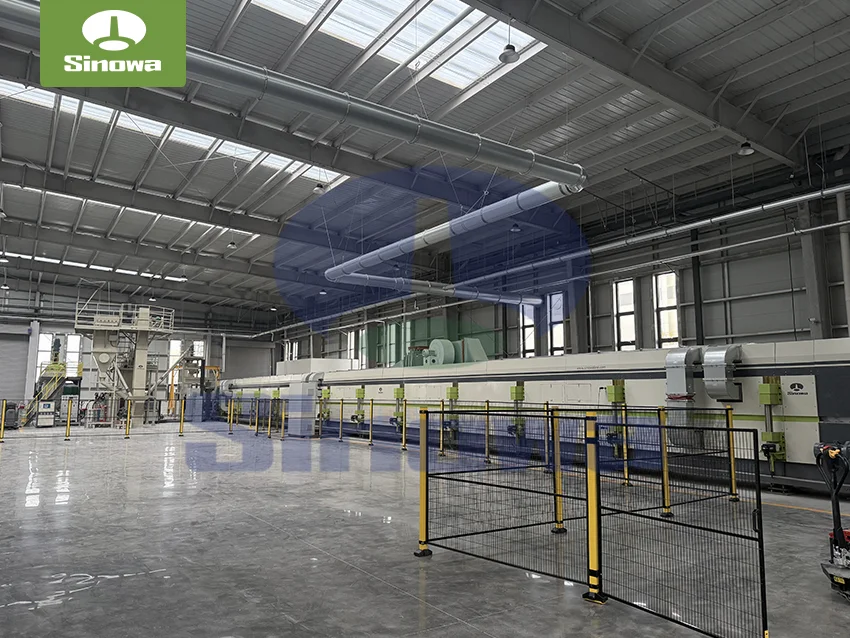
Once both facings have been formed, they enter the double-belt laminator, which is the heart of the PU line. The bottom sheet travels along a Teflon-coated or stainless steel belt, while the top sheet is guided from above to meet it at a precise opening. Polyurethane chemistry—polyol blend and isocyanate—is metered by a high-pressure impingement mixing unit and sprayed onto the moving bottom facing through a oscillating spray gun. The mixing head oscillates across the panel width at a frequency and stroke calibrated to the line speed and panel thickness, ensuring an even bead distribution that will expand and fill the cavity uniformly. As the two facings and the liquid foam enter the heated double belt, the PU expands chemically under controlled temperature and pressure. The belt consists of upper and lower precision plates or bands held at a constant gap by a series of hydraulic or servo pressure stations. The heating zones—usually oil-circulated or electric—are divided into multiple segments along the belt length, each with independent temperature control. The first zone triggers foaming and nucleation, the middle zones sustain cure and dimensional stability, and the final zone cools the panel just enough that it exits the laminator flat and rigid.
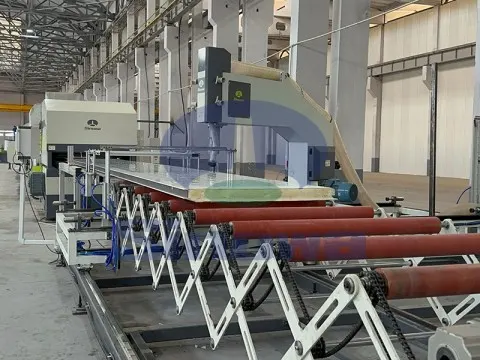
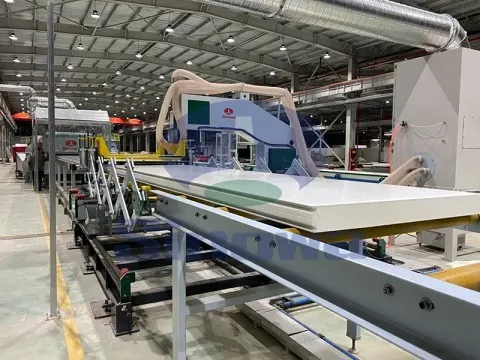
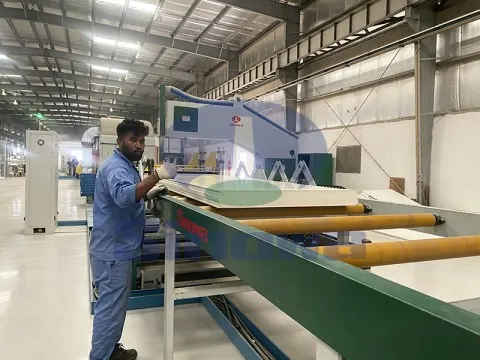
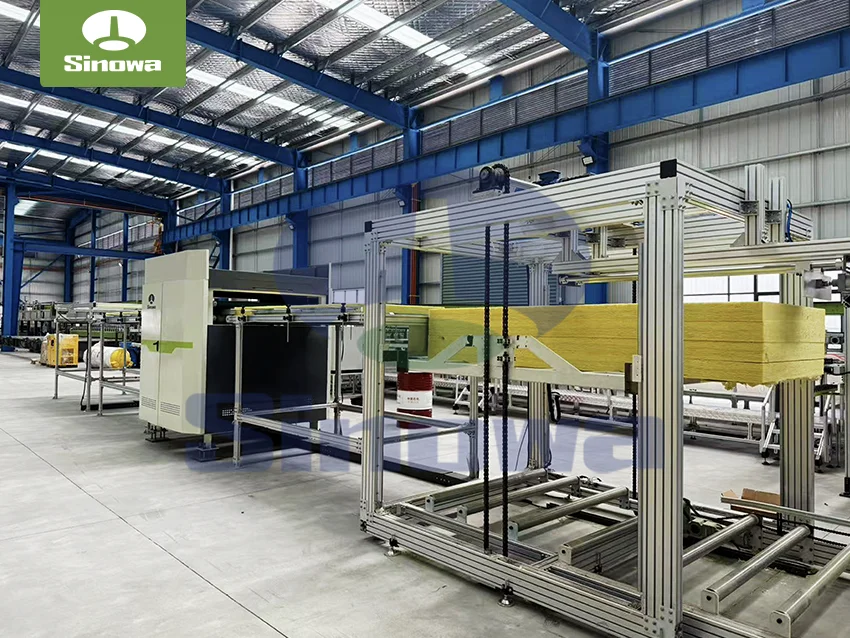
After the laminator, the continuous panel slab moves into the cutting and sawing section. A flying circular saw cuts the moving panel to the exact length ordered by the customer, synchronized by an encoder so that no panel is cut short or skewed. Behind the saw, a tilting or transverse conveyor transfers individual panels to a stacking station. Many lines also include side trimming and edge-drilling or notching devices that prepare the panel for click-and-lock joints, concealed fixing, or plinth integration. The stacker then layers panels onto pallets with interleaving separators, ready for wrapping and dispatch. What often goes unnoticed is the waste recovery: edge trimmings and off-cuts are fed into a crusher and densifier, and the resulting PU scrap is either sold for thermal energy or disposed of as non-recyclable construction waste, a cost and environmental consideration that increasingly shapes line design.
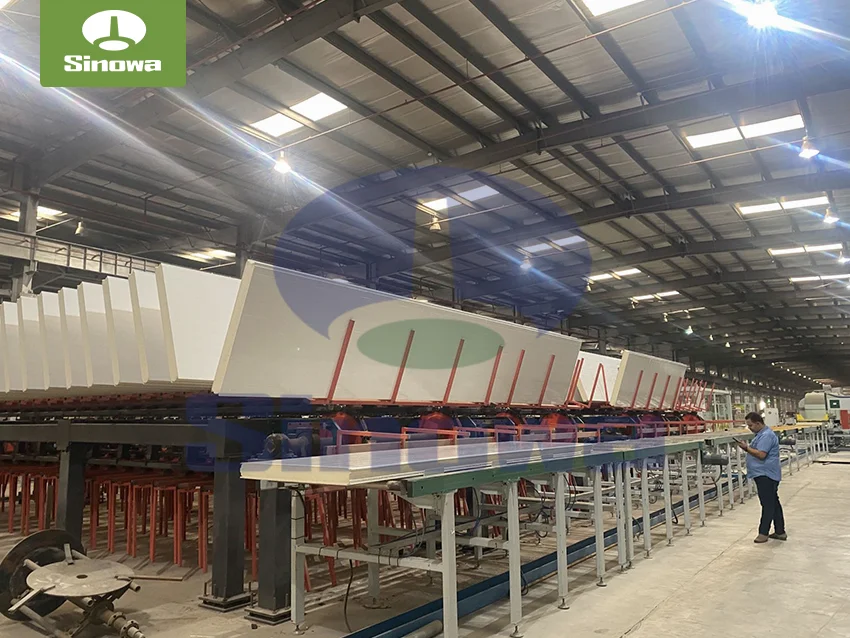
Quality on a PU line is not inspected at the end; it is built into every station. Line speed, which typically ranges between several meters per minute for thick roof panels and over twenty meters per minute for thin wall liners, must be matched to the foam reaction profile. If the line runs too fast, the foam may not fully cure before the saw, resulting in post-expansion bowing or delamination. If it runs too slow, the panel sits in the hot belt too long, causing skin burn, internal voids, or wasted energy. The metering unit must deliver a consistent mass flow of polyol and isocyanate at the correct ratio and temperature, because even a small drift in chemistry translates into uneven core density, poor bond strength, or thermal performance loss. Operators monitor core density by weighing sample sections, measuring thermal resistance periodically, and visually inspecting cut edges for voids, skin adhesion, and straightness. Most lines now collect process data—belt gap, zone temperatures, pump pressures, line speed, and mixing-head oscillation frequency—into a supervisory system that flags drift before it becomes a customer complaint.
Beyond the core process, a high-quality PU line is defined by its automation and flexibility. Modern control platforms coordinate decoiler, roll former, laminator, saw, and stacker through a single human-machine interface, where an operator selects a panel order from a work list and the line auto-adjusts belt gap, heating setpoints, spray gun parameters, and cut length. Recipe management reduces human error and makes it practical to switch between wall and roof profiles, thicknesses from thin interior liners to thick insulated roof panels, and different facing finishes within a single production day. Safety is embedded throughout: emergency stop circuits at every station, interlocked guards on moving belts, flame detection in the foaming zone, and exhaust ventilation that captures isocyanate vapors. Energy efficiency is equally important—recirculating hot oil rather than reheating from cold, insulating belt housings, and using variable-frequency drives on all major motors reduce both running cost and carbon footprint. For modular building factories, where panels are shipped to off-site assembly yards, line reliability directly translates into on-time project delivery.
The modular building sector demands panels that are not only thermally efficient but also dimensionally accurate enough for off-site repetition. A 20-meter module assembled indoors requires wall panels that line up perfectly at corners, that click together without forcing, and that hold their flatness through shipping and multiple handling cycles. This pushes PU line builders toward tighter tolerance control—flatter exit panels, straighter side edges, and more consistent joint geometry. It also pushes end-users to think holistically: the line is only as good as the upstream material quality, the foam chemistry, and the operator discipline. A premium line with poor raw-material incoming inspection will still produce bad panels. Conversely, a well-run line with routine maintenance, clean filters, calibrated sensors, and trained crews can consistently deliver the flat, bonded, dimensionally stable panels that modular construction relies on, project after project.
Sinowa is a professional manufacturer of sandwich panel machine in china, we provide diversified and high-performance sandwich panel production lines, including fully automatic continuous PU sandwich panel line and customized special lines to meet mass production and personalized order demands. These sandwich panel lines support processing multiple foam core materials, such as PU, PIR, mineral wool, rock wool and glass wool, covering different insulation and fireproof standards.
Featuring stable operation, high efficiency, energy saving and easy maintenance, our PU sandwich panel line deliver sandwich panels with excellent thermal insulation, fire resistance, sound insulation and lightweight durability. The finished panels are widely applied in industrial workshops, warehouse roofing and wall cladding, cold storage insulation, serving global construction and industrial insulation markets.
https://www.cnsinowa.com/sandwich-panel-machines/high-quality-pu-sandwich-panel-production-line-for-modular-building-industry.html