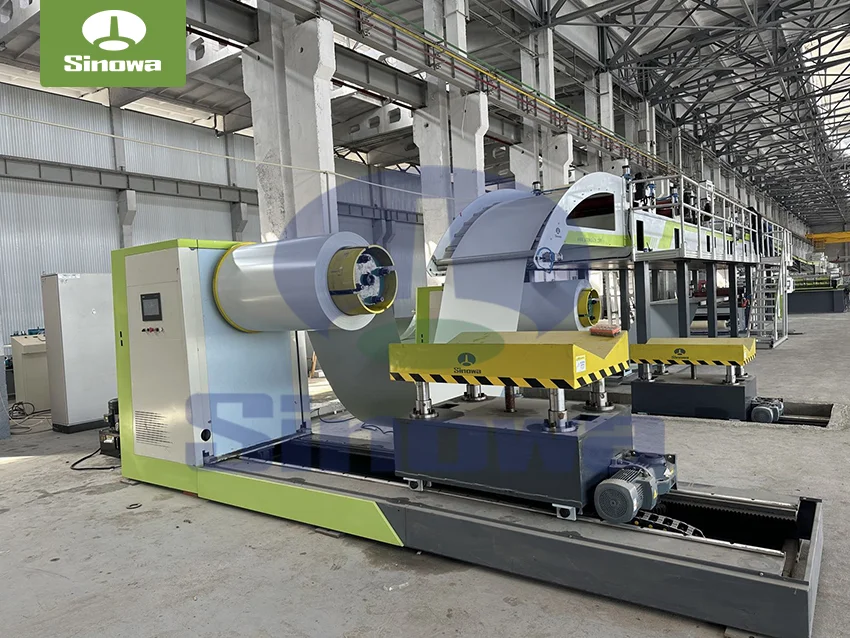
 sandwich panel line
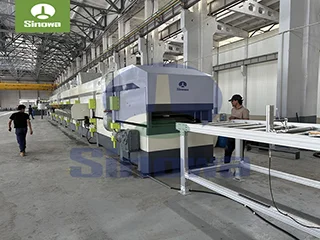
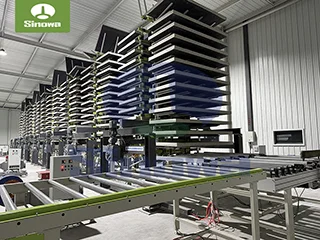
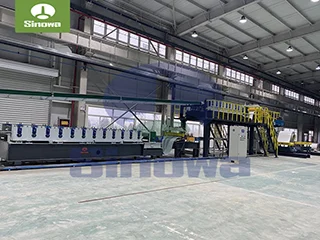
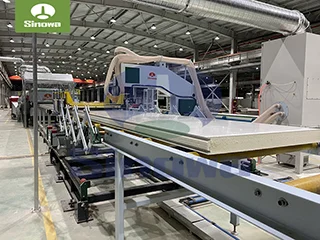
Different from ordinary lightweight sandwich panel production equipment, heavy-duty PIR sandwich panel line is engineered to meet the rigorous working conditions and long-term service requirements of industrial-grade steel structure buildings. Traditional light-duty production lines are mostly suitable for temporary buildings or low-demand civil buildings, with limited structural rigidity, process precision, and product performance stability. In contrast, heavy-duty production systems adopt integrated industrial-grade structural design and modular process configuration, focusing on producing thickened, high-density, and high-stability PIR sandwich panels that can adapt to extreme temperature differences, strong wind loads, and long-term outdoor exposure environments faced by steel structure factory buildings, warehouses, cold storage workshops, and large-span commercial steel structure buildings. Every structural module and production process of the equipment is optimized around the core demands of steel structure building envelope systems, including load-bearing coordination, thermal insulation continuity, fire safety, and overall structural integration, ensuring that the produced panels can perfectly match the assembly characteristics and performance standards of modern steel structure buildings.
The complete operational system of a heavy-duty PIR sandwich panel production line covers the full-process automated production from raw material feeding to finished panel forming, curing, cutting, and output, realizing continuous and uninterrupted industrial production with high consistency of product quality. The entire production flow starts with the automatic feeding and preprocessing of metal surface materials. The equipment is compatible with multiple metal sheet substrates commonly used for steel structure building envelopes, conducting automatic leveling, deburring, and surface pretreatment to eliminate surface defects and stress concentration of raw materials. This pretreatment process is crucial for subsequent bonding and forming, as it ensures the flatness and uniformity of the outer layer of the sandwich panel, avoiding structural warping or local stress defects that may affect the installation accuracy and service life of the panel in steel structure building assembly projects. The precision roll-forming module integrated in the line can complete continuous profiling of metal sheets, realizing diverse cross-section shaping to adapt to different installation node designs of steel structure wall panels, roof panels, and partition panels, providing diversified structural matching solutions for different types of steel structure buildings.
The core functional link of the continuous sandwich panel production line lies in the precise foaming, filling, and composite curing of PIR core materials. PIR, as a modified polyisocyanurate foam material, has a more stable cross-linked cellular structure compared with ordinary polyurethane materials, featuring low thermal conductivity, excellent flame retardancy, and low smoke generation characteristics, which are key to improving the safety and energy-saving level of steel structure buildings. The heavy-duty production line is equipped with a high-precision proportional feeding and foaming system, which can accurately control the mixing ratio, injection volume, and foaming speed of PIR raw materials according to preset process parameters. This precise control enables the PIR foam to form a uniform and dense microcellular structure between the upper and lower metal layers, effectively avoiding hollowing, uneven density, and local defects that often occur in ordinary production processes. In the closed composite curing area of the equipment, the stable temperature and pressure environment created by the double-belt pressing structure promotes complete polymerization and cross-linking reaction of PIR materials, ensuring that the core material maintains stable structural strength and thermal insulation performance in long-term high and low temperature alternating environments, and effectively improving the overall wind pressure resistance and deformation resistance of the sandwich panel.
The structural stability and operational durability of heavy-duty PIR sandwich panel machine is fully optimized for long-term high-load industrial production scenarios. The main frame of the equipment adopts thickened high-strength structural steel welding and integral stress relief treatment, which can maintain stable operational accuracy under long-term continuous working conditions without structural deformation or vibration displacement. Key transmission and pressing components are designed with enhanced wear resistance and fatigue resistance, adapting to high-frequency and high-intensity production operations. This heavy-duty structural design not only extends the service life of the entire production line but also ensures the long-term consistency of panel production precision. For steel structure building projects that require large-scale batch installation, the stable output of high-precision panels can effectively reduce the assembly gaps of building envelopes, avoid energy loss caused by poor sealing, and enhance the overall airtightness and thermal insulation integrity of steel structure buildings. Meanwhile, the equipment's intelligent linkage control system realizes synchronous coordination of all production modules, automatically adjusting process parameters such as foaming density, pressing pressure, and curing temperature according to different panel thicknesses and structural specifications, greatly improving the flexibility of production and meeting the personalized customization needs of different steel structure building projects.
In terms of production efficiency and resource utilization, heavy-duty PIR sandwich panel manufacturing line has obvious advantages over traditional production equipment, perfectly matching the rapid construction characteristics of modern steel structure buildings. Steel structure construction is widely praised for its high assembly efficiency and short project cycle, which puts forward high requirements for the supply speed and batch stability of supporting enclosure materials. The fully automated continuous production mode of the line eliminates intermittent operation links in traditional production, realizing seamless connection from raw material input to finished product output. The integrated intelligent control system can monitor the production status of each link in real time, automatically identify and adjust process deviations, reduce manual intervention errors, and significantly improve the yield rate of finished panels. In addition, the precision material distribution and foaming control technology minimizes raw material waste, improves the utilization rate of PIR raw materials and metal substrates, and realizes more economical and environmentally friendly production. The high-efficiency production capacity of the equipment can stably supply large quantities of qualified PIR sandwich panels for large-scale steel structure industrial parks, logistics warehouses, ultra-large-span steel structure stadiums, and commercial complex projects, effectively guaranteeing the progress and quality of building construction.
The performance advantages of panels produced by heavy-duty PIR sandwich panel production machine is highly compatible with the multi-dimensional performance requirements of steel structure buildings. In terms of thermal insulation and energy saving, the dense cross-linked cellular structure of PIR core materials brings ultra-low thermal conductivity, which can effectively block indoor and outdoor heat transfer, reduce the energy consumption of building heating and cooling, and help steel structure buildings meet high energy-saving design standards. In terms of fire safety, the PIR core material will form a stable carbonized layer when exposed to high temperature, which can prevent flame spread and reduce smoke and toxic gas release, significantly improving the fire resistance level of steel structure building envelopes and making up for the fire protection shortcomings of traditional steel structure building auxiliary materials. In terms of structural performance, the integrated composite structure formed by high-pressure curing of the production line enables the metal outer layer and PIR core layer to form a firm whole, with excellent bonding strength and overall rigidity. The panels can effectively bear external wind loads and temperature stress, avoid delamination, cracking, and deformation in long-term use, and maintain the long-term structural stability of steel structure building envelopes.
In addition to core performance optimization, the heavy-duty PIR sandwich panel machinery also takes into account the environmental adaptability and long-term weather resistance of finished panels, fully adapting to the complex and diverse application environments of steel structure buildings. Many industrial steel structure buildings are exposed to outdoor environments all year round, facing the erosion of ultraviolet rays, rainwater, humidity, and temperature changes. The optimized composite process of the production line enhances the bonding stability between the metal layer and the PIR core layer, effectively preventing degumming and peeling caused by long-term environmental erosion. At the same time, the uniform and stable core material structure avoids thermal expansion and contraction deformation under extreme temperature differences, ensuring that the panel size and structural performance remain stable in high-temperature summer and low-temperature winter environments. This excellent weather resistance enables PIR sandwich panels to serve stably in various harsh climatic conditions, greatly reducing the later maintenance cost of steel structure buildings and extending the overall service life of building envelopes.
From the perspective of industrial development, the popularization and application of heavy-duty PIR sandwich panel manufacturing machine have promoted the standardized and upgraded development of the supporting material industry for steel structure buildings. In the early stage of the industry, the production of sandwich panels mostly relied on light-duty equipment with low process precision and uneven product performance, which led to inconsistent quality of building enclosure materials and restricted the high-quality development of steel structure construction. With the continuous upgrading of heavy-duty automated production lines, the production process of PIR sandwich panels has been standardized and refined, and the dimensional accuracy, performance stability, and structural consistency of finished products have been greatly improved. The unified and standardized panel production standards provide a solid foundation for the modular assembly and industrialized construction of steel structure buildings, further amplifying the advantages of steel structure construction such as high efficiency, environmental protection, and high integration. As the construction industry continues to advance towards energy conservation, low carbonization, and industrialization, the high-performance production capacity of heavy-duty PIR sandwich panel making lines will become an important technical support for the iterative upgrading of green steel structure buildings.
The equipment's flexible production characteristics also endow steel structure buildings with richer design and application possibilities. The modular process configuration of the heavy-duty production line can realize the production of panels with different thicknesses, widths, and surface styles, covering the diverse needs of building exterior walls, roofs, interior partitions, and special functional insulation layers. For high-demand scenarios such as low-temperature cold storage steel structure buildings, high-cleanliness workshop buildings, and high-fire-risk industrial buildings, the production line can adjust core material density and composite process parameters to produce customized high-insulation, high-fire-resistance, and high-airtightness special panels, realizing precise matching with the functional positioning of different steel structure buildings. This flexible production mode breaks through the limitations of single product type in traditional production equipment, meets the personalized and functional construction needs of modern steel structure buildings, and expands the application scope and market value of steel structure construction systems.
In terms of operational safety and production stability, heavy-duty PIR sandwich panel production machinery adopts humanized and intelligent safety design, ensuring safe and stable operation in long-term industrial production. The whole production system is equipped with real-time operation monitoring and fault early warning functions, which can timely identify abnormal conditions such as equipment vibration, temperature deviation, and process parameter errors, and implement automatic protection measures to avoid production failures and defective products. The closed foaming and curing system reduces the volatilization of raw materials in the production process, realizing cleaner and more environmentally friendly production operation, and conforming to the green production requirements of the modern construction material industry. The highly automated operation mode reduces manual operation links, lowers the risk of operational errors and safety accidents, and improves the overall safety and efficiency of production operations.
In conclusion, the heavy-duty PIR sandwich panel making line is a key core equipment connecting the high-performance material manufacturing industry and the modern steel structure construction industry. Through its heavy-duty structural design, precise process control, efficient automated production, and flexible product customization capabilities, it stably provides high-quality, high-stability, and multi-functional PIR sandwich panels for steel structure buildings. The excellent thermal insulation, fire resistance, weather resistance, and structural stability of the finished panels effectively make up for the functional deficiencies of traditional steel structure building enclosure materials, improve the overall energy-saving level, safety performance, and service quality of steel structure buildings. With the continuous acceleration of green building and industrial construction processes, steel structure buildings will occupy a more important position in modern construction engineering, and the technical upgrading and popularization of heavy-duty PIR sandwich panel making lines will further promote the standardized, high-efficiency, and green development of the entire steel structure construction industry, injecting lasting power into the iterative innovation of modern building engineering technology.
https://www.cnsinowa.com/sandwich-panel-machines/heavy-duty-pir-sandwich-panel-making-line-for-steel-structure-buildings.html