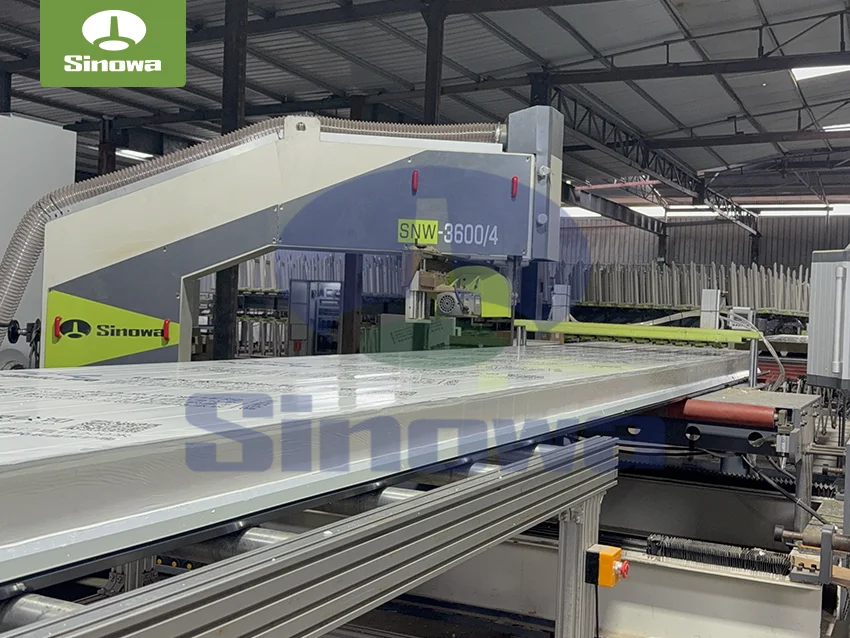
 sandwich panel line
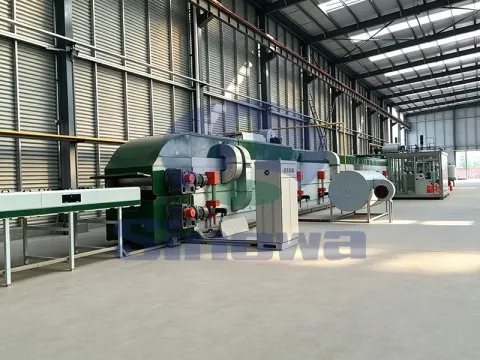
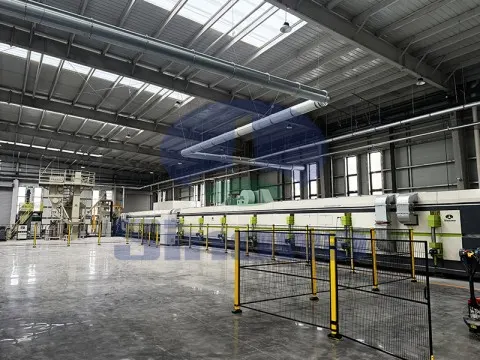
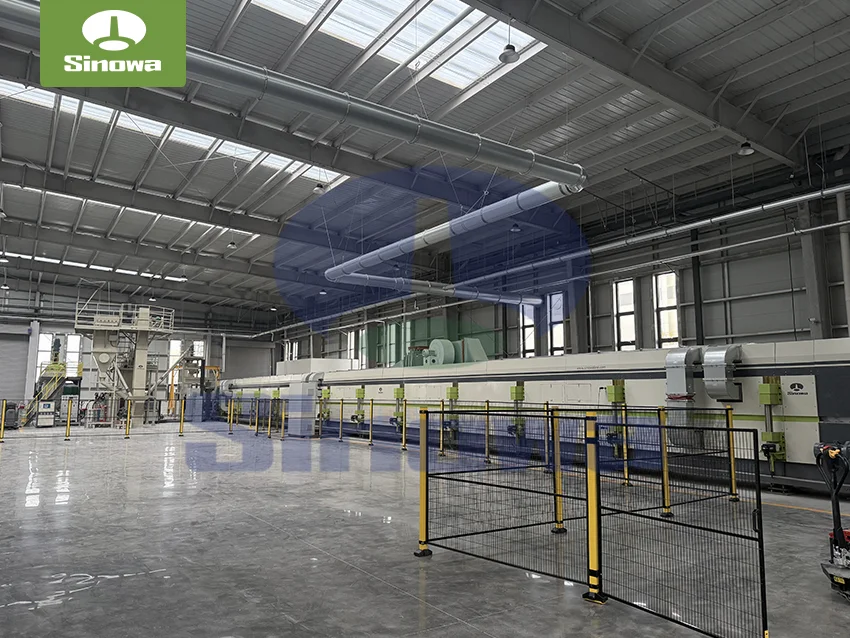
The entire operational logic of a professional PU sandwich panel line for exterior wall insulation revolves around the scientific coordination of raw material pretreatment, surface material processing, polyurethane core foaming and solidification, composite lamination, temperature-controlled curing, precision cutting, and finished product finishing, with every single production step meticulously calibrated to eliminate quality fluctuations and ensure uniform panel performance in every batch of production. Unlike general-purpose sandwich panel production equipment that simply meets basic forming needs, the production lines dedicated to exterior wall insulation panels focus heavily on enhancing the composite integrity of the panel structure, optimizing the uniformity of the polyurethane foam core density, strengthening the bonding strength between the outer surface layers and the foam core material, and improving the overall dimensional stability of the finished panels, all of which are critical prerequisites for long-term safe and effective use in building exterior wall enclosure systems. The production process begins with the orderly feeding and pretreatment of upper and lower surface facing materials, which are usually durable and weather-resistant building sheet materials selected to withstand long-term outdoor exposure, resist ultraviolet radiation, prevent rainwater penetration, and maintain surface flatness and structural stability over decades of use. These surface materials are loaded onto the initial feeding section of the production line through automatic unwinding units, which release the sheet materials at a constant and stable speed to avoid tension deviation, surface wrinkling, or material misalignment that could affect the subsequent composite forming quality of the sandwich panels.
After being unwound, the surface materials pass through a series of guiding, straightening, and edge trimming devices that correct any minor deformation or edge irregularities generated during material storage and transportation, ensuring both the upper and lower surface sheets maintain consistent width, flatness, and linearity throughout the entire production process. This preliminary pretreatment stage is indispensable for exterior wall panel production, as uneven surfaces or irregular edges would not only affect the aesthetic appearance of the exterior wall after installation but also lead to poor on-site assembly gaps, reduced overall wall sealing performance, and even potential water seepage and thermal bridge risks in the later service period. Following surface material pretreatment, the materials enter the roll forming area, where continuous rolling and shaping processes adjust the surface sheet profiles to match the structural design requirements of exterior wall insulation panels. Different from flat panels used for simple partition purposes, exterior wall PU sandwich panels require specific edge structures and overall plate rigidity to facilitate seamless on-site splicing, enhance the overall wind pressure resistance of the exterior wall, and improve the overall structural coordination with building main structures. The roll forming system on the production line adopts multi-group precision roller sets to gradually shape the surface materials without damaging the surface protective layer or causing structural stress concentration, ensuring the formed surface sheets retain stable mechanical properties and perfect matching dimensions for subsequent composite processing.
While the surface materials undergo pretreatment and roll forming, the core material preparation and foaming system of the production line operates synchronously in a fully coordinated manner, forming the most critical functional part of the exterior wall sandwich panels—the rigid polyurethane foam insulation core. The polyurethane core is formed by the precise mixing and chemical reaction of two main liquid raw material components, which are transported from independent storage tanks to a high-pressure metering and mixing device through professional pumping systems. The production line is equipped with high-precision metering pumps that strictly control the proportional ratio of the two raw materials, a fundamental factor determining the foam core’s thermal insulation performance, foaming uniformity, curing speed, and structural strength. Any slight deviation in the raw material ratio will directly lead to uneven foam pore structure, reduced thermal insulation efficiency, insufficient core hardness, or weakened bonding effect between the core and surface layers, which will seriously compromise the overall quality and service life of the exterior wall panels. After being fully and evenly mixed in the high-pressure mixing head, the liquid polyurethane mixture is continuously and uniformly poured onto the surface of the lower facing material that has completed roll forming and is steadily moving forward along the production line conveyor system.
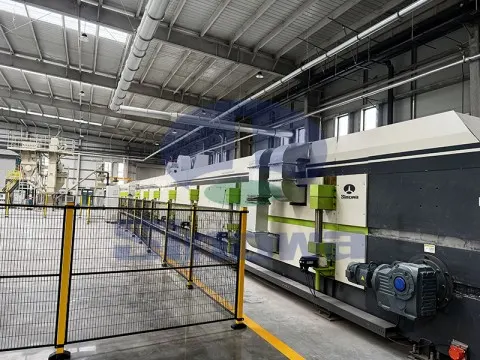
The even distribution of the polyurethane liquid mixture is carefully controlled to ensure consistent thickness and coverage across the entire width and length of the panel, avoiding local material accumulation or insufficient pouring that would result in inconsistent insulation performance and structural thickness of different panel parts. Immediately after the polyurethane raw material is poured, the upper surface material and the lower surface material carrying the liquid polyurethane core material enter the continuous double-track laminating and conveying system together, which is the core equipment for realizing the composite bonding and preliminary shaping of the sandwich panels. The laminating system applies uniform and stable pressure to the upper and lower surface materials through continuous chain plates and roller sets, tightly pressing the surface layers and the polyurethane liquid core together without generating air gaps or local separation between layers. Air gaps inside the panels would not only greatly reduce thermal insulation performance and form thermal bridges but also cause delamination between the core and surface layers over time, leading to panel deformation, cracking, and failure of the exterior wall insulation system. At the same time, the laminating system is equipped with a constant temperature control function, which provides a stable temperature environment required for the chemical foaming and curing reaction of polyurethane materials, effectively accelerating the foaming expansion and solidification molding speed of the foam core while ensuring the foam forms a fine, uniform, and closed-cell internal structure.
As the composite sandwich structure moves forward with the laminating conveyor, the polyurethane liquid material undergoes rapid foaming expansion, fills the entire space between the upper and lower surface layers, and gradually completes chemical cross-linking and physical curing reactions to form a rigid, high-strength, and low thermal conductivity foam core integrated closely with the surface materials. The closed-cell structure formed during this foaming process is particularly crucial for exterior wall insulation applications, as it can effectively block heat conduction and air convection inside the panel, significantly reduce the heat exchange efficiency between the indoor and outdoor environments, and achieve excellent energy-saving insulation effects throughout all seasons. In summer, the closed-cell polyurethane core can block external high-temperature heat from penetrating into the building interior, reducing the load on indoor cooling equipment and lowering overall building energy consumption; in winter, it can lock indoor heating energy inside the building, prevent heat loss through the exterior wall enclosure structure, and maintain a stable and comfortable indoor temperature environment. In addition to thermal insulation performance, the integrated composite structure formed in the laminating and curing stage also gives the exterior wall sandwich panels good overall structural rigidity and impact resistance, enabling the panels to withstand external wind pressure, minor external impact, and natural temperature cycle changes without permanent deformation or structural damage.
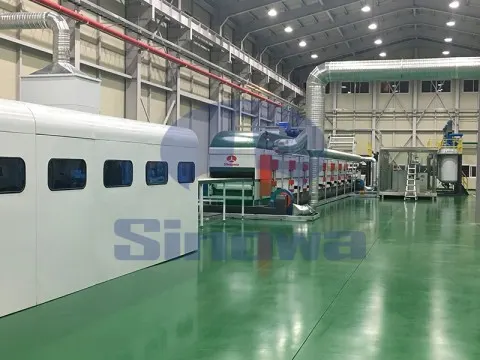
After completing the initial foaming and curing in the laminating area, the semi-finished continuous sandwich panels enter the subsequent constant-temperature deep curing zone of the production line, where the panels continue to stay for a certain period to complete the final chemical reaction and strength stabilization of the polyurethane core material. The deep curing process is essential for improving the long-term dimensional stability and bonding durability of exterior wall panels, as it eliminates residual internal stress generated during foaming and lamination, ensures the bonding interface between the foam core and surface materials reaches the optimal adhesion strength, and prevents panel warping, deformation, or delamination problems caused by temperature changes and external stress during long-term outdoor use. The temperature and conveying speed of the curing zone are precisely adjusted according to the production requirements of exterior wall panels, balancing production efficiency and product curing quality to avoid insufficient curing affecting panel performance or excessive curing time reducing overall production output capacity. Throughout the curing process, the production line’s automatic monitoring system continuously tracks the operating status of each link, ensuring all production parameters remain within the optimal range and maintaining the consistency and stability of each batch of panels.
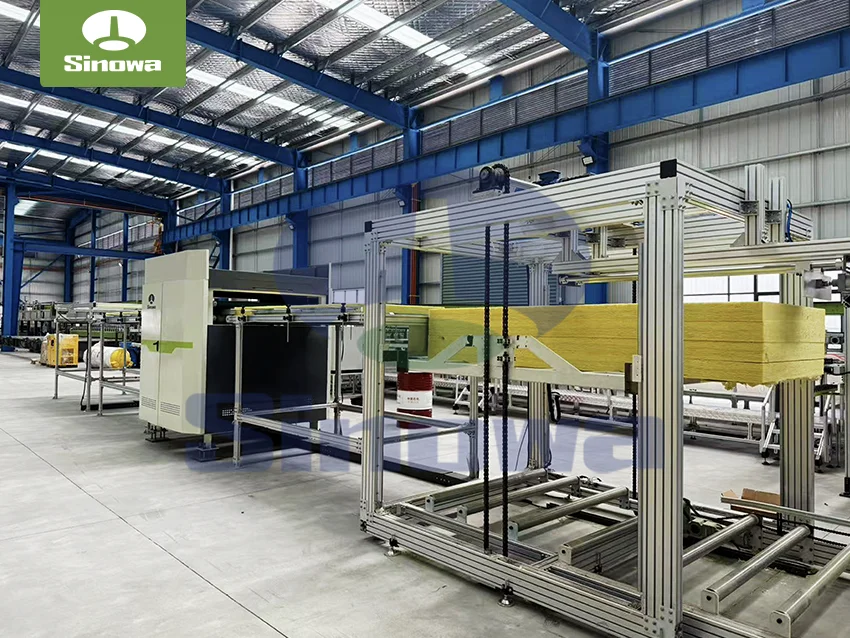
Once the deep curing process is fully completed, the continuous integrated sandwich panels move to the automatic cutting and edge trimming station of the production line, where the continuous long panels are cut into standard fixed lengths according to the actual construction and installation requirements of exterior wall projects. The cutting system adopts high-precision automatic tracking cutting equipment, which can accurately position and cut the panels without generating burrs, edge cracks, or dimensional errors at the cutting sections, ensuring each finished panel has neat and smooth cutting edges and accurate overall dimensions. For exterior wall insulation panels, precise cutting size and smooth edge treatment are very important, as they ensure tight seamless splicing between adjacent panels during on-site installation, reduce assembly gaps, enhance the overall airtightness and watertightness of the exterior wall system, and avoid rainwater infiltration and heat loss caused by excessive assembly gaps. After cutting, the edge trimming device further polishes and trims the panel edges to remove tiny burrs and irregular parts generated during cutting, ensuring the panels meet the fine installation requirements of high-standard building exterior walls.
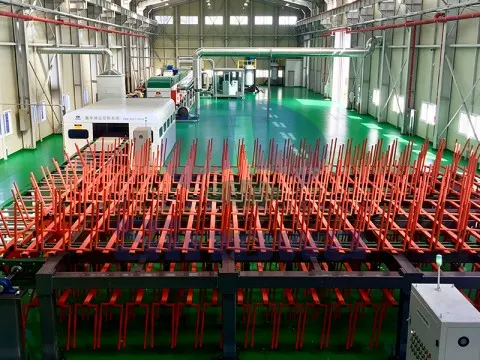
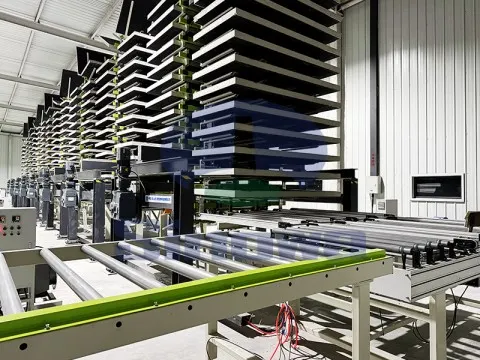
After the completion of cutting and edge trimming, the finished PU exterior wall insulation sandwich panels are transported to the final finished product output and automatic stacking area of the production line. The automatic stacking device neatly arranges the qualified finished panels according to standardized stacking specifications, ensuring the panels are not squeezed, collided, or deformed during the stacking process, and maintaining the surface integrity and structural stability of each panel. The entire stacking process is completed automatically without manual intervention, improving production efficiency while avoiding panel damage and quality problems caused by manual handling. The stacked finished panels are ready for subsequent transportation and on-site construction installation, and the whole production process from raw material feeding to finished product output is completed in a fully automated continuous flow, realizing large-scale, high-efficiency, and stable batch production of exterior wall insulation PU sandwich panels.
The inherent structural and performance advantages of the panels produced by this professional PU sandwich panel production line make them highly adaptable to various complex building exterior wall working environments and diverse architectural design needs. In terms of thermal insulation performance, the polyurethane foam core produced by precise production processes has extremely low thermal conductivity, far exceeding the insulation effect of many traditional exterior wall insulation materials, effectively reducing the building’s overall heating and cooling energy consumption and helping buildings meet high energy-saving and green building construction requirements. In terms of weather resistance, the integrated composite structure formed by the production line process enables the panels to resist long-term ultraviolet radiation, rainwater erosion, temperature difference alternation, and natural aging, maintaining stable performance and appearance without fading, cracking, peeling, or insulation performance attenuation after years of outdoor use. In terms of construction convenience, the finished panels have lightweight characteristics and standardized dimensions, which can greatly shorten the on-site exterior wall construction cycle, reduce on-site construction procedures and labor input, and improve the overall construction progress of building projects compared with traditional on-site plastering and insulation laying construction methods.
In addition, the production line has strong production flexibility and product adjustability, which can appropriately adjust the panel thickness, foam core density, surface material specifications, and edge structure according to the different climatic conditions, building types, and exterior wall design requirements of different regions. Whether it is high-rise residential buildings needing lightweight and high-insulation exterior walls, commercial buildings requiring beautiful appearance and durable exterior wall enclosure, or industrial factory buildings needing wind-resistant, heat-insulating, and easy-to-maintain exterior wall systems, the production line can produce matching PU sandwich panels to meet diversified application needs. The precise automatic control system of the production line effectively reduces human operation errors in the production process, realizes standardized and standardized production of each production link, ensures the performance and size of each panel in each production batch are highly consistent, avoids quality differences between different panels, and provides a solid quality guarantee for the overall stability and long-term safe operation of the entire building exterior wall insulation system.
With the continuous advancement of building energy-saving policies and the continuous improvement of public awareness of green and low-carbon buildings, the market demand for high-efficiency, durable, and environmentally friendly exterior wall insulation materials will continue to rise, and the importance of professional PU sandwich panel production lines in the field of building exterior wall supporting production will become increasingly prominent. This type of production line not only realizes efficient and standardized production of high-performance exterior wall insulation panels but also promotes the continuous upgrading and optimization of the overall building exterior wall insulation system, helping the construction industry move toward a more energy-saving, environmentally friendly, efficient, and sustainable development direction. Through continuous optimization of production technology, improvement of automatic control levels, and upgrading of production process matching degree, PU sandwich panel production lines for exterior wall insulation will continue to provide reliable high-quality panel products for various building projects, create more comfortable and energy-saving indoor living and working environments for building users, and make important contributions to the long-term healthy development of the entire construction industry and the realization of green building development goals.
Sinowa is a professional manufacturer of sandwich panel machine in china, we provide diversified and high-performance sandwich panel production lines, including fully automatic continuous PU sandwich panel line and customized special lines to meet mass production and personalized order demands. These sandwich panel lines support processing multiple foam core materials, such as PU, PIR, mineral wool, rock wool and glass wool, covering different insulation and fireproof standards.
Featuring stable operation, high efficiency, energy saving and easy maintenance, our PU sandwich panel line deliver sandwich panels with excellent thermal insulation, fire resistance, sound insulation and lightweight durability. The finished panels are widely applied in industrial workshops, warehouse roofing and wall cladding, cold storage insulation, serving global construction and industrial insulation markets.
https://www.cnsinowa.com/sandwich-panel-machines/pu-sandwich-panel-line-for-exterior-wall-insulation.html