 sandwich panel line
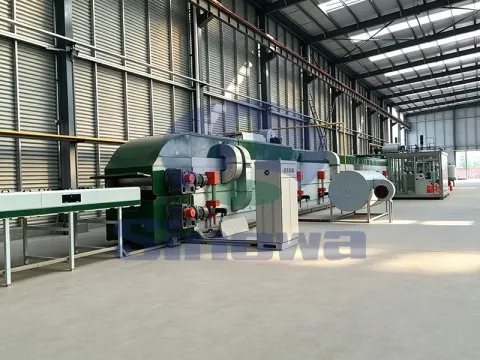
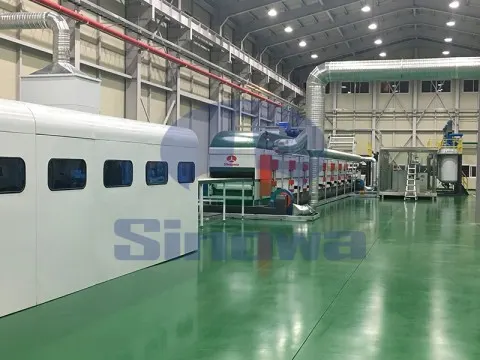
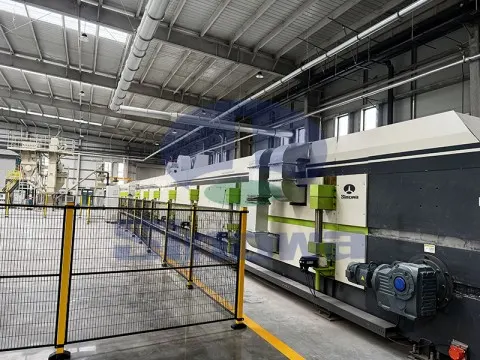
The core material foaming or filling system is the key part that determines the insulation performance of the cold storage insulation board, and its structure varies according to the type of core material used. For production lines using polyurethane as the core material, the foaming system is composed of high-pressure foaming machines, mixing heads, temperature control devices and feeding pipelines. The high-pressure foaming machine accurately mixes isocyanate and polyol in a certain proportion, and injects the mixed raw materials into the cavity between the upper and lower panels through the mixing head. Under the action of a catalyst, the raw materials undergo rapid foaming reaction to form a uniform and dense polyurethane foam layer. The temperature control device strictly controls the temperature of the foaming raw materials and the foaming environment to ensure that the foaming reaction is sufficient and the foam structure is stable, avoiding problems such as uneven foam holes and insufficient density. For production lines using rock wool, glass wool or extruded polystyrene as core materials, the filling system is mainly composed of automatic cotton laying equipment or material conveying devices, which can accurately control the thickness and density of the core material, ensuring that the core material is evenly distributed in the panel cavity and there is no hollowing or uneven distribution. The composite molding unit is responsible for closely bonding the panel and the core material to form an integrated insulation board. It usually includes composite presses, pressure control systems and molding molds. The composite press applies uniform pressure to the panel and core material, making them closely fit together. The pressure control system adjusts the pressure according to the type of panel and core material to avoid damage to the panel or insufficient bonding caused by excessive or insufficient pressure. The molding mold determines the cross-sectional shape and size of the insulation board, and can be replaced according to production needs to produce insulation boards of different specifications and styles, such as tongue-and-groove boards and hidden connection boards, which are convenient for the splicing and installation of cold storage facilities.
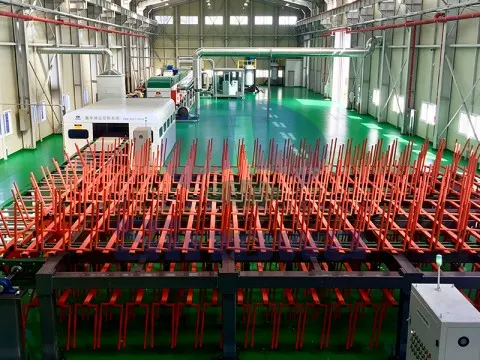
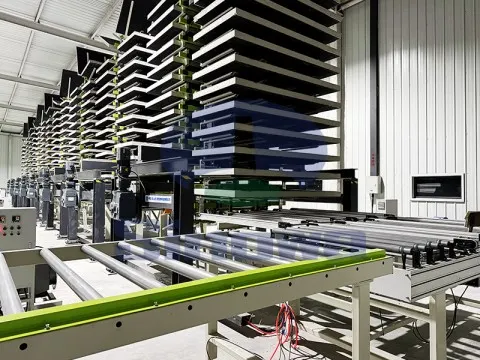
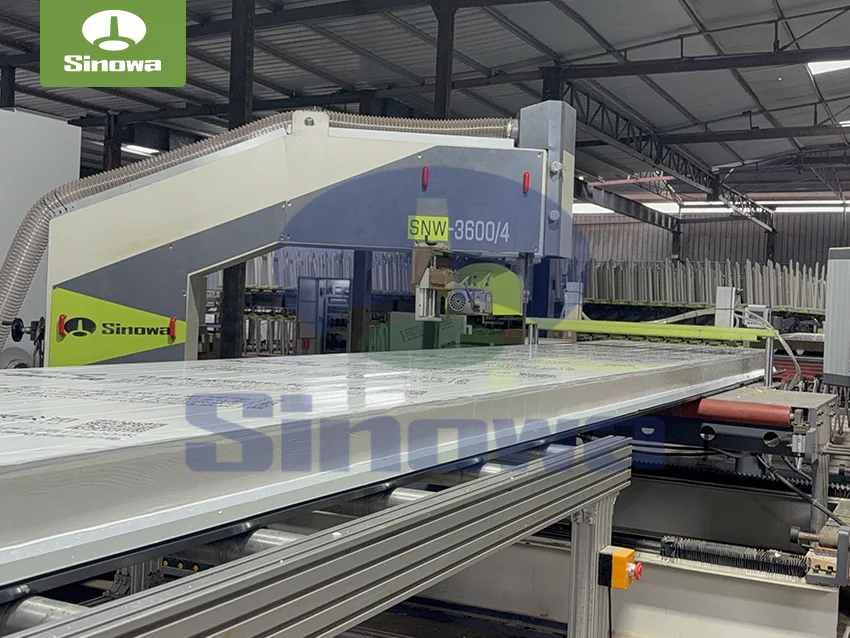
The curing device is used to solidify the foamed or filled insulation board to improve its structural strength and stability. According to the type of core material, the curing method can be divided into natural curing and artificial curing. Natural curing is suitable for small-scale production or core materials that do not require high curing speed, and the insulation board is placed in a suitable environment to complete the curing process through natural reaction; artificial curing is more commonly used in large-scale continuous production lines, including heating curing, constant temperature and humidity curing and other methods. The heating curing device uses hot air or electric heating to control the curing temperature and time, accelerating the curing speed of the core material and ensuring that the insulation board can quickly reach the required strength and performance. The precision cutting equipment is used to cut the cured insulation board into standard sizes according to production requirements. It is usually composed of numerical control cutting machines, cutting blades and positioning devices. The numerical control system can accurately set the cutting length and width, and the positioning device ensures the cutting accuracy, making the size error of the finished board within a small range, which is convenient for the assembly and installation of cold storage. The post-processing system is mainly responsible for the surface finishing of the cut insulation board, including deburring, edge trimming, surface cleaning and anti-rust treatment. The deburring device removes the burrs and irregularities generated during cutting, improving the appearance quality of the board; the edge trimming device trims the edges of the board to ensure the neatness of the board edges; the surface cleaning device removes dust and debris on the board surface; the anti-rust treatment is mainly aimed at metal panels, which can improve the corrosion resistance of the panel and extend the service life of the insulation board. The automatic conveying and stacking mechanism runs through the entire production line, responsible for the conveying of materials between various processes and the stacking of finished products. The conveying device adopts belt conveyors or roller conveyors, which can realize the continuous conveying of materials, improving production efficiency; the automatic stacking device can stack the finished insulation boards neatly according to the specified quantity and specifications, reducing manual labor intensity and avoiding damage to the boards during manual stacking.
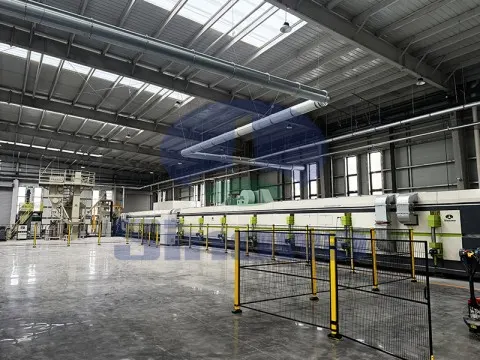
The performance of a cold storage insulation board production line directly determines the quality of the produced insulation boards and the efficiency of the production process, and its core performance is mainly reflected in automation, production efficiency, processing accuracy, material adaptability, stability and energy conservation and environmental protection. Automation performance is one of the most prominent characteristics of modern cold storage insulation board production lines. With the continuous development of industrial automation technology, most production lines have realized full or semi-automatic operation. From raw material feeding, panel pretreatment, foaming, composite molding to cutting, post-processing and stacking, the entire process can be completed automatically through the control system, reducing manual intervention. This not only improves production efficiency, but also avoids errors caused by manual operation, ensuring the consistency of product quality. The control system of the production line is usually composed of a PLC controller, a touch screen and a sensor. The operator can set production parameters, monitor the production process and adjust equipment operation in real time through the touch screen, which is simple and convenient to operate. Some advanced production lines also integrate intelligent monitoring and fault diagnosis functions, which can timely detect equipment faults and alarm, reducing the downtime caused by equipment failures and improving the continuity of production.
Production efficiency is another important performance indicator of the production line. The continuous operation mode adopted by the production line can realize the uninterrupted production of insulation boards, and the production speed can be adjusted according to actual needs. For large-scale production lines, the daily output can reach thousands of square meters, which can meet the large demand for insulation boards in large cold storage construction projects. The improvement of production efficiency is mainly due to the reasonable design of the production line structure, the high coordination between various equipment and the high automation degree. At the same time, the production line adopts efficient equipment and processes, such as high-speed foaming machines, precision cutting machines and automatic stacking devices, which further shorten the production cycle and improve production efficiency. Processing accuracy is crucial to the quality of cold storage insulation boards, because the size and shape accuracy of the boards directly affect the splicing effect and insulation performance of cold storage. Modern cold storage insulation board production lines have high processing accuracy, and the size error of the produced insulation boards can be controlled within a very small range. The precision of the production line is mainly guaranteed by high-precision equipment, advanced positioning technology and strict quality control systems. For example, the numerical control cutting machine can accurately cut the board according to the set size, and the error is less than 1mm; the composite molding unit adopts a high-precision pressure control system and a positioning device to ensure that the panel and the core material are closely bonded and the thickness of the board is uniform. In addition, the production line is also equipped with online detection equipment, which can detect the size, thickness and bonding strength of the board in real time during the production process, and timely remove unqualified products, ensuring the overall quality of the finished products.
Material adaptability is an important performance that reflects the flexibility of the production line. Different cold storage scenarios have different requirements for the performance of insulation boards, which requires the production line to be able to produce insulation boards of different materials and specifications. Modern cold storage insulation board production lines have strong material adaptability, and can be compatible with various panel materials and core materials. For panel materials, it can process color steel plates, stainless steel plates, aluminum plates and other different metal materials, as well as non-metal panels such as PVC plates according to needs; for core materials, it can produce insulation boards with polyurethane, rock wool, extruded polystyrene, glass wool and other core materials. At the same time, the production line can flexibly adjust production parameters according to the type of raw materials and product requirements, such as adjusting the foaming temperature and pressure, changing the cutting size and replacing the molding mold, so as to produce insulation boards of different thicknesses, widths, lengths and performance indicators, meeting the diverse needs of the market. Stability is the guarantee for the long-term operation of the production line. The production line is made of high-quality materials and components, and the key parts are subjected to precision processing and strict testing, which can ensure long-term continuous operation without frequent failures. The transmission system of the production line adopts high-quality bearings and gears, which have good wear resistance and stability, and can withstand long-term high-load operation; the electrical system adopts reliable electrical components, which has strong anti-interference ability and can avoid malfunctions caused by voltage fluctuations or external interference. In addition, the production line is equipped with a complete maintenance system, which is convenient for operators to maintain and maintain the equipment, further extending the service life of the equipment and ensuring the stability of production.
Energy conservation and environmental protection are important development trends of modern industrial production lines, and cold storage insulation board production lines are no exception. The production line adopts a variety of energy-saving technologies and environmental protection measures to reduce energy consumption and environmental pollution during the production process. In terms of energy conservation, the production line optimizes the design of the heating system and the power system, adopts energy-saving motors and heating equipment, and reduces energy waste; the heat recovery device recycles the waste heat generated during the production process, which can be used for heating raw materials or the production environment, improving energy utilization efficiency. In terms of environmental protection, the production line adopts environmentally friendly raw materials and foaming agents, avoiding the use of substances harmful to the environment, such as ozone-depleting foaming agents; the waste gas, waste water and waste generated during the production process are treated through professional equipment to meet the national environmental protection emission standards before being discharged. In addition, the production line also adopts a closed production mode, which reduces the diffusion of dust and harmful gases, protects the health of operators and the surrounding environment.
Cold storage insulation board production lines can be divided into different types according to various classification standards, and each type has its own characteristics and applicable scenarios, which can meet the diverse production needs of different users. According to the production mode, it can be divided into continuous production lines and intermittent production lines. Continuous production lines are suitable for large-scale mass production. They adopt a fully automated continuous operation mode, with high production efficiency, stable product quality and small product error. The entire production process is uninterrupted, and the finished products can be continuously output, which is suitable for large enterprises or projects with large demand for insulation boards. Intermittent production lines are suitable for small-scale production or customized production. They adopt a discontinuous operation mode, and the production process is divided into multiple stages. Each stage is completed independently, and then enters the next stage. The production line has strong flexibility, can easily adjust the production specifications and product types, and is suitable for small and medium-sized enterprises or users with diverse and small-batch production needs. According to the type of core material produced, it can be divided into polyurethane cold storage insulation board production lines, rock wool cold storage insulation board production lines, extruded polystyrene cold storage insulation board production lines and composite core material production lines. Polyurethane cold storage insulation board production lines are the most widely used type. They mainly produce insulation boards with polyurethane as the core material. The produced boards have excellent insulation performance, low thermal conductivity, good moisture resistance and high structural strength, which are suitable for various cold storage facilities, especially low-temperature and ultra-low-temperature cold storage. Rock wool cold storage insulation board production lines produce insulation boards with rock wool as the core material. Rock wool has excellent fire resistance, high temperature resistance and sound insulation performance, so the produced insulation boards are suitable for cold storage facilities with high fire protection requirements, such as cold storage for flammable and explosive materials or public cold storage.
Extruded polystyrene cold storage insulation board production lines produce insulation boards with extruded polystyrene as the core material. Extruded polystyrene has good waterproof performance, high compressive strength and stable insulation performance, which are suitable for cold storage ground, basement insulation and other scenarios that require waterproof and pressure resistance. Composite core material production lines can produce insulation boards with composite core materials, such as polyurethane-rock wool composite, polyurethane-extruded polystyrene composite, etc. These composite insulation boards combine the advantages of different core materials, have comprehensive performance such as insulation, fire prevention, waterproof and pressure resistance, and are suitable for complex cold storage environments or scenarios with high performance requirements. According to the degree of automation, it can be divided into fully automatic production lines, semi-automatic production lines and manual production lines. Fully automatic production lines realize the automation of the entire production process, with the highest production efficiency, the best product quality consistency and the least manual intervention, which are suitable for large-scale industrial production. Semi-automatic production lines require a small amount of manual operation, such as manual feeding, manual inspection or manual stacking, which have moderate production efficiency and flexibility, and are suitable for small and medium-sized enterprises with certain production scale. Manual production lines rely on manual operation for most processes, with low production efficiency, large product error and high labor intensity, which are only suitable for small-scale production or individual workshops with limited funds.
The application of cold storage insulation board production lines is closely related to the development of the cold chain industry and various fields that require low-temperature storage and insulation, and its use scope covers multiple industries and scenarios, providing important equipment support for the construction and operation of cold storage facilities. In the cold chain logistics industry, cold storage insulation board production lines play a core role. With the rapid development of the cold chain logistics industry, the demand for cold storage facilities is increasing day by day, and cold storage insulation boards, as the core building materials of cold storage, have a huge market demand. The production lines can produce a large number of high-quality insulation boards to meet the construction needs of various cold storage facilities, such as large-scale cold storage warehouses, fresh-keeping warehouses, freezing warehouses, and mobile cold storage. These cold storage facilities are used for the storage and transportation of fresh food, frozen food, aquatic products, dairy products and other perishable goods, and the high-performance insulation boards produced by the production lines can effectively maintain the low-temperature environment inside the cold storage, reduce energy consumption, and ensure the quality and safety of the stored goods. In the food processing industry, many food processing enterprises need to build cold storage facilities to store raw materials, semi-finished products and finished products to ensure the freshness and quality of food. For example, meat processing enterprises need cold storage to freeze and store meat, fruit and vegetable processing enterprises need fresh-keeping warehouses to store fruits and vegetables, and beverage processing enterprises need cold storage to store raw materials such as fruit juice and dairy products. Cold storage insulation board production lines can produce insulation boards that meet the needs of food processing enterprises, with good hygiene performance, corrosion resistance and insulation performance, ensuring the safety of food storage.
In the pharmaceutical industry, the storage of vaccines, biological agents, special drugs and other medical products has strict requirements on temperature and humidity, and cold storage facilities with high insulation performance are required to ensure the effectiveness and safety of medical products. Cold storage insulation board production lines can produce insulation boards with high insulation accuracy, good stability and clean surface, which are suitable for the construction of medical cold storage. These medical cold storage facilities can accurately control the internal temperature and humidity, avoid the deterioration of medical products due to temperature fluctuations, and provide a reliable storage environment for the medical industry. In the agricultural field, cold storage insulation board production lines are widely used in the storage of agricultural products. With the development of modern agriculture, the scale of agricultural product planting and breeding is increasing, and the demand for fresh-keeping storage of agricultural products is also increasing. The insulation boards produced by the production lines can be used to build fruit and vegetable fresh-keeping warehouses, edible fungi cultivation constant temperature warehouses, Chinese medicinal materials low-temperature storage warehouses, etc. These warehouses can delay the ripening and deterioration of agricultural products, extend the storage period, reduce the loss of agricultural products, and improve the economic benefits of farmers. In the industrial field, some industrial production processes require low-temperature environments or the storage of low-temperature raw materials and products, which also need to use cold storage facilities. For example, chemical enterprises need cold storage to store low-temperature chemical raw materials, electronic enterprises need constant temperature and humidity warehouses to store electronic components, and textile enterprises need cold storage to store textile raw materials. Cold storage insulation board production lines can produce insulation boards with corresponding performance according to the needs of industrial production, with good corrosion resistance, pressure resistance and insulation performance, adapting to the harsh industrial production environment.
In addition, cold storage insulation board production lines are also used in some special fields, such as aerospace, refrigerated transportation, and scientific research. In the aerospace field, they are used to produce insulation boards for aerospace cold storage equipment, ensuring the normal operation of equipment in low-temperature environments; in the refrigerated transportation field, they are used to produce insulation boards for refrigerated trucks, refrigerated containers and other transportation equipment, maintaining the low-temperature environment during the transportation of goods; in the scientific research field, they are used to produce insulation boards for low-temperature experimental equipment and experimental warehouses, providing a stable low-temperature environment for scientific research experiments. With the continuous progress of technology and the expansion of the cold chain industry, the application scope of cold storage insulation board production lines will continue to expand, and the demand will also continue to increase. At the same time, with the increasing requirements for energy conservation, environmental protection and product quality, cold storage insulation board production lines will develop in the direction of higher automation, more intelligence, more energy conservation and environmental protection, providing more high-quality and efficient equipment support for the development of various industries.
Sinowa is a professional manufacturer of sandwich panel machine in china, we provide diversified and high-performance sandwich panel production lines, including fully automatic continuous PU sandwich panel line and customized special lines to meet mass production and personalized order demands. These sandwich panel lines support processing multiple foam core materials, such as PU, PIR, mineral wool, rock wool and glass wool, covering different insulation and fireproof standards.
Featuring stable operation, high efficiency, energy saving and easy maintenance, our PU sandwich panel line deliver sandwich panels with excellent thermal insulation, fire resistance, sound insulation and lightweight durability. The finished panels are widely applied in industrial workshops, warehouse roofing and wall cladding, cold storage insulation, serving global construction and industrial insulation markets.
https://www.cnsinowa.com/sandwich-panel-machines/cold-storage-insulation-board-production-line.html