sandwich panel line
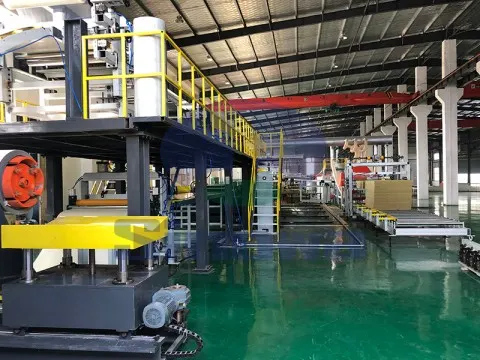
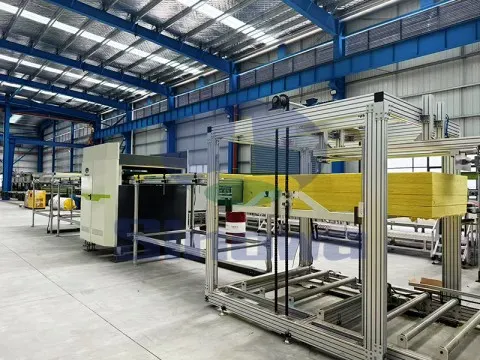
The rock wool sandwich panel production line is a modular system composed of several interconnected units, each performing a specific function in the manufacturing process, from raw material feeding to the final stacking of finished panels. Each unit is engineered to work in perfect synchronization, ensuring a seamless flow of materials and processes that maximizes efficiency and reduces production downtime. The core components of the production line include the uncoiling system, roll forming unit, rock wool processing system, adhesive application unit, lamination and pressing system, cutting system, stacking system, and central control system. These components work together to transform raw materials—primarily metal coils for the surface layers and rock wool slabs for the core—into finished sandwich panels that meet the rigorous standards of prefabricated construction. The modular design of the production line also allows for flexibility, enabling operators to adjust parameters, replace components, and customize the production process to accommodate different panel specifications, such as varying thicknesses, widths, and surface profiles, which is crucial for adapting to the diverse design requirements of prefabricated buildings.
The uncoiling system marks the starting point of the production process, responsible for feeding the surface layer materials—typically color-coated steel coils or aluminum coils—into the production line. This system is equipped with hydraulic control and automatic centering mechanisms to ensure stable and uniform feeding, preventing deviations that could affect the subsequent forming quality. The metal coils, which serve as both the structural support and protective layer of the sandwich panels, are unwound smoothly and fed into the roll forming unit at a consistent speed. The uncoiling system is designed to handle coils of varying weights and sizes, with adjustable tension control to avoid damage to the metal sheets. This stability is critical because the surface layers must maintain consistent flatness and dimensional accuracy to ensure proper bonding with the rock wool core and overall structural integrity of the finished panel. In addition, some advanced uncoiling systems are equipped with protective film covering functions, which apply a thin protective layer to the metal sheets to prevent scratches and corrosion during processing and transportation.
Following the uncoiling process, the metal sheets enter the roll forming unit, a key component that shapes the surface profile of the sandwich panels. The roll forming process uses a series of sequentially arranged rollers with precise contours to gradually bend the flat metal sheets into the desired cross-sectional shape, such as corrugated, trapezoidal, or smooth profiles. The rollers are designed to apply uniform pressure to the metal sheets, ensuring consistent shaping without causing material fatigue or damage. The forming speed is adjustable, allowing operators to match the speed to the thickness of the metal sheets and the complexity of the profile, ensuring optimal forming quality. Advanced roll forming units adopt a cassette-type design, which allows for quick replacement of roller sets, enabling the production line to switch between different panel profiles efficiently. This flexibility is essential for meeting the diverse design needs of prefabricated buildings, where different panels may be required for walls, roofs, partitions, and other components.
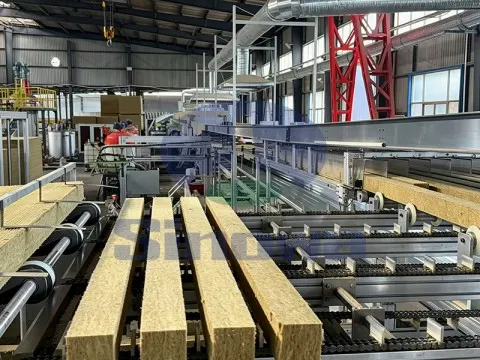
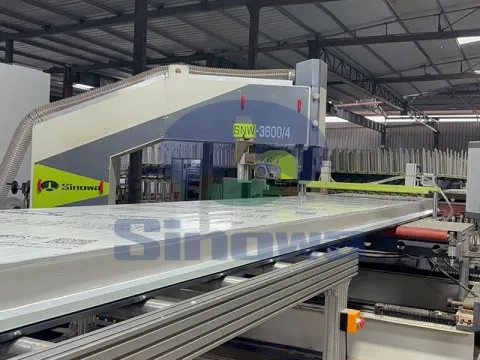
While the surface layers are being formed, the rock wool processing system prepares the core material—the rock wool slabs—that will be sandwiched between the two surface layers. Rock wool, a non-combustible inorganic mineral fiber material, is chosen for its excellent thermal insulation, fire resistance, and sound absorption properties, making it ideal for prefabricated buildings that require energy efficiency and safety. The rock wool processing system consists of several sub-components, including a lifting device, slitting device, turning device, and dust collection device. The lifting device gently transfers the raw rock wool slabs—typically with dimensions ranging from 1200mm to 2400mm in length, 1200mm in width, and up to 105mm in thickness—to the slitting device. The slitting device, equipped with precision rolling blades, cuts the rock wool slabs into strips of specified widths that match the dimensions of the surface layers. The cutting gap is carefully controlled to ensure clean, smooth cuts and minimize material waste. After slitting, the rock wool strips are transferred to a turning device, which reorients the strips 90 degrees to ensure that the fiber direction is vertical. This vertical fiber orientation significantly enhances the structural strength and load-bearing capacity of the finished sandwich panels by distributing stress more evenly.
The dust collection device integrated into the rock wool processing system plays a crucial role in maintaining a clean and safe working environment. Rock wool processing can generate small fiber particles, which, if inhaled, can pose health risks to operators. The dust collection device captures these particles through a system of filters and suction fans, ensuring that the air quality in the production area meets safety standards. This not only protects the health of the operators but also prevents dust from accumulating on the production equipment, which could affect performance and product quality. In addition, the dust collection system helps to reduce material waste by collecting loose rock wool fibers that can be recycled and reused in the production process, aligning with the sustainability goals of modern prefabricated construction.
Once the surface layers and rock wool core are prepared, the adhesive application unit applies a uniform layer of adhesive to the inner surfaces of the formed metal sheets. The adhesive is carefully selected to ensure strong bonding between the metal surface layers and the rock wool core, with excellent resistance to high temperatures, moisture, and aging. The adhesive application unit uses a precision spraying or rolling mechanism to apply the adhesive in a consistent thickness, ensuring that every part of the surface layer is covered. This uniformity is critical for preventing delamination of the sandwich panels, which could compromise their structural integrity and performance. The amount of adhesive applied can be adjusted according to the type of rock wool and metal used, as well as the intended application of the panels. Some advanced adhesive application units are equipped with automatic dosage control systems, which further enhance the consistency and efficiency of the process.
After the adhesive is applied, the lamination and pressing system brings the two surface layers and the rock wool core together, forming the sandwich panel structure. The system consists of a series of conveyor belts and pressing rollers that apply uniform pressure to the composite structure, ensuring that the adhesive bonds the layers tightly together. The pressing process is carried out at a controlled temperature, which accelerates the curing of the adhesive and enhances the bond strength. The temperature and pressure parameters are carefully adjusted based on the type of adhesive and the thickness of the panels, ensuring optimal bonding without damaging the rock wool core or the surface layers. The lamination and pressing system is designed to handle the continuous flow of materials, maintaining a consistent production speed that matches the other units in the line. This continuous lamination process ensures that the finished panels have uniform thickness, density, and bond strength, meeting the strict quality standards required for prefabricated construction.
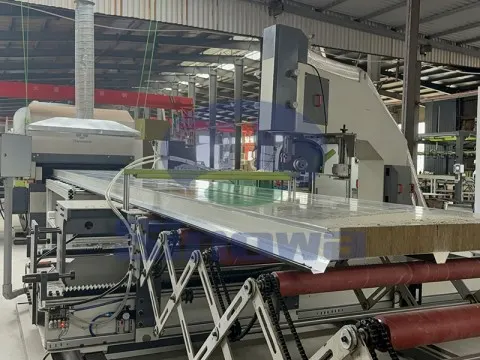
Following the lamination and pressing process, the composite sandwich panel moves to the cutting system, which cuts the continuous panel into individual pieces of specified lengths. The cutting system uses high-precision circular saws or plasma cutters, depending on the thickness of the panels and the type of surface material. The cutting length is controlled by the central control system, which allows operators to input the desired dimensions with high accuracy. The cutting process is designed to be clean and precise, minimizing material waste and ensuring that the cut edges are smooth and free from burrs. This precision is essential for ensuring that the panels can be easily assembled on-site, as prefabricated buildings require components to fit together seamlessly. Some advanced cutting systems are equipped with automatic length measurement and adjustment functions, which further improve the accuracy and efficiency of the cutting process.
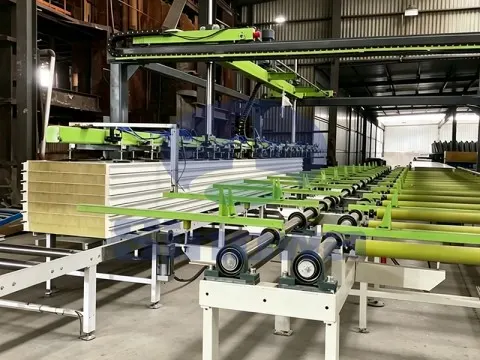
Once the panels are cut to the desired length, they are transferred to the stacking system, which automatically stacks the finished panels in an orderly manner. The stacking system uses robotic arms or conveyor belts to move the panels to the designated storage area, ensuring that they are stacked safely and securely to prevent damage. The stacking height and arrangement can be adjusted according to the size and weight of the panels, as well as the storage space available. This automated stacking process not only reduces the need for manual labor but also minimizes the risk of damage to the finished panels, ensuring that they remain in perfect condition until they are shipped to the construction site. In addition, the stacking system can be integrated with a packaging unit, which wraps the stacked panels in protective film to prevent scratches, moisture, and dust during transportation.
The central control system is the brain of the entire production line, responsible for coordinating the operation of all units and ensuring that the production process runs smoothly and efficiently. The control system uses a programmable logic controller (PLC) and a human-machine interface (HMI) that allows operators to monitor and adjust all production parameters in real time. Operators can input production orders, set panel specifications, adjust speeds, temperatures, and pressures, and monitor the status of each unit through the HMI. The control system also includes safety interlocks and alarm functions that alert operators to any malfunctions or deviations from the set parameters, allowing for quick intervention and minimizing production downtime. Advanced control systems can also collect and analyze production data, providing valuable insights into production efficiency, material usage, and product quality, which can be used to optimize the production process and reduce costs.
The rock wool sandwich panels produced by this production line offer a wide range of performance advantages that make them ideal for prefabricated buildings. One of the most significant advantages is their excellent fire resistance. Rock wool is a non-combustible material with a melting point of over 1000 degrees Celsius, and it does not release toxic smoke or promote flame spread when exposed to fire. This makes rock wool sandwich panels suitable for use in buildings with high fire safety requirements, such as residential complexes, commercial buildings, and industrial facilities. The panels can achieve fire resistance ratings of up to several hours, depending on their thickness and design, providing valuable time for evacuation and fire control in the event of a fire.
In addition to fire resistance, rock wool sandwich panels also offer superior thermal insulation performance. The rock wool core has a low thermal conductivity, typically ranging from 0.024 to 0.080 W/m·K, which effectively blocks heat transfer between the interior and exterior of the building. This helps to reduce energy consumption for heating and cooling, making prefabricated buildings more energy-efficient and environmentally friendly. The thermal insulation properties of the panels also help to maintain a stable indoor temperature, improving comfort for occupants. This is particularly important in regions with extreme climates, where maintaining a comfortable indoor environment can be challenging and energy-intensive.
Another key advantage of rock wool sandwich panels is their excellent sound absorption and noise reduction capabilities. The porous structure of rock wool allows it to absorb sound waves, reducing the transmission of noise between rooms and from the exterior of the building. This makes the panels ideal for use in residential buildings, offices, schools, and hospitals, where a quiet environment is essential. The sound insulation performance of the panels can be further enhanced by adjusting the thickness of the rock wool core and the design of the surface layers, allowing them to meet the specific acoustic requirements of different applications.
Rock wool sandwich panels are also known for their structural stability and durability. The combination of the rigid metal surface layers and the strong, resilient rock wool core creates a composite structure that has excellent load-bearing capacity, impact resistance, and dimensional stability. The panels are resistant to moisture, mold, and corrosion, ensuring a long service life even in harsh environments. This durability reduces the need for frequent maintenance and replacement, lowering the overall lifecycle cost of the building. Additionally, the panels are lightweight, which simplifies transportation and installation, further accelerating the construction process of prefabricated buildings.
The application of rock wool sandwich panel production lines in prefabricated building projects offers numerous benefits for both manufacturers and construction companies. For manufacturers, the production line enables large-scale, continuous production, significantly increasing output and reducing production costs compared to traditional manual or semi-automatic methods. The automated process minimizes human error, ensuring consistent product quality and reducing the risk of defects. The flexibility of the production line also allows manufacturers to quickly adapt to changing market demands, producing panels of different specifications and designs to meet the needs of various projects. For construction companies, the use of prefabricated rock wool sandwich panels reduces on-site construction time and labor costs, as the panels can be easily transported to the site and assembled quickly. This not only accelerates the project timeline but also reduces the impact of construction on the surrounding environment, making prefabricated buildings a more sustainable alternative to traditional construction.
In addition to their use in standard prefabricated buildings, rock wool sandwich panels produced by these production lines are also suitable for a variety of specialized applications. For example, they can be used in cold storage facilities, where their excellent thermal insulation properties help to maintain low temperatures and reduce energy consumption. They are also used in clean rooms, such as those in the pharmaceutical and electronics industries, where the panels' smooth surface and resistance to moisture and mold make them ideal for maintaining a hygienic environment. Additionally, the panels can be used in temporary structures, such as construction site offices, dormitories, and disaster relief shelters, due to their quick installation and durability.
As the prefabricated construction industry continues to grow and evolve, the demand for advanced rock wool sandwich panel production lines is expected to increase. Manufacturers are constantly innovating and improving the design and functionality of these production lines, integrating new technologies such as artificial intelligence, Internet of Things (IoT), and digital twins to further enhance efficiency, quality, and sustainability. For example, IoT sensors can be installed on the production line to monitor the performance of each unit in real time, providing data that can be used to predict maintenance needs and optimize production parameters. Artificial intelligence can be used to analyze production data and identify areas for improvement, such as reducing material waste or increasing production speed. Digital twins can create a virtual model of the production line, allowing operators to simulate different production scenarios and test changes before implementing them in the real world.
Sustainability is also a key focus in the development of rock wool sandwich panel production lines. Manufacturers are increasingly adopting eco-friendly materials and processes, such as using recycled metal for the surface layers and recycling rock wool waste generated during production. The energy efficiency of the production line is also being improved, with the use of energy-saving motors, heat recovery systems, and renewable energy sources such as solar power. These initiatives not only reduce the environmental impact of the production process but also align with the global trend towards sustainable construction and green buildings.
In conclusion, the rock wool sandwich panel production line is an essential piece of equipment in the modern prefabricated construction industry, enabling the efficient, consistent, and high-quality production of rock wool sandwich panels. Its modular design, automated processes, and flexibility make it suitable for meeting the diverse needs of prefabricated building projects, from residential and commercial buildings to industrial facilities and temporary structures. The rock wool sandwich panels produced by these lines offer exceptional performance in terms of fire resistance, thermal insulation, sound absorption, and structural stability, making them a preferred choice for prefabricated construction. As the industry continues to innovate, the rock wool sandwich panel production line will play an increasingly important role in driving the growth and sustainability of the prefabricated construction sector, helping to build safer, more efficient, and more environmentally friendly buildings for the future.
Sinowa is a professional manufacturer of sandwich panel machine in china, we provide diversified and high-performance sandwich panel production lines, including fully automatic continuous PU sandwich panel line and customized special lines to meet mass production and personalized order demands. These sandwich panel lines support processing multiple foam core materials, such as PU, PIR, mineral wool, rock wool and glass wool, covering different insulation and fireproof standards.
Featuring stable operation, high efficiency, energy saving and easy maintenance, our PU sandwich panel line deliver sandwich panels with excellent thermal insulation, fire resistance, sound insulation and lightweight durability. The finished panels are widely applied in industrial workshops, warehouse roofing and wall cladding, cold storage insulation, serving global construction and industrial insulation markets.
https://www.cnsinowa.com/sandwich-panel-machines/rock-wool-sandwich-panel-production-line-for-prefabricated-building.html