 sandwich panel line
The superiority of PIR as a core material for partition wall panels is rooted in its exceptional inherent properties, which the production line is designed to preserve and enhance throughout the manufacturing process. Unlike conventional insulation materials such as EPS or XPS, PIR exhibits superior fire resistance, classified as a difficult-to-combustible material that self-extinguishes when the ignition source is removed. This critical feature makes PIR sandwich panels an ideal choice for partition walls, where fire safety is paramount to protecting lives and property. Additionally, PIR boasts an extremely low thermal conductivity, below 0.021 W/(m·K), ensuring excellent thermal insulation performance that helps maintain stable indoor temperatures, reduce energy consumption for heating and cooling, and enhance the overall energy efficiency of buildings. The material also offers a wide operating temperature range, from -180℃ to +120℃, maintaining its structural stability and insulation properties even in extreme environmental conditions without shrinkage or embrittlement. Furthermore, PIR is environmentally friendly, composed of six-component materials that produce non-toxic, odorless gases when burned, posing no harm to humans or the environment. Its closed-cell structure provides excellent waterproof and moisture-resistant properties, with a water absorption rate of ≤3%, preventing issues such as mold growth, corrosion, and structural degradation over time. Compared to other insulation materials like EPS or rock wool, PIR also exhibits higher impact resistance and strength-to-weight ratio, enabling it to withstand normal human traffic and handling impacts without damaging the insulation system.
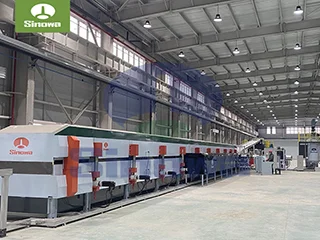
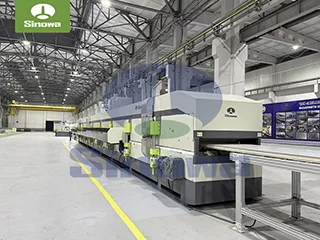
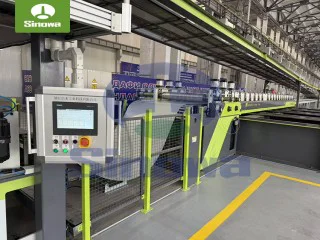
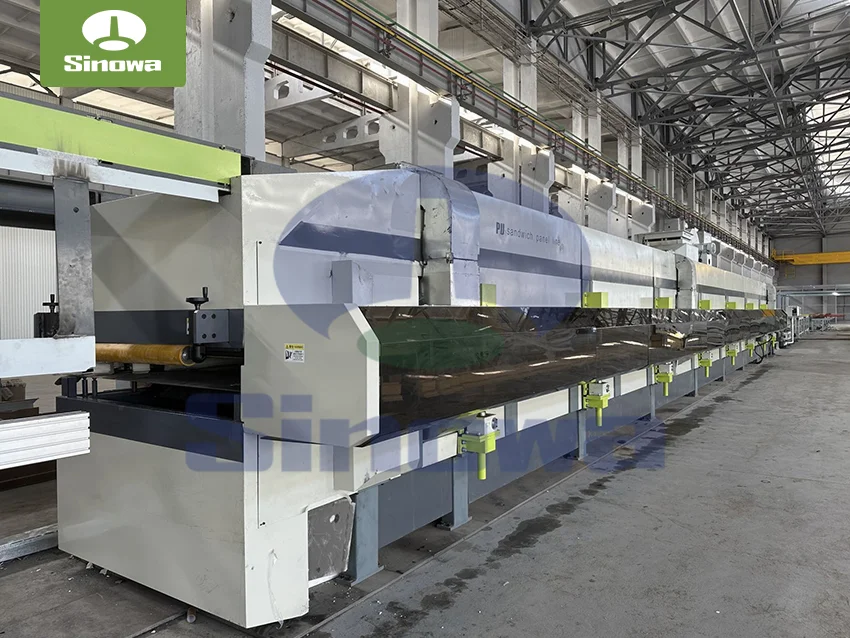
The PIR sandwich panel line for partition wall panels is a sophisticated integrated system that combines multiple processes into a seamless, automated production workflow, ensuring consistent quality and high production efficiency. These lines are typically available in two main configurations: continuous and non-continuous, each tailored to different production scales and project requirements. Continuous production lines, which are widely adopted for large-scale manufacturing, operate in a fully automated manner, enabling uninterrupted production of panels with consistent dimensions and performance. Non-continuous lines, on the other hand, are suitable for small-batch production, utilizing multi-layer worktables and track supports to produce panels in discrete cycles. Regardless of the configuration, the core components of a PIR sandwich panel production line include unwinding devices for facing materials, preprocessing units, foam mixing and pouring systems, lamination and curing presses, cooling zones, cutting equipment, and quality inspection stations. Each component is precision-engineered to work in harmony, ensuring that every stage of the production process meets strict quality standards.
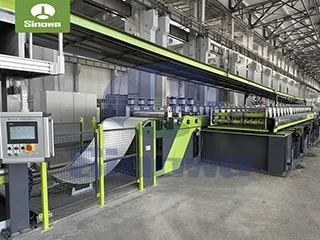
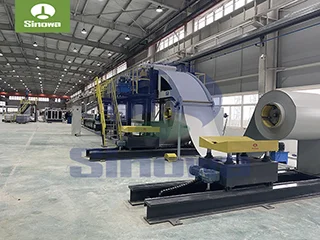
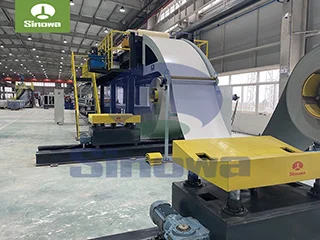
The production process of PIR sandwich panels for partition walls begins with the preparation of raw materials, a critical stage that lays the foundation for the final product's performance. The facing materials, which serve as the outer layers of the sandwich panel, are typically metal sheets such as color-coated steel, aluminum, or stainless steel, chosen for their strength, durability, and weather resistance. These facing materials are supplied in rolls and fed into the unwinding device, which unrolls and feeds the sheets into the preprocessing unit. In the preprocessing stage, the facing materials undergo a series of treatments, including profiling, which involves forming corrugated or trapezoidal shapes to enhance structural rigidity, and surface cleaning to remove any contaminants that could affect adhesion. Some production lines also include punching or notching processes to create holes for fixtures or ventilation, depending on the specific requirements of the partition wall panels.
Following preprocessing, the lower facing sheet is conveyed to the foam mixing and pouring station, where the PIR core material is generated and applied. The PIR foam is produced by mixing multiple liquid components in precise proportions, a process that requires strict control over temperature, pressure, and mixing speed to ensure the formation of a uniform, high-quality foam. The mixed liquid components are poured onto the lower facing sheet in a continuous, even layer, covering the entire surface area. Immediately after pouring, the upper facing sheet is fed onto the foam layer, forming the characteristic sandwich structure. The assembly is then conveyed into the lamination and curing press, where it is subjected to controlled temperature, pressure, and time conditions. This stage is crucial for ensuring the strong adhesion between the facing sheets and the PIR core, as well as the complete curing of the foam. The pressure applied during lamination ensures that the foam fills all gaps between the facing sheets, creating a dense, homogeneous core, while the temperature and time settings promote the cross-linking of the foam components, resulting in a rigid, stable structure. The curing process typically takes several minutes, depending on the thickness of the panel and the specific formulation of the PIR foam.
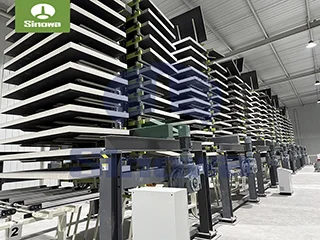
Once the curing process is complete, the composite panel is moved to the cooling zone, where it is cooled to room temperature to stabilize its dimensions and properties. Cooling is typically achieved using forced air or water-cooled rollers, ensuring a rapid and uniform cooling process that prevents warping or deformation. After cooling, the panel is conveyed to the cutting station, where it is cut to the required length using precision cutting tools such as circular saws or CNC cutting machines. The cutting process is highly accurate, ensuring that the panels meet the exact dimensional requirements of the project. Some production lines also include edge trimming processes to smooth the edges of the panels and remove any excess material, improving the overall appearance and facilitating installation. Finally, the finished panels undergo a comprehensive quality inspection, where they are checked for defects such as uneven surfaces, poor adhesion, dimensional inaccuracies, and surface damage. Panels that meet the quality standards are then packaged and stored, while any defective panels are rejected or reworked.
The PIR sandwich panels produced by these lines are highly versatile and find extensive applications in a wide range of construction projects as partition walls. One of the primary applications is in commercial buildings such as offices, shopping malls, and hotels, where the panels' rapid installation, excellent sound insulation, and fire safety properties are particularly valuable. In office buildings, for example, PIR partition wall panels are used to create individual workspaces, meeting rooms, and corridors, providing a quiet, comfortable environment while enabling quick reconfiguration of spaces as needs change. The lightweight nature of the panels also reduces the overall load on the building structure, minimizing the need for additional structural support. In shopping malls and hotels, the panels' aesthetic versatility, with a wide range of color and finish options, allows them to blend seamlessly with different interior designs, while their fire resistance ensures compliance with strict safety regulations.
Industrial buildings, including factories, warehouses, and logistics centers, also benefit greatly from the use of PIR sandwich panel partition walls. These buildings often require large, open spaces to be divided into functional areas such as production zones, storage areas, and office spaces. PIR partition wall panels are ideal for this purpose due to their ability to cover large areas quickly and their resistance to impact, moisture, and chemicals. The excellent thermal insulation properties of the panels also help maintain stable temperatures in different zones of the industrial facility, improving working conditions and reducing energy costs. Additionally, the panels' durability and low maintenance requirements make them suitable for use in harsh industrial environments, where they can withstand the rigors of daily operations without degradation.
Residential buildings, including apartments, houses, and modular homes, are another key application area for PIR sandwich panel partition walls. In residential construction, the panels are used to create internal partitions between bedrooms, bathrooms, kitchens, and living areas, providing sound insulation and thermal comfort. The lightweight nature of the panels reduces the weight of the building, which can lead to significant cost savings in foundation construction. Furthermore, the rapid installation of the panels accelerates the construction process, reducing the overall project timeline and enabling homeowners to move in sooner. The environmental friendliness of PIR also aligns with the growing demand for sustainable housing, as the panels contribute to lower energy consumption and a reduced carbon footprint.
Public buildings such as hospitals, schools, and stadiums also utilize PIR sandwich panel partition walls, leveraging their safety, durability, and performance properties. In hospitals, where hygiene and safety are critical, the panels' smooth, easy-to-clean surfaces and moisture-resistant properties make them ideal for use in corridors, patient rooms, and operating theaters. Their fire resistance and sound insulation properties also help create a safe, quiet environment for patients and staff. In schools, the panels are used to create classrooms, offices, and auditoriums, providing a comfortable learning environment with excellent sound insulation to minimize distractions. Stadiums and other large public venues use the panels to create temporary or permanent partitions for seating areas, restrooms, and concession stands, benefiting from their rapid installation and portability.
The development of PIR sandwich panel machine for partition wall panels is closely aligned with the broader trends in the construction industry, including the shift toward prefabrication, modular construction, and sustainability. Prefabrication, which involves manufacturing building components in a factory setting and assembling them on-site, offers numerous advantages over traditional on-site construction, including faster project completion, higher quality control, reduced waste, and lower labor costs. PIR sandwich panel line is a key enabler of prefabrication, as they can produce large volumes of standardized partition wall panels that can be easily transported and assembled on-site. Modular construction, which takes prefabrication a step further by manufacturing entire building modules in a factory, also relies heavily on PIR sandwich panels for partitioning, as they can be integrated into the modules to create functional, self-contained spaces.
Sustainability is another major driver of innovation in PIR sandwich panel machinery. As the construction industry seeks to reduce its environmental impact, there is a growing demand for building materials that are energy-efficient, recyclable, and made from renewable or recycled resources. PIR sandwich panels contribute to sustainability in several ways, including their excellent thermal insulation properties, which reduce energy consumption for heating and cooling, and their use of environmentally friendly raw materials. Additionally, the production process of PIR sandwich panels generates minimal waste, as the panels are cut to precise dimensions in the factory, reducing on-site waste. Some production lines are also incorporating renewable energy sources such as solar power to reduce their carbon footprint, further enhancing the sustainability of the manufacturing process.
Technological advancements are also playing a key role in the evolution of PIR sandwich panel production equipment, with ongoing innovations aimed at improving production efficiency, product quality, and flexibility. One of the key technological trends is the increased automation of production lines, with the integration of advanced sensors, robotics, and artificial intelligence (AI) systems. These technologies enable real-time monitoring and control of the production process, ensuring that every stage is optimized for quality and efficiency. For example, AI-powered systems can adjust the mixing ratios of the PIR foam components based on real-time data, ensuring consistent foam quality, while robotic arms can handle the handling and packaging of the finished panels, reducing labor costs and improving safety. Another technological trend is the development of production lines that can handle a wider range of materials and panel configurations, enabling manufacturers to produce custom panels tailored to the specific needs of different projects. This includes the ability to use different facing materials, such as fiber cement boards or gypsum boards, and to produce panels with varying thicknesses and core densities.
Despite the numerous advantages of PIR sandwich panel manufacturing line for partition wall panels, there are also some challenges that the industry faces. One of the main challenges is the initial investment cost of the production lines, which can be relatively high, particularly for fully automated continuous lines. This can be a barrier for small and medium-sized manufacturers looking to enter the market. However, the long-term benefits of increased production efficiency, reduced labor costs, and higher product quality often offset the initial investment. Another challenge is the need for skilled operators to manage and maintain the production lines, as the complex nature of the manufacturing process requires a high level of technical expertise. To address this, many manufacturers offer training programs for operators, and there is a growing focus on developing user-friendly control systems that simplify operation.
Looking to the future, the PIR sandwich panel production machine for partition wall panels is poised for continued growth, driven by the increasing demand for sustainable, efficient, and safe building materials. The global market for PIR sandwich panels is expected to expand significantly in the coming years, with a compound annual growth rate (CAGR) of 8.4% projected from 2025 to 2031. This growth will be fueled by ongoing urbanization, particularly in emerging markets, where there is a strong demand for new residential and commercial buildings. Additionally, the renovation and retrofitting of existing buildings, as part of efforts to improve energy efficiency and reduce carbon emissions, will also drive demand for PIR sandwich panel partition walls. As the industry continues to innovate, with advancements in production technology, material formulations, and design flexibility, PIR sandwich panel production line will play an increasingly important role in shaping the future of modern construction, offering sustainable, high-performance solutions that meet the evolving needs of the global building industry.
https://www.cnsinowa.com/sandwich-panel-machines/pir-sandwich-panel-line-for-partition-wall-panels.html