sandwich panel line
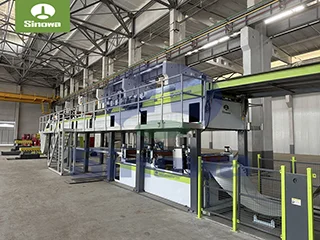
The overall structural design of the PU sandwich panel production line follows modular integration principles, with each functional module undertaking an exclusive production process while maintaining precise collaborative operation through a unified intelligent control system. The complete production system covers raw material unwinding and finishing, surface layer profiling and shaping, polyurethane raw material mixing and pouring, high-pressure lamination and thermal curing, fixed-length cutting, and finished product conveying and sorting. Every operational link is calibrated to match the physical characteristics of polyurethane foam and surface decorative materials, ensuring that the chemical foaming reaction and physical composite molding proceed in the most stable state. Compared with traditional manual or semi-automatic production equipment, this continuous production line eliminates unstable factors caused by manual intervention, greatly reducing product quality differences between batches and improving the overall yield of finished panels.
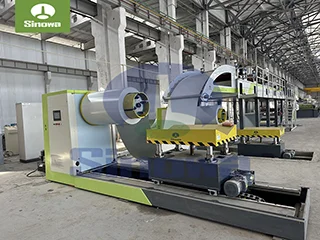
The front-end operation of the PU sandwich panel line starts with the raw material feeding and pretreatment module, which is mainly responsible for the supply and finishing of surface layer substrates. Common substrate materials include various metal sheets and lightweight decorative boards, all of which are stored in coil form to adapt to continuous production rhythm. The unwinding unit is equipped with a stable tension control structure, which can ensure the continuous and uniform output of coiled materials without slack, deviation, or tensile deformation during operation. To solve the production interruption problem caused by coil replacement, the system supports automatic material splicing, which can complete the connection between the exhausted coil and the new coil in a short time without stopping the entire production line, effectively reducing equipment downtime and improving continuous production capacity. After unwinding, the substrate will pass through multi-group leveling and cleaning structures to eliminate surface wrinkles, tiny deformations, and dust contaminants generated during coil storage and transportation. A flat and clean substrate surface is a key prerequisite for tight bonding between the surface layer and the polyurethane foam core layer, laying a solid foundation for the overall structural firmness and durability of finished panels.
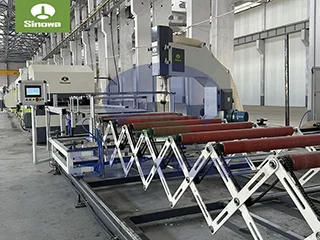
Following the pretreatment process, the flat substrate enters the roll forming module for precise profiling treatment. This module adopts multi-stage progressive rolling technology, through orderly arranged roller groups, to perform gradual bending, pressing, and shaping on the flat substrate according to preset wall panel profile parameters. The gradual processing method avoids the structural damage and surface scratch problems caused by one-time strong extrusion, effectively protecting the integrity and flatness of the substrate surface. For wall panels with different edge sealing structures, groove designs, and decorative lines, the roll forming structure can complete adaptive adjustment of rolling gaps and forming angles, realizing flexible production of multiple panel specifications on a single production line. During the forming process, the built-in deviation correction system monitors the substrate transmission track in real time, automatically fine-tuning the operating position to ensure the consistency of panel width, edge straightness, and profile accuracy, avoiding defective products such as irregular edges and inconsistent sizes.
The polyurethane foaming and pouring module is the core functional unit of the PU sandwich panel machine, which directly determines the thermal insulation performance, structural density, and bonding strength of finished wall panels. Polyurethane production raw materials are composed of two groups of liquid chemical components, which need to be accurately proportioned, fully mixed, and evenly sprayed between the upper and lower surface substrates. The automated mixing system realizes precise proportional delivery of raw materials through stable power transmission and flow control structures, ensuring that the chemical components always maintain the optimal reaction ratio. High-speed stirring and mixing equipment eliminates uneven mixing and local reaction differences, making the foaming raw materials present a uniform liquid state before pouring. The pouring operation adopts continuous uniform spraying mode, with the spraying range and flow rate dynamically matched with the production line operating speed, so that the liquid polyurethane materials can completely cover the gap between the upper and lower substrates without local accumulation or missing spraying.
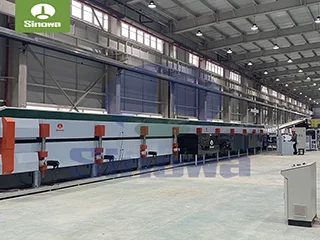
After the pouring is completed, the semi-finished panels enter the constant-temperature lamination and curing channel to complete foaming expansion and solid bonding molding. The internal temperature of the curing channel is kept within a stable and reasonable range, providing a good reaction environment for the foaming and curing of polyurethane materials. In the early stage of entering the channel, the liquid polyurethane materials undergo rapid chemical reaction, gradually expand and fill the entire sandwich space between the upper and lower surface layers, and tightly bond with the inner surface of the substrate. With the progress of the curing process, the expanded foam gradually solidifies and forms a uniform and dense porous core layer structure with stable physical properties. The long-distance lamination and curing structure ensures that the polyurethane foam has sufficient time to complete reaction and shaping, avoiding quality problems such as insufficient foaming, uneven density, and incomplete curing caused by insufficient curing time. At the same time, the lamination structure maintains stable pressure on the upper and lower layers of the panel during the curing process, preventing panel deformation, bulging, and delamination, and ensuring the flatness and structural tightness of the composite panel.
The fixed-length cutting and post-processing module undertakes the final shaping and finishing work of finished panels. After full curing and molding, the continuous long strip composite panel is transmitted to the cutting station at a constant speed. The high-precision tracking cutting system can synchronize with the polyurethane sandwich panel production line operating speed, realizing dynamic cutting without stopping the machine. According to the preset length parameters of wall panels, the cutting equipment completes fast and smooth cutting operations, with neat and burr-free cutting sections, effectively avoiding material waste and section damage caused by traditional static cutting. For wall panels requiring edge trimming and fine finishing, the supporting post-processing structure can complete edge trimming and surface finishing in one step, ensuring that the size and appearance of each finished panel meet unified production standards. After cutting and finishing, the qualified finished panels are automatically conveyed to the discharging and sorting area through the transmission system.
The intelligent control system runs through the entire production process of the sandwich panel equipment, serving as the core brain to coordinate the operation of all functional modules. The system adopts integrated programming control technology, which can uniformly adjust and monitor the operating speed of the production line, raw material proportioning parameters, curing temperature, cutting size, and other core production indicators. Operators can complete parameter setting, production mode switching, and equipment operation monitoring through a simple and intuitive operation interface. The real-time data monitoring function can track the operating status of each module in real time, automatically identifying abnormal fluctuations in parameters such as raw material flow, transmission speed, and curing temperature. Once abnormal conditions occur, the system will trigger automatic adjustment or early warning prompts to avoid batch defective products and equipment failure losses. In addition, the system supports parameter memory and one-key reset functions, which can quickly switch production specifications when producing different types of wall panels, greatly improving production flexibility and debugging efficiency.
The polyurethane sandwich panel line has significant technical and production advantages compared with traditional panel manufacturing equipment in practical application. First of all, the continuous synchronous production mode realizes uninterrupted operation of the whole process, with extremely high production efficiency, which can meet the large-scale and centralized production needs of engineering construction projects. Secondly, the fully automated production process reduces manual participation links, not only reduces labor input costs and operational errors, but also improves the safety of the production process. The standardized parameter control mode ensures that the density, thickness, bonding strength, and thermal insulation performance of each batch of wall panels remain stable, with extremely low product quality fluctuation rate.
In terms of product performance shaping, the precise foaming and curing process of the polyurethane sandwich panel machine enables the polyurethane core layer to form a uniform microcellular structure. This structure endows the finished wall panels with excellent thermal insulation, sound insulation, and shock resistance. The tight composite structure between the core layer and the surface layer avoids delamination and peeling after long-term use, improving the service life and structural stability of the panels. At the same time, the production line supports diversified production and processing, and can adapt to the production of wall panels with different thicknesses, surface materials, and appearance designs by adjusting equipment parameters and replacing partial forming structures, covering the usage needs of interior decoration, exterior wall thermal insulation, industrial factory buildings, cold storage insulation, and other different scenarios.
In terms of equipment operation and maintenance, the modular structural design of the sandwich panel machinery brings great convenience to daily management. Each functional module is relatively independent, which can realize targeted inspection, maintenance, and parts replacement without affecting the overall operation of the equipment. The equipment is equipped with a stable power transmission structure and anti-wear parts, which reduces the frequency of daily failures and maintenance costs. The optimized transmission and operation structure also reduces energy consumption during production operation, realizing energy-saving and environmentally friendly production while ensuring high-efficiency output. The whole production process does not produce excessive waste gas and waste residue, and the raw material utilization rate is extremely high, which conforms to the development trend of green manufacturing in the modern building materials industry.
With the rapid development of the prefabricated construction industry, the market demand for high-efficiency, energy-saving, and standardized building wall materials continues to grow, which also promotes the continuous upgrading and optimization of PU sandwich wall panel production line technology. Modern production lines are gradually developing towards higher automation, stronger flexibility, and more intelligent monitoring, realizing more precise control of production details and more diversified product production. As a key equipment for the production of new building insulation materials, the PU sandwich panel production line not only improves the industrial production level of composite wall panels, but also provides reliable material support for the lightweight, energy-saving, and high-efficiency development of modern construction engineering, and has broad application prospects and industrial development value in the field of building supporting manufacturing.
https://www.cnsinowa.com/sandwich-panel-machines/pu-sandwich-wall-panel-production-line.html