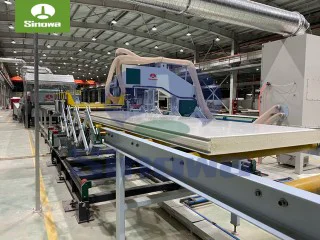
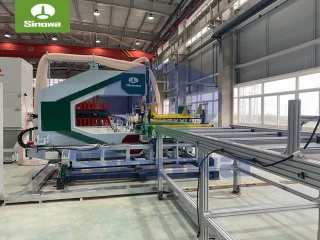
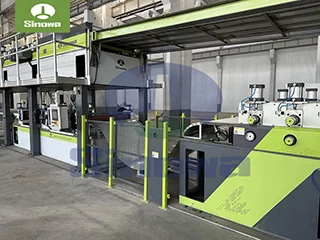
sandwich panel line
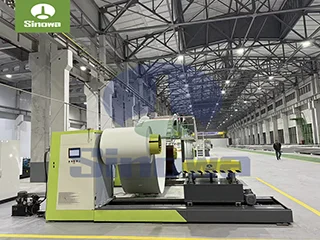
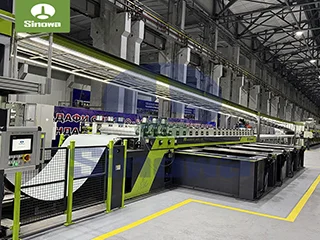
The overall operational logic of the PU sandwich panel line is based on the perfect coordination of mechanical transmission, chemical reaction control and automated processing, realizing the seamless combination of metal surface material processing and polyurethane foam core molding. The entire production process starts with the feeding and preprocessing of surface materials. Most thermal insulation sandwich panels adopt metal sheets as the outer protective layers, which are stored in coil forms to facilitate continuous feeding. The automated feeding unit of the production line steadily unwinds the coiled metal materials, with built-in tension control structures to avoid material deviation, wrinkling or deformation during the conveying process. This precise tension regulation ensures the flatness and dimensional stability of the surface materials, laying a solid foundation for the subsequent composite molding process. After unwinding, the metal sheets pass through a multi-station rolling and forming structure, where gradual bending, pressing and shaping operations are completed to form the specific edge profiles and surface structures required for sandwich panels. The profiling process is designed with flexible parameter adjustment functions, enabling the production line to adapt to different panel specifications and meet the diverse structural needs of different application scenarios.
While the surface materials are being processed and conveyed, the internal chemical supply and mixing system of the thermal insulation board production line operates synchronously, which is the key link to determine the thermal insulation performance of finished panels. Polyurethane foam is formed by the chemical reaction of two core liquid raw materials, which need to be stored in independent temperature-controlled storage tanks to maintain stable chemical activity. The production line is equipped with high-precision metering and conveying devices, which can accurately control the proportion and flow rate of the two raw materials according to the preset process parameters. Accurate proportioning is critical to the foaming effect: only when the two components are mixed in an optimal ratio can the polyurethane produce uniform and fine foam pores, ensuring low thermal conductivity and high structural compactness of the core material. After precise metering, the raw materials are transported to the high-pressure dynamic mixing chamber, where rapid and uniform blending is completed to trigger the initial foaming reaction. The mixed liquid foam is then evenly poured between the upper and lower layers of formed metal sheets through a reciprocating spraying structure, realizing full coverage of the composite cavity without dead angles.
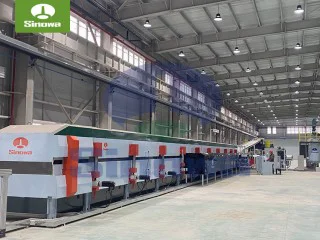
The composite laminating and curing stage is the core process that shapes the structural integrity of PU sandwich panels. After the liquid foam is injected between the upper and lower surface layers, the entire panel semi-finished product enters the sealed laminating and curing section along with the conveyor system. This area maintains a stable temperature and pressure environment, providing optimal conditions for the expansion, foaming and solidification of polyurethane materials. In the confined space between the upper and lower conveyor chain plates of the laminating machine, the liquid polyurethane fully expands and fills the entire gap between the surface layers, and gradually solidifies into a high-density porous foam structure. During this process, the foam material produces a strong adhesive force, forming a firm integrated bond with the inner surfaces of the metal sheets. The automated pressure balancing system of the laminating equipment ensures uniform pressure on the entire panel surface, effectively avoiding local bulging, hollowing or uneven thickness of the finished product. The curing time is precisely matched with the conveying speed of the sandwich panel production line, ensuring that the polyurethane foam completes sufficient cross-linking reaction and dimensional stabilization during the continuous conveying process, so that the finished panel has stable structural strength and lasting thermal insulation performance.
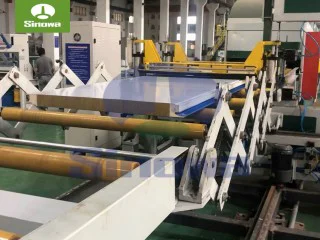
After completing curing and shaping, the continuous long-size sandwich panel enters the final finishing stage of the production line. The automated tracking and cutting system conducts fixed-length cutting according to preset dimensional parameters, and the cutting mechanism adopts high-precision synchronous cutting technology, which can complete flat and smooth cutting without damaging the surface metal layer and internal foam structure. The PU sandwich panel production line is also equipped with edge trimming and finishing functions to polish and correct the panel edges, ensuring the neatness and dimensional accuracy of the finished product. After finishing, the qualified panels are automatically conveyed to the discharging platform, realizing continuous discharging and stacking. The whole process from raw material feeding to finished product discharging is highly automated, with minimal manual intervention, which not only greatly improves production efficiency but also effectively reduces the quality fluctuation caused by human operation errors.
The technical advantages of the PU sandwich panel machine are fully reflected in product performance stability and production flexibility. In terms of product quality, the precise chemical proportioning and uniform foaming technology enable the polyurethane core material to have extremely low thermal conductivity, excellent heat insulation and heat preservation effects, and good air tightness and moisture resistance. The integrated composite structure formed by high-pressure laminating makes the metal surface layer and the foam core layer not easy to peel off, and the overall panel has high bending resistance and compression resistance, which can adapt to complex outdoor and industrial use environments. In terms of production flexibility, the production line supports the adjustment of processing parameters such as panel thickness, width and surface profile, and can produce thermal insulation panels suitable for different scenarios including building exterior walls, roof insulation, cold storage enclosure and industrial workshop partition walls. The continuous production mode breaks the limitation of intermittent production, realizes uninterrupted mass production, and significantly improves the output capacity of insulation panels.
In terms of operational economy and energy conservation, the modern polyurethane sandwich panel production line has achieved remarkable optimization compared with traditional production equipment. The whole system adopts centralized energy-saving control, which can automatically adjust the operating power of each unit according to the production status, effectively reducing invalid energy consumption during equipment operation. The closed foaming and curing environment avoids the waste of chemical raw materials and reduces the volatilization of reactive substances, improving the utilization rate of raw materials. In addition, the automated intelligent control system realizes real-time monitoring of production parameters such as material proportioning, curing temperature, laminating pressure and conveying speed. Once slight parameter deviation is detected, the system can automatically fine-tune and correct it, ensuring that each batch of products maintains consistent quality standards. This intelligent control mode greatly reduces the rate of defective products, lowers production and maintenance costs, and improves the overall economic benefits of production.
The application value of thermal insulation panels produced by the polyurethane sandwich panel line covers multiple fields of modern construction and industrial manufacturing. In the building industry, such panels are widely used in the thermal insulation and decoration of prefabricated buildings, factory buildings, warehouses and public buildings, effectively reducing the heat transfer coefficient of building envelopes, lowering the energy consumption of building heating and cooling, and conforming to the development trend of green energy-saving buildings. In the cold chain logistics industry, the excellent low-temperature resistance and thermal insulation performance of PU sandwich panels make them the preferred material for cold storage walls, roofs and partition structures, which can stably maintain the internal low-temperature environment, reduce the operating load of refrigeration equipment, and ensure the storage quality of fresh food, medical supplies and other goods. In addition, these panels also have good sound insulation, fire retardancy and weather resistance, and can adapt to extreme environments such as high temperature, low temperature and strong wind, showing strong environmental adaptability in industrial plants, outdoor temporary facilities and special engineering projects.
With the continuous progress of industrial manufacturing technology, the polyurethane sandwich panel machine is also undergoing continuous technological iteration and upgrading. Modern production lines are developing towards higher automation, intelligence and environmental protection. The introduction of digital control technology enables the entire production process to be visualized and traceable, facilitating production management and quality inspection. The optimized foaming process improves the uniformity and fineness of the foam core structure, further enhancing the thermal insulation performance and structural durability of the panels. At the same time, the upgraded environmental protection production process reduces the generation of production waste and harmful emissions, making the entire production process more environmentally friendly and in line with the increasingly stringent industrial environmental protection standards. The continuous improvement of production line technology also expands the application boundary of PU thermal insulation panels, making them more widely used in new energy facilities, special industrial buildings and other emerging fields.
In conclusion, the PU sandwich panel manufacturing line as a professional and efficient automated production system for thermal insulation panels, integrates advanced mechanical manufacturing, chemical reaction control and intelligent monitoring technologies. Its stable production process, flexible production capacity and excellent product molding effect provide reliable technical support for the mass production of high-performance thermal insulation sandwich panels. Driven by the global energy conservation and emission reduction goals and the rapid development of prefabricated construction, the market demand for high-quality thermal insulation building materials continues to grow, which also promotes the continuous innovation and improvement of PU sandwich panel production equipment. In the future, with the further integration of intelligent manufacturing and green production concepts, the insulation sandwich panel machine will play a more important role in the field of building thermal insulation and industrial material manufacturing, and continuously create greater value for the development of modern green construction industry.
https://www.cnsinowa.com/sandwich-panel-machines/pu-sandwich-panel-line-for-thermal-insulation-panels.html