sandwich panel line
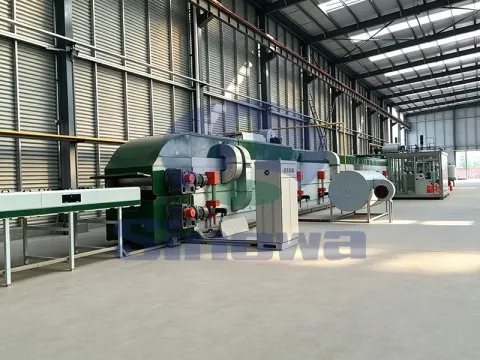
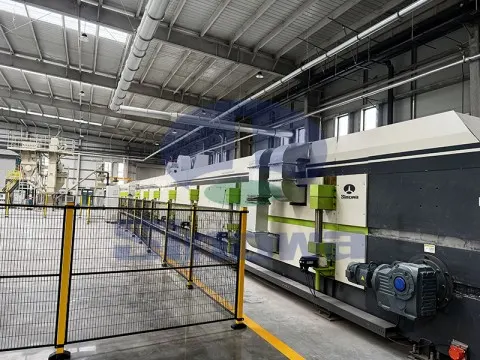
The overall structural composition of the continuous thermal insulation sandwich panel production line presents a modular and integrated layout, with each functional module closely connected and operating synchronously to ensure the continuity and stability of the entire production process. The front-end raw material feeding module is the starting point of the entire production process, responsible for the continuous supply of upper and lower metal surface materials and thermal insulation core materials. The surface material feeding unit adopts a roller unwinding structure, which can stably release coiled metal substrates with uniform tension through servo tension control systems. This tension regulation function is crucial for avoiding surface material wrinkling, deviation, and uneven stretching in the high-speed moving state, laying a flat and stable foundation for subsequent composite molding. Meanwhile, the core material feeding and metering unit undertakes the precise proportioning and continuous conveying of thermal insulation raw materials. For foam-based core materials, the system completes automatic metering, high-speed stirring, and uniform mixing of multiple raw material components, ensuring the full fusion of raw materials and stable foaming reaction effects. For inorganic fiber core materials, it realizes continuous paving, uniform thickness leveling, and preliminary compaction of fiber materials to avoid hollow areas and thickness inconsistencies inside the core layer.
Following the feeding module is the surface material pretreatment unit, an indispensable link to enhance the bonding performance between the surface layer and the core layer. In the continuous high-speed production state, the surface of metal substrates inevitably carries tiny dust, oil stains, and oxide layers generated during storage and transportation, which will directly reduce the bonding strength between the surface material and the thermal insulation core material, and easily cause delamination and peeling of the finished panel in subsequent use. The pretreatment process includes automatic dust removal, surface leveling, and micro-coating treatment. The high-pressure air circulation dust removal device completely removes floating impurities on the surface of the substrate, while the flexible leveling structure calibrates the flatness of the surface material. The quantitative micro-coating treatment forms a uniform and thin transition layer on the inner side of the surface material, which significantly improves the interface adhesion between the metal surface layer and the organic or inorganic core material, and enhances the overall structural tightness and durability of the sandwich panel. All pretreatment procedures are completed in a fully automatic continuous manner, matching the running speed of the entire production line without causing material accumulation or process stagnation.
The core functional area of the continuous sandwich panel production line is the continuous composite molding and curing module, which determines the structural forming quality and thermal insulation performance of the sandwich panel. After the pretreated bottom surface material is transported to the composite station at a constant speed, the uniformly mixed core material raw materials are continuously poured and paved on the surface of the bottom material according to the set thickness parameters. For foam core materials, the raw materials undergo gradual foaming and expansion in the closed molding space, and the foaming speed and expansion range are precisely controlled by the temperature and pressure regulation system of the equipment to ensure that the foam structure is uniform and dense without hollow holes or uneven bubble distribution. When the core material foams to the preset thickness and preliminary curing state, the upper surface material is accurately closed and laminated with the core material under the action of the upper pressing roller group, forming a preliminary composite sandwich structure integrating upper and lower surface layers and the middle thermal insulation core layer. The whole lamination process adopts multi-group roller synchronous pressure control, with uniform pressure distribution in the transverse and longitudinal directions of the plate surface, effectively avoiding local compression deformation or insufficient bonding gaps.
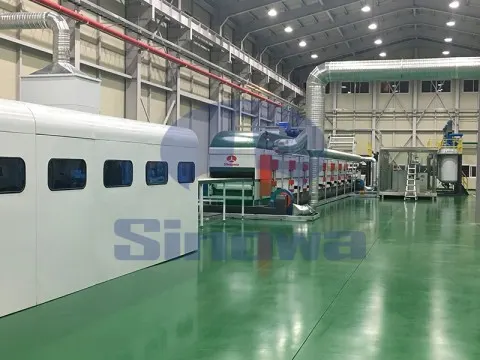
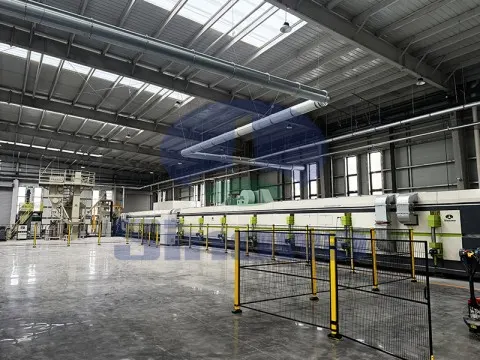
Subsequently, the initially formed composite plate enters the segmented heating and curing channel for gradient curing treatment, which is the key link to stabilize the physical properties of the core material and strengthen the interface bonding strength. The curing channel adopts a multi-stage temperature zoning design, with independent temperature adjustment functions in each zone, realizing low-temperature preliminary shaping, medium-temperature continuous curing, and high-temperature final stabilization. The low-temperature zone mainly promotes the preliminary solidification of the core material structure to prevent structural deformation during the transmission process; the medium-temperature zone accelerates the cross-linking reaction of the core material raw materials and the bonding interface, improving the overall compactness of the composite structure; the high-temperature zone completes the final curing and shaping of the plate, eliminating internal stress generated during the molding process. The circulating hot air system inside the curing channel ensures uniform temperature distribution in the entire cavity, avoiding local overheating or insufficient curing. The running speed of the transmission system matches the curing temperature parameters in real time, ensuring that each position of the plate obtains consistent curing time and temperature conditions, thus realizing unified performance standards for batch products.
After the curing and shaping process is completed, the continuous long plate enters the precision cutting and finishing module. This module realizes fixed-length cutting, edge trimming, and surface finishing of the continuous plate according to the customized size requirements. The high-speed servo cutting system adopts synchronous tracking cutting technology, which can complete accurate cutting operation without stopping the production line, effectively improving production continuity and efficiency. The cutting tool adopts high-precision wear-resistant structural design, which ensures smooth and flat cutting sections without burrs, cracks, or deformation, maintaining the flatness and dimensional accuracy of the plate end face. The edge trimming unit performs fine trimming on the two side edges of the plate to eliminate tiny deformation and uneven edges generated in the molding process, ensuring that the overall dimensional tolerance of the finished plate is controlled within a tiny error range. Meanwhile, the surface finishing device carries out fine leveling and dust removal on the outer surface of the plate to optimize the surface flatness and appearance quality of the finished product.
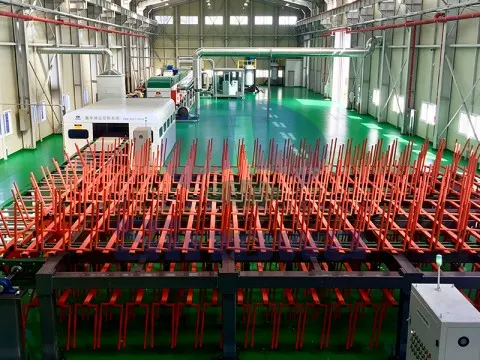
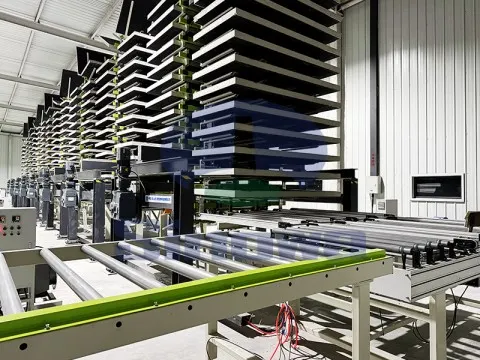
The final link of the continuous sandwich panel line is the automatic detection and stacking and discharging module, which undertakes the quality screening and finished product sorting work of the produced plates. The online detection system integrates multi-dimensional monitoring functions including thickness detection, flatness detection, bonding uniformity detection, and surface defect identification. In the continuous operation state, the system conducts real-time scanning and data collection on each plate, automatically identifying unqualified products with excessive thickness deviation, uneven surface, local debonding, and surface damage, and realizing automatic sorting of qualified and unqualified products. For qualified finished plates, the automatic stacking device completes orderly stacking and arrangement according to the set stacking specifications, with stable stacking accuracy and neat plate placement, which is convenient for subsequent packaging, transportation, and storage. The whole detection and stacking process realizes unmanned automatic operation, reducing the error rate caused by manual detection and stacking, and greatly improving the overall yield and packaging standardization of products.
The core technical advantages of the continuous thermal insulation board production line are reflected in its high integration, stable continuity, and precise parameter control. Different from traditional intermittent production equipment that requires repeated start-stop and manual adjustment of parameters, the continuous production line realizes one-time parameter setting and long-term stable operation. All key parameters including feeding speed, core material proportioning, molding pressure, curing temperature, and cutting size are controlled by a centralized intelligent control system, which can realize real-time data monitoring and dynamic adjustment. When the external production environment or raw material state has tiny fluctuations, the system can automatically fine-tune the corresponding operating parameters to ensure that the product performance and dimensional indicators remain stable in the whole batch production process. This intelligent closed-loop control mode fundamentally solves the problem of inconsistent product quality in batch production of traditional equipment, and greatly improves the qualified rate and product consistency of finished plates.
In terms of production efficiency, the continuous operation mode of the sandwich panel production line creates efficient manufacturing conditions for large-scale production. The whole process from raw material feeding to finished product discharging is carried out continuously without intermediate stagnation and waiting links. The synchronous operation of each functional module avoids the resource waste and efficiency loss caused by equipment start-stop and material handling in segmented production. The high-speed synchronous transmission structure enables the production line to maintain a stable operating speed for a long time, and the single-line daily production capacity is far higher than that of traditional intermittent production equipment. At the same time, the highly automated operation mode greatly reduces the demand for manual operation. The whole production process only needs a small number of personnel to conduct real-time monitoring of equipment operation status and regular maintenance of the system, which effectively reduces labor costs and avoids product quality fluctuations caused by manual operation differences.
In terms of product performance optimization, the continuous composite molding process of the sandwich panel line endows the sandwich panel with more stable structural performance and excellent thermal insulation effect. The continuous foaming and curing process makes the internal pore structure of the foam core material more uniform and closed, effectively reducing air convection and heat transfer inside the core layer, and improving the thermal insulation and heat preservation performance of the plate. For inorganic fiber core materials, the continuous uniform paving and integral compaction molding mode avoids the problems of loose fiber arrangement and local hollowing in traditional manual paving, ensuring the overall compactness and structural uniformity of the core layer. The integrated composite molding structure makes the bonding interface between the surface layer and the core layer more tight and seamless, effectively enhancing the overall structural strength, wind resistance, pressure resistance, and bending resistance of the sandwich panel, and enabling the product to maintain stable performance in complex service environments such as high temperature, low temperature, and alternating cold and heat.
The adaptability of the continuous thermal insulation panel production line is another important feature of its technical advantages. The equipment can adapt to the production of multiple types of thermal insulation sandwich panels by adjusting process parameters and replacing individual functional components. It can match different surface material types including color-coated steel plates, galvanized steel plates, and aluminum alloy plates, and can also adapt to multiple core material systems such as polyurethane foam, rock wool, glass wool, and composite thermal insulation materials. By adjusting the feeding thickness of the core material, molding pressure, and curing parameters, the production line can produce finished plates with different thickness specifications and performance grades, meeting the diversified application needs of different scenarios such as building exterior wall thermal insulation, roof waterproof thermal insulation, cold storage thermal insulation, industrial workshop enclosure, and purification engineering. The flexible parameter adjustment function enables the production line to quickly respond to the personalized customization needs of the market, with strong production flexibility and market adaptability.
In terms of production energy consumption and environmental protection, the optimized structural design and intelligent control system of the continuous production line effectively reduce energy consumption and pollutant emission in the production process. The segmented gradient curing mode avoids the long-term high-temperature operation of the whole equipment, realizes precise energy supply according to the curing demand of the plate, and greatly reduces invalid energy consumption. The closed raw material mixing and conveying system effectively avoids the volatilization and leakage of raw material components, reduces the generation of production dust and waste gas, and improves the environmental protection level of the production process. At the same time, the continuous molding process reduces the generation of leftover materials and defective products in the production process, improves the utilization rate of raw materials, and realizes energy-saving and efficient green production. Compared with traditional production equipment, the continuous production line has obvious advantages in energy consumption control, material utilization, and environmental protection performance, which conforms to the development trend of green manufacturing in the modern building materials industry.
With the continuous upgrading of modern manufacturing technology and the increasing improvement of building energy-saving standards, the continuous thermal insulation sandwich panel machine is also developing towards higher intelligence, higher precision, and more diversified integration. The upgraded intelligent control system realizes remote monitoring, data cloud storage, and equipment fault self-diagnosis functions. Production data such as daily output, product qualification rate, and equipment operating parameters can be automatically recorded and analyzed, providing data support for production management and process optimization. The high-precision transmission and control components further improve the dimensional accuracy and performance stability of products, meeting the higher standard requirements of high-end engineering for thermal insulation panels. In addition, the multi-functional integrated design enables the production line to realize one-time molding of special-shaped plates, color composite plates, and fire-resistant enhanced plates, further expanding the product coverage and application scope.
In practical industrial production applications, the stable operation of the continuous thermal insulation sandwich panel manufacturing line depends on standardized equipment maintenance and scientific process parameter management. Daily equipment maintenance includes regular inspection of transmission components, tension control systems, temperature sensing components, and cutting tools, to ensure the stable operation of each functional module and avoid equipment failure caused by long-term high-load operation. Regular cleaning and maintenance of the curing channel, feeding pipeline, and molding mold can effectively avoid material residue accumulation affecting product surface quality and molding accuracy. At the same time, according to the changes of raw material characteristics and production environment, the process parameters are dynamically adjusted to ensure that the production process is always in the optimal state, so as to maintain the long-term stability of product quality and production efficiency.
As a key core equipment in the field of modern building thermal insulation materials, the continuous thermal insulation sandwich panel production line has completely changed the traditional backward production mode of thermal insulation panels, and realized the transformation of sandwich panel production from low-efficiency and unstable manual intermittent production to high-efficiency, standardized, and intelligent continuous production. Its excellent production stability, high-efficiency production capacity, diversified product adaptability, and green production characteristics provide strong technical support for the large-scale popularization and application of thermal insulation sandwich panels. With the continuous advancement of building energy-saving renovation and new energy-saving building construction in various industries, the market demand for high-performance thermal insulation sandwich panels continues to grow, and the continuous thermal insulation sandwich panel production line will also play a more important role in the building materials manufacturing industry, continuously promoting the upgrading and iterative development of the thermal insulation panel manufacturing industry towards high quality, high efficiency, and green intelligence.
Sinowa is a professional manufacturer of sandwich panel machine in china, we provide diversified and high-performance sandwich panel production lines, including fully automatic continuous PU sandwich panel line and customized special lines to meet mass production and personalized order demands. These sandwich panel lines support processing multiple foam core materials, such as PU, PIR, mineral wool, rock wool and glass wool, covering different insulation and fireproof standards.
Featuring stable operation, high efficiency, energy saving and easy maintenance, our PU sandwich panel line deliver sandwich panels with excellent thermal insulation, fire resistance, sound insulation and lightweight durability. The finished panels are widely applied in industrial workshops, warehouse roofing and wall cladding, cold storage insulation, serving global construction and industrial insulation markets.
https://www.cnsinowa.com/sandwich-panel-machines/continuous-thermal-insulation-sandwich-panel-production-line.html