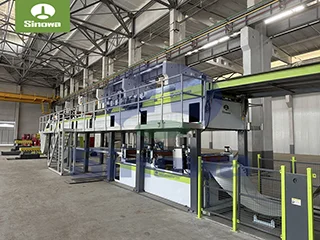
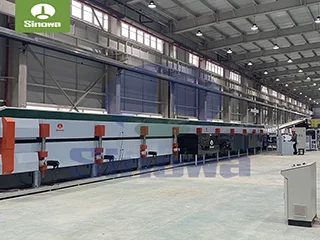
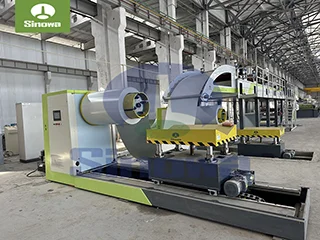
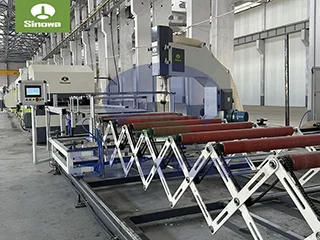
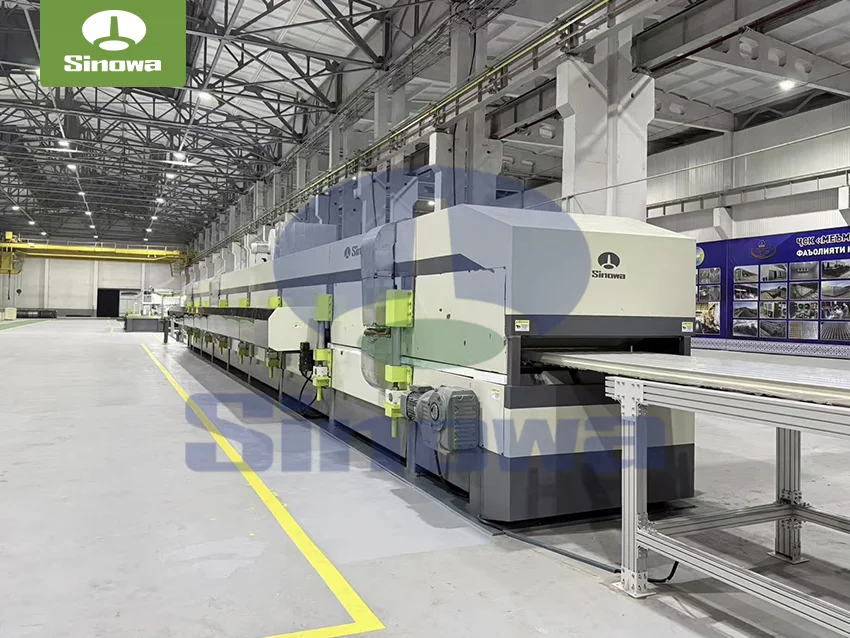
 sandwich panel line
The fundamental advantage of the low-power-consumption PU sandwich panel production line lies in its systematic energy-saving design that covers every link of the production workflow. Unlike traditional production lines that maintain continuous high-power operation regardless of production load, this advanced production equipment adopts a load-adaptive power regulation mechanism, which dynamically adjusts the operating power of each functional module according to real-time production demand. The core power-driven system of the line is equipped with high-efficiency motor units paired with variable frequency speed regulation technology, replacing the fixed-speed motors that are commonly used in traditional equipment. Fixed-speed motors always run at maximum power output during operation, resulting in massive invalid energy consumption during low-load operation, standby intervals, and material switching stages. In contrast, the variable frequency drive system can accurately identify changes in production load, automatically reduce motor speed and power output during light-load operation, and instantly boost power to meet production requirements during peak-load processing, eliminating long-term idle power loss and greatly improving the overall energy utilization rate of the equipment.
Thermal energy loss control is another key breakthrough of this energy-efficient continuous PU sandwich panel production line. The foaming, laminating, and curing processes of PU sandwich panels require stable and precise temperature conditions, and traditional production lines suffer from serious heat dissipation loss due to unclosed structural design and simple thermal insulation measures, forcing heating systems to continuously supplement heat energy and leading to excessive power consumption. The upgraded production line adopts a fully sealed internal thermal insulation structure for all temperature-controlled working areas including the curing tunnel and preheating zone. Multi-layer high-performance thermal insulation materials are laid on the inner wall of the temperature-controlled cabins, which effectively isolates internal processing temperature from external ambient temperature, reduces heat convection and heat radiation loss to the greatest extent, and shortens the temperature rise cycle of the equipment. Under conventional ambient temperature conditions, the equipment can quickly reach the optimal process temperature required for PU foaming and curing within a short time after startup, avoiding the long-time preheating and repeated temperature compensation required by traditional equipment, and realizing significant reduction of thermal energy consumption in continuous production.
The raw material mixing and pouring system of the polyurethane sandwich panel production line is also optimized for energy saving and precise control, which indirectly reduces overall power consumption while improving product quality. The forming quality of PU foam core layers depends entirely on the precise proportioning and uniform mixing of polyol, isocyanate, foaming agents, and functional additives. Traditional mixing equipment adopts fixed-flow pumping and stirring modes, which not only causes uneven material mixing and unstable foaming effects but also leads to unnecessary energy waste due to unreasonable matching between pumping power and material demand. The low-power-consumption production line is equipped with precision metering and variable-flow pumping units, which can automatically adjust the material delivery volume and stirring speed according to production speed and panel specification requirements. This intelligent matching mode ensures that the raw material mixing reaction is always carried out in the optimal state, avoiding material waste and defective product reprocessing caused by uneven proportioning. Since rework and waste material treatment will generate additional energy consumption, the high-precision material control system further reduces the comprehensive energy consumption per unit of finished panels while stabilizing product quality.
In the lamination and pressing stage, the energy-efficient PU sandwich panel line adopts an optimized constant-pressure forming technology with low energy loss. Traditional pressing equipment relies on continuous high-pressure hydraulic operation to maintain panel lamination pressure, which consumes a large amount of electric energy and generates severe mechanical vibration and heat loss during long-term operation. The improved pressing system integrates constant-pressure energy storage components, which can quickly reach the preset pressing pressure in a short time and maintain stable pressure through energy storage and pressure maintaining mechanisms, without continuous high-power hydraulic driving. The uniform and stable pressing force ensures that the PU foam material is evenly distributed between the upper and lower surface layers, achieving tight bonding between the core layer and the surface material. This structural optimization not only reduces the long-term operating power consumption of the pressing module but also reduces mechanical wear and heat generation, extending the service life of equipment components and lowering the energy consumption and maintenance cost of subsequent equipment operation.
The intelligent integrated control system serves as the core brain for the low-energy operation of the entire polyurethane sandwich panel line. The whole production process, from surface material unreeling, leveling, and preprocessing, to PU material pouring, foaming, lamination, curing, and final cutting and finishing, is centrally controlled by an automated intelligent system. The system can monitor the operating parameters of each module in real time, including motor operating power, temperature of temperature-controlled zones, material flow rate, production line operating speed, and equipment operating load, and form dynamic data analysis through built-in algorithm programs. Once abnormal parameter fluctuations or invalid energy consumption phenomena are detected, the system will automatically adjust the operating state of the corresponding equipment modules to eliminate energy waste caused by parameter instability and manual operation errors. Compared with semi-automatic production lines that rely heavily on manual operation and parameter adjustment, the fully intelligent control mode eliminates energy loss caused by improper manual operation, parameter lag adjustment, and unstandardized production processes, and realizes full-process energy-saving control from startup, operation, standby to shutdown.
The streamlined and compact overall layout of the production line also contributes to its excellent energy-saving performance. Traditional PU sandwich panel machine has scattered functional modules and long material conveying paths, which lead to increased power consumption of conveying equipment and material temperature loss during transmission. The energy-efficient production line adopts an integrated modular layout, scientifically arranging all functional units such as surface material processing, foaming lamination, constant-temperature curing, and fixed-length cutting in a compact and orderly manner. The optimized conveying path shortens the material transmission distance, reduces the operating time and load of conveying motors, and avoids the temperature drop of semi-finished panels during long-distance transmission. This layout optimization not only improves production continuity and operating efficiency but also reduces the additional energy consumption generated in the material conveying and transition links, making the energy consumption of the entire production process more concentrated and controllable.
In actual industrial production applications, the low-power-consumption polyurethane sandwich panel machine shows outstanding comprehensive energy-saving effects. Under the same production scale and product specification conditions, the comprehensive energy consumption of the equipment is far lower than that of traditional similar production lines. The efficient matching of power drive, thermal insulation control, precision material distribution, and intelligent regulation systems minimizes invalid energy consumption in every production link. For long-term continuous industrial production, this energy-saving advantage can be continuously amplified, effectively reducing the unit production energy cost of enterprises. At the same time, the stable and efficient operating state of the equipment reduces frequent startup and shutdown operations and equipment failure downtime caused by parameter instability. Frequent startup of industrial equipment will generate instantaneous high power impact and extra energy consumption, while the stable continuous operation of the optimized production line avoids such energy loss, further improving the overall energy utilization efficiency of production activities.
In addition to direct energy saving in the production process, the energy-efficient continuous PU sandwich panel line also brings indirect energy and environmental benefits for the whole industrial chain. The precise process control ensures the uniform density, stable thickness, and excellent bonding performance of PU sandwich panels, greatly reducing the rate of defective products and waste materials. The reduction of production waste not only saves raw material resources but also avoids the secondary energy consumption generated by waste material recycling, treatment, and reprocessing. Meanwhile, the high-quality finished panels produced by this equipment have more stable thermal insulation performance and structural durability. When applied in building enclosure structures, cold storage insulation layers, and industrial facility thermal insulation systems, these panels can effectively reduce the energy consumption of building temperature regulation and facility operation, forming a virtuous cycle of energy saving from production end to application end.
With the continuous improvement of industrial energy-saving standards and the increasingly stringent requirements for green manufacturing in the building materials industry, the traditional high-energy-consumption and low-efficiency sandwich panel production equipment can no longer adapt to the development needs of the industry. The energy-efficient PU sandwich panel making machine with low power consumption, through multi-dimensional technological optimization and structural upgrading, solves the pain points of high energy consumption, low efficiency, and poor stability of traditional equipment. It not only helps production enterprises reduce operating costs, improve production efficiency and product quality consistency but also conforms to the general trend of global industrial energy conservation, emission reduction, and sustainable development.
In the future, with the continuous innovation of industrial intelligent manufacturing and energy-saving technology, the low-power-consumption PU sandwich panel making line will further realize iterative upgrading in terms of heat energy recovery, residual energy reuse, and more precise intelligent energy regulation. The continuous optimization of equipment energy-saving performance will further promote the green and low-carbon transformation of the sandwich panel manufacturing industry, provide more efficient and environmentally friendly sandwich panel machinery support for the construction and new energy industries, and create greater economic and environmental value for the entire industrial chain.
https://www.cnsinowa.com/sandwich-panel-machines/energy-efficient-pu-sandwich-panel-making-line-with-low-power-consumption.html