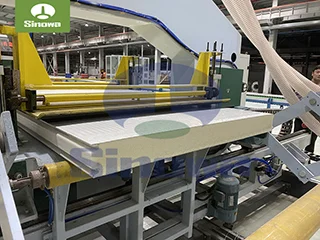
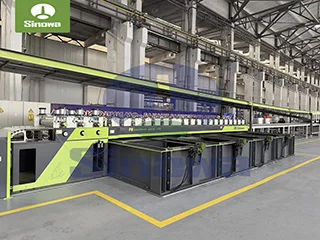
sandwich panel machine
The fundamental strength of PU sandwich panels lies in their unique three-layer "sandwich" structure, which consists of two outer facings and a rigid polyurethane foam core. This structural design is not arbitrary but a result of meticulous material engineering, where each component is selected to complement the others and enhance the overall performance of the panel. The outer facings are typically made from galvanized steel, galvalume, or aluminum, materials chosen for their high strength-to-weight ratio, corrosion resistance, and durability. These metal facings undergo surface treatments to improve their adhesion to the core and enhance their resistance to UV radiation, humidity, and harsh weather conditions, ensuring long-term performance in various environments. The inner core, composed of rigid polyurethane foam, is the key to the panel's exceptional thermal insulation properties. Produced through a chemical reaction between isocyanates and polyether polyols, this foam forms a dense, closed-cell structure with a low thermal conductivity, making it one of the most efficient insulating materials available in industrial production.
The production process in a PU sandwich panel plant is a sophisticated sequence of automated operations that ensure precision, consistency, and efficiency. It begins with raw material preparation, where the metal coils for the outer facings are carefully inspected and loaded onto uncoiling machines. These coils are then fed into leveling equipment to remove any distortions and ensure a flat surface, a critical step for maintaining the structural integrity of the final product. Next, the metal sheets undergo profiling, where they are shaped into specific configurations such as corrugated or trapezoidal forms through a series of rolling dies. This profiling process enhances the mechanical strength of the facings, allowing the panels to withstand greater loads and resist bending or deformation.
Following profiling, the metal facings proceed to surface pretreatment, where they are cleaned to remove dust, oil, and other contaminants. A bonding agent is then applied uniformly to the inner surface of the facings to ensure a strong and permanent adhesion with the PU foam core. Meanwhile, the polyurethane raw materials—consisting of polyol, isocyanate, foaming agents, and catalysts—are carefully measured and mixed in precise proportions. This mixing process is critical, as even slight deviations in the ratio can significantly affect the properties of the foam, such as its density, thermal conductivity, and mechanical strength. The mixed PU components are then continuously dispensed onto the lower metal facing through a high-pressure mixing head, which ensures uniform distribution of the foam precursor.
Once the foam is dispensed, the upper metal facing is brought into contact with the foam layer, and the entire assembly is fed into a double-belt pressing machine. This machine applies consistent pressure and temperature to the composite structure, facilitating the foaming and curing process of the PU core. The controlled environment within the double-belt press ensures that the foam expands evenly to fill the entire space between the two facings, forming a tight and homogeneous bond. The curing process is carefully monitored to ensure that the foam reaches its optimal mechanical and thermal properties, with the duration and temperature adjusted according to the desired thickness and performance specifications of the panels.
After curing, the continuous composite sheet is moved to a precision cutting station, where it is cut into panels of predetermined lengths using a computer-controlled tracking saw. This automated cutting process ensures high dimensional accuracy, with minimal waste and consistent panel sizes that facilitate easy installation on construction sites. The cut panels then undergo edge trimming to remove any irregularities and ensure clean, straight edges. Finally, the finished panels are inspected for quality, including checks for bonding strength, surface smoothness, dimensional accuracy, and foam density. Qualified panels are then stacked and packaged to protect them during transportation and storage.
The PU sandwich panels produced by these plants offer a wide range of performance advantages that make them indispensable in modern construction. Their most notable feature is their exceptional thermal insulation performance. The closed-cell structure of the PU foam core has a very low thermal conductivity, significantly reducing heat transfer through the panels. This translates to lower energy consumption for heating and cooling in buildings, making them an ideal choice for energy-efficient construction projects. In cold storage facilities, for example, PU sandwich panels help maintain stable low temperatures with minimal energy input, while in commercial and industrial buildings, they reduce the load on HVAC systems, leading to substantial energy savings over the building's lifetime.
Another key advantage of PU sandwich panels is their high strength-to-weight ratio. Despite being lightweight, the composite structure provides excellent structural integrity, with the metal facings contributing to high bending and compressive strength, and the PU core adding rigidity and impact resistance. This combination allows the panels to withstand wind loads, snow loads, and other environmental stresses, while their lightweight nature reduces the overall weight of the building structure. This not only lowers the cost of structural materials but also simplifies transportation and installation, as the panels can be handled and installed with fewer personnel and equipment.
Durability and weather resistance are also prominent features of PU sandwich panels. The metal facings, with their corrosion-resistant coatings, protect the core from moisture, UV radiation, and chemical exposure, while the closed-cell PU foam is inherently water-resistant, preventing moisture absorption and the subsequent degradation of thermal and mechanical properties. This makes the panels suitable for use in a wide range of climates, from humid coastal areas to dry and cold regions, with minimal maintenance requirements over their long service life.
Fire safety is a critical consideration in construction materials, and modern PU sandwich panels are engineered to meet stringent fire performance standards. Through the addition of flame retardants, the PU foam can achieve a high fire resistance rating, with the foam charring rapidly when exposed to fire to form a protective layer that inhibits flame spread and reduces smoke emission. This char layer helps to maintain the structural integrity of the panel for a period, providing valuable time for evacuation and fire suppression in the event of a fire.
The versatility of PU sandwich panels is reflected in their wide range of applications across various industries. In industrial construction, they are extensively used for the walls and roofs of factories, warehouses, and manufacturing facilities, where their combination of insulation, strength, and quick installation is highly valued. In the logistics and transportation sector, they are used in the construction of distribution centers, cold storage warehouses, and refrigerated trucks, where temperature control and structural durability are essential. Commercial buildings, such as shopping malls, office complexes, and sports facilities, also benefit from the panels' aesthetic versatility, as the metal facings can be customized in a variety of colors and finishes to match architectural designs.
In addition to traditional construction applications, PU sandwich panels are increasingly being used in modular and prefabricated construction. The prefabricated nature of the panels allows for rapid on-site assembly, significantly reducing construction time and labor costs compared to traditional building methods. This makes them an ideal choice for emergency housing, temporary facilities, and large-scale construction projects where speed and efficiency are critical. The modular design also facilitates quality control, as the panels are manufactured in a controlled factory environment, ensuring consistent performance and reducing the risk of on-site construction errors.
The development of PU sandwich panel plants is closely aligned with the global trend towards sustainability and carbon reduction. The exceptional thermal insulation properties of PU sandwich panels directly contribute to lower energy consumption in buildings, reducing greenhouse gas emissions and helping to meet global carbon neutrality goals. Furthermore, the materials used in the panels are increasingly being sourced from sustainable suppliers, and many manufacturers are adopting recycling programs for metal facings and PU foam. Advances in recycling technology have made it possible to recover and reuse the metal components of the panels, while research is ongoing to develop efficient methods for recycling the PU core, further enhancing the environmental sustainability of the product lifecycle.
Automation and digitalization are driving significant advancements in PU sandwich panel production. Modern plants are increasingly equipped with intelligent monitoring systems and digital twin technology, which allow for real-time monitoring and optimization of the production process. These technologies enable manufacturers to track key parameters such as foam mixing ratios, curing temperatures, and panel dimensions, ensuring consistent product quality and reducing waste. Artificial intelligence (AI) algorithms are also being used to simulate the performance of panels under different environmental conditions, allowing for the optimization of panel design for specific applications. This integration of automation and digitalization not only improves production efficiency but also enables the customization of panels to meet the unique needs of individual projects.
The future of PU sandwich panel plants is shaped by ongoing innovations in material science and production technology. Research is focused on developing new foam formulations with enhanced thermal insulation properties, improved fire resistance, and lower environmental impact. The use of bio-based polyols in PU foam production is an emerging trend, reducing reliance on fossil fuels and further improving the sustainability of the panels. Additionally, advancements in coating technology are leading to the development of metal facings with enhanced durability, corrosion resistance, and aesthetic appeal.
Another area of innovation is the integration of smart technologies into PU sandwich panels. Researchers are exploring the incorporation of sensors and monitoring devices within the panels to track temperature, humidity, and structural performance in real-time. These smart panels can provide valuable data for building management systems, enabling predictive maintenance and optimizing energy efficiency. This integration of smart technology is transforming PU sandwich panels from passive structural components into active elements of intelligent building systems.
In conclusion, the PU sandwich panel plant plays a vital role in the modern construction industry, producing composite boards that combine exceptional thermal insulation, structural strength, durability, and versatility. The sophisticated and automated production process ensures consistent quality and efficiency, while the environmental sustainability of the product aligns with global efforts to reduce carbon emissions. As the industry continues to embrace automation, digitalization, and sustainable practices, PU sandwich panel plants are poised to meet the growing demand for high-performance, energy-efficient building materials. The ongoing innovations in material science and production technology will further enhance the performance and sustainability of PU sandwich panels, making them an even more integral part of the future of construction.
https://www.cnsinowa.com/sandwich-panel-machines/pu-sandwich-panel-plant-for-composite-board-production.html