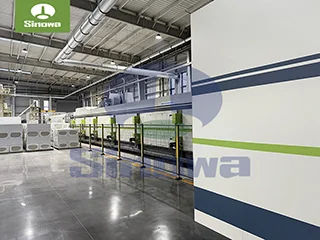
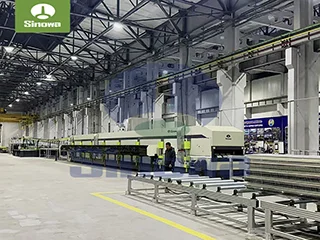
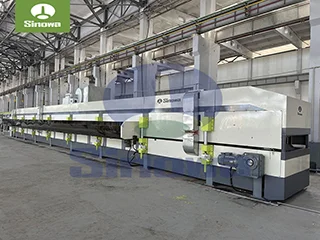
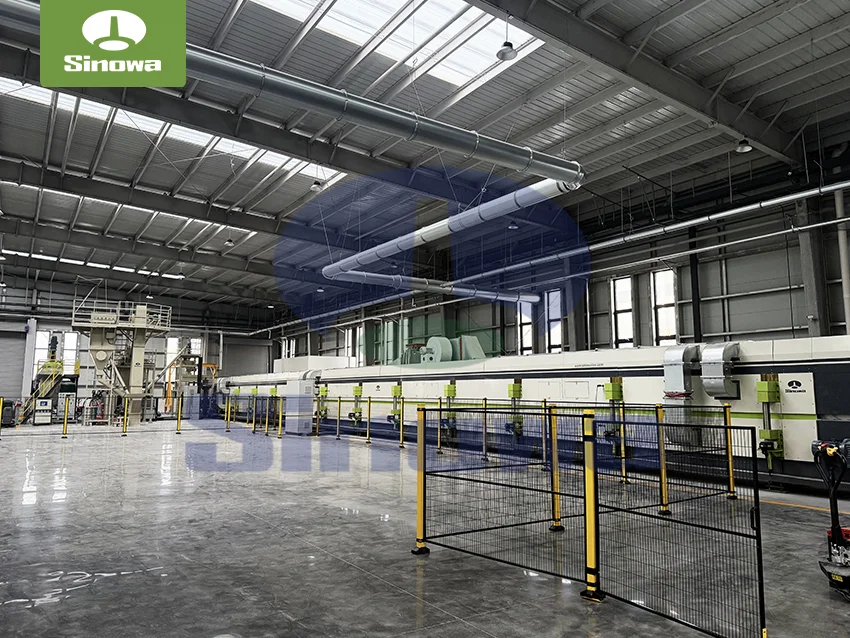
 sandwich panel machine
To understand the significance of polyurethane sandwich panel making machines, it is first essential to recognize the inherent properties of the panels they produce. High-strength polyurethane sandwich panels are composite structures consisting of three distinct layers: two outer facings, typically made of galvanized steel, galvalume, or aluminum, and a core of rigid polyurethane foam. This "sandwich" configuration is not arbitrary; it leverages the complementary strengths of each material to create a final product that exceeds the performance of its individual components. The outer metal facings provide structural rigidity, impact resistance, and protection against environmental elements, while the polyurethane core offers exceptional thermal insulation, sound absorption, and lightweight properties. What sets high-strength variants apart is the precise optimization of material ratios, core density, and bonding strength—factors that are directly controlled and enforced by the manufacturing machine. Unlike manual or semi-automatic production methods, these machines ensure that every panel adheres to the exact specifications required for high-strength applications, eliminating inconsistencies that could compromise structural integrity or performance.
The core functionality of a polyurethane sandwich panel making machine revolves around a continuous production process that seamlessly integrates multiple stages, from raw material feeding to finished product cutting. At the start of the production line, the outer facing materials—usually in the form of large rolls of metal sheet—are fed into the machine through a set of decoilers. These decoilers are designed to handle heavy rolls with precision, featuring adjustable tension control systems that prevent the sheet from wrinkling or stretching during uncoiling. This tension control is critical, as any deformation of the outer facing would directly affect the flatness and structural stability of the final panel. Following the decoilers, the metal sheets pass through a series of guiding and leveling rollers that further refine their flatness, ensuring they enter the subsequent stages of the process in perfect alignment. In some configurations, the metal sheets may also undergo a pre-heating stage, where they are gently warmed to a specific temperature to enhance the adhesion of the polyurethane core later in the process.
Parallel to the handling of the outer facings is the preparation and application of the polyurethane core material. Rigid polyurethane foam is formed through a chemical reaction between two main components: isocyanate and polyether polyol. These two components, along with additional additives such as blowing agents, catalysts, and flame retardants, are stored in separate tanks and precisely metered by high-pressure pumps. The metering system is a critical component of the machine, as the exact ratio of the two main components directly influences the density, strength, and insulation properties of the foam core. Any deviation from the optimal ratio could result in a core that is too weak, too brittle, or lacks the required thermal performance. Once the components are accurately measured, they are fed into a high-speed mixing head, where they are blended rapidly and uniformly. The mixing head is designed to ensure complete homogenization of the materials, as incomplete mixing would lead to inconsistent foam structure and compromised panel quality.
The next stage of the process is the core application and lamination, where the three layers of the sandwich panel are brought together. The mixed polyurethane material is continuously deposited onto the lower metal facing as it moves along the production line. The deposition is controlled by a precision spreading system, which ensures an even layer of the material across the entire width of the facing. Immediately after the polyurethane is applied, the upper metal facing is fed into position, sandwiching the liquid foam between the two sheets. The combined assembly then enters a double-track laminating conveyor, where it is subjected to controlled pressure and temperature. The conveyor consists of two parallel tracks of heated steel plates that apply uniform pressure to the panel assembly, ensuring that the polyurethane foam bonds tightly to both outer facings. The temperature within the laminating conveyor is carefully regulated to facilitate the foaming and curing process of the polyurethane. As the assembly moves through the conveyor, the polyurethane undergoes a chemical reaction, expanding to fill the entire space between the two facings and curing into a rigid, high-strength core. The length of the laminating conveyor is designed to provide sufficient time for the foam to fully cure before the panel exits the system, ensuring that the core achieves its maximum strength and stability.
Once the panel has been fully laminated and the polyurethane core has cured, it proceeds to the trimming and cutting stages. The first step in this phase is edge trimming, where specialized cutting tools remove any excess material from the sides of the panel to achieve the exact width specification. This trimming process also ensures that the edges of the panel are clean and straight, which is essential for easy installation and proper sealing in end applications. Following edge trimming, the continuous panel is cut into individual lengths using an automatic tracking cross-cut saw. The saw is controlled by a computerized system that allows operators to set the desired length of the finished panels, and it is designed to track the movement of the panel precisely, ensuring clean, square cuts without damaging the panel's structure. Some advanced machines may also include additional finishing stages, such as the application of protective films to the outer surfaces of the panels to prevent scratches during transportation and installation.
The efficiency and performance of a polyurethane sandwich panel making machine are further enhanced by its control system, which serves as the "brain" of the entire production process. Modern machines are equipped with advanced programmable logic controllers (PLCs) that monitor and regulate every aspect of the production line, from the speed of the conveyors and the tension of the metal sheets to the metering of the polyurethane components and the temperature of the laminating conveyor. The PLC system is typically paired with a user-friendly human-machine interface (HMI), which allows operators to set production parameters, monitor the status of the process in real-time, and troubleshoot any issues that may arise. This level of automation not only improves the consistency and quality of the finished panels but also reduces the need for manual intervention, lowering the risk of human error and increasing overall production efficiency. Additionally, many machines are equipped with sensors that detect deviations from the set parameters, triggering automatic adjustments or alarms to ensure that the production process remains within optimal limits.
One of the key advantages of using a polyurethane sandwich panel making machine for high-strength composite panel production is its ability to achieve precise control over the core density of the polyurethane foam. High-strength panels require a core density that is typically in the range of 38-42 kg/m³, as this density range balances optimal strength with lightweight properties. The machine's metering and mixing systems ensure that the polyurethane foam achieves this exact density consistently across every panel. This consistent density is essential for the panel's structural performance, as it ensures that the core can effectively distribute loads and resist compression, bending, and impact. In contrast, manual production methods are unable to achieve the same level of density consistency, resulting in panels that vary in strength and performance.
Another significant benefit of these machines is their high production efficiency. Unlike traditional construction methods that involve on-site assembly and curing, polyurethane sandwich panel making machines operate continuously, producing large volumes of panels in a relatively short period of time. The production speed can typically be adjusted between 4-10 meters per minute, depending on the specific requirements of the panels being produced. This high production rate makes it possible to meet the demands of large-scale construction projects, where timely delivery of materials is critical. Additionally, the continuous production process reduces material waste, as the machine uses only the exact amount of material required for each panel. Any excess material from the trimming process can often be recycled, further enhancing the sustainability of the production process.
The high-strength polyurethane sandwich panels produced by these machines offer a wide range of performance advantages that make them ideal for diverse applications. Their exceptional thermal insulation properties are one of their most notable features. Polyurethane foam has one of the lowest thermal conductivity values among common insulation materials, meaning that panels made with this core can effectively reduce heat transfer between the interior and exterior of a building. This results in significant energy savings, as heating and cooling systems do not need to work as hard to maintain a comfortable internal temperature. This energy efficiency is particularly valuable in applications such as cold storage facilities, where precise temperature control is essential, and in commercial and industrial buildings, where energy costs can be a major operational expense.
In addition to their thermal insulation properties, high-strength polyurethane sandwich panels also offer excellent sound insulation. The dense, closed-cell structure of the polyurethane core effectively absorbs sound waves, reducing noise transmission between spaces. This makes the panels ideal for use in industrial facilities, where machinery noise can be a significant issue, and in public buildings such as airports, train stations, and sports stadiums, where sound control is essential for user comfort. The panels also exhibit excellent weather resistance, thanks to the protective coatings on the outer metal facings and the water-resistant properties of the polyurethane core. The metal facings are typically coated with polyester, silicon-modified polyester, or PVDF fluorocarbon coatings, which provide long-term resistance to corrosion, UV radiation, and extreme weather conditions. The closed-cell structure of the polyurethane core also prevents water absorption, ensuring that the panel's performance does not degrade over time due to moisture damage.
The structural strength of these panels is another key advantage, making them suitable for use in load-bearing applications such as roof and wall cladding. The combination of the rigid metal facings and the high-density polyurethane core results in a panel with an excellent strength-to-weight ratio. This means that the panels are lightweight, reducing the overall load on the building's structural frame, while still being strong enough to resist wind loads, snow loads, and other external forces. The lightweight nature of the panels also makes them easier to transport and install, reducing construction time and labor costs. In many cases, the panels can be installed using simple dry-fix methods, eliminating the need for wet trades such as plastering or rendering, which further speeds up the construction process.
The versatility of high-strength polyurethane sandwich panels is reflected in their wide range of applications across various industries. In the industrial sector, they are commonly used for the construction of warehouses, factories, and logistics centers, where their combination of strength, insulation, and quick installation makes them an ideal choice. Cold storage facilities and refrigerated warehouses also rely heavily on these panels, as their exceptional thermal insulation properties help to maintain the low temperatures required for food storage, pharmaceuticals, and other temperature-sensitive products. In the commercial sector, the panels are used for the construction of shopping malls, office buildings, and hotels, where their aesthetic flexibility—achieved through a variety of metal coating colors and finishes—allows them to blend seamlessly with different architectural styles.
Public infrastructure projects also benefit from the use of high-strength polyurethane sandwich panels. They are often used in the construction of airports, train stations, and sports stadiums, where their sound insulation properties, durability, and quick installation are particularly valuable. Additionally, the panels are used in the construction of modular and prefabricated buildings, such as temporary housing, disaster relief shelters, and portable offices. The ability to produce the panels in a factory-controlled environment and then assemble them on-site makes modular construction significantly faster and more efficient than traditional building methods, and the high strength of the panels ensures that the resulting structures are safe and durable.
The sustainability of high-strength polyurethane sandwich panels and the machines that produce them is another important consideration in today's construction industry. The energy efficiency of the panels contributes to reduced carbon emissions during the operational phase of a building, helping to meet global sustainability goals. Additionally, the metal facings of the panels are fully recyclable at the end of their life, reducing the amount of waste sent to landfills. The production process itself is also becoming increasingly sustainable, with modern machines incorporating energy-efficient components and processes that reduce power consumption. Some machines are also designed to minimize material waste, further enhancing their environmental performance.
Despite the many advantages of polyurethane sandwich panel making machines, their operation requires skilled operators who are familiar with the complexities of the production process and the properties of the materials involved. Operators must be able to set and adjust production parameters, monitor the process for any signs of deviation, and perform routine maintenance on the machine to ensure its continued performance. Regular maintenance is essential to keep the machine running smoothly and to prevent breakdowns that could disrupt production. This includes checking and cleaning the mixing head, inspecting the conveyors and cutting tools, and ensuring that the metering systems are functioning correctly.
Looking to the future, the development of polyurethane sandwich panel making machines is likely to focus on further improving automation, efficiency, and sustainability. Advances in artificial intelligence and machine learning could lead to machines that are able to self-optimize production parameters based on real-time data, further improving the consistency and quality of the finished panels. Additionally, the integration of more energy-efficient components and the use of renewable energy sources to power the machines could reduce their environmental impact even further. There may also be developments in the materials used in the production process, such as the use of bio-based polyols in the polyurethane core, which would further enhance the sustainability of the panels.
In conclusion, polyurethane sandwich panel making machines play a vital role in the production of high-strength composite panels that are transforming the modern construction industry. These sophisticated machines integrate precision engineering, advanced material science, and automated control systems to produce panels that are consistent, efficient, and high-performing. The high-strength polyurethane sandwich panels they produce offer a unique combination of thermal insulation, sound absorption, structural strength, and weather resistance, making them suitable for a wide range of applications across industrial, commercial, and public sectors. As the demand for sustainable, energy-efficient, and quick-to-construct buildings continues to grow, the importance of these machines and the panels they produce is only set to increase. With ongoing advancements in technology and materials, polyurethane sandwich panel making machines will continue to evolve, further enhancing their performance and contributing to the development of a more sustainable and efficient construction industry.
https://www.cnsinowa.com/sandwich-panel-machines/polyurethane-sandwich-panel-making-machine-for-high-strength-composite-panel-production.html