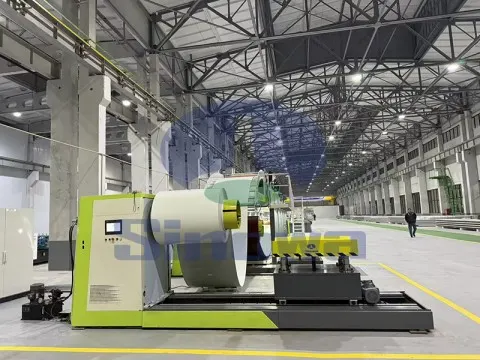
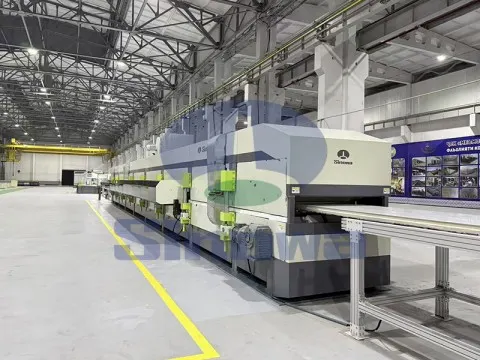
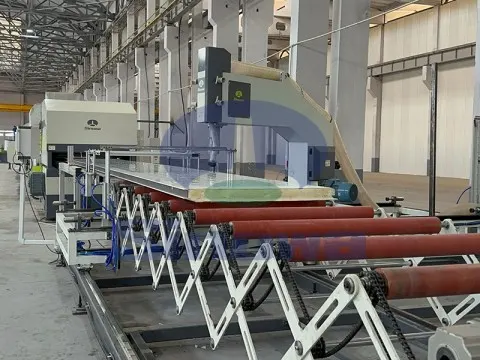
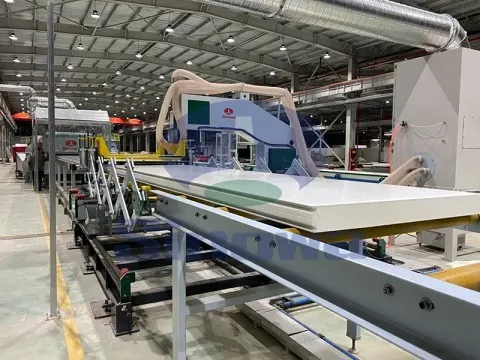
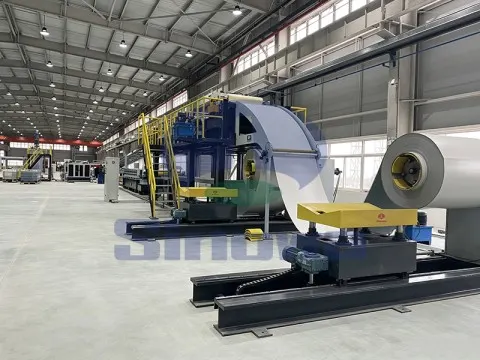
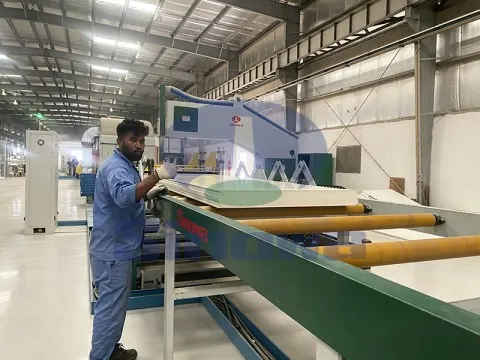
sandwich panel line
The rise of China’s PU foam production line manufacturing sector is deeply rooted in the country’s comprehensive industrial ecosystem and well-established manufacturing clusters, which create a solid foundation for efficient production and technical iteration. Unlike scattered manufacturing models, Chinese producers benefit from concentrated industrial zones that integrate raw material suppliers, precision component manufacturers, mechanical processing facilities, R&D institutions, and logistics networks within a compact geographic radius. These clusters, primarily located in key industrial regions across the nation, foster close collaboration between upstream and downstream stakeholders, streamlining production processes, reducing lead times for component procurement, and enabling rapid adjustments to production line design and configuration. This clustered development model not only enhances operational efficiency but also facilitates the sharing of technical expertise and manufacturing resources, allowing manufacturers to refine their production line designs continuously and address technical pain points in PU foam production more effectively. Over the years, this industrial synergy has eliminated bottlenecks in component supply and technical support, making Chinese PU foam production line manufacturers highly responsive to market changes and customer demands, whether for standard automated production lines or customized solutions tailored to specific foam types and production scales.
At the heart of China’s competitive edge in PU foam production line manufacturing lies a relentless focus on technological advancement and process optimization, balancing automation precision with production flexibility to cater to a wide spectrum of PU foam manufacturing requirements. Modern PU foam production involves complex chemical reactions, precise material mixing, controlled foaming, curing, cutting, and post-processing, each stage demanding high levels of mechanical accuracy and process stability. Chinese manufacturers have invested heavily in upgrading core technologies, refining the design of key components such as mixing systems, metering pumps, foaming chambers, curing conveyors, and cutting mechanisms to ensure uniform material distribution, stable foaming reactions, and consistent product dimensions. Unlike outdated production equipment that relies heavily on manual operation and supervision, the latest PU foam production lines from Chinese suppliers integrate intelligent control systems, enabling real-time monitoring of production parameters, automatic adjustment of material ratios, and fault early warning functions. This high degree of automation not only reduces labor input and human error but also boosts production efficiency, minimizes material waste, and improves the overall yield of qualified PU foam products. Moreover, manufacturers prioritize the flexibility of production lines, designing modular structures that allow for quick switching between different foam formulations, densities, and product specifications. This adaptability is crucial for foam producers operating in dynamic markets, where demand fluctuates between flexible foam for furniture bedding, rigid foam for building insulation, high-resilience foam for automotive seating, and micro-porous foam for electronic component protection.
Quality control and operational reliability are cornerstones of the value proposition offered by Chinese PU foam production line manufacturers, as global buyers increasingly prioritize equipment longevity, low maintenance costs, and consistent performance over short-term cost savings. Recognizing the critical role of production line stability in continuous foam manufacturing, Chinese producers implement stringent quality management protocols throughout the entire production cycle, from raw material selection for mechanical components to final assembly and commissioning. Each key component undergoes rigorous testing and screening to ensure wear resistance, corrosion resistance, and compatibility with PU foam raw materials, which are often chemically reactive and require equipment that can withstand long-term, high-intensity operation. Before delivery, every complete production line undergoes comprehensive trial runs, simulating real-world production conditions to verify operational stability, parameter accuracy, and product quality output. This meticulous quality assurance process ensures that the production lines can operate continuously for extended periods with minimal downtime, a vital factor for foam manufacturers aiming to meet large order volumes and tight delivery schedules. Additionally, Chinese manufacturers focus on the usability and maintainability of their equipment, designing user-friendly control interfaces and accessible component layouts that simplify daily operation and routine maintenance, reducing the technical barriers for equipment operators and lowering long-term operational costs for buyers.
The global appeal of Chinese PU foam production line manufacturers is further amplified by their deep understanding of diverse market demands and commitment to customized solution development, rather than relying solely on standardized product offerings. Different regions and industries have unique requirements for PU foam products, driven by local regulatory standards, application scenarios, and production scale. For instance, foam producers in the automotive sector demand production lines capable of manufacturing high-performance, low-emission foam components that meet strict performance criteria for vehicle interiors, while construction industry buyers prioritize lines that produce rigid foam with superior thermal insulation and fire resistance. Similarly, small and medium-sized foam enterprises require compact, cost-effective production lines with moderate output capacity, while large-scale industrial manufacturers need fully automated, high-capacity lines to support mass production. Chinese manufacturers excel in tailoring production line specifications, including output capacity, foaming technology, automation level, and footprint, to align with these varied needs. They work closely with clients to assess their production goals, workshop conditions, and target product specifications, then design and optimize production lines accordingly, ensuring that each solution is perfectly matched to the buyer’s operational reality. This customer-centric approach not only enhances customer satisfaction but also strengthens long-term partnerships, as global buyers increasingly view Chinese manufacturers as reliable collaborators rather than just equipment suppliers.
Beyond product quality and customization, Chinese PU foam production line manufacturers have built a robust global service system to support buyers throughout the entire equipment lifecycle, from pre-sales consultation to after-sales installation, training, and technical support. For international buyers, especially those new to PU foam manufacturing or operating in regions with limited technical resources, comprehensive after-sales service is a critical consideration when selecting production equipment. Chinese manufacturers address this need by providing end-to-end support: professional pre-sales teams offer detailed technical guidance, helping buyers select the most suitable production line configuration and optimize workshop layout; experienced installation engineers travel to client sites worldwide to oversee equipment assembly, commissioning, and trial production; dedicated training teams conduct systematic training for local operators and maintenance staff, covering equipment operation, parameter setting, routine maintenance, and troubleshooting. Furthermore, manufacturers maintain responsive technical support channels, providing timely assistance for equipment faults, technical upgrades, and process optimization long after delivery. This full-lifecycle service framework eliminates concerns about technical barriers and operational challenges for global buyers, ensuring that they can maximize the performance and service life of their PU foam production lines, and ultimately achieve stable and efficient foam production.
The growth of China’s PU foam production line manufacturing sector is also closely intertwined with the global expansion of the PU foam industry, as rising demand for sustainable, high-performance polymer materials drives the need for advanced production equipment worldwide. In recent years, global trends toward energy conservation, environmental protection, and sustainable manufacturing have reshaped the PU foam industry, with increasing focus on low-carbon production, reduced emissions, and recyclable foam products. Chinese manufacturers have kept pace with these trends, integrating eco-friendly design principles into their production line development, optimizing energy consumption patterns, reducing material waste during production, and supporting the use of environmentally friendly PU foam raw materials. These green production lines not only help foam producers meet global sustainability standards and regulatory requirements but also align with the long-term development goals of the polymer manufacturing industry. Additionally, as emerging economies accelerate industrialization and infrastructure construction, demand for PU foam products in construction, automotive, and furniture sectors has surged, creating a vast market for reliable, cost-effective PU foam production lines. Chinese manufacturers, with their proven technical capabilities, efficient production capacity, and global service network, are well-positioned to capitalize on this market growth, supplying high-quality production lines to buyers across Asia, Africa, Europe, North America, and South America.
Despite facing intense global competition, Chinese PU foam production line manufacturers continue to enhance their core competitiveness through continuous innovation, industrial upgrading, and market adaptation. The sector is moving beyond traditional manufacturing to embrace digitalization and smart manufacturing, with ongoing investments in technologies such as artificial intelligence, Internet of Things (IoT), and big data analytics to further improve production line intelligence, efficiency, and remote monitoring capabilities. These technological upgrades will enable real-time data collection and analysis of production processes, predictive maintenance of equipment, and optimized production scheduling, taking PU foam production to a new level of automation and precision. Simultaneously, manufacturers are expanding their research and development efforts to address emerging market needs, such as production lines for bio-based PU foam, high-performance flame-retardant foam, and ultra-light micro-foam, catering to the evolving demands of high-end industries such as new energy vehicles, medical equipment, and green construction. By staying at the forefront of technological innovation and market trends, Chinese manufacturers are not only consolidating their position in the global market but also driving the overall development of the global PU foam manufacturing industry.
Looking ahead, the future of China’s PU foam production line manufacturing sector remains promising, fueled by sustained global demand for PU foam products, ongoing technological innovation, and the country’s robust industrial foundation. As the global economy recovers and industries continue to prioritize efficiency, sustainability, and high-quality production, the demand for advanced, reliable, and customizable PU foam production lines will continue to rise. Chinese manufacturers, with their proven track record of quality, innovation, and customer service, are poised to play an even more influential role in the global market. They will continue to leverage their industrial advantages, refine their technological capabilities, and deepen cooperation with global partners, delivering cutting-edge PU foam production line solutions that empower foam manufacturers worldwide to achieve operational excellence, meet market demands, and embrace sustainable development. In the ever-evolving landscape of polymer manufacturing equipment, China’s PU foam production line manufacturers stand as a testament to the country’s manufacturing prowess, combining technical expertise, industrial synergy, and customer focus to drive progress across the entire PU foam industry chain.
In summary, China has emerged as a leading global manufacturer of PU foam production lines, driven by a mature industrial ecosystem, continuous technological innovation, uncompromising quality control, customer-centric customization, and comprehensive global service. The sector’s development reflects the broader advancement of China’s high-end manufacturing industry, shifting from volume-based production to value-driven innovation. For global PU foam manufacturers, partnering with Chinese production line suppliers offers access to reliable, efficient, and adaptable equipment that aligns with diverse production needs and long-term business goals. As the industry continues to evolve, Chinese manufacturers will remain at the forefront, driving innovation, supporting sustainable production, and fostering mutually beneficial cooperation with partners around the world, solidifying their status as key players in the global PU foam production equipment market.
Sinowa is a professional manufacturer of sandwich panel machine in china, we provide diversified and high-performance sandwich panel production lines, including fully automatic continuous PU sandwich panel line and customized special lines to meet mass production and personalized order demands. These sandwich panel lines support processing multiple foam core materials, such as PU, PIR, mineral wool, rock wool and glass wool, covering different insulation and fireproof standards.
Featuring stable operation, high efficiency, energy saving and easy maintenance, our PU sandwich panel line deliver sandwich panels with excellent thermal insulation, fire resistance, sound insulation and lightweight durability. The finished panels are widely applied in industrial workshops, warehouse roofing and wall cladding, cold storage insulation, serving global construction and industrial insulation markets.
https://www.cnsinowa.com/sandwich-panel-machines/manufacturer-of-pu-foam-production-lines-in-china.html