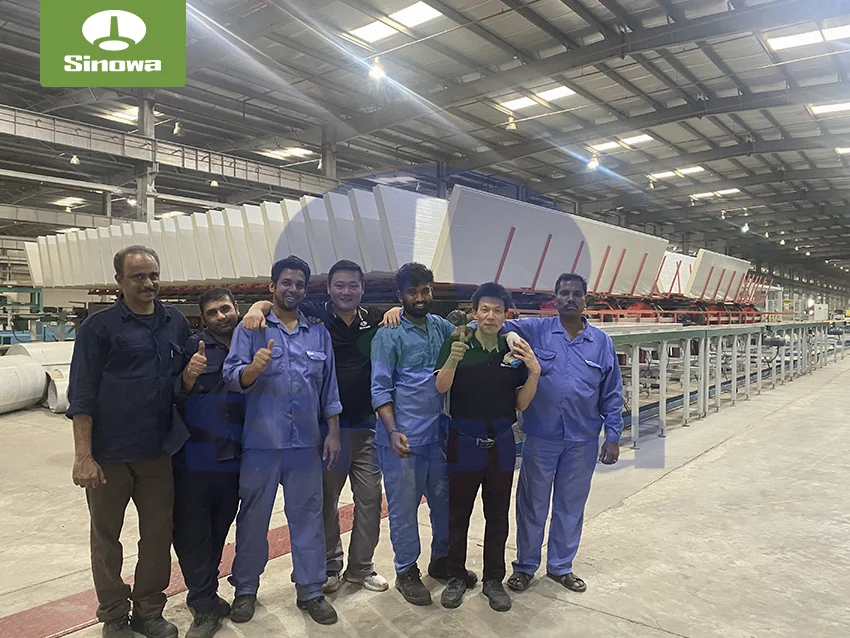
 sandwich panel machine
To understand the significance of the PU sandwich panel machine with embossed surface material, it is essential to first grasp the basic composition and properties of the PU sandwich panels it produces. A typical PU sandwich panel consists of three layers: two outer facing materials (usually metal sheets, such as galvanized steel or aluminum) and a core layer of polyurethane foam. The embossed surface material refers to the outer facing sheets that have been processed with a pattern or texture, which can range from simple lines and waves to more complex designs mimicking wood, stone, or brick. The PU core, known for its excellent thermal insulation and sound absorption capabilities, is formed by the reaction of polyol and isocyanate, which expands and bonds tightly with the outer facing materials during the manufacturing process. The embossing of the surface material is not merely a decorative touch; it also serves to enhance the rigidity of the facing sheets, prevent surface oxidation, and improve the overall weather resistance of the panels. The machine that produces these panels integrates multiple processes—including uncoiling of the facing materials, embossing, foam mixing and pouring, lamination, cutting, and stacking—into a seamless production line, ensuring high efficiency and consistent product quality.
The working mechanism of the PU sandwich panel machine with embossed surface material is a sophisticated integration of mechanical, chemical, and thermal processes, designed to achieve precise control over each stage of production. The process begins with the uncoiling of the raw facing materials. Large rolls of metal sheets (the surface material) are loaded onto uncoiling devices, which feed the sheets into the embossing unit at a steady speed. The embossing unit is equipped with a set of engraved rollers that press patterns onto the surface of the metal sheets. The design of these rollers determines the final embossed pattern, and manufacturers can customize the rollers to produce different textures based on customer requirements. The embossing process is carried out under controlled temperature and pressure conditions to ensure that the pattern is clearly defined and permanently formed on the surface of the metal sheets, without compromising the structural integrity of the material.
After embossing, the facing materials are guided into the lamination zone, where the PU core is applied. Meanwhile, the foam mixing system prepares the polyurethane foam by accurately mixing polyol, isocyanate, and other additives (such as flame retardants and blowing agents) in a predetermined ratio. The mixing process is critical, as any deviation in the ratio can affect the thermal insulation performance, density, and bonding strength of the foam core. The mixed foam is then evenly poured onto one of the embossed facing sheets, which moves forward on a conveyor belt. The other embossed facing sheet is then fed from the top, and the three layers (top embossed sheet, foam core, bottom embossed sheet) pass through a series of compression rollers and a curing tunnel. The compression rollers ensure that the foam core is evenly distributed between the two facing sheets and that there are no air bubbles or gaps. The curing tunnel, maintained at a specific temperature and humidity, facilitates the foaming and curing of the polyurethane core. During the curing process, the foam expands to fill the entire space between the facing sheets, forming a strong bond with the embossed surfaces. Once the panels are fully cured, they are fed into the cutting unit, which uses precision saws to cut the continuous panel into the desired length. Finally, the cut panels are stacked automatically by a stacking device, ready for packaging and delivery. Throughout the entire process, advanced control systems monitor and adjust parameters such as conveyor speed, temperature, pressure, and foam mixing ratio, ensuring that each panel meets the required specifications.
One of the most notable advantages of the PU sandwich panel machine with embossed surface material is the superior performance of the panels it produces, which stems from the combination of the embossed surface material and the PU core. Firstly, the embossed surface significantly enhances the mechanical properties of the panels. The texture on the surface of the facing material increases the surface area, improving the bonding strength between the facing sheets and the PU core. This results in a higher overall structural rigidity of the panel, making it more resistant to bending, compression, and impact. Compared to flat-surface PU sandwich panels, embossed panels can withstand greater loads, making them suitable for use in large-span structures such as warehouses and exhibition halls. Secondly, the embossed surface provides excellent weather resistance. The pattern on the surface helps to prevent water accumulation, reducing the risk of corrosion and rust on the metal facing sheets. Additionally, the embossed surface can be treated with additional coatings (such as PVDF or PE) to further enhance its resistance to UV radiation, rain, snow, and other harsh weather conditions, extending the service life of the panels to 20 years or more.
Another key advantage of this machine is its ability to produce panels with both functional and aesthetic properties, expanding their application scope. The embossed patterns not only improve the performance of the panels but also enhance their visual appeal. With customizable patterns, the panels can be tailored to match the architectural style of different projects. For example, panels with wood-grain embossing can be used in residential buildings to create a warm and natural appearance, while panels with stone-like embossing are suitable for commercial buildings seeking a modern and elegant look. This eliminates the need for additional decorative materials (such as paint, tiles, or cladding) after installation, reducing construction time and costs. Moreover, the PU core of the panels provides excellent thermal insulation performance. Polyurethane foam has a low thermal conductivity, which helps to reduce heat transfer between the interior and exterior of a building. This results in lower energy consumption for heating and cooling, making the buildings more energy-efficient and environmentally friendly. In cold storage facilities, for instance, the thermal insulation properties of the PU sandwich panels are crucial for maintaining a stable low temperature, reducing the energy consumption of refrigeration systems.
Efficiency and cost-effectiveness are also significant advantages of the PU sandwich panel machine with embossed surface material. The integration of multiple processes into a single production line allows for continuous and automated production, significantly increasing the output rate. Compared to traditional manual or semi-automatic production methods, this machine can produce up to several hundred square meters of panels per hour, meeting the high-volume demands of large construction projects. The automation of the production process also reduces the need for manual labor, minimizing human errors and improving product consistency. Furthermore, the use of high-quality raw materials and precise manufacturing control ensures that the panels have a low defect rate, reducing material waste and production costs. In the long run, the panels produced by this machine offer a high return on investment, as their long service life, low maintenance requirements, and energy-saving properties reduce the overall operational costs of the buildings.
The application scenarios of the PU sandwich panel machine with embossed surface material are diverse, covering a wide range of construction sectors. In the residential construction sector, the embossed PU sandwich panels are widely used for exterior wall cladding, roof panels, and interior partitions. The decorative embossed patterns enhance the aesthetic value of residential buildings, while the thermal insulation and sound absorption properties improve the living comfort. For example, in low-rise residential communities, wood-grain embossed PU panels are often used as exterior wall cladding, creating a cozy and natural living environment. In high-rise residential buildings, the lightweight nature of the panels reduces the overall weight of the building, improving structural safety.
In the industrial construction sector, the panels produced by this machine are essential components for warehouses, workshops, and factories. Industrial buildings require materials that are durable, easy to install, and capable of withstanding harsh working environments. The embossed PU sandwich panels meet these requirements, as they have high mechanical strength, excellent weather resistance, and good thermal insulation. For warehouses storing large quantities of goods, the panels' load-bearing capacity and fire resistance (when flame-retardant additives are added to the PU core) ensure the safety of the stored items. In workshops with high temperature or noise levels, the thermal insulation and sound absorption properties of the panels help to create a more comfortable working environment for employees.
Cold storage and refrigeration facilities are another important application area for the embossed PU sandwich panels. The excellent thermal insulation performance of the PU core is critical for maintaining a stable low temperature inside the cold storage, which is essential for preserving food, pharmaceuticals, and other perishable products. The embossed surface material, with its good weather resistance and moisture resistance, prevents the panels from being damaged by the cold and humid environment inside the cold storage. Additionally, the panels are easy to clean and maintain, which is important for meeting the hygiene requirements of food and pharmaceutical storage.
Commercial construction, including shopping malls, hotels, office buildings, and exhibition halls, also benefits greatly from the use of embossed PU sandwich panels. The customizable embossed patterns allow architects to create unique and attractive building facades, enhancing the brand image of commercial projects. For example, hotels may use stone-like embossed panels to create a luxurious and elegant appearance, while shopping malls may use colorful embossed panels to attract customers. The thermal insulation and sound absorption properties of the panels also improve the comfort of commercial spaces, reducing energy costs and enhancing the shopping or working experience of visitors and employees.
When using the PU sandwich panel machine with embossed surface material, there are several technical considerations that manufacturers need to take into account to ensure optimal performance and product quality. Firstly, the selection of raw materials is crucial. The quality of the facing materials (metal sheets) directly affects the embossing effect and the overall durability of the panels. Manufacturers should choose high-quality metal sheets with uniform thickness and good surface flatness to ensure that the embossed pattern is clear and consistent. The PU raw materials (polyol and isocyanate) should also meet the relevant standards, with stable chemical properties to ensure the performance of the foam core. Additionally, the selection of additives, such as flame retardants and blowing agents, should be based on the specific application requirements of the panels (e.g., fire resistance requirements for public buildings).
Secondly, the maintenance of the embossing rollers is essential. The engraved rollers are the key components that determine the embossed pattern, and their surface condition directly affects the quality of the embossed surface. Over time, the rollers may become worn or damaged due to friction with the metal sheets, leading to blurred or uneven patterns. Manufacturers should regularly inspect and maintain the embossing rollers, including cleaning, lubricating, and replacing them when necessary. Additionally, the pressure and temperature settings of the embossing unit should be adjusted according to the type and thickness of the facing material to ensure optimal embossing results.
Thirdly, the control of the foam mixing process is critical. The ratio of polyol to isocyanate, the mixing speed, and the temperature of the raw materials all affect the foaming process and the properties of the PU core. Manufacturers should use advanced mixing systems with precise control capabilities to ensure that the raw materials are mixed evenly and in the correct ratio. Additionally, the temperature of the mixing system and the curing tunnel should be strictly controlled to ensure that the foam expands and cures properly. Any deviation in these parameters can lead to defects such as uneven foam density, poor bonding between the core and the facing materials, or reduced thermal insulation performance.
Fourthly, the safety of the production process should not be overlooked. The PU raw materials (especially isocyanate) are toxic and flammable, so manufacturers should take appropriate safety measures to protect the health of workers and prevent accidents. This includes installing ventilation systems in the production area, providing workers with personal protective equipment (such as gloves, masks, and goggles), and implementing strict safety operating procedures. Additionally, the machine should be equipped with safety devices such as emergency stop buttons and protective covers to prevent mechanical injuries.
Looking into the future, the PU sandwich panel machine with embossed surface material is expected to undergo further advancements, driven by the growing demand for sustainable and intelligent construction. One of the key trends is the development of more energy-efficient and environmentally friendly production processes. Manufacturers are exploring ways to reduce the energy consumption of the machine, such as using variable frequency drives to adjust the speed of the conveyor belt and the embossing rollers according to production needs. Additionally, there is a growing focus on the use of eco-friendly raw materials, such as bio-based polyols derived from renewable resources (e.g., vegetable oils), which can reduce the carbon footprint of the PU sandwich panels.
Another important trend is the integration of intelligent technologies into the machine. The adoption of Industry 4.0 technologies, such as the Internet of Things (IoT), artificial intelligence (AI), and big data analytics, will enable real-time monitoring and optimization of the production process. For example, sensors installed on the machine can collect data on temperature, pressure, speed, and foam quality, which can be analyzed by AI algorithms to identify potential issues and adjust the production parameters automatically. This will not only improve product quality and production efficiency but also reduce the need for manual intervention. Additionally, the use of digital twins—virtual replicas of the production line—will allow manufacturers to simulate and optimize the production process before actual production, reducing the risk of errors and improving the overall performance of the machine.
The customization of embossed patterns is also expected to become more flexible and diverse. With the development of advanced roller engraving technologies, manufacturers will be able to produce embossed patterns with higher precision and more complex designs, meeting the increasingly personalized needs of customers. Additionally, the combination of embossing with other surface treatment technologies, such as coating and printing, will further expand the aesthetic possibilities of the PU sandwich panels, allowing them to mimic a wider range of natural materials and textures.
In conclusion, the PU sandwich panel machine with embossed surface material is a key innovation in the construction equipment industry, offering a perfect combination of functionality, aesthetics, and efficiency. Its ability to produce high-quality PU sandwich panels with embossed surface materials has revolutionized the way building materials are manufactured and used, expanding their application scope across residential, industrial, cold storage, and commercial construction. The core advantages of this machine—including superior product performance, high production efficiency, cost-effectiveness, and design flexibility—make it an indispensable tool for modern construction projects. As the construction industry continues to move towards sustainability and intelligence, the PU sandwich panel machine with embossed surface material is expected to undergo further advancements, playing an even more important role in shaping the future of efficient and sustainable construction. Manufacturers and industry professionals should continue to invest in research and development, optimize production processes, and explore new applications for this innovative equipment, to meet the evolving needs of the construction industry and contribute to the development of a more sustainable built environment.
https://www.cnsinowa.com/sandwich-panel-machines/pu-sandwich-panel-machine-with-embossed-surface-material.html






