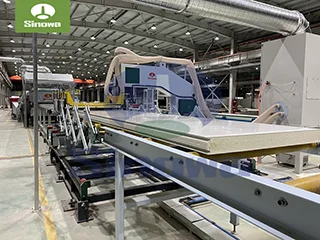
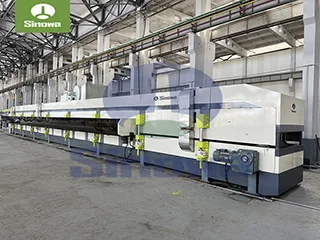
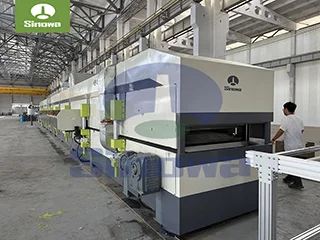
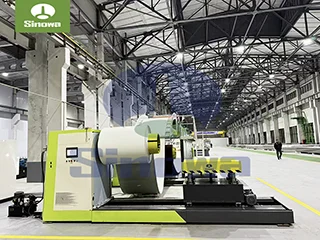
sandwich panel line
The core of a PU sandwich panel line for interior wall panels lies in its ability to seamlessly combine multiple materials into a unified, high-performance composite structure. Typically, the panels consist of two outer facings and a central polyurethane (PU) foam core, a "sandwich" structure that leverages the unique properties of each component. The outer facings, which can be metal sheets, fiber cement boards, or polymer materials, provide structural rigidity, surface durability, and aesthetic versatility. The PU foam core, formed through a precise chemical reaction, offers exceptional thermal insulation and sound absorption, making it ideal for interior wall applications where comfort and energy efficiency are paramount. The production line is designed to ensure that these components are bonded together with maximum integrity, creating a panel that outperforms traditional interior wall materials in both functionality and longevity.
The operational process of a PU sandwich panel production line is a sophisticated sequence of automated steps, each carefully calibrated to maintain consistency and quality. The process begins with raw material preparation, where the outer facing materials, often supplied in coil form, are uncoiled using decoiling equipment. This equipment ensures that the coils are fed into the line smoothly, preventing wrinkles or damage that could compromise the final product. Following decoiling, the facings undergo preprocessing, which may include roll forming to create specific profiles that enhance structural strength, surface treatment to improve adhesion with the PU core, or preheating to optimize the bonding process. For metal facings, this preheating step is particularly crucial as it ensures that the subsequent foam reaction occurs in an environment that promotes strong adhesion between the core and the facings.
The next phase, PU foam mixing and pouring, is the heart of the production process. Polyurethane foam is formed by the reaction of polyol and isocyanate, along with additives such as catalysts, foaming agents, and flame retardants. The production line uses precise metering systems to mix these components in exact proportions, ensuring that the resulting foam has consistent density and performance characteristics. Advanced lines employ high-pressure mixing technology, which guarantees thorough homogenization of the raw materials and enables the foam to expand uniformly within the panel structure. The mixed foam is then poured onto the lower facing material, which is moving along a conveyor system. The timing and distribution of the foam pouring are carefully controlled to ensure that the core fills the entire space between the two facings without gaps or unevenness.
Once the foam is poured, the upper facing material is applied, and the composite structure enters a lamination zone equipped with double belt conveyors. These conveyors apply uniform pressure to the panel as the foam expands and cures, ensuring that the three layers are bonded tightly together. The lamination process also maintains the flatness of the panel, preventing warping or distortion. The curing time and temperature are precisely regulated to allow the PU foam to reach its full structural strength; this step is critical, as insufficient curing can lead to weak adhesion or reduced thermal performance. After lamination, the continuous panel is moved to a cooling zone, where it is cooled to room temperature to stabilize its dimensions and properties.
The final stages of production involve cutting, trimming, and stacking. The cooled panel is cut to the required lengths using precision cutting equipment, which can operate without stopping the line, ensuring maximum efficiency. Trimming equipment removes any excess material from the edges of the panels, creating clean, uniform edges that facilitate easy installation. Some advanced lines also include additional processing capabilities, such as grooving or punching, to create features that simplify assembly on the construction site. Quality control inspections are integrated throughout the production process, with checks for dimensions, surface quality, adhesion strength, and foam density. Panels that meet the quality standards are then automatically stacked using stacking equipment, which arranges the panels in neat bundles ready for packaging and transportation. The high level of automation in these lines means that the entire production process can be operated with a relatively small team of operators, reducing labor costs and minimizing human error.
One of the key advantages of PU sandwich panel machine for interior wall panels is their high level of automation, which translates to improved efficiency and consistent product quality. Modern lines are equipped with comprehensive computer control systems that integrate digital servo technology, frequency conversion vector technology, and hydraulic control systems to manage every aspect of the production process. Operators can input production parameters such as panel thickness, length, and foam density into the system, which then adjusts the equipment accordingly to produce panels that meet exact specifications. This automation not only reduces the need for manual intervention but also enables quick product changes, allowing manufacturers to adapt to different project requirements without significant downtime. The production speed of these lines is adjustable, typically ranging from 3 to 7 meters per minute, and annual production capacity can be as high as 800,000 square meters, making them suitable for large-scale construction projects.
The PU sandwich panels produced by these lines offer a range of performance benefits that make them ideal for interior wall applications. Their thermal insulation properties are particularly outstanding, with a thermal conductivity significantly lower than that of traditional materials such as brick or concrete. This superior insulation helps to reduce energy consumption in buildings by minimizing heat transfer through interior walls, leading to lower heating and cooling costs. The closed-cell structure of the PU foam core also provides excellent moisture resistance, preventing water absorption and the subsequent growth of mold or mildew, which is crucial for maintaining a healthy indoor environment. Additionally, the panels have excellent soundproofing capabilities, reducing the transmission of airborne sound between rooms and creating a quieter, more comfortable living or working space.
Structurally, PU sandwich panels are lightweight yet strong, offering a high strength-to-weight ratio. This lightweight nature reduces the overall load on the building's foundation and structural frame, allowing for more flexible architectural designs and potentially reducing construction costs. Despite their light weight, the panels have good load-bearing capacity, making them suitable for use in both residential and commercial buildings. The outer facings provide additional protection against impact and wear, ensuring that the panels maintain their integrity and appearance over time. The surface of the panels is smooth and easy to clean, and they can be finished with a variety of colors or textures to match different interior design styles, eliminating the need for additional decorative materials.
The versatility of polyurethane sandwich panel production line allows for the production of panels with a wide range of specifications to meet the diverse needs of interior wall construction. Panels can be produced in various thicknesses, typically ranging from 25mm to 105mm, and lengths can be customized according to project requirements, with some lines capable of producing panels up to 13.8 meters long. The choice of outer facing materials also adds to the versatility of the panels; metal facings are suitable for industrial or commercial buildings where durability is a priority, while fiber cement or polymer facings are ideal for residential applications where aesthetics and fire resistance are important. The production lines can also be adapted to produce panels with different core materials, such as polyisocyanurate (PIR) foam for enhanced fire resistance, further expanding their application range.
In terms of sustainability, polyurethane sandwich panel line and the panels they produce offer several environmental benefits. The high thermal insulation performance of the panels contributes to energy efficiency in buildings, reducing carbon emissions associated with heating and cooling. The production process itself is relatively efficient, with minimal material waste due to precise cutting and automated quality control. Additionally, the lightweight nature of the panels reduces transportation energy consumption, as more panels can be transported in a single load compared to heavier traditional materials. Many of the materials used in the panels, including the PU foam and outer facings, are recyclable, further reducing their environmental impact. As the construction industry continues to prioritize sustainability, these environmental benefits make PU sandwich panels an increasingly attractive choice for interior wall applications.
The application of PU sandwich panels produced by these lines is widespread across various types of construction projects. In residential buildings, they are used for interior walls, partitions, and ceilings, providing a combination of thermal comfort, soundproofing, and aesthetic appeal. In commercial and industrial buildings, such as offices, shopping malls, and factories, the panels are valued for their durability, energy efficiency, and quick installation. They are also commonly used in prefabricated and modular buildings, where the speed and efficiency of construction are critical. The panels can be easily installed using standard construction techniques, reducing installation time and labor costs compared to traditional interior wall materials. Their lightweight nature also makes them suitable for renovation projects, where adding heavy materials could compromise the existing structure.
Despite the many advantages of polyurethane sandwich panel machine, there are also some considerations to ensure optimal performance. Proper maintenance of the production equipment is essential to maintain consistent quality and efficiency. Regular inspections and servicing of components such as the mixing heads, conveyors, and cutting equipment can prevent breakdowns and extend the lifespan of the line. Additionally, the quality of raw materials used in the production process is crucial; using high-quality polyol, isocyanate, and facing materials ensures that the final panels meet the required performance standards. Proper storage and transportation of the finished panels are also important to prevent damage; panels should be stored in a dry, covered area and transported using appropriate packaging to protect the surfaces and edges.
Looking to the future, the development of continuous PU sandwich panel production line for interior wall panels is likely to focus on further improving automation, enhancing environmental performance, and expanding product capabilities. Advances in artificial intelligence and machine learning could be integrated into the control systems of these lines, enabling predictive maintenance and real-time quality control. The use of more sustainable raw materials, such as bio-based polyols, could further reduce the environmental impact of the panels. Additionally, the development of panels with enhanced fire resistance, thermal performance, and soundproofing capabilities will continue to meet the evolving needs of the construction industry. As the demand for energy-efficient, sustainable, and high-performance interior wall materials grows, PU sandwich panel line is poised to play an even more important role in shaping the future of construction.
In conclusion, the continuous PU sandwich panel line for interior wall panels represents a significant advancement in construction material manufacturing. By integrating advanced automation technologies, precise chemical processes, and rigorous quality control, these lines produce panels that offer superior thermal insulation, soundproofing, structural performance, and aesthetic versatility. The efficiency, versatility, and sustainability of these lines make them an ideal solution for modern construction projects, from residential buildings to large-scale commercial and industrial developments. As the construction industry continues to evolve, the ongoing innovation and improvement of PU sandwich panel lines will ensure that they remain at the forefront of interior wall material manufacturing, providing solutions that meet the changing needs of builders, architects, and consumers alike.
https://www.cnsinowa.com/sandwich-panel-machines/pu-sandwich-panel-line-for-interior-wall-panels.html