sandwich panel machine
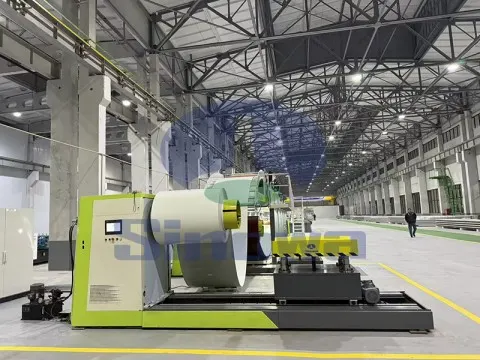
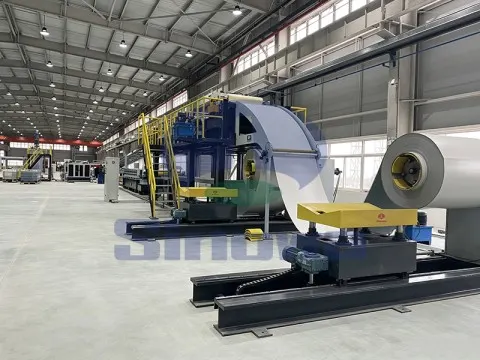
A complete polyurethane sandwich panel production line consists of multiple interconnected functional units, each undertaking independent production tasks while maintaining synchronous operation to ensure the continuity of the overall production process. The raw material feeding unit serves as the starting point of the entire production workflow, mainly responsible for the orderly transportation of surface base materials and polyurethane chemical raw materials. Metal sheets, fiber cement boards, and other common surface materials are placed on the feeding support structure, with auxiliary transmission components controlling the feeding speed and horizontal stability of the base materials to avoid positional deviation during transportation. For polyurethane raw materials, two types of liquid chemical components are stored in independent sealed tanks, equipped with dedicated delivery pipelines and metering power components. The internal circulation design of the storage tanks maintains the fluid activity of chemical raw materials, preventing component precipitation and viscosity changes that may affect subsequent foaming reactions. The collaborative operation of the feeding system eliminates manual intervention in raw material handling, realizing automated and uninterrupted material supply for the production line.
The foaming and mixing unit is the core functional module that determines the thermal insulation performance and internal structural density of polyurethane sandwich panels. This unit is equipped with precision metering and conveying components driven by variable frequency power devices, which independently adjust the delivery flow of different chemical raw materials according to the preset production parameters. After being quantitatively transported to the mixing structure, the raw materials undergo high-speed stirring and uniform fusion to form a homogeneous mixed liquid. The internal structural design of the mixing chamber avoids dead mixing zones, ensuring that each component is fully reacted without local proportion imbalance. The uniformly mixed polyurethane liquid is evenly coated on the surface of the lower base material through a reciprocating moving distribution structure. The linear movement of the distribution device covers the entire width of the base material, realizing flat and consistent liquid spreading, which lays a foundation for the formation of a dense and uniform foam core layer in the later stage. The foaming reaction process is dynamically regulated by auxiliary temperature control components to maintain a stable reaction environment and avoid abnormal foam pore structures caused by excessive or insufficient reaction temperature.
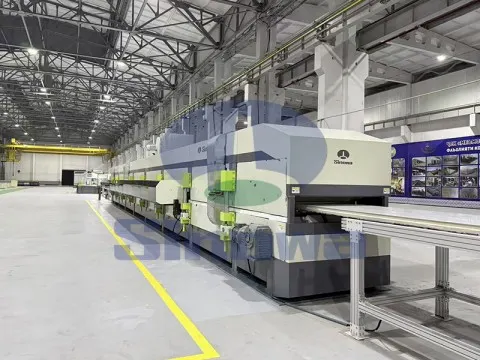
The composite molding unit undertakes the key process of bonding the upper and lower base materials with the polyurethane foam core layer. The processed base materials coated with polyurethane mixed liquid are sent to the double-belt pressing structure, where constant pressure and constant temperature environments are created inside the closed molding space. The adjustable pressure system applies uniform vertical pressure to the composite materials, eliminating tiny gaps between the core layer and the surface materials and enhancing the overall bonding firmness of the sandwich panel. The internal heating circulation structure of the pressing equipment maintains a stable curing temperature, which accelerates the foaming and solidification reaction of polyurethane materials. During the continuous molding process, the transmission speed of the double-belt structure keeps synchronized with the upstream feeding and mixing procedures to ensure the consistency of panel thickness and structural density. For production demands of different material textures and hardness, the pressure output range and heating temperature gradient of the molding unit can be moderately adjusted to adapt to the composite processing requirements of soft and hard base materials, effectively preventing surface deformation and internal bubble defects of finished panels.
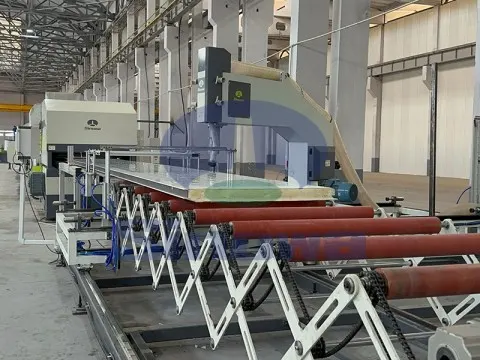
After completing composite molding, the preliminary finished polyurethane sandwich panels enter the trimming and shaping unit for precise dimension optimization. The continuous molded panels have irregular edges due to the spreading range of raw materials and transmission errors, so the trimming components on both sides of the production line cut off the excess edge materials to ensure that the width of each panel meets the preset production standards. The high-speed rotating cutting accessories adopt smooth cutting structures to avoid burrs and cracks on the panel section, maintaining the flatness and aesthetic degree of the panel edges. Meanwhile, the surface flattening and shaping components eliminate tiny stress wrinkles generated during the pressing process, further optimizing the surface flatness of finished panels. Some production lines are also equipped with surface cleaning structures to remove residual chemical attachments and floating dust on the panel surface, improving the surface finish of products and laying a good foundation for subsequent storage and transportation.
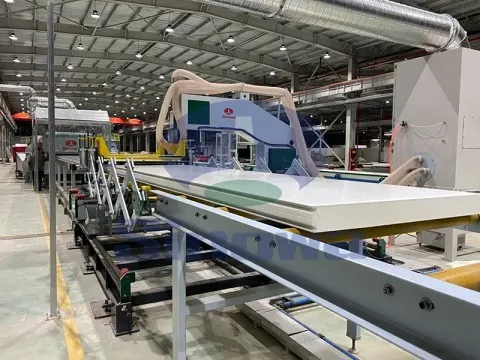
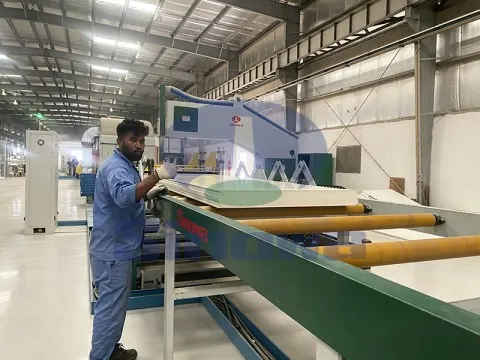
The final stage of the production process includes fixed-length cutting and automatic stacking procedures. The continuously produced long-strip panels are transmitted to the cutting area, and the intelligent induction system identifies the transmission position of the panels to trigger fixed-length cutting actions. The cutting power components maintain stable running speed to ensure smooth and neat cutting sections without damaging the internal foam structure. The cut finished panels are transported to the stacking area through the auxiliary conveying platform, and the mechanical stacking structure automatically completes orderly stacking and arrangement according to the preset stacking specifications. This automated stacking mode replaces manual carrying operation, reduces the probability of surface scratch damage caused by human contact, and improves the neatness of finished product storage. The entire production process forms a closed-loop assembly line from raw material feeding to finished product storage, realizing seamless connection of all links and minimizing material transfer intervals between processes.
Excellent polyurethane sandwich panel machine manufacturers focus on the overall stability and durable operation of equipment in the structural design process, and carry out targeted optimization for different production environments. The main frame of the equipment is made of high-strength metal materials with integrated welding processing technology, which enhances the overall structural rigidity and anti-vibration ability of the production line. During long-term continuous operation, the rigid frame structure can effectively resist mechanical vibration generated by high-speed transmission and cutting components, reducing the position deviation of precision parts and lowering the failure rate of equipment operation. All transmission and rotating parts are equipped with sealed protection structures to isolate external dust, moisture, and corrosive substances, avoiding component aging and wear caused by environmental interference. For the chemical raw material transportation pipeline, anti-corrosion and high-temperature resistant materials are selected to adapt to the chemical characteristics of polyurethane mixtures, extending the service life of pipeline components and reducing the frequency of pipeline blockage and leakage failures.
Intelligent control optimization is an important development feature of modern polyurethane sandwich panel production equipment. Mature manufacturing manufacturers adopt centralized integrated control systems to realize one-click parameter setting and dynamic monitoring of the entire production line. Operators can adjust feeding speed, raw material mixing ratio, molding pressure, curing temperature, and cutting size through the human-computer interaction interface. The built-in data induction module collects real-time operating data of each functional unit, including component operating temperature, transmission speed, and raw material consumption. When abnormal data such as flow deviation and temperature fluctuation occurs, the system will automatically trigger early warning prompts and carry out mild parameter correction to ensure the stability of the production process. The synchronous linkage control logic between different units avoids production stagnation caused by asynchronous operation of a single component, effectively improving the overall continuous production capacity of the equipment. In addition, the simplified operation logic reduces the professional threshold for equipment operation, enabling ordinary operators to master daily production operations after simple training.
In terms of production performance, well-designed polyurethane sandwich panel machines have outstanding advantages in production efficiency and product consistency. The continuous circulating production mode enables the equipment to maintain stable operating efficiency for a long time, and the optimized transmission structure effectively shortens the material transition interval between processes. The precision metering system controls the mixing proportion of chemical raw materials within a stable fluctuation range, ensuring that the foam density and thermal insulation performance of each batch of panels remain consistent. The high-precision pressing and cutting structure keeps the thickness error and edge flatness of finished panels within a tiny range, which improves the assembly compatibility of panels in engineering construction. Meanwhile, the energy-saving optimization design of the equipment reduces invalid energy consumption in the heating and transmission process. The circulating heating structure recycles residual heat generated during curing, lowering the comprehensive energy consumption of unit products and helping production enterprises reduce daily operating costs.
Professional manufacturers also provide targeted personalized optimization solutions according to the differentiated production needs of downstream enterprises. Different application scenarios have diverse requirements for the thickness, surface material, and hardness of polyurethane sandwich panels. Based on this, manufacturers can adjust the internal spacing of the pressing structure to adapt to the production of panels with different thickness specifications. They can also replace the surface contact accessories of the transmission unit to meet the conveying processing requirements of metal plates, non-metal plates, and composite decorative plates. For special production environments such as low-temperature workshops and high-dust factories, the equipment can be modified with low-temperature anti-freezing and dust-proof sealing structures to enhance environmental adaptability. This customizable production optimization capability enables the equipment to cover multiple application fields such as industrial factory buildings, cold storage buildings, and temporary prefabricated buildings, expanding the applicable scope of production equipment.
Daily maintenance and after-sales technical support are key service links that excellent polyurethane sandwich panel machine manufacturers attach importance to. In the equipment design stage, manufacturers simplify the disassembly and assembly structure of vulnerable parts, facilitating daily cleaning, lubrication, and replacement of accessories by maintenance personnel. The standardized component installation mode ensures the compatibility of replacement parts, reducing the difficulty of later equipment maintenance. In terms of after-sales service, manufacturers provide systematic equipment operation guidelines and daily maintenance specifications to help users establish a scientific equipment management system. During the long-term operation of the equipment, professional technical personnel can provide remote operation guidance and on-site fault maintenance services to quickly solve equipment operation failures and avoid long-term production stagnation caused by equipment faults. Regular equipment inspection and parameter debugging services can correct minor performance deviations generated during long-term operation, maintaining the long-term stable production capacity of the equipment.
From the perspective of industrial development, polyurethane sandwich panel machine manufacturing is gradually developing towards intelligence, environmental protection, and high integration. With the continuous improvement of industrial environmental protection standards, manufacturers are optimizing the internal circulation structure of equipment to reduce volatile gas emission during the foaming reaction. The closed raw material transportation and mixing system minimizes the contact between chemical raw materials and the external environment, realizing clean and environmentally friendly production. The integrated structural design integrates multiple functional units into a compact overall framework, reducing the floor space of the production line and optimizing the workshop space utilization rate. In addition, the combination of intelligent sensing and data analysis technology enables the equipment to record production data for a long time, providing effective data support for production enterprises to optimize production plans and control product quality. With the continuous expansion of the global composite building material market, the market demand for high-performance polyurethane sandwich panel production equipment will continue to grow, driving manufacturers to continuously carry out technological innovation and structural upgrading.
In conclusion, polyurethane sandwich panel machine, as professional processing equipment for composite thermal insulation panels, relies on its scientific structural layout, mature production technology, and flexible application performance to occupy an important position in the modern building material manufacturing industry. Professional manufacturers rely on rich manufacturing experience and continuous technological research and development to optimize every detail of equipment design, production, and after-sales service, ensuring that the equipment can efficiently and stably complete panel production tasks. In the future, with the deep integration of industrial intelligent technology and environmental protection concepts, such production equipment will achieve greater breakthroughs in energy-saving consumption reduction, intelligent control, and personalized customization. Driven by high-quality manufacturing equipment, polyurethane sandwich panels will be more widely used in construction, cold chain logistics, industrial manufacturing, and other fields, providing reliable material support for the high-quality development of the global construction industry. The continuous progress of sandwich panel machine manufacturing technology will also further promote the standardized and intelligent development of the entire composite building material industry chain.
Sinowa is a professional manufacturer of sandwich panel machine in china, we provide diversified and high-performance sandwich panel production lines, including fully automatic continuous PU sandwich panel line and customized special lines to meet mass production and personalized order demands. These sandwich panel lines support processing multiple foam core materials, such as PU, PIR, mineral wool, rock wool and glass wool, covering different insulation and fireproof standards.
Featuring stable operation, high efficiency, energy saving and easy maintenance, our PU sandwich panel line deliver sandwich panels with excellent thermal insulation, fire resistance, sound insulation and lightweight durability. The finished panels are widely applied in industrial workshops, warehouse roofing and wall cladding, cold storage insulation, serving global construction and industrial insulation markets.
https://www.cnsinowa.com/sandwich-panel-machines/polyurethane-sandwich-panel-machine-manufacturer.html