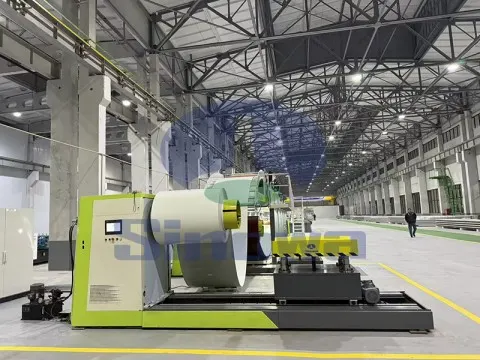
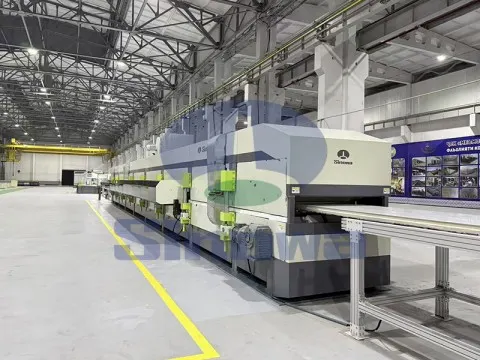
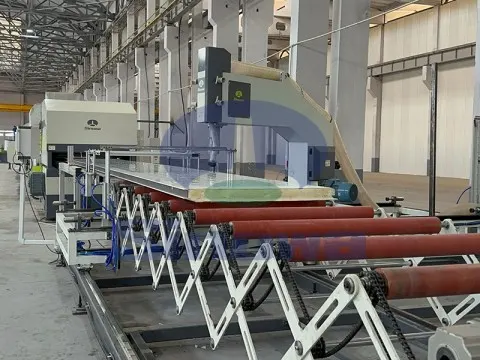
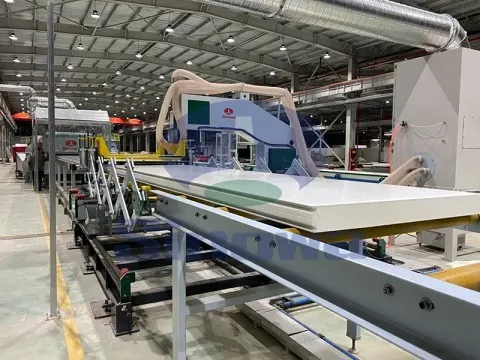
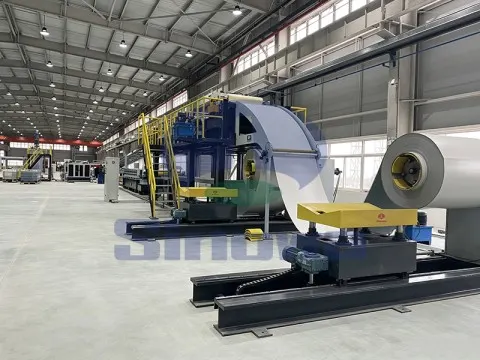
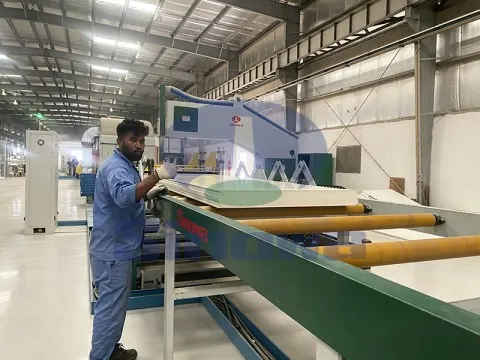
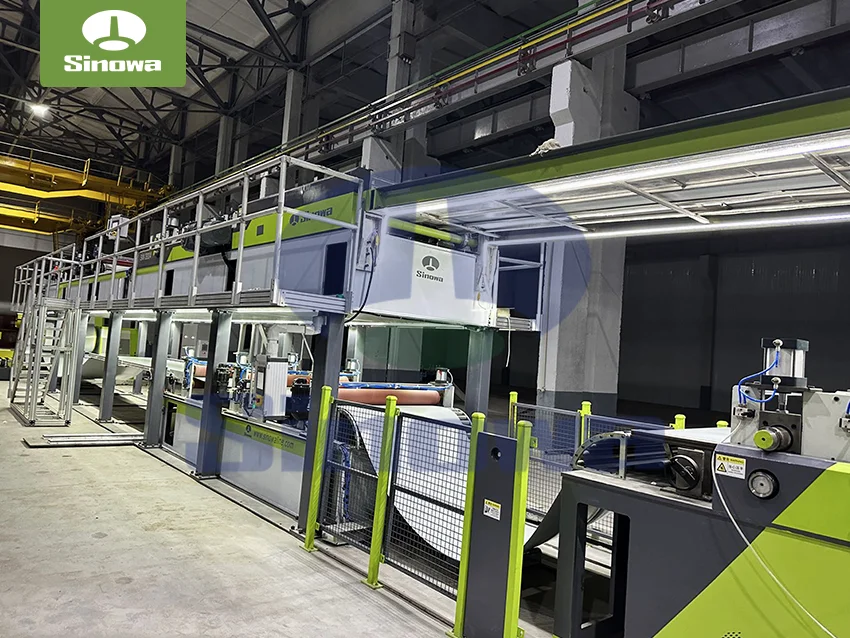
 sandwich panel line
The noise generated by the polyurethane sandwich panel line during operation mainly comes from several key links, including the operation of mechanical equipment, the mixing and foaming of raw materials, the transmission of panels, and the cutting and trimming processes. Each of these links produces distinct noise characteristics: mechanical noise is usually low-frequency and continuous, generated by the rotation of motors, gears, and bearings; foaming noise is caused by the violent reaction of polyurethane raw materials and the release of gas; transmission noise comes from the friction between the panel and the conveyor belt, as well as the vibration of the transmission mechanism; cutting noise is high-frequency and intermittent, produced when the cutting tool contacts the panel. Without effective noise reduction measures, the noise level on the production site can easily exceed the safe standard, leading to fatigue, hearing loss, and other health problems for workers after long-term exposure. Additionally, excessive noise can affect the surrounding environment, causing disturbances to nearby residents and enterprises, thus bringing potential legal and public relations risks to the production unit.
The PU sandwich panel line with a noise reduction device solves these problems through a series of scientific and reasonable design measures, achieving effective control of noise while ensuring production efficiency. The core design concept of this type of production line is to reduce noise from the source, block noise transmission, and absorb residual noise, forming a comprehensive noise reduction system. Unlike traditional noise reduction methods that simply add sound insulation covers, the advanced noise reduction production line integrates noise reduction design into every link of equipment manufacturing and production process, making noise reduction more efficient, stable, and durable.
In terms of noise reduction from the source, the production line adopts optimized mechanical structure design and high-performance noise-reducing components. For example, the motors, pumps, and other power equipment used in the production line are all low-noise models, which reduce the noise generated by the operation of the equipment itself through advanced manufacturing processes and precision assembly. The gearboxes and transmission shafts are equipped with shock-absorbing and noise-reducing sleeves made of high-quality rubber or polyurethane materials, which can effectively reduce the vibration and noise caused by gear meshing and shaft rotation. In the raw material mixing and foaming link, the mixing head is designed with a buffer structure, which slows down the speed of raw material mixing and reduces the noise generated by the violent reaction of the materials. At the same time, the foaming chamber is equipped with a sound-absorbing lining, which can absorb the noise generated during the foaming process in a timely manner, preventing it from spreading to the outside.
Blocking noise transmission is another key link in the noise reduction design of the production line. The entire production line is enclosed with a sound insulation cover made of high-density sound insulation materials, which can effectively block the spread of noise from the inside of the equipment to the outside. The sound insulation cover is made of a composite structure, including an outer layer of high-strength steel plate, a middle layer of sound insulation cotton, and an inner layer of sound-absorbing felt. This composite structure has excellent sound insulation performance, which can isolate most of the noise generated by the production line. The joints of the sound insulation cover are sealed with sound insulation strips to avoid noise leakage through gaps. In addition, the conveyor belt of the production line is made of low-noise materials, and the surface is treated with anti-friction technology, which reduces the friction noise between the panel and the conveyor belt. The support rollers of the conveyor belt are also equipped with shock-absorbing bearings, which can reduce the vibration of the conveyor belt during operation and further reduce noise.
Absorbing residual noise is the supplement and improvement of the noise reduction system, ensuring that the noise level on the production site meets the relevant standards. The inner wall of the sound insulation cover is attached with a high-efficiency sound-absorbing material, which can absorb the residual noise inside the cover, reducing the reflection and resonance of noise. The sound-absorbing material is usually made of porous materials with good sound absorption performance, such as glass fiber, rock wool, or polyurethane foam, which can convert the sound energy into heat energy through the friction and collision of air molecules in the pores, thereby achieving the purpose of noise reduction. In addition, the production line is equipped with a muffler at the exhaust port of the foaming chamber and the cooling system, which can reduce the noise generated by the exhaust process. The muffler adopts a resistive muffling structure, which can effectively absorb high-frequency noise and reduce the noise intensity at the exhaust port.
In addition to the above noise reduction measures, the polyurethane sandwich panel line with a noise reduction device also adopts an intelligent control system to further optimize the noise reduction effect. The intelligent control system can monitor the noise level of the production line in real-time through noise sensors installed at various key positions. When the noise level exceeds the set standard, the system will automatically adjust the operation parameters of the equipment, such as reducing the operation speed of the motor, adjusting the mixing ratio of raw materials, or starting the auxiliary noise reduction device, to reduce the noise generated by the production line. At the same time, the system can record the noise data of the production line, providing a basis for the maintenance and optimization of the noise reduction device. The intelligent control system not only improves the automation level of the production line but also makes the noise reduction effect more stable and reliable.
The application of the polyurethane sandwich panel line with a noise reduction device brings significant benefits to production enterprises, workers, and the environment. For production enterprises, the low-noise production line can reduce the risk of environmental pollution and legal disputes, improving the corporate image and social responsibility. At the same time, the noise reduction device can reduce the vibration of the equipment, extending the service life of the equipment and reducing maintenance costs. For workers, the low-noise working environment can effectively protect their physical and mental health, reduce work fatigue, and improve work efficiency and work satisfaction. For the environment, the reduction of noise pollution can improve the quality of the surrounding environment, reducing the impact on nearby residents and enterprises.
In practical application, the polyurethane sandwich panel line with a noise reduction device has good adaptability and can be applied to the production of various types of polyurethane sandwich panels, including panels used for exterior walls, roofs, cold storage, and interior decoration. The production line can adjust the production parameters according to the different specifications and performance requirements of the panels, ensuring the quality of the products while maintaining the noise reduction effect. For example, in the production of cold storage panels, the production line needs to ensure the thermal insulation performance of the panels, and the noise reduction device can still maintain effective noise control under the condition of adjusting the foaming temperature and speed. In the production of exterior wall panels, the production line needs to ensure the structural strength and weather resistance of the panels, and the noise reduction measures will not affect the stability and efficiency of the production process.
The development and popularization of the polyurethane sandwich panel line with a noise reduction device are also in line with the global trend of green and low-carbon development. With the increasing emphasis on environmental protection and occupational health, more and more production enterprises begin to pay attention to the noise control of production equipment. The low-noise production line not only meets the relevant environmental protection and occupational health standards but also helps enterprises achieve energy conservation and emission reduction, improving the core competitiveness of enterprises. In the future, with the continuous progress of science and technology, the noise reduction technology of the polyurethane sandwich panel line will be further optimized and improved. New noise reduction materials and technologies will be continuously applied to the production line, making the noise reduction effect more excellent, and the production efficiency and product quality will be further improved.
It should be noted that the maintenance and maintenance of the noise reduction device are crucial to ensuring its long-term and stable operation. During the operation of the production line, enterprises need to regularly inspect and clean the noise reduction components, such as the sound insulation cover, sound-absorbing material, and muffler. For the sound-absorbing material that has been used for a long time and has reduced sound absorption performance, it should be replaced in a timely manner to ensure the noise reduction effect. At the same time, the operation and maintenance personnel should be trained to master the correct use and maintenance methods of the noise reduction device, so as to avoid the damage of the noise reduction device caused by improper operation. In addition, enterprises should formulate a scientific maintenance plan according to the actual operation of the production line, regularly check the operation status of the noise reduction device, and deal with potential problems in a timely manner.
In conclusion, the polyurethane sandwich panel line with a noise reduction device is a new type of production equipment that integrates efficiency, environmental protection, and humanization. It effectively solves the noise problem of traditional production lines through a comprehensive noise reduction system, protecting the physical and mental health of workers, reducing environmental pollution, and bringing significant economic and social benefits to production enterprises. With the continuous development of the building materials industry and the increasing demand for environmental protection and occupational health, the polyurethane sandwich panel line with a noise reduction device will have a broader application prospect. It will play an increasingly important role in promoting the sustainable development of the building materials industry and building a green and low-carbon production environment.
The design and improvement of the noise reduction device are closely combined with the production process of the polyurethane sandwich panel, ensuring that the noise reduction measures do not affect the production efficiency and product quality. For example, in the cutting link, the noise reduction device adopts a silent cutting tool and a shock-absorbing fixture, which not only reduces the cutting noise but also ensures the cutting precision and speed of the panel. In the transmission link, the use of low-noise conveyor belts and shock-absorbing rollers not only reduces noise but also ensures the stable transmission of the panel, avoiding the damage of the panel caused by vibration. The integration of noise reduction design and production process makes the production line more efficient, stable, and reliable.
Another advantage of the polyurethane sandwich panel line with a noise reduction device is its energy-saving performance. The low-noise motors and equipment used in the production line have higher energy efficiency, which can reduce energy consumption while reducing noise. The sound insulation cover and sound-absorbing material not only have noise reduction effects but also have a certain thermal insulation performance, which can reduce the heat loss of the production line, saving energy for the enterprise. In the context of global energy conservation and emission reduction, this energy-saving advantage further enhances the competitiveness of the production line.
In the process of popularizing the polyurethane sandwich panel line with a noise reduction device, it is also necessary to pay attention to the customization of the production line according to the actual needs of the enterprise. Different enterprises have different production scales, product types, and on-site environments, so the requirements for noise reduction effect and production efficiency are also different. Manufacturers of the production line can customize the noise reduction device and production parameters according to the specific needs of the enterprise, ensuring that the production line can meet the actual needs of the enterprise. For example, for enterprises with small production scales, a simple and efficient noise reduction system can be adopted to reduce investment costs; for enterprises with large production scales and high noise requirements, a more advanced and comprehensive noise reduction system can be adopted to ensure the noise reduction effect.
With the continuous improvement of environmental protection standards and occupational health requirements in various countries, the polyurethane sandwich panel line with a noise reduction device will become the mainstream equipment in the field of polyurethane sandwich panel production. It not only conforms to the development trend of the times but also brings practical benefits to enterprises and society. In the future, with the continuous innovation of noise reduction technology and the continuous improvement of production line performance, the polyurethane sandwich panel line with a noise reduction device will play a more important role in the building materials industry, promoting the healthy and sustainable development of the industry.
Sinowa is a professional manufacturer of sandwich panel machine in china, we provide diversified and high-performance sandwich panel production lines, including fully automatic continuous PU sandwich panel line and customized special lines to meet mass production and personalized order demands. These sandwich panel lines support processing multiple foam core materials, such as PU, PIR, mineral wool, rock wool and glass wool, covering different insulation and fireproof standards.
Featuring stable operation, high efficiency, energy saving and easy maintenance, our PU sandwich panel line deliver sandwich panels with excellent thermal insulation, fire resistance, sound insulation and lightweight durability. The finished panels are widely applied in industrial workshops, warehouse roofing and wall cladding, cold storage insulation, serving global construction and industrial insulation markets.
https://www.cnsinowa.com/sandwich-panel-machines/polyurethane-sandwich-panel-line-with-noise-reduction-device.html