sinowa@sinowa.cn
+0086 151 0610 6366

Sandwich Panel Machines

Home > Sandwich Panel Machines > Rock Wool Sandwich Panel Production Line For Curtain Wall

Rock Wool Sandwich Panel Production Line For Curtain Wall

Dec 27, 2025

In the modern construction industry, the pursuit of energy efficiency, safety and aesthetic appeal has driven the continuous innovation of building materials. Among them, rock wool sandwich panels have become a preferred choice for curtain wall systems due to their excellent thermal insulation, fire resistance and sound insulation performance. The production quality and efficiency of these panels are directly determined by the advanced nature of the production line.

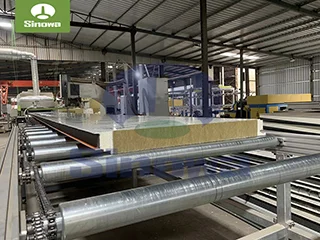
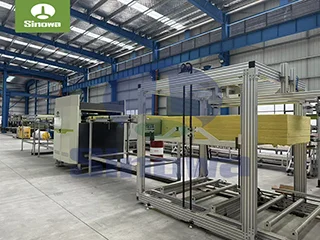
Rock Wool Sandwich Panel Production Line For Curtain Wallsandwich panel line

Curtain wall systems, as the "outer clothing" of modern buildings, not only need to meet the aesthetic requirements of the building's appearance but also bear important functions such as thermal insulation, wind resistance, and fire protection. Rock wool sandwich panels, composed of two outer metal panels and a middle rock wool core material, have unique performance advantages that match the functional needs of curtain walls. The rock wool core material is made of natural basalt and other materials through high-temperature melting, fiberization, and other processes, which has inherent fire resistance and thermal insulation properties. The outer metal panels, usually aluminum or steel plates, have good mechanical strength and corrosion resistance. The combination of the two materials makes the rock wool sandwich panel have excellent comprehensive performance. However, the realization of these performance advantages is inseparable from the precise control of the production line. A well-designed production line can ensure the uniform combination of the core material and the outer panels, maintain the flatness of the panel surface, and ensure the stability of the product's performance indicators. Therefore, the rock wool sandwich panel production line for curtain walls is not just a simple assembly of equipment, but a complex system integrating material processing, precision bonding, and quality inspection.

Core Technological Components of the Production Line

The rock wool sandwich panel production line for curtain walls is composed of multiple functional units, each of which undertakes a specific production task, and the coordination between the units ensures the smooth progress of the entire production process. The core technological components mainly include the feeding unit, rock wool core material processing unit, metal panel processing unit, bonding and compounding unit, cutting unit, and quality inspection unit. Each unit is equipped with advanced technical equipment and control systems to ensure the precision and efficiency of production.

The feeding unit is the starting part of the production line, responsible for the continuous and stable supply of raw materials. The raw materials involved here include rock wool blankets (core material), metal coils (outer panels), and adhesives. The feeding unit for metal coils is usually equipped with a decoiler, a leveling machine, and a feeding guide device. The decoiler can stably uncoil the metal coils, which are often in a rolled state during transportation and storage. The leveling machine is used to correct the deformation of the metal sheets caused by rolling, ensuring that the metal panels entering the next process are flat and smooth. The feeding speed of the metal coils can be adjusted according to the production rhythm, and the feeding guide device ensures that the metal sheets move along the correct path, avoiding deviation. For the rock wool core material, the feeding unit needs to accurately convey the rock wool blankets to the processing unit. Considering that rock wool fibers are easy to fly and cause environmental pollution, the feeding unit for rock wool is usually equipped with a closed conveying device and a dust removal system to ensure the cleanliness of the production environment and the health of workers.

The rock wool core material processing unit is a key part that determines the performance of the final product. The main tasks of this unit include rock wool cutting, leveling, and density adjustment. The rock wool blankets purchased from the raw material suppliers are usually of a fixed width and thickness, and need to be cut according to the size requirements of the curtain wall panels. The cutting equipment in the production line adopts precision cutting technology, which can realize the cutting of rock wool blankets in both horizontal and vertical directions. The cutting blade is made of high-hardness materials, which can ensure the flatness of the cutting surface and avoid the phenomenon of fiber breakage and scattering. After cutting, the rock wool core material needs to go through the leveling process to eliminate the unevenness caused by cutting and ensure that the thickness of the core material is uniform. In addition, according to the different thermal insulation and mechanical performance requirements of curtain walls in different regions and application scenarios, the production line can adjust the density of the rock wool core material. This adjustment is usually achieved by controlling the pressure of the compression roller during the processing of the rock wool core material, so that the rock wool core material can meet the different performance requirements of the curtain wall system.

The metal panel processing unit is responsible for the pre-processing of the outer metal panels, including surface cleaning, coating, and profiling. The surface of the metal coils may have oil stains, dust, and other impurities during transportation and storage, which will affect the bonding effect between the metal panels and the adhesive. Therefore, the surface cleaning equipment in the processing unit uses chemical cleaning or physical cleaning methods to remove impurities on the surface of the metal panels. After cleaning, the metal panels enter the coating process. The coating can improve the corrosion resistance and weather resistance of the metal panels, making the curtain wall system suitable for different natural environments such as high humidity, strong ultraviolet radiation, and coastal areas. The coating process usually adopts roller coating or spraying technology, and the thickness of the coating can be precisely controlled according to the design requirements. For some curtain wall panels with special shapes, the metal panel processing unit is also equipped with a profiling machine, which can process the metal panels into various shapes such as wave shape and corrugated shape according to the design drawings, meeting the aesthetic requirements of different building curtain walls.

The bonding and compounding unit is the core link of the entire production line, which realizes the combination of the metal panels and the rock wool core material. The key technology of this unit is the application of adhesive and the control of compound pressure and temperature. The adhesive used for bonding rock wool sandwich panels needs to have good bonding strength, high-temperature resistance, and aging resistance. The production line usually adopts automatic glue application equipment, which can evenly apply the adhesive on the surface of the metal panels or the rock wool core material. The amount of glue application can be precisely adjusted according to the thickness of the panels and the performance requirements, avoiding the problems of insufficient bonding strength caused by too little glue or waste caused by too much glue. After the glue application is completed, the metal panels and the rock wool core material are sent to the compound roller together. The compound roller applies a certain pressure to make the metal panels and the rock wool core material closely bonded. At the same time, the heating device in the compound unit heats the adhesive to accelerate the curing speed of the adhesive and improve the bonding quality. The control of compound pressure and temperature is crucial. Too much pressure may cause the rock wool core material to be crushed, reducing the thermal insulation performance; too low temperature will affect the curing effect of the adhesive, leading to poor bonding strength.

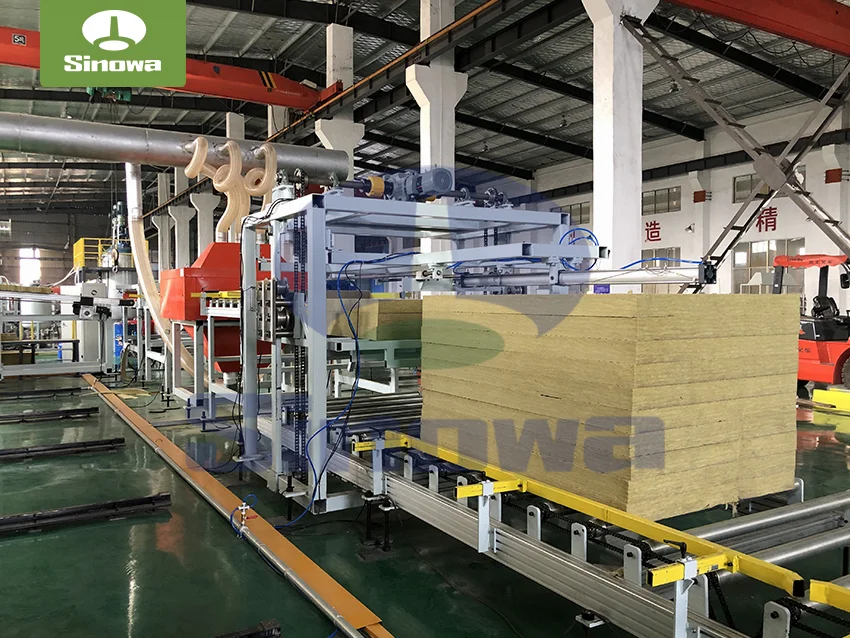
The cutting unit is responsible for cutting the continuous compounded rock wool sandwich panels into finished products of specified lengths. The cutting equipment in the production line adopts numerical control cutting technology, which can realize precise cutting according to the preset length parameters. The cutting blade is equipped with a cooling system to avoid the deformation of the metal panels caused by the high temperature generated during the cutting process. After cutting, the finished products are sent to the conveying platform, and the cutting debris and dust generated during the cutting process are collected and processed by the dust removal system to ensure the cleanliness of the production site. In addition, some advanced production lines are also equipped with automatic stacking equipment, which can stack the cut finished products neatly, improving the efficiency of subsequent storage and transportation.

The quality inspection unit is an important guarantee for the quality of the finished products. This unit is equipped with a variety of detection equipment to conduct comprehensive inspections on the finished rock wool sandwich panels. The main inspection items include the thickness of the panels, the flatness of the surface, the bonding strength between the metal panels and the core material, the density of the rock wool core material, and the appearance quality. The thickness detection uses a precision thickness gauge to ensure that the thickness of the panels meets the design requirements; the surface flatness detection uses a laser flatness detector to quickly and accurately detect the flatness of the panel surface; the bonding strength detection adopts a sampling inspection method, and the sampled panels are subjected to tensile and shear tests to ensure that the bonding strength meets the safety standards. For the appearance quality, the inspection is carried out through manual visual inspection and automatic image recognition technology, which can detect defects such as scratches, indentations, and color differences on the surface of the panels. The unqualified products detected by the quality inspection unit will be removed from the production line in time, and the reasons for the unqualified products will be analyzed to adjust the production parameters, ensuring the stability of the product quality.

Detailed Production Process of the Production Line

The production process of the rock wool sandwich panel production line for curtain walls is a continuous and systematic process, which can be divided into six main stages: raw material preparation, metal panel pre-processing, rock wool core material processing, bonding and compounding, finished product cutting, and quality inspection. Each stage is closely connected, and the quality control of each link directly affects the final product quality.

The first stage is raw material preparation. Before the production starts, the staff needs to check the quality of the raw materials. For metal coils, check whether their thickness, width, and mechanical properties meet the requirements; for rock wool blankets, check whether their density, thermal conductivity, and fire resistance performance meet the standards; for adhesives, check whether their viscosity, curing time, and bonding strength meet the technical requirements. After the quality inspection is passed, the metal coils are hoisted to the decoiler of the feeding unit, the rock wool blankets are placed in the closed conveying device, and the adhesives are poured into the glue storage tank of the automatic glue application equipment. At the same time, the staff sets the production parameters according to the design requirements of the curtain wall panels, such as the length and width of the panels, the thickness of the metal panels, the thickness and density of the rock wool core material, and the amount of glue application.

The second stage is metal panel pre-processing. The metal coils on the decoiler are uncoiled and sent to the leveling machine. The leveling machine corrects the deformation of the metal sheets through the extrusion of multiple rollers, making the metal sheets flat. Then, the metal sheets are sent to the surface cleaning equipment, where oil stains and dust on the surface are removed. After cleaning, the metal sheets enter the coating line. The coating equipment sprays or rolls the coating evenly on the surface of the metal sheets. The coated metal sheets are sent to the drying oven for drying, so that the coating is firmly attached to the surface of the metal sheets. If the curtain wall panels need to have a special shape, the dried metal sheets are sent to the profiling machine for profiling processing, and the metal sheets are processed into the required shape through the stamping and bending of the profiling die.

The third stage is rock wool core material processing. The rock wool blankets in the closed conveying device are sent to the cutting machine. The cutting machine cuts the rock wool blankets into the required width and thickness according to the set parameters. During the cutting process, the dust removal system works simultaneously to collect the flying rock wool fibers. After cutting, the rock wool core material is sent to the leveling equipment to eliminate the unevenness caused by cutting. Then, the rock wool core material is sent to the density adjustment device, and the density of the rock wool core material is adjusted by controlling the pressure of the compression roller to meet the thermal insulation and mechanical performance requirements of the curtain wall panels. After the processing is completed, the rock wool core material is sent to the bonding and compounding unit, waiting for compounding with the metal panels.

The fourth stage is bonding and compounding. The pre-processed metal panels (upper and lower panels) and the processed rock wool core material are sent to the compound roller at the same time. Before entering the compound roller, the automatic glue application equipment applies the adhesive evenly on the inner surface of the metal panels. When the metal panels and the rock wool core material pass through the compound roller, the compound roller applies a certain pressure to make the three layers of materials closely bonded. At the same time, the heating device around the compound roller heats the adhesive to accelerate the curing of the adhesive. The temperature and pressure during the compounding process are precisely controlled by the control system. The temperature is usually set between 80°C and 120°C, and the pressure is adjusted according to the thickness and density of the rock wool core material. After compounding, the continuous rock wool sandwich panel is formed, which is then sent to the cooling section for cooling. The cooling section uses air cooling or water cooling to reduce the temperature of the compounded panels, so that the adhesive is completely cured and the structure of the panels is stabilized.

The fifth stage is finished product cutting. The cooled continuous rock wool sandwich panels are sent to the numerical control cutting machine. The cutting machine cuts the continuous panels into finished products of specified lengths according to the preset parameters. During the cutting process, the cooling system of the cutting blade cools the blade to avoid the deformation of the metal panels caused by high temperature. After cutting, the finished products are sent to the automatic stacking platform by the conveying belt. The stacking equipment stacks the finished products neatly according to a certain number, and marks each stack of products with information such as production date and product specifications to facilitate subsequent storage and transportation.

The sixth stage is quality inspection. The stacked finished products are sent to the quality inspection area. The staff uses professional detection equipment to inspect the thickness, flatness, bonding strength, and other indicators of the products. For the thickness inspection, the precision thickness gauge is used to measure multiple points of each panel to ensure that the thickness error is within the allowable range; for the flatness inspection, the laser flatness detector is used to scan the surface of the panel, and the detection data is transmitted to the control system for analysis. If the flatness does not meet the requirements, the product is judged as unqualified; for the bonding strength inspection, the staff randomly samples the finished products, and uses the tensile testing machine to test the bonding strength between the metal panel and the rock wool core material. If the bonding strength is lower than the standard value, the batch of products will be re-inspected, and the production parameters will be adjusted. In addition, the staff also conducts visual inspections on the appearance of the products, checking for scratches, indentations, color differences, and other defects. The qualified products after inspection are sent to the warehouse for storage, while the unqualified products are sorted out for rework or scrapping.

Performance Advantages Brought by Advanced Production Technology

The advanced production technology of the rock wool sandwich panel production line for curtain walls not only improves the production efficiency but also greatly enhances the performance of the finished products. Compared with the traditional production mode, the products produced by the advanced production line have obvious advantages in thermal insulation, fire resistance, mechanical strength, and durability, which can better meet the functional requirements of modern curtain wall systems.

In terms of thermal insulation performance, the precise control of the production line on the density and thickness of the rock wool core material ensures the stability of the thermal conductivity of the panels. The rock wool core material processed by the production line has a uniform density, and there are no gaps or uneven density areas. This makes the heat transfer through the panel more uniform and effectively reduces the heat loss of the building. The thermal conductivity of the rock wool sandwich panels produced by the advanced production line can be as low as 0.038 W/(m·K), which is far lower than that of traditional building materials. This excellent thermal insulation performance can help buildings reduce energy consumption for heating and cooling, meet the requirements of energy-saving buildings, and reduce the operating costs of the building.

In terms of fire resistance performance, the advanced production line ensures the purity of the rock wool core material and the firm bonding between the core material and the metal panels. The rock wool core material is an inorganic material that does not burn, and its fire resistance limit can reach more than 2 hours. During the production process, the production line avoids the mixing of flammable impurities in the rock wool core material, ensuring the inherent fire resistance of the core material. At the same time, the firm bonding between the metal panels and the rock wool core material prevents the core material from falling off during the fire, ensuring that the panel can maintain its structural integrity for a long time and play a role in fire separation. This excellent fire resistance performance can effectively improve the fire safety level of the building and protect the lives and property safety of the people in the building.

In terms of mechanical strength, the pre-processing of the metal panels and the precise compounding technology of the production line enhance the overall mechanical performance of the rock wool sandwich panels. The metal panels after leveling and profiling have good flatness and mechanical strength, and the firm bonding between the metal panels and the rock wool core material makes the panel form a whole, which can bear greater wind pressure and impact force. The rock wool sandwich panels produced by the production line have a bending strength of more than 15 MPa and a compressive strength of more than 25 MPa, which can meet the mechanical performance requirements of curtain wall systems in different regions. Even in areas with strong winds and frequent earthquakes, the panels can maintain their structural stability and avoid damage.

In terms of durability, the coating technology of the production line improves the corrosion resistance and weather resistance of the metal panels. The coating on the surface of the metal panels can effectively isolate the metal from the external environment, preventing the metal from being corroded by moisture, oxygen, and other substances. The coating has good aging resistance and can maintain its performance stability under long-term ultraviolet radiation and temperature changes. The adhesives used in the production line also have good aging resistance, ensuring that the bonding strength between the metal panels and the rock wool core material does not decrease over time. The service life of the rock wool sandwich panels produced by the advanced production line can reach more than 20 years, which reduces the frequency of curtain wall maintenance and replacement and lowers the life-cycle cost of the building.

Application Prospects of Rock Wool Sandwich Panel Production Line in Curtain Wall Construction

With the continuous advancement of the urbanization process and the increasing emphasis on energy conservation and environmental protection in the construction industry, the demand for rock wool sandwich panels for curtain walls is showing a growing trend. This has brought broad development prospects for the rock wool sandwich panel production line. The application of the production line is not only limited to the field of residential buildings but also has a wide range of application space in public buildings, industrial buildings, and other fields.

In the field of residential buildings, with the improvement of people's living standards, the requirements for the comfort and safety of residential buildings are getting higher and higher. The rock wool sandwich panel curtain wall produced by the advanced production line has excellent thermal insulation performance, which can improve the thermal comfort of the interior of the residence and reduce energy consumption. At the same time, its good fire resistance performance can improve the fire safety of the residence. In addition, the production line can process metal panels into various colors and shapes, which can meet the aesthetic requirements of different residential building styles. Therefore, in the construction of high-rise residential buildings, villas, and other residential projects, the rock wool sandwich panel curtain wall has been widely used, and the demand for the corresponding production line is also increasing.

In the field of public buildings, such as office buildings, shopping malls, hospitals, and schools, the curtain wall system is an important part of the building's appearance and functional layout. These public buildings have large floor areas and high usage intensities, and have higher requirements for the thermal insulation, fire resistance, and sound insulation performance of the curtain wall. The rock wool sandwich panel produced by the advanced production line can meet these requirements well. For example, in large shopping malls, the rock wool sandwich panel curtain wall can effectively isolate the external high temperature in summer, reduce the energy consumption of the central air conditioning system, and at the same time, its good sound insulation performance can reduce the noise pollution from the external environment, creating a comfortable shopping environment for consumers. In hospitals, the fire resistance and antibacterial performance of the rock wool sandwich panel can ensure the safety and hygiene of the medical environment. Therefore, the application of rock wool sandwich panel curtain walls in public buildings is becoming more and more extensive, which drives the development of the production line.

In the field of industrial buildings, such as factories, warehouses, and workshops, the curtain wall system needs to have good mechanical strength and corrosion resistance to adapt to the harsh industrial environment. The rock wool sandwich panel produced by the production line has high mechanical strength and can bear the wind pressure and impact force in the industrial environment. The coated metal panels have good corrosion resistance and can resist the corrosion of harmful gases and dust in the industrial production process. In addition, the thermal insulation performance of the rock wool sandwich panel can help industrial buildings reduce energy consumption for heating and cooling, reducing production costs. Therefore, in the construction and renovation of industrial buildings, the rock wool sandwich panel curtain wall is widely used, and the market demand for the production line is also growing.

In addition, with the continuous promotion of green building and low-carbon building concepts, the construction industry is paying more and more attention to the environmental performance of building materials. The rock wool core material of the rock wool sandwich panel is made of natural inorganic materials, which is non-toxic, harmless, and recyclable, and has good environmental performance. The production line adopts closed production equipment and dust removal systems, which can reduce the emission of pollutants during the production process and meet the requirements of environmental protection. Therefore, the rock wool sandwich panel produced by the production line conforms to the development trend of green building materials, and its application prospects will be broader.

Conclusion

The rock wool sandwich panel production line for curtain walls is an important equipment in the modern construction industry, which integrates multiple advanced technologies such as precision machining, automatic control, and quality inspection. Its core technological components and detailed production process ensure the high quality and high efficiency of the rock wool sandwich panels. The products produced by the production line have excellent performance advantages such as thermal insulation, fire resistance, mechanical strength, and durability, which can better meet the functional and aesthetic requirements of modern curtain wall systems. With the continuous development of the construction industry and the increasing demand for energy-saving and environmentally friendly building materials, the rock wool sandwich panel production line has broad application prospects in residential buildings, public buildings, and industrial buildings.

In the future, with the continuous progress of science and technology, the rock wool sandwich panel production line will also develop in the direction of intelligence, automation, and high efficiency. The application of intelligent control systems will realize the real-time monitoring and adjustment of the production process, further improving the stability of product quality; the popularization of automatic equipment will reduce manual intervention, improve production efficiency, and reduce production costs; the development of new materials and new processes will further enhance the performance of rock wool sandwich panels, expanding their application fields. It is believed that with the continuous innovation and improvement of the production line, the rock wool sandwich panel will play a more important role in the curtain wall construction industry, contributing to the high-quality development of the construction industry towards energy conservation, environmental protection, and safety.

Any Questins About Continuous Sandwich Panel Production Lines or Other Products

Email us with inquiries or use our contact infomations

Get In Touch