sandwich panel line
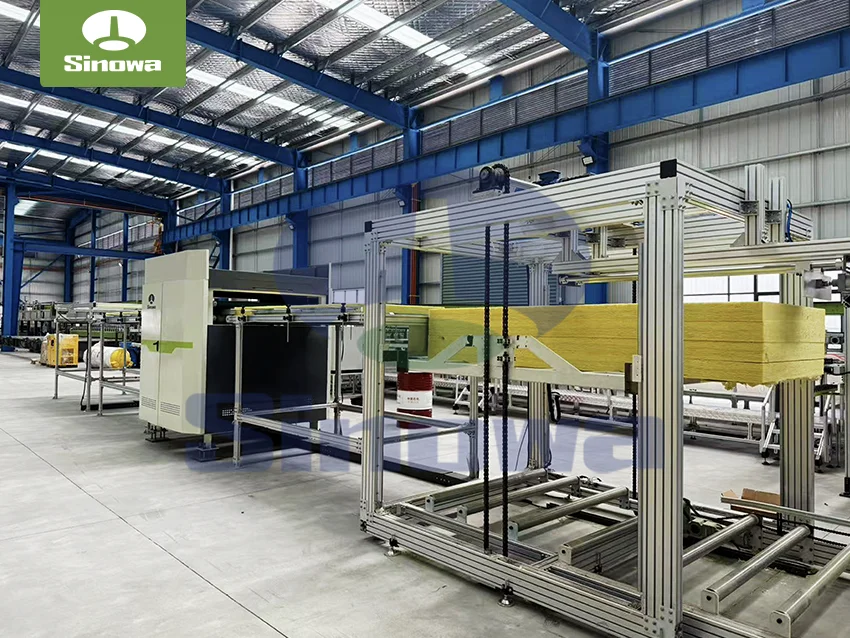
The structural composition of the production line is carefully engineered to accommodate the unique properties of rock wool and ensure optimal processing conditions. The feeding system typically consists of chain plate conveyors and lifting devices equipped with frequency conversion control technology, which minimizes vibration and prevents damage to the rock wool slabs during transportation. These conveyors gently transfer the raw rock wool slabs—usually with dimensions ranging from 1200mm to 2400mm in length, 1200mm in width, and up to 105mm in thickness—to the automatic slitting station. The automatic slitting system itself comprises a set of precision rolling blades driven by an AC asynchronous motor, with a tool spacing adjuster that allows for flexible adjustment of strip widths according to production requirements. Common strip thicknesses range from 50mm to 250mm, with a slitting gap controlled to approximately 3.3mm to ensure clean, smooth cuts and reduce material waste. After slitting, the rock wool strips are transferred to a 90-degree flipping device, which uses a continuous rotary motion to reorient the strips so that their fiber direction is vertical. This vertical fiber orientation significantly enhances the structural strength and load-bearing capacity of the final sandwich panels by distributing stress more evenly across the panel surface.
Following the flipping process, the rock wool strips pass through an alignment unit that staggers the strips slightly to avoid stress concentration in the composite structure. This alignment step is crucial for improving the overall durability of the panels, especially in applications requiring high structural integrity. The strips then undergo edge milling to create precise grooves, which facilitate better adhesion with the surface materials and the side-sealing foam. The adhesive application system is another integral part of the production line, featuring upper and lower spraying units that distribute a uniform layer of adhesive onto the rock wool core. The adhesive dosage is carefully controlled between 180g and 250g per unit area to ensure strong bonding without excess waste, while maintaining the panel’s thermal insulation properties. For side sealing, a polyurethane (PU) foaming system is used to fill the gaps along the edges of the panels, enhancing both structural strength and insulation performance by preventing heat loss and moisture penetration. The lamination station employs a double-belt conveyor system that applies consistent pressure and temperature to bond the rock wool core with the surface materials—typically color-coated steel sheets, galvanized steel, or aluminum—creating a cohesive composite structure. The double-belt system features heating elements that accelerate the curing of the adhesive and PU foam, ensuring a firm bond and reducing production cycle time.
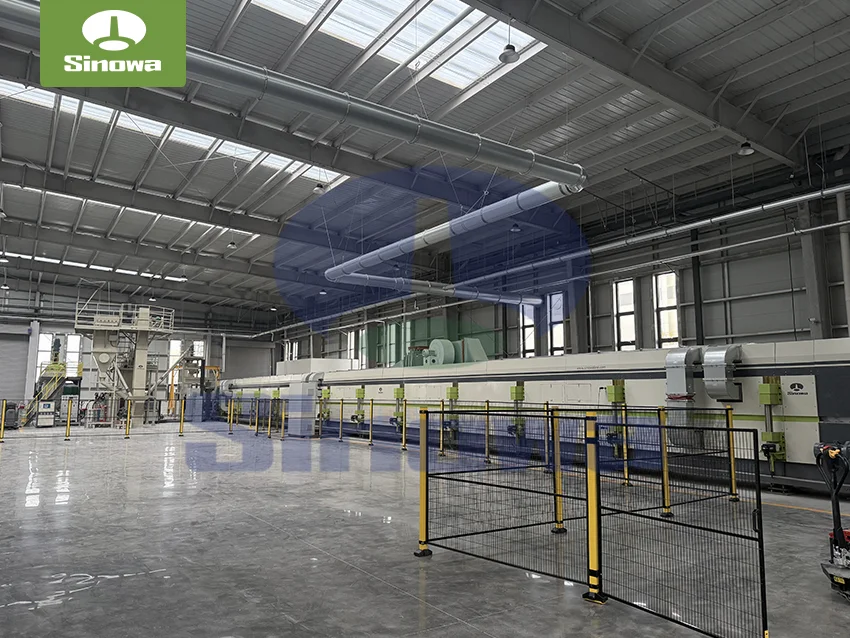
The control system of the production line is built on advanced digital servo technology, frequency conversion vector control, and hydraulic control, integrated into a centralized human-machine interface (HMI). This interface allows operators to input production parameters such as panel thickness, width, length, and slitting dimensions, after which the system automatically adjusts all modules to meet the specified requirements. The HMI also provides real-time monitoring of production status, including speed, adhesive dosage, and temperature, enabling operators to identify and resolve issues promptly. Emergency stop buttons and safety interlocks are installed throughout the line to ensure operational safety, while the modular design simplifies maintenance and troubleshooting by allowing individual components to be inspected or repaired without halting the entire production process. The overall length of the production line is typically around 120 meters, with the double-belt conveyor section accounting for approximately 24 meters of this length, providing sufficient space for thorough curing and lamination.
The performance of the rock wool sandwich panel production line with automatic slitting system is defined by its high efficiency, precision, and reliability, as well as the superior quality of the panels it produces. Production speed is adjustable according to the thickness and type of panel being manufactured, with typical speeds ranging from 3m/min to 8m/min for standard rock wool panels. For thinner panels or those with specialized surface materials, speeds can reach up to 15m/min in some configurations. This high efficiency translates to an annual production capacity of up to 1,000,000 square meters, based on 250 working days per year and 10 working hours per day, making the line suitable for large-scale manufacturing operations. The automatic slitting system ensures exceptional precision, with strip width tolerances controlled within ±2mm, and the vertical fiber orientation achieved through the flipping device enhances the mechanical properties of the panels. The rock wool cores processed by the line exhibit excellent performance metrics, including a compressive strength of at least 40kPa, a tensile strength of 7.5kPa or higher, and a hydrophobicity rate of over 98%, which prevents moisture absorption and maintains insulation performance over time. The slag ball content in the rock wool is kept below 10%, ensuring a uniform fiber structure that contributes to consistent thermal conductivity—typically ≤0.036W/(m·K) at 10℃ and ≤0.041W/(m·K) at 70℃.
Energy efficiency is a key performance advantage of this production line, with energy consumption levels 40% lower than traditional production equipment. This efficiency is achieved through several design features, including frequency conversion control that adjusts motor speed based on production demand, optimized heating systems that minimize heat loss, and the elimination of the need for separate thermal insulation rooms. The line also operates with low noise levels and minimal dust pollution, adhering to environmental standards and creating a safer, more comfortable working environment for operators. The reduced reliance on manual labor—with only 5 to 8 operators required to run the entire line—significantly lowers labor costs and reduces the risk of human error, further enhancing production efficiency and product consistency. The panels produced by the line exhibit strong peel strength, ensuring that the surface materials remain firmly bonded to the rock wool core even under harsh conditions, and their fire resistance properties make them suitable for applications with strict safety requirements.
The production line is capable of manufacturing a variety of rock wool sandwich panels, differentiated by their surface materials, core density, thickness, and structural design, to meet diverse application needs. Based on the production process of the rock wool core, the panels can be categorized into sedimentation rock wool panels, pendulum rock wool panels, and three-dimensional rock wool panels. Sedimentation rock wool panels are characterized by a relatively simple fiber structure, suitable for general insulation applications where cost-effectiveness is a priority. Pendulum rock wool panels feature a more uniform fiber distribution and higher density, offering improved mechanical strength and thermal insulation performance, making them ideal for mid-to-high-end building projects. Three-dimensional rock wool panels have the highest structural integrity, with a cross-linked fiber structure that provides exceptional compressive and tensile strength, suitable for high-rise buildings, heavy-load applications, and areas with strict fire safety regulations. The density of the rock wool core can be customized between 80kg/m³ and 120kg/m³ for standard panels, with specialized panels offering densities up to 150kg/m³ to meet specific load-bearing requirements.
Surface material options for the sandwich panels include color-coated steel sheets, galvanized steel, stainless steel, and aluminum, each offering unique properties. Color-coated steel sheets provide a decorative finish and corrosion resistance, available in a range of textures such as small wave, flat, embossed, and big rib, with surface treatments including PVDF, PE, HDP, and SMP to enhance durability. Galvanized steel offers superior corrosion resistance, making it suitable for outdoor applications or harsh environments, while stainless steel is preferred for food processing facilities, pharmaceuticals, and other industries with high hygiene requirements. Aluminum panels are lightweight and offer excellent thermal conductivity control, ideal for applications where weight reduction is critical, such as shipbuilding and mobile structures. Perforated surface materials are also available for specialized sound absorption applications, allowing the panels to reduce noise levels in industrial workshops, auditoriums, and public buildings. The thickness of the surface materials typically ranges from 0.3mm to 1mm, with adjustable panel thickness between 50mm and 200mm to accommodate different insulation and structural needs.
The versatility of the rock wool sandwich panels produced by this line makes them suitable for a wide range of applications across multiple industries, driven by their exceptional thermal insulation, fire resistance, sound absorption, and structural performance. In the construction industry, these panels are widely used for exterior wall cladding, interior partitions, roofs, and ceilings in both residential and commercial buildings. Their fire resistance properties make them an ideal choice for fire isolation belts in high-rise buildings, where they help prevent the spread of fire and smoke between floors. The panels are also used in structural insulation integration systems, combining load-bearing capacity with insulation performance to simplify construction and reduce project timelines. Industrial applications include the construction of workshops, warehouses, and factories, where the panels provide thermal insulation to maintain stable internal temperatures, reduce energy consumption for heating and cooling, and absorb mechanical noise to improve the working environment.
Specialized applications of the panels extend to industrial equipment, such as drying tunnels, industrial furnaces, and heat treatment systems. The high-temperature resistance of rock wool—capable of withstanding temperatures exceeding 650℃—makes the panels suitable for lining ovens and drying equipment, where they minimize heat loss and ensure consistent processing conditions. In the food processing and pharmaceutical industries, the panels are used to construct clean rooms and sterile environments, as they are non-toxic, odorless, and free from harmful volatile substances, meeting strict hygiene standards. The panels also find applications in shipbuilding, where their lightweight nature and corrosion resistance make them suitable for hull insulation, partitions, and bunk beds. Tunnel construction benefits from the panels’ fire resistance and sound absorption properties, enhancing safety and comfort for users. Additionally, the panels are used in cold storage facilities and freezers, where their low thermal conductivity helps maintain low temperatures efficiently, reducing energy costs for refrigeration.
The adaptability of the production line allows for customization to meet specific project requirements, enabling the manufacture of panels with unique dimensions, surface finishes, and performance characteristics. This flexibility makes the line a valuable asset for manufacturers looking to serve diverse markets, from general construction to specialized industrial applications. The panels’ durability and low maintenance requirements further expand their application scope, as they can withstand harsh weather conditions, chemical exposure, and mechanical impact without significant degradation. In regions with extreme climates, such as high-cold areas, the panels are used for road waterproofing and anti-freezing projects, providing insulation to prevent ice formation and protect infrastructure. The environmental friendliness of rock wool—being a recyclable, inorganic material—and the energy-efficient production process also align with modern sustainability goals, making the panels a preferred choice for green building projects and eco-conscious industries.
In summary, the rock wool sandwich panel production line with automatic slitting system represents a technological advancement in composite material manufacturing, combining precision engineering, automation, and efficiency to produce high-quality panels for diverse applications. Its modular structure, advanced control system, and superior performance metrics ensure consistent production of panels with excellent thermal insulation, fire resistance, and structural strength. The automatic slitting system, as a core component, enhances the line’s versatility by enabling precise customization of rock wool strips, while the integration of PU side sealing and vertical fiber orientation further improves the panels’ performance. From construction and industrial facilities to specialized equipment and transportation, the panels produced by this line offer reliable solutions that meet the evolving needs of modern industries, emphasizing safety, efficiency, and sustainability. As demand for high-performance, eco-friendly building materials continues to grow, this production line will remain a key enabler for manufacturers seeking to deliver innovative and reliable composite panel solutions.
https://www.cnsinowa.com/sandwich-panel-machines/rock-wool-sandwich-panel-production-line-with-automatic-slitting-system.html