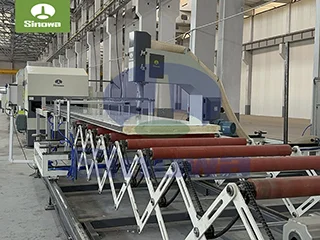
sandwich panel line
The fundamental structure of acoustic PIR sandwich panels consists of two outer facings bonded to a dense PIR foam core. The outer layers, typically made of metal sheets such as galvanized steel or aluminum, provide structural rigidity and protection, while the PIR core serves as the primary acoustic and thermal insulation medium. The production line is engineered to ensure seamless integration of these components, with each stage optimized to enhance the acoustic performance of the final product. The closed-cell structure of PIR foam is inherently effective at absorbing airborne sound waves, as the dense network of cells disrupts sound transmission by converting acoustic energy into minimal thermal energy. This intrinsic property, combined with the mechanical bonding of the facings, creates a composite material that outperforms many traditional insulation options in reducing noise transfer between spaces.
The production process begins with the preparation of the outer facings, a stage that lays the groundwork for the panel’s structural integrity and acoustic performance. Coiled metal sheets are loaded into uncoiling units, which feed the material into leveling machines to eliminate any warping or unevenness. This step is crucial because irregular facings can lead to gaps between the core and the outer layers, compromising both the bond strength and acoustic insulation—gaps act as sound bridges, allowing noise to pass through unimpeded. After leveling, the metal sheets may undergo additional treatments such as corona processing, which enhances the surface adhesion properties to ensure a strong bond with the PIR foam core. Some production lines also incorporate profiling stations to create specific surface textures or edge designs, which can further improve acoustic performance by reducing sound reflection and enhancing the panel’s fit during installation.
Following surface preparation, the metal sheets are fed into roll forming machines, which shape the facings into the desired profiles. For acoustic panels, the profile design is often optimized to maximize sound absorption and structural stability. Trapezoidal or corrugated profiles are common choices, as they increase the surface area of the facings and create additional air pockets that contribute to sound dampening. The roll forming process uses a series of tandem rollers to gradually bend the metal sheets into shape, ensuring consistent dimensions and profile accuracy across the entire length of the material. This consistency is vital for maintaining uniform acoustic performance, as variations in profile can lead to inconsistent sound reduction across different sections of the panel.
Parallel to the preparation of the outer facings, the PIR foam core is produced through a precise chemical reaction process. The core material is derived from a mixture of isocyanates and polyols, with additional additives to control density, curing time, and acoustic properties. The high-pressure foaming machines at the heart of this stage are designed to meter, mix, and dispense the chemical components with exceptional accuracy. The ratio of isocyanates to polyols is carefully controlled to produce a foam with a dense, closed-cell structure—higher density foam typically offers superior acoustic insulation, as it provides more resistance to sound wave penetration. Additives such as nucleating agents are used to create a uniform cell structure, ensuring that sound absorption is consistent throughout the core.
The foaming process also incorporates temperature regulation to optimize the chemical reaction. The components are heated to a specific temperature range before mixing, which accelerates the curing process while ensuring that the foam expands evenly. The mixed chemicals are then continuously injected between the two pre-formed metal facings as they move through the production line. The injection system is designed to distribute the foam uniformly across the width and length of the facings, preventing voids or uneven density that would degrade acoustic performance. Once injected, the foam begins to expand, filling the space between the facings and adhering to their inner surfaces. The expansion process is carefully monitored to ensure that the foam reaches the desired thickness and density, as both factors directly impact the panel’s ability to absorb sound.
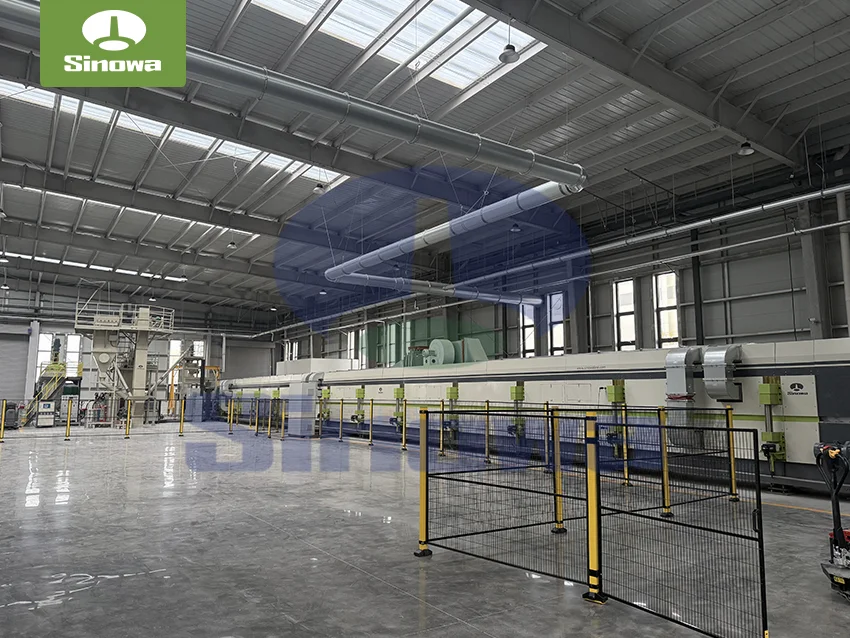
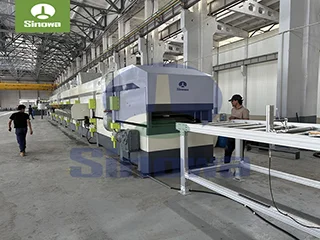
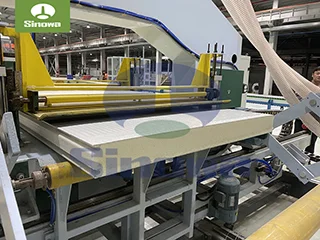
After foam injection, the composite structure enters a double belt press, a critical component that controls the curing process and final panel dimensions. The press consists of two parallel conveyor belts that apply uniform pressure and temperature to the panel as it moves through the system. The controlled pressure ensures that the foam bonds tightly to the outer facings, eliminating any potential gaps that could act as sound bridges. Simultaneously, the heated belts maintain an optimal temperature for foam curing, allowing the chemical reaction to complete fully and the foam to achieve its maximum density and acoustic performance. The double belt press also ensures that the panel maintains a flat, consistent surface, which is essential for proper installation and minimizing sound leakage at joints.
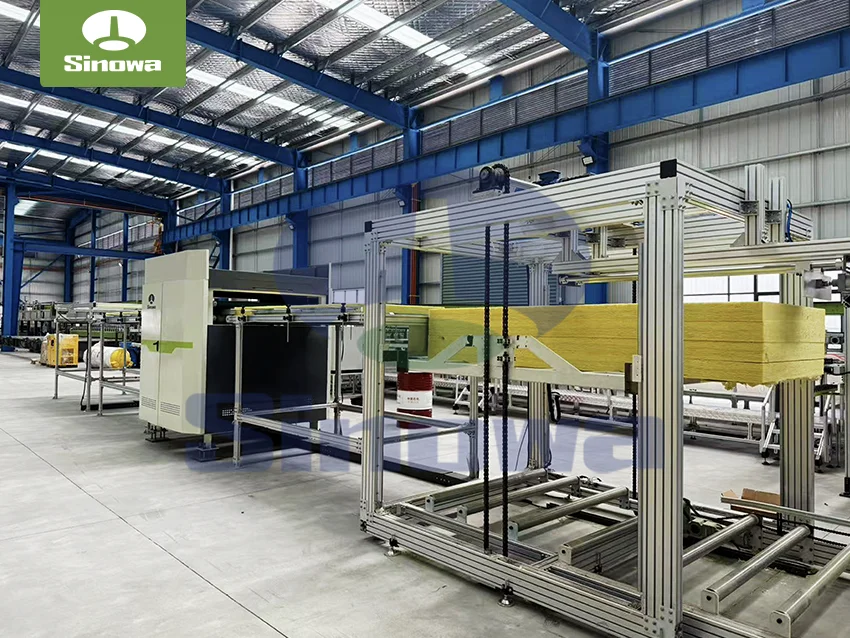
For production lines that integrate mineral wool into the PIR core—an enhancement that further improves acoustic insulation, particularly for low-frequency sounds—a dedicated mineral wool section is incorporated into the process. Mineral wool, produced from melted volcanic rocks, offers excellent sound absorption properties due to its fibrous structure. In this stage, mineral wool boards are cut into precise dimensions using dustless cutting systems, which reduce waste and prevent dust contamination that could affect the foam bonding process. The cut mineral wool is then automatically placed and glued onto one of the metal facings before PIR foam injection. The combination of PIR foam and mineral wool creates a hybrid core that addresses both high and low-frequency sound waves, making the panels suitable for applications with demanding acoustic requirements, such as music studios, industrial facilities, and urban buildings.
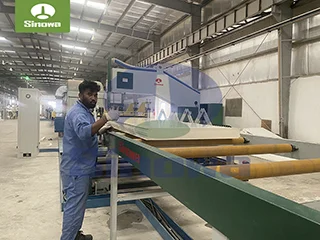
Once the foam has cured sufficiently, the continuous panel is cut into specified lengths using flying saw cutting machines. These machines are equipped with rotating blades that make precise cuts while the panel is still in motion, ensuring high production efficiency without compromising accuracy. The cutting process is synchronized with the production line speed to minimize waste and maintain consistent panel lengths. After cutting, the panels are transferred to a cooling station, where they undergo gradual cooling to stabilize the foam core and outer facings. Rapid cooling is avoided to prevent thermal stress, which could cause warping or delamination—both of which would negatively impact acoustic performance by creating gaps or weakening the bond between layers.
Quality control is an integral part of every stage of the production process, with a focus on parameters that directly influence acoustic insulation. Throughout the line, sensors and monitoring systems track foam density, panel thickness, and bonding strength. Random samples are taken for laboratory testing, including sound absorption coefficient measurements, which quantify the panel’s ability to absorb sound waves at different frequencies. Additional tests include bending and shear strength assessments to ensure structural integrity, as a structurally sound panel maintains its acoustic properties over time. Visual inspections are also conducted to check for surface defects, delamination, or voids in the foam core, all of which are corrected immediately to maintain product consistency.
The finished acoustic PIR sandwich panels offer a range of performance benefits that make them versatile across multiple applications. Their ability to absorb sound waves—often reducing noise transmission by 30 decibels or more—makes them ideal for use in industrial buildings, where machinery noise can be excessive. In commercial settings such as offices, retail spaces, and restaurants, the panels create quieter environments that enhance comfort and productivity. They are also widely used in cold storage facilities, where their dual thermal and acoustic insulation properties address both temperature control and noise reduction from refrigeration equipment. Additionally, their lightweight nature and ease of installation make them suitable for retrofitting existing buildings to improve acoustic performance without significant structural modifications.
One of the key advantages of the PIR sandwich panel production line is its flexibility to adapt to different project requirements. The line can be adjusted to produce panels of varying thicknesses, from 40mm to 100mm or more, with thicker panels offering enhanced acoustic and thermal insulation. The outer facings can be customized in terms of material, coating, and profile to meet specific aesthetic or environmental needs, such as corrosion resistance for humid environments. Some production lines also offer integrated processes like embossing or printing, which add visual appeal without compromising acoustic performance. This flexibility allows manufacturers to tailor products to the unique acoustic challenges of each project, from small residential renovations to large-scale industrial complexes.
Environmental considerations are also integrated into modern production lines, reflecting the growing demand for sustainable building materials. Many lines use environmentally friendly blowing agents in the foam production process, reducing the carbon footprint of the panels. The durability of PIR sandwich panels also contributes to sustainability, as their long service life minimizes the need for replacement and reduces waste. Additionally, the dustless cutting systems used in mineral wool processing and the efficient material utilization of the production line further reduce environmental impact. These sustainable practices align with global efforts to reduce energy consumption and promote green building standards, while maintaining the high acoustic performance that defines PIR sandwich panels.
The performance of acoustic PIR sandwich panels is not solely dependent on the production process; proper installation also plays a critical role in maximizing sound insulation. However, the production line’s focus on consistent bonding, uniform density, and precise dimensions provides a reliable foundation for effective installation. Panels with tight, consistent edges ensure a snug fit between adjacent panels, minimizing sound leakage through joints. The strong bond between the facings and core prevents delamination over time, ensuring that the acoustic properties remain stable throughout the panel’s lifespan. This combination of high-quality production and proper installation results in a long-lasting acoustic solution that meets the evolving needs of the construction industry.
As the demand for acoustic comfort continues to grow in both residential and commercial construction, the role of PIR sandwich panel production lines becomes increasingly important. These lines are constantly evolving to incorporate new technologies that enhance acoustic performance, improve production efficiency, and reduce environmental impact. Advancements in foaming technology, for example, are leading to the development of PIR cores with even higher density and sound absorption capabilities. Automation and digital monitoring systems are also being integrated to further improve process control and product consistency. These innovations ensure that acoustic PIR sandwich panels remain at the forefront of insulation solutions, offering a balance of performance, durability, and sustainability that is unmatched by many alternative materials.
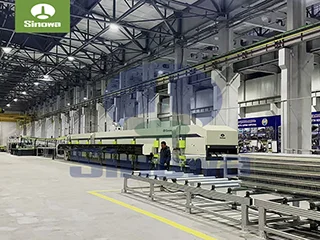
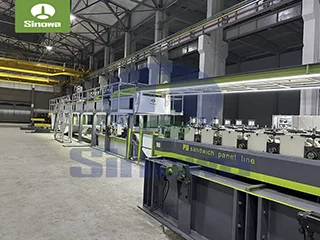
In conclusion, the production line for acoustic PIR sandwich panels is a complex, integrated system that combines chemical precision, mechanical engineering, and quality control to produce high-performance insulation materials. Each stage of the process—from facing preparation and foam production to pressing, cutting, and cooling—is optimized to enhance the acoustic properties of the final product. The ability to customize panel specifications, integrate additional insulation materials like mineral wool, and adhere to sustainable practices makes these production lines versatile and adaptable to a wide range of applications. As the construction industry continues to prioritize acoustic comfort and energy efficiency, the PIR sandwich panel production line will remain a key enabler of innovative, high-performance building solutions, delivering products that create quieter, more sustainable spaces for years to come.
https://www.cnsinowa.com/sandwich-panel-machines/pir-sandwich-panel-production-line-for-acoustic-insulation-panels.html