Why Does Fast Foaming Occur On The PU Foam Production Line
Oct 26, 2026
Fast foaming is a common disruptive issue on PU foam production lines, where raw materials react and expand far quicker than the preset cycle. This abnormality messes up forming stability, creates defective foam products, and raises operational risks for continuous manufacturing, with multiple intertwined root causes from raw materials, equipment and process control.
The most fundamental trigger of fast foaming lies in the imbalance of the chemical formula of polyurethane raw materials. Polyurethane foam relies on the crosslinking reaction between isocyanate and polyol, and catalysts play a decisive role in adjusting reaction speed. If the proportion of amine catalysts that promote foaming is accidentally increased, the gas generation rate will surge immediately once the components are mixed. Even tiny deviations in catalyst addition can greatly shorten the cream time, leaving almost no time for the material to flow evenly inside the mould or on the conveyor. Besides catalysts, excessive moisture contained in polyol or auxiliary additives will react with isocyanate to produce carbon dioxide, which is the main blowing gas for many PU foam systems. Extra water input brings extra gas output and accelerates the whole foaming sequence, independent of the designed reaction schedule. Some low-viscosity polyol varieties also inherently have higher reactivity, and switching raw material batches without adjusting supporting parameters will easily induce sudden fast foaming on the production line.
Temperature fluctuation across the production system is another major factor that accelerates PU foaming reactions. All chemical reactions for polyurethane are sensitive to ambient and material temperature, and reaction rates rise sharply as temperature climbs. If the storage tanks for polyol or isocyanate are heated beyond the required temperature range before feeding, the raw materials themselves hold high thermal energy, and their molecular activity increases before mixing. The mixing head of the foaming machine also generates friction heat during high-speed stirring. When the circulation speed is too high or the cooling circuit of the mixing unit fails, accumulated heat inside the mixing chamber will kick off the foaming reaction prematurely. Workshop environmental temperature also cannot be ignored. In poorly ventilated production zones with sustained high air temperature, heat cannot dissipate from the foam mixture after pouring. The self-heating characteristic of PU reaction forms a positive feedback loop: early heat release speeds up subsequent reactions, making foaming happen faster and harder to restrain. Even a small temperature rise of several degrees can cut cream time by a noticeable margin and bring unexpected fast foaming.
Inaccurate metering of raw material flows directly breaks the stoichiometric balance required for stable foaming. Continuous PU foam lines use precision metering pumps to deliver isocyanate, polyol, blowing agents and additives at fixed ratios. When pump wear, seal leakage or pressure instability occurs, the output proportion of each component drifts away from the designed value. A surplus of isocyanate is particularly likely to speed up the reaction, as excess isocyanate molecules contact polyol and water more frequently to trigger vigorous crosslinking and gas generation. Pressure changes in feeding pipelines will also interfere with metering accuracy. If the inlet pressure of the raw material tank drops suddenly, the pump cannot maintain a steady volumetric output. Operators sometimes adjust pump speed temporarily to compensate for feeding shortages, and improper manual adjustments often create ratio mismatch and fast foaming. In many practical cases, metering deviation does not show obvious signs at first, and the abnormality only appears after dozens of continuous pouring cycles, which makes this cause harder to detect promptly.
Poor mixing quality at the foaming head can create local over-reaction and apparent fast foaming on the production line. Many operators mistakenly believe that faster stirring always brings better mixing results, yet excessive stirring speed not only generates extra heat but also traps abundant tiny air bubbles into the liquid mixture. These entrapped air bubbles act as initial nucleation points for foaming. Once chemical blowing gas starts to form, bubble nucleation proceeds much faster than intended, and the whole foam system expands rapidly. On the contrary, uneven stirring leads to high-concentration catalyst clusters in partial areas. In these concentrated zones, reactions start ahead of other regions, and local fast foaming occurs before the material spreads out uniformly. Worn mixing rotors, blocked mixing channels or irregular cleaning of the mixing head will leave residual cured PU material inside the structure. The leftover solid foam fragments serve as nucleation seeds and catalytic carriers. When fresh raw materials flow through, residual reactive residues initiate premature foaming again and again during continuous production runs.
Improper selection and addition timing of blowing agents and surfactants also contribute to unexpected fast foaming. Surfactants stabilize foam cells and control the rate of bubble growth. If the surfactant loading is too high, it reduces surface tension excessively, allowing gas bubbles to form and expand rapidly without timely restraint. Different blowing agents carry different latent heat and solubility characteristics. Some blowing agents with low boiling points vaporize readily at mild temperatures. When such blowing agents are over-dosed, physical vaporization overlaps with chemical gas generation, superimposing two foaming driving forces and pushing the expansion process forward quickly. Blowing agents that are not fully compatible with the polyol system may separate out in the feeding pipeline. After entering the mixing head, separated blowing agent evaporates instantly once mixed with warm reactive components. Unlike slow, synchronized foaming, this combined physical and chemical expansion leads to an out-of-control foaming rhythm. Even if the total formula ratio looks correct on paper, mismatched auxiliary materials can break the original foaming timing design.
Residue contamination and cross-contamination of different PU systems inside equipment are easily overlooked triggers of fast foaming. When the production line switches between different foam grades, incomplete cleaning of tanks, pipelines, mixing heads and delivery hoses leaves residual reactive materials. The residual catalyst or leftover isocyanate from the previous production batch mixes with new raw materials. These foreign reactive components raise the overall reactivity of the fresh formulation instantly. Cross-contamination is especially serious between high-reactivity and low-reactivity PU systems. A tiny amount of high-activity catalyst carried over from the prior run is enough to greatly shorten the cream time of the next batch. Cured PU dust and fine foam scraps falling back into the material feed area also act as heterogeneous nucleation points. As production continues, accumulated contamination gradually accumulates, and fast foaming problems become more frequent as time passes. Many factories only perform full equipment cleaning after severe defects emerge, while light contamination causes intermittent and hard-to-reproduce fast foaming faults.
The pouring speed, distribution mode and conveying speed of the production line affect the manifestation of fast foaming as well. After the mixed PU liquid flows out of the mixing head, it needs a set period to spread flat on the conveyor before expansion begins. If the conveyor runs too slowly while the reaction speed rises, the liquid material piles up locally, and heat accumulates in the thick material layer. Heat buildup accelerates the reaction further, and foaming finishes before the material spreads evenly. If the pouring gate releases material in concentrated streams instead of a uniform thin layer, the central stream holds higher temperature and higher component concentration, and fast foaming starts in the core area first. In moulded PU foam production, insufficient mould preheating control or poor mould venting can worsen the situation. Trapped air inside the mould cannot escape, and rising internal pressure promotes rapid bubble expansion. Even when the raw material formula and equipment are normal, mismatched line running parameters can turn a stable foaming system into fast foaming and produce uneven, cracked or collapsed foam slabs.
Human operational errors and insufficient real-time monitoring are important indirect reasons for recurring fast foaming events. Frontline staff may adjust formula parameters based on past experience without fully assessing the combined influence of raw material batch changes and workshop conditions. Minor adjustments to catalyst feed, heating temperature or pump flow may seem trivial alone, but their combined effect can significantly lift reaction speed. Many production lines only rely on periodic manual sampling to test cream time and foam density, instead of continuous online monitoring of material temperature, feeding pressure and reaction state. By the time operators observe fast foaming and defective products, several batches of foam have already been produced. Lack of standardized log records also makes it difficult to link fast foaming incidents with earlier parameter changes or raw material replacement. Without clear tracking, the same mistake is likely to repeat, and operators may repeatedly adjust unrelated parameters, making the reaction state more unstable.
Effective suppression of fast foaming on PU foam lines requires systematic and layered troubleshooting instead of single-parameter adjustment. Once fast foaming appears, technicians should first check raw material batch information and test raw material reactivity and moisture content, then verify metering pump precision, pipeline pressure and mixing head operating status. Temperature systems for raw material storage, mixing heads and the workshop should be stabilized within a narrow operating window, and equipment cleaning procedures between product switches must be strictly enforced. Operators need to establish stable parameter adjustment logic: reducing catalyst dosage appropriately, lowering preheating temperature or optimizing conveyor and pouring distribution can restore the designed cream time and foaming cycle. Continuous online monitoring helps capture abnormal signals at the earliest stage, so corrective actions can be taken before fast foaming spreads. By balancing chemical reactivity, thermal conditions, metering accuracy and line operation, manufacturers can keep PU foaming consistent, cut waste caused by out-of-control expansion, and maintain smooth long-term operation of the continuous foam production line.
Gallery
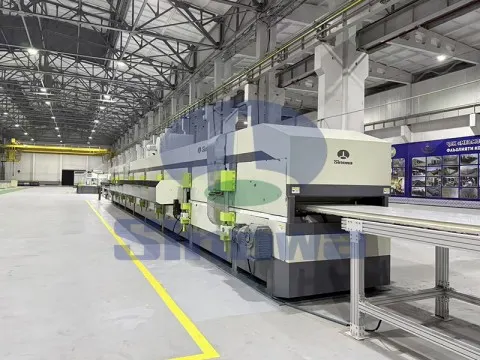
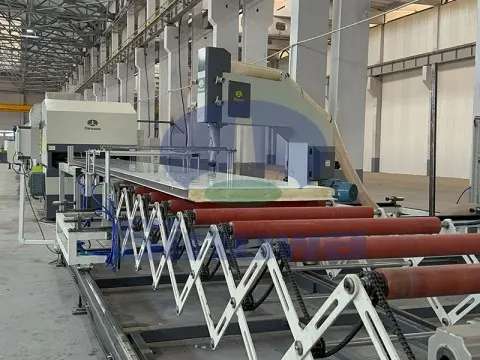
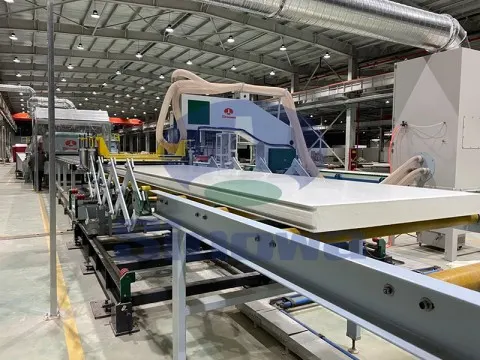
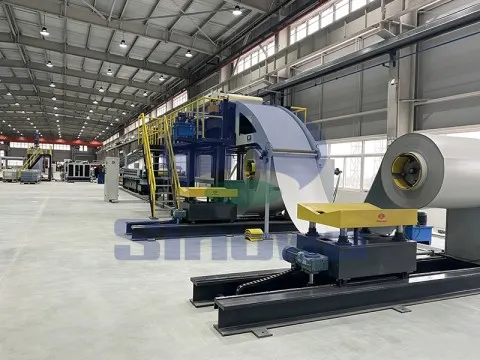
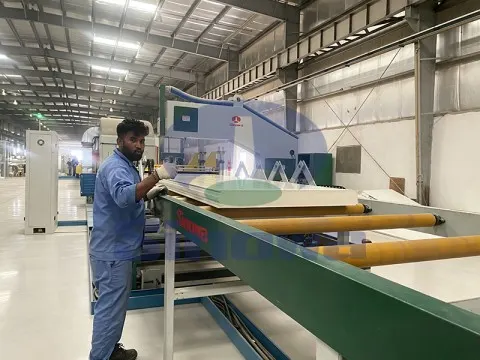
Sinowa is a professional manufacturer of sandwich panel machine in china, we provide diversified and high-performance sandwich panel production lines, including fully automatic continuous PU sandwich panel line and customized special lines to meet mass production and personalized order demands. These sandwich panel lines support processing multiple foam core materials, such as PU, PIR, mineral wool, rock wool and glass wool, covering different insulation and fireproof standards.
Featuring stable operation, high efficiency, energy saving and easy maintenance, our PU sandwich panel line deliver sandwich panels with excellent thermal insulation, fire resistance, sound insulation and lightweight durability. The finished panels are widely applied in industrial workshops, warehouse roofing and wall cladding, cold storage insulation, serving global construction and industrial insulation markets.
https://www.cnsinowa.com/faqs/why-does-fast-foaming-occur-on-the-pu-foam-production-line.html
Main Products
-

Continuous PU Sandwich Panel Production Line
This continuous PU sandwich panel production line is an integrated automatic equipment. It covers uncoiling, forming, foaming, curing and cutting processes. With automatic raw material proportioning and precise temperature & pressure control, PIR sandwich panel production line continuously composites panels with double skins. Polyurethane sandwich panel production line stably produces steel and aluminum sandwich panels. Featuring high automation, the line makes fireproof and thermal-insulation panels for building enclosure and cold storage. -
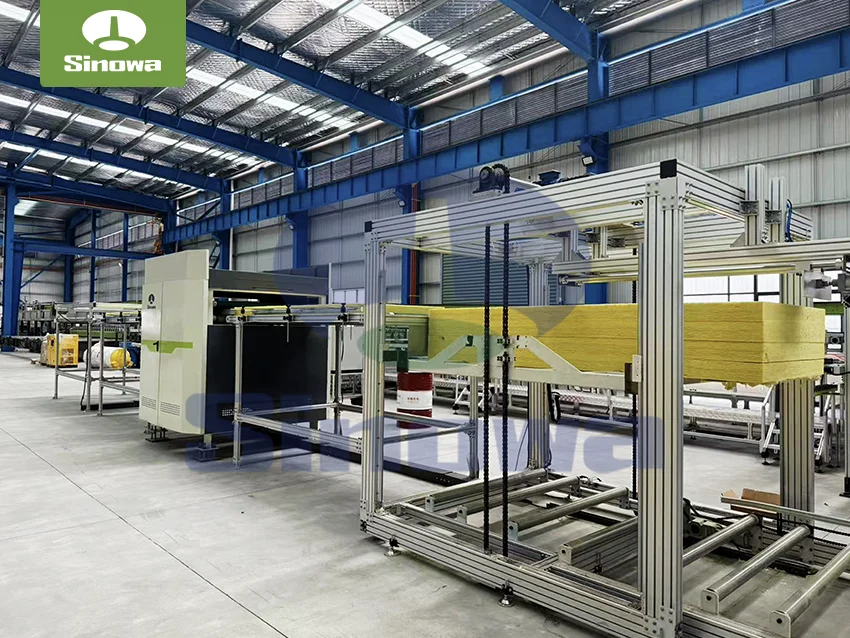
Rock Wool Sandwich Panel Production Line
Continuous rockwool sandwich panel production line is an automatic integrated production equipment, consisting of uncoiling, forming, gluing and compounding, heating curing, fixed-length cutting, automatic stacking and other modules. The mineral wool sandwich panel production line continuously conveys color steel plates and rock wool core materials to automatically complete lamination and curing, which can produce fireproof and thermal insulation sandwich panels. Featuring high automation degree and stable operation, this production line is suitable for mass production of panels used for building walls, roofs and other scenarios. -
Phenolic Insulation Board Production Line
This integrated automatic production line continuously manufactures PU and phenolic insulation boards. The insulation board production line covers raw material proportioning, high-pressure foaming, laminating, curing and fixed-length cutting. Featuring high automation and stable molding, the insulation panel production line supports various surface materials. PU boards offer excellent thermal insulation, while phenolic boards have superior fire resistance. These products are widely used in construction, cold chain, ventilation ducts and other thermal insulation fields.
Other FAQs
- How To Maintain Foam Core Sandwich Panel Line Daily
- How To Improve The Flatness Of Panels Made By PIR Foam Core Sandwich Panel Line
- What Is A PU Sandwich Panel Machine And How Does It Work
- Why Is The Curing Effect Poor In Insulation Board Production Line
- How To Adjust The Foaming Ratio Of A Polyurethane Sandwich Panel Production Line
- Continuous PU Sandwich Panel Production Line Speed Adjustment Synchronization Method
- Compressed Air Supply Requirement For PU Sandwich Panel Line Operation
- Polyurethane Sandwich Panel Production Line Fault Alarm System Debugging Method
- Sandwich Panel Production Line Startup And Shutdown Standard Operating Procedures
- Maximum Production Capacity Of Polyurethane Sandwich Panel Production Line
Related Articles
- Thermal Insulation Panel Production Line
- Polyurethane Sandwich Panel Manufacturing Line With PLC Control System
- Insulated PU Sandwich Panel Line
- Polyurethane Sandwich Panel Production Line For Modular House
- High Quality PU Sandwich Panel Machine Design
- PU Sandwich Panel Making Machine For High Density Composite Panels
- Corrugated Sandwich Panel Production Line
- PIR Sandwich Panel Production Line With PLC Control System
- External Wall Composite Insulation Board Production Line
- PU Sandwich Panel Manufacturing Machinery For Double-sided Composite Panels