How To Maintain The Extrusion System Of Insulation Board Production Line
Oct 26, 2026
The extrusion system acts as the core functional unit of an insulation board production line, directly determining the surface flatness, internal density stability and overall forming quality of finished boards. Regular and standardized maintenance can reduce unexpected shutdowns, extend the service life of key components, and keep continuous production running smoothly while lowering unnecessary wear and energy consumption in long-term operation.
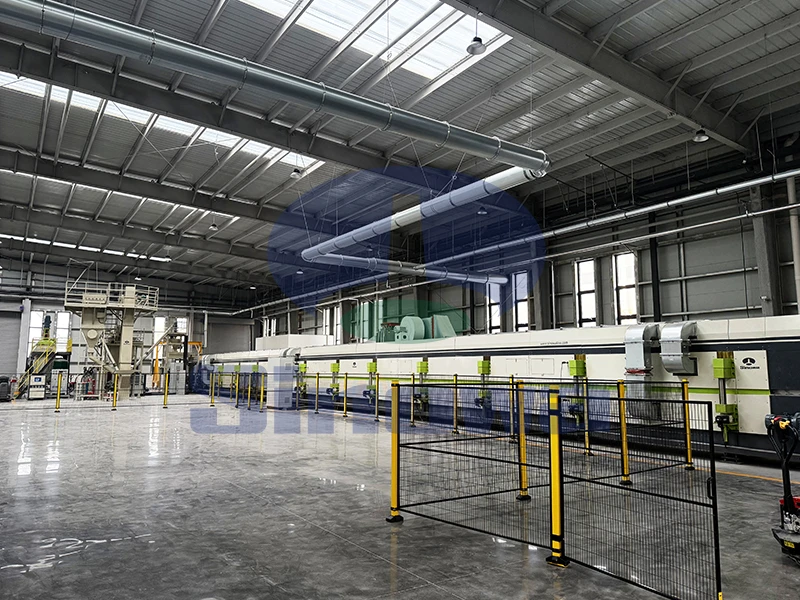
Daily visual inspection forms the foundation of reliable extrusion system maintenance and should be carried out before every production shift starts. Operators need to check the outer surface of the extrusion barrel, die head and connecting flanges to spot traces of material leakage, carbonized material accumulation and abnormal oil seepage at sealing positions. They should observe the running state of transmission parts to identify unusual vibration, strange friction noise or loose fastening bolts at an early stage. It is also necessary to confirm whether the temperature sensing parts are firmly installed and free from heavy dirt coverage, because inaccurate temperature feedback will easily cause local overheating of raw materials and block the internal flow channel. Any minor problems found during the inspection need to be recorded in time and handled before feeding materials into the system, rather than allowing small defects to evolve into serious failures during continuous extrusion. After each shift finishes production, residual raw materials staying in the flow channel should be purged according to the correct operation sequence, preventing leftover materials from cooling and hardening inside and bringing extra resistance to the next extrusion process.
Temperature control components require careful maintenance since stable heating is essential for uniform melting of insulation board raw materials. Heating sleeves and cooling fans distributed along the extrusion barrel and die head will gradually be covered with dust and fine material powder after long working hours, which weakens heat transfer efficiency and leads to uneven temperature distribution across different sections. When cleaning these parts, hard scraping tools that may scratch the heating surface or damage insulating layers must be avoided, and soft brushes and compressed air with moderate pressure are preferred to clear surface attachments. Operators should also check the connection terminals of heating circuits regularly to make sure there is no loose contact or oxidation discoloration, as poor contact often causes intermittent heating failure. After maintenance work, the temperature setting and actual feedback value should be compared and observed for a period of time, so that hidden deviations can be discovered and adjusted promptly. Long-term overheating of local areas not only accelerates the aging of heating elements but also causes raw material degradation, which will produce inferior insulation boards with uneven internal structure.
Screw and barrel are the most heavily worn parts inside the extrusion system, and their matching clearance directly affects extrusion pressure stability and material plasticizing effect. During normal operation, hard impurities mixed into raw materials will continuously scrape the inner wall of the barrel and the surface of the screw thread, gradually increasing the gap between the two components. Maintenance personnel should avoid running the extrusion system under empty high-temperature conditions for a long time, because the lack of raw material lubrication will aggravate dry friction and surface abrasion. When the production line needs to stop for a long time, the temperature of the extrusion barrel should be lowered gradually instead of cutting off the heating power suddenly, to reduce thermal stress and deformation of metal structures. If disassembly and cleaning are required, the screw should be taken out slowly and protected from collision with hard objects. Carbon deposits adhered to the screw surface can be removed with special cleaning materials and soft tools, and abrasive polishing methods are forbidden, as they will destroy the original surface finish and accelerate subsequent wear. Periodic assessment of the matching clearance helps arrange maintenance reasonably before obvious quality fluctuations of insulation boards appear.
The die head, as the final forming component of the extrusion system, demands precise maintenance to guarantee consistent thickness and smooth surface of insulation boards. Narrow flow channels inside the die head are prone to material buildup and carbonization after prolonged production, which will change the flow speed of molten materials and create stripes or bulges on the surface of finished boards. Before disassembly, the die head must be cooled down to a safe temperature to prevent scalding and thermal deformation caused by rapid cooling. When taking apart the die plates, all components should be placed in order to avoid mixing up gaskets and positioning parts, which are critical to the uniformity of the discharging gap. After clearing residual materials, the sealing surfaces and flow surfaces need to be checked for scratches, pits or corrosion marks. Tiny surface damage will disturb the stable flow of molten materials and cannot be ignored. After reassembly, the tightening force of bolts should be kept balanced on all sides, rather than tightening one side excessively, otherwise the die gap will tilt and the discharged material will be uneven in thickness.
Lubrication management of the transmission system is indispensable to maintain stable power transmission for extrusion. The gearbox, bearing seats and chain transmission structures rely on lubricants to reduce friction and dissipate heat generated during high-speed operation. The lubricant level should be checked at fixed intervals, and attention should be paid to whether the lubricant turns dark, contains suspended impurities or shows signs of emulsification. Degraded lubricant loses its protective effect and will speed up the wear of gears and bearings. When replacing lubricant, the old oil should be drained completely, and the inner cavity can be cleaned properly before adding new lubricant that meets the usage requirements. Lubrication points on bearings need to be refilled with grease on schedule, and excessive grease filling should also be avoided, because too much grease will hinder heat dissipation and cause the bearing temperature to rise abnormally. During operation, maintenance staff should pay attention to the running sound of the gearbox; continuous dull impact sound often indicates abnormal meshing of internal gears or insufficient lubrication, and the machine should be inspected in time.
Hydraulic and pneumatic auxiliary devices supporting the extrusion system also need routine maintenance to ensure reliable action of adjustment and switching parts. Sealing rings in hydraulic cylinders and pneumatic valves will age gradually under the influence of temperature, pressure and medium erosion. Aging seals cause oil or air leakage, which reduces the control accuracy of the die gap adjustment mechanism and the switching response speed of feeding components. The surface of hydraulic pipelines and air pipes should be inspected regularly for cracks, bulges and loose joints. Dust and debris on the filter elements of hydraulic stations and air source processors should be cleaned or replaced on a fixed cycle, because blocked filters increase pipeline resistance and affect the stability of system pressure. When adjusting hydraulic pressure or air pressure, the pressure value cannot be raised far beyond the normal working range for a long time, and sudden pressure impact should be avoided as much as possible. After any maintenance on hydraulic and pneumatic circuits, test runs should be carried out to verify that all adjusting mechanisms move smoothly and stay stable at the set position.
Electrical control components connected to the extrusion system need dustproof and moisture-proof maintenance to avoid sudden control failures. The control cabinet contains contactors, frequency converters and signal modules that control screw speed, heating power and auxiliary actuators. Fine material dust floating in the production workshop can enter the cabinet through heat dissipation holes and adhere to electronic boards, which may lead to poor signal transmission or short circuit under humid conditions. The interior of the control cabinet should be cleaned regularly with dry compressed air, and the door of the cabinet should be kept closed tightly during production. Cable connectors and signal wiring terminals should be checked for looseness and aging of insulating sheaths. If the insulating layer is cracked, the wire needs to be repaired or replaced in time. The heat dissipation fans of frequency converters also need to be kept unobstructed; overheating of electrical components will trigger automatic shutdown and interrupt continuous extrusion production. Maintenance of electrical parts must be performed after cutting off the power supply completely, and relevant safety protection steps should be followed strictly.
Long-term idle maintenance of the extrusion system is often overlooked, yet it matters a lot for equipment preservation when the production line stops for days or longer periods. Before long-term shutdown, all residual molten materials inside the barrel, screw and die head must be thoroughly cleaned, and the inner flow surfaces should be protected appropriately to prevent oxidation and rust. All exposed threaded parts, sliding guide surfaces and connecting shafts can be coated with anti-rust protective materials. The movable adjustment parts of the die head should be adjusted to a proper state to avoid long-term stress deformation of sealing components. The power supply and air source of the whole extrusion system need to be cut off, and dust covers can be used to shield key components from accumulation of workshop dust. When restarting the equipment after a long idle period, a comprehensive inspection covering lubrication, electrical circuits, sealing status and temperature feedback should be conducted step by step. A low-speed no-load test run is required first, and formal material feeding can only start after confirming that all parts run normally without abnormal vibration or leakage.
Recording maintenance data and training operating and maintenance personnel together help form a sustainable maintenance mechanism for the extrusion system. Every inspection, cleaning, part replacement and abnormal failure should be recorded truthfully, including the occurrence phenomenon, processing method and running condition after maintenance. By sorting out these records, maintenance staff can find out the high-frequency failure points and formulate more targeted maintenance cycles, instead of carrying out maintenance work in a blind way. Personnel who operate and maintain the extrusion system need to master the structural characteristics of each component, recognize the early warning signals of abnormal operation, and master the correct disassembly, cleaning and adjustment methods. Improper operation during maintenance is one of the major causes of secondary damage to precision parts. Standardized operation habits can reduce man-made damage, keep the extrusion system in a stable working state for a long time, and steadily guarantee the production efficiency and finished quality of the whole insulation board production line in daily work.
Gallery
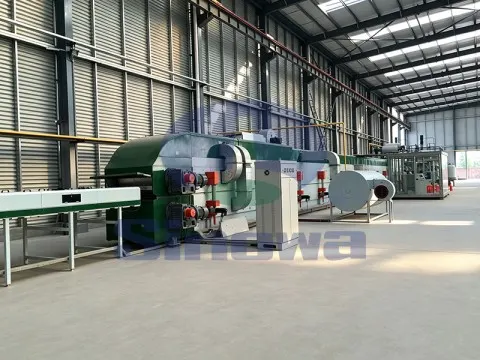
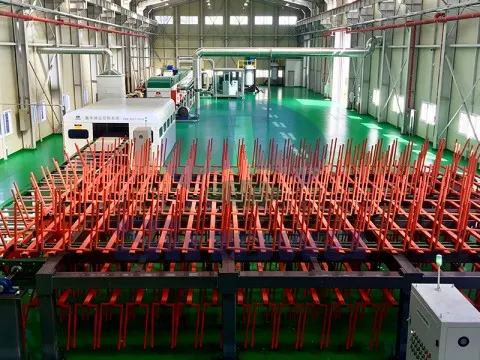
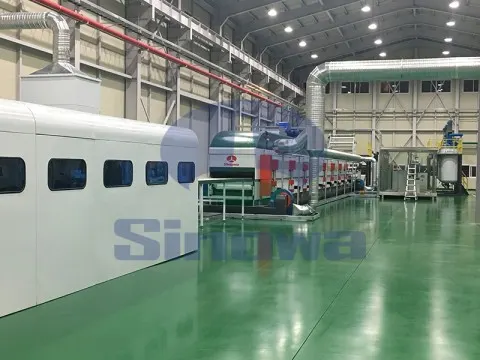
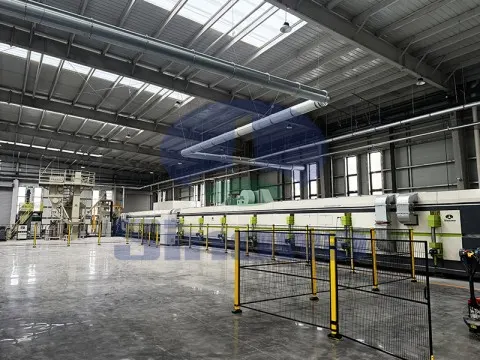
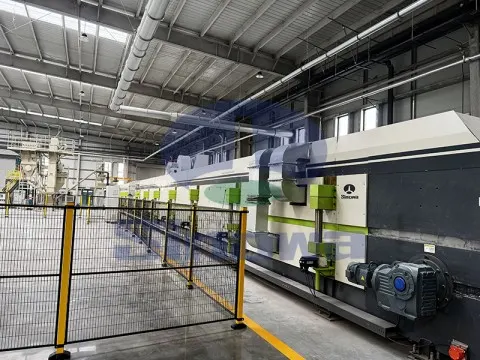
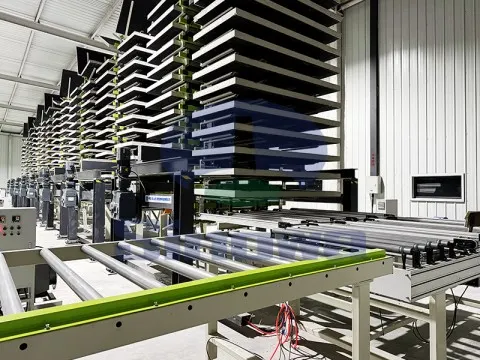
Sinowa is a professional manufacturer of sandwich panel machine in china, we provide diversified and high-performance sandwich panel production lines, including fully automatic continuous PU sandwich panel line and customized special lines to meet mass production and personalized order demands. These sandwich panel lines support processing multiple foam core materials, such as PU, PIR, mineral wool, rock wool and glass wool, covering different insulation and fireproof standards.
Featuring stable operation, high efficiency, energy saving and easy maintenance, our PU sandwich panel line deliver sandwich panels with excellent thermal insulation, fire resistance, sound insulation and lightweight durability. The finished panels are widely applied in industrial workshops, warehouse roofing and wall cladding, cold storage insulation, serving global construction and industrial insulation markets.
Main Products
-

Continuous PU Sandwich Panel Production Line
This continuous PU sandwich panel production line is an integrated automatic equipment. It covers uncoiling, forming, foaming, curing and cutting processes. With automatic raw material proportioning and precise temperature & pressure control, PIR sandwich panel production line continuously composites panels with double skins. Polyurethane sandwich panel production line stably produces steel and aluminum sandwich panels. Featuring high automation, the line makes fireproof and thermal-insulation panels for building enclosure and cold storage. -
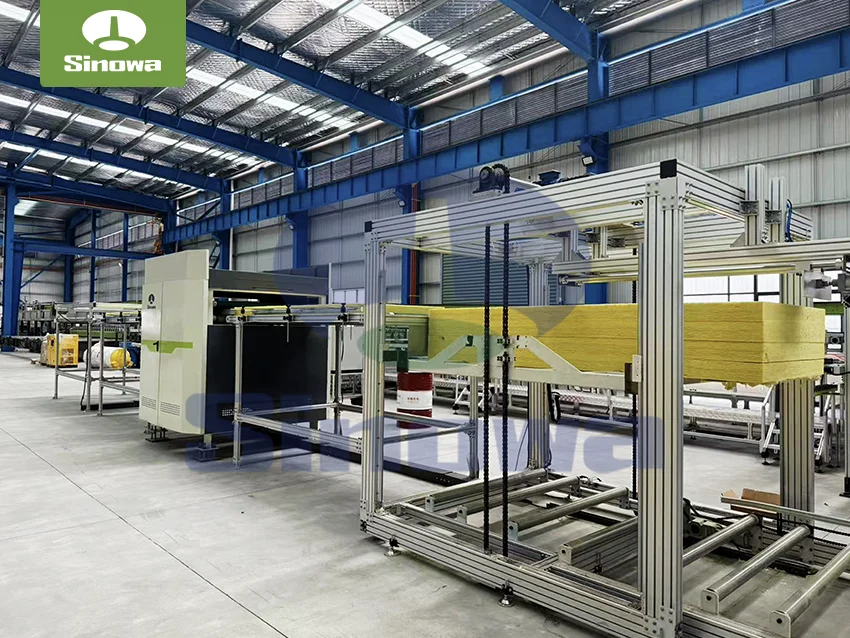
Rock Wool Sandwich Panel Production Line
Continuous rockwool sandwich panel production line is an automatic integrated production equipment, consisting of uncoiling, forming, gluing and compounding, heating curing, fixed-length cutting, automatic stacking and other modules. The mineral wool sandwich panel production line continuously conveys color steel plates and rock wool core materials to automatically complete lamination and curing, which can produce fireproof and thermal insulation sandwich panels. Featuring high automation degree and stable operation, this production line is suitable for mass production of panels used for building walls, roofs and other scenarios. -
Phenolic Insulation Board Production Line
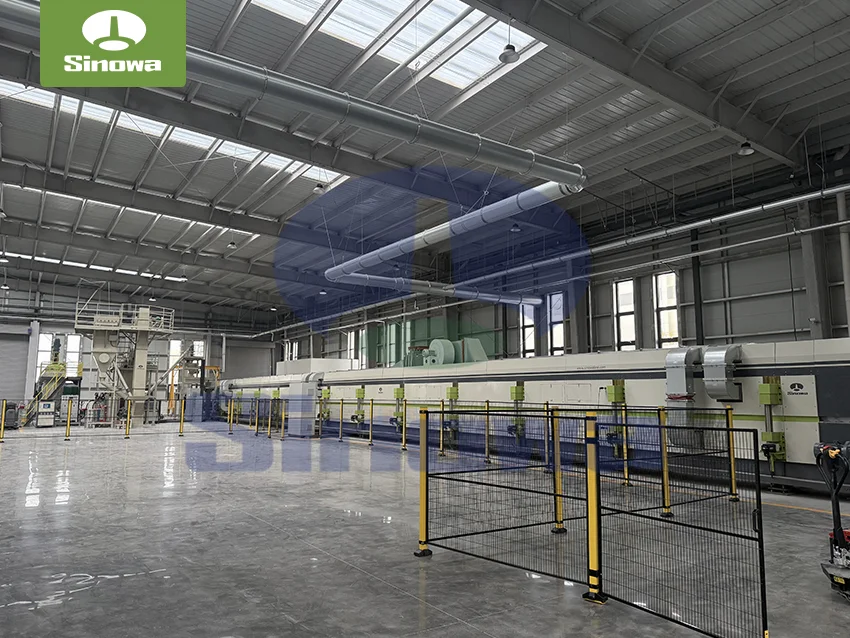
This integrated automatic production line continuously manufactures PU and phenolic insulation boards. The insulation board production line covers raw material proportioning, high-pressure foaming, laminating, curing and fixed-length cutting. Featuring high automation and stable molding, the insulation panel production line supports various surface materials. PU boards offer excellent thermal insulation, while phenolic boards have superior fire resistance. These products are widely used in construction, cold chain, ventilation ducts and other thermal insulation fields.
Other FAQs
- How To Maintain Foam Core Sandwich Panel Line Daily
- How To Improve The Flatness Of Panels Made By PIR Foam Core Sandwich Panel Line
- What Is A PU Sandwich Panel Machine And How Does It Work
- Why Is The Curing Effect Poor In Insulation Board Production Line
- How To Adjust The Foaming Ratio Of A Polyurethane Sandwich Panel Production Line
- Continuous PU Sandwich Panel Production Line Speed Adjustment Synchronization Method
- Compressed Air Supply Requirement For PU Sandwich Panel Line Operation
- Polyurethane Sandwich Panel Production Line Fault Alarm System Debugging Method
- Sandwich Panel Production Line Startup And Shutdown Standard Operating Procedures
- Maximum Production Capacity Of Polyurethane Sandwich Panel Production Line
Related Articles
- Metal Carved Sandwich Panel Production Line
- PU Sandwich Panel Making Line For Corrugated Roof
- Insulated Sandwich Panel Assembly Line
- PU Sandwich Panel Line For Thermal Insulation Wall
- Insulation PU Sandwich Panel Production Line
- Polyurethane Sandwich Panel Line With Noise Reduction Device
- High-Speed PU Sandwich Panel Making Line For Large-Scale Projects
- Polyurethane Exterior Wall Sandwich Panel Machine
- Thermal Insulation PU Sandwich Panel Line
- Sandwich Panel Production Line