 sandwich panel line
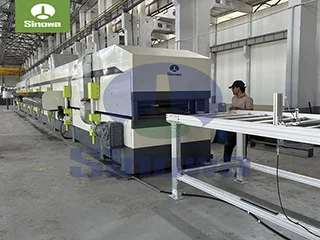
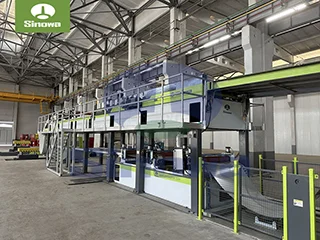
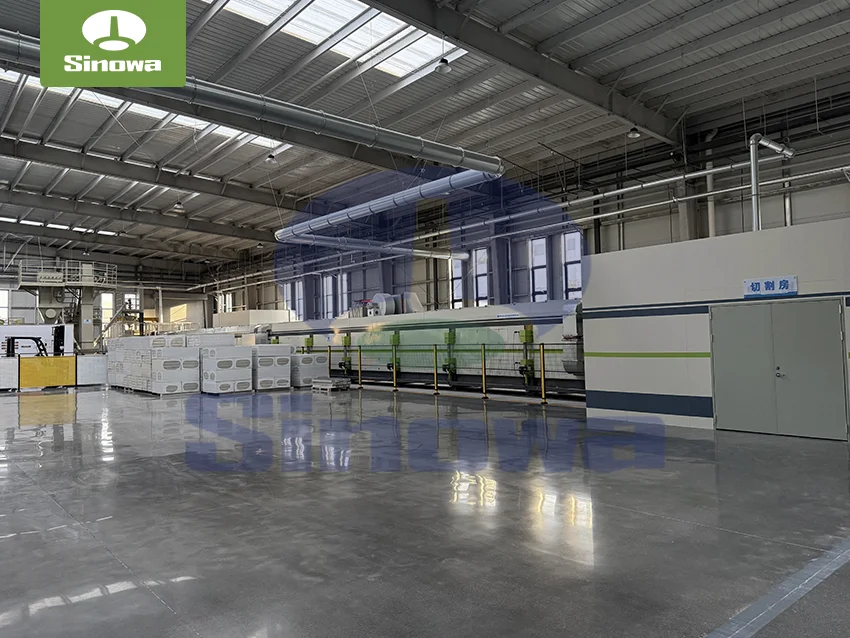
The overall structural design of polyurethane sandwich panel production lines follows the principle of continuous integrated operation, with every functional module precisely matched to ensure seamless connection of each production link. The entire line is composed of surface material unwinding unit, preheating treatment unit, high-precision chemical metering and mixing unit, foaming and laminating unit, constant-temperature curing unit, and automatic cutting unit. The unwinding system stably releases metal or composite surface materials, with automatic leveling and deviation correction functions to avoid wrinkles, offsets, and surface irregularities during material transmission, laying a foundation for the flatness of finished panels. The preheating module adjusts the surface material temperature in real time according to production speed and material thickness, effectively improving the bonding tightness between the surface layer and the foam core layer and preventing delamination during long-term use. As the core component, the metering and mixing system accurately controls the proportion of polyurethane raw materials, ensuring uniform chemical reaction and stable foam density. The subsequent crawler-type lamination equipment realizes uniform pressing of composite materials, while the constant-temperature curing section promotes sufficient foaming and solidification of the polyurethane core, and the final fixed-length cutting system completes precise sizing according to production requirements. This full-process automated design eliminates the instability of intermittent production, realizing continuous and efficient output of qualified polyurethane sandwich panels with consistent thickness and structural uniformity.
PIR sandwich panel production lines retain the mature continuous production framework of traditional polyurethane lines but carry out targeted technical upgrades in core reaction and control modules to adapt to the special chemical characteristics of PIR materials. Different from ordinary polyurethane foaming raw materials, PIR formulas require a higher isocyanate ratio and special catalytic additives to form a dense closed-cell foam structure with better thermal stability and fire resistance. Therefore, the PIR production line is equipped with a multi-component precise dosing system, which can dynamically adjust the raw material proportioning ratio in real time according to production parameters, ensuring thorough and stable chemical reactions of PIR materials. The line optimizes the internal temperature control system of the foaming cavity, adopting graded temperature regulation to match the slow and stable reaction process of PIR foaming, avoiding local overheating, insufficient foaming or excessive expansion that may cause product quality problems. In addition, the crawler lamination and traction structure of the PIR production line is strengthened to withstand the slight expansion and contraction changes of PIR foam during curing, maintaining the overall flatness and dimensional accuracy of the panel. The upgraded curing system extends the staged heat preservation process appropriately, enabling the PIR foam molecular structure to be more stable, significantly improving the high-temperature resistance and structural durability of the finished panels compared with ordinary polyurethane products.
The raw material proportioning and foaming process is the key difference between PIR and polyurethane sandwich panel production lines, directly determining the core performance of finished panels. Polyurethane sandwich panel lines adopt a mature two-component raw material matching mode, with a relatively flexible proportioning range, which can quickly complete chemical cross-linking reactions at room temperature to form lightweight and high-insulation foam cores. The foaming reaction speed is fast and the process is stable, which is suitable for high-speed continuous production and can form a uniform and fine cellular structure, endowing the panel with excellent low-temperature thermal insulation and sound insulation effects. This process feature makes polyurethane panels ideal for cold storage insulation, ordinary factory building enclosure and temporary building thermal insulation projects. For PIR sandwich panel production lines, the foaming reaction mechanism is more complex, requiring accurate control of isocyanate excess ratio and catalyst dosage. The production line’s intelligent metering system supports micro-adjustment of raw material flow, ensuring that the PIR foam forms a tighter cross-linked molecular structure during the reaction process. This special foaming process makes PIR foam have higher closed-cell rate and structural rigidity, effectively inhibiting heat conduction and flame spread, and maintaining stable physical properties in high-temperature environments, which cannot be achieved by ordinary polyurethane foaming processes.
In terms of production flexibility and product customization, polyurethane sandwich panel production lines have outstanding adaptability to meet diversified market production demands. The whole line supports flexible adjustment of multiple production parameters, including panel thickness, width, and surface material types, and can quickly switch production specifications without complex equipment debugging. It can match various surface materials such as color steel plates, aluminum plates, and composite color plates, and produce sandwich panels with different insulation thicknesses to adapt to different thermal insulation and building enclosure needs. The equipment’s operation system adopts intelligent PLC centralized control, with simple parameter setting and intuitive operation interface, which can quickly respond to customized production orders and realize small-batch and multi-specification flexible production while ensuring mass production efficiency. Moreover, the polyurethane production line has low requirements for production environment conditions, stable operation in conventional factory environments, and low daily operation and debugging costs. Its excellent production flexibility makes it widely applicable in civil buildings, industrial plants, logistics warehouses and other fields, covering most conventional thermal insulation and enclosure panel production scenarios in the construction industry.
PIR sandwich panel production lines focus more on high-standard product performance customization and stable high-quality output, with unique advantages in high-demand application scenario production. Although the parameter adjustment logic of the PIR line is more sophisticated than that of the polyurethane line, it can realize precise customization of panel fire resistance, high-temperature resistance and structural strength by fine-tuning raw material formulas and curing parameters. The equipment can produce high-density PIR core panels with uniform cell structure, which have stronger pressure resistance and deformation resistance, and can maintain stable structural performance under long-term high-temperature and harsh environmental conditions. In terms of production stability, the PIR production line is equipped with real-time reaction monitoring and feedback adjustment modules, which can automatically correct parameter deviations caused by raw material temperature and environmental changes during continuous production, ensuring that each batch of finished panels has consistent fire resistance and thermal stability. This precise customization capability enables the PIR production line to target high-end application scenarios such as high-temperature industrial workshops, special fire-proof building enclosures, and advanced cold chain equipment insulation, filling the demand gap for high-performance insulation panels that ordinary polyurethane production lines cannot meet.
The operational stability and maintenance characteristics of the two production lines differ significantly in long-term industrial application. Polyurethane sandwich panel production lines feature simple structural design, fewer core precision components, and low failure rates in long-term continuous operation. The foaming and lamination modules have strong adaptability, and the wearing parts are easy to replace and maintain, which can effectively reduce daily production downtime and equipment maintenance costs. The equipment has strong tolerance to slight fluctuations in raw material quality, stable batch production quality, and is very suitable for long-term uninterrupted large-scale production of conventional building insulation panels. In contrast, PIR sandwich panel production lines have higher precision requirements for core components such as metering pumps, mixing heads and temperature sensors due to their sophisticated chemical reaction control system. Daily operation requires regular calibration of precision measuring units and detection of reaction cavity temperature uniformity to ensure accurate raw material proportioning and stable foaming reaction. Although the daily maintenance process of PIR production lines is more refined, the optimized structural design ensures long-term stable operation after standardized maintenance, and the service life of core equipment components is comparable to that of polyurethane production lines, meeting the long-term production needs of high-performance panels.
With the continuous upgrading of green building and energy-saving insulation industry requirements, PIR and polyurethane sandwich panel production lines are constantly iterating in intelligent and energy-saving technologies to adapt to market development trends. Modern polyurethane production lines are gradually equipped with energy recovery systems and material waste reduction devices, which optimize the foaming raw material utilization rate and reduce energy consumption per unit product on the premise of maintaining excellent insulation performance. The intelligent monitoring system can realize real-time early warning of equipment operation faults and automatic statistics of production data, improving the overall intelligent level of production management. PIR production lines are further optimized in chemical reaction energy consumption and product performance, adopting more efficient catalytic formulas and intelligent temperature gradient control technology to shorten the curing cycle while improving the fire resistance and durability of panels, effectively balancing production efficiency and high product performance. The complementary performance and application advantages of the two production lines enable manufacturers to cover both conventional and high-end insulation panel markets, providing reliable equipment support for the development of energy-saving and fire-proof green building materials, and promoting the standardized and high-quality development of the composite sandwich panel industry.
https://www.cnsinowa.com/sandwich-panel-machines/pir-polyurethane-sandwich-panel-production-line.html