What Thickness Range Can A PUF Sandwich Panel Production Line Produce
Oct 26, 2026
A PUF sandwich panel production line is engineered to manufacture panels within a flexible thickness range, catering to diverse application scenarios from light interior cladding to heavy-duty thermal insulation enclosures. The adjustable structure of the line allows operators to modify core material filling, guiding roller spacing and cutting settings to deliver finished panels that match custom thickness demands while maintaining stable surface flatness and bonding integrity.
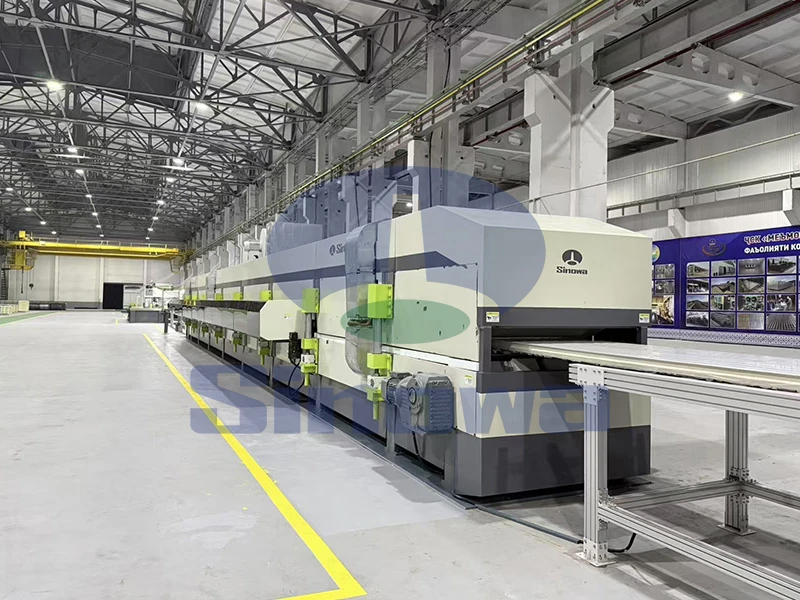
The thickness capability of a PUF sandwich panel production line starts with the lower end of its production spectrum, which is designed for relatively thin panels used in non-load-bearing decorative and partition projects. These thinner panels rely on a compact PUF foam core that cures quickly between two metal or non-metal facing sheets. During production, the conveying system brings the facings together at a narrow gap, and the high-pressure foaming unit injects a calculated volume of mixed raw materials to form a uniform foam layer. Operators need to fine-tune the injection output and conveyor speed synchronously to avoid foam overflow or insufficient filling inside the panel cavity. Even at the minimum thickness setting, the continuous laminating section applies steady pressure to ensure the foam adheres fully to both facing surfaces, preventing delamination or uneven foam distribution that could weaken the basic performance of finished panels. Thin panels made on this line are generally lightweight and easy to cut, transport and install, making them suitable for spaces where insulation requirements are moderate and overall structural weight must be kept low.
Moving upward from the minimum thickness range, the production line can produce medium-thickness PUF sandwich panels that represent the most widely adopted specification for general insulation projects. This range strikes a good balance between thermal performance, mechanical strength and material consumption. When adjusted to this thickness band, the spacing between the upper and lower forming rollers expands accordingly, creating a larger cavity for the PUF foam to expand and cure. The foaming system adjusts the material flow rate to match the increased cavity volume, ensuring the foam rises evenly and fills the entire space without creating voids or dense spots inside the core. The continuous curing tunnel is also configured with appropriate temperature and dwell time settings, as thicker foam requires longer time to complete cross-linking and achieve consistent density throughout the core. Panels in this middle thickness range can resist minor impact loads and reduce heat transfer effectively, and they adapt well to repeated handling during transportation and on-site installation without obvious deformation. Many conventional building envelope and cold storage applications depend on panels produced within this stable operating window of the production line.
As the target thickness continues to rise, the production line enters the higher thickness working zone intended for projects with stringent thermal insulation requirements. Producing thicker PUF sandwich panels introduces new control challenges that the line’s integrated systems must address. A larger cavity means the foam expansion path is longer, and uneven expansion may lead to internal defects if raw material mixing quality or injection position deviates. To counter this, the foaming distribution layout is optimized to spread the mixed polyurethane materials across the panel width before expansion, so the rising foam can fill the whole cavity uniformly. The laminating pressure is carefully calibrated instead of simply increased, because excessive pressure can restrict natural foam expansion and create compressed core areas with degraded insulation performance. The curing process becomes a critical control point here, as heat transfer from the outer facings to the center of the thick foam core slows down. The production line extends the residence time inside the curing area and maintains a gentle, stable ambient temperature to support complete curing from the outer layers to the core center. Panels from this thickness segment deliver superior thermal resistance and are commonly selected for facilities that require consistent internal temperature control over long operational cycles.
It is important to understand that the theoretical thickness adjustment range of the production line cannot be treated as an infinitely adjustable continuous spectrum without practical constraints. Several mechanical and process factors set practical boundaries for stable production. The maximum opening distance of the forming rollers defines the hard mechanical limit of thickness adjustment, and any target thickness beyond this limit cannot be achieved even with adjustments to foaming parameters. The design of the side sealing mechanisms also imposes restrictions, as these components contain the expanding foam along the panel edges and must form a tight seal across different cavity heights. If the gap between facings exceeds the effective working range of side seals, foam leakage will occur along the panel edges, resulting in irregular edge shapes and wasted raw materials. In addition, the structural rigidity of the upper and lower conveyor beams must be sufficient to resist the upward thrust generated by expanding foam. At very large thickness settings, the expansion force of high-volume PUF foam can push the upper conveyor upward, causing inconsistent thickness across the panel width if the frame lacks enough stiffness.
The type of facing materials paired with the PUF foam core also exerts an indirect influence on the usable thickness range that can be reliably produced on the line. Rigid metal facings maintain their shape well under the pressure of expanding foam and support a broader thickness adjustment window. More flexible or relatively thin facing materials, by contrast, are prone to bulging or wrinkling when the foam expansion force is high, especially when producing panels toward the upper end of the thickness range. For these softer facings, operators usually limit the maximum production thickness and slightly adjust the foaming formula to reduce peak expansion pressure. The surface flatness requirement of finished panels also guides parameter selection. When panels are intended for exposed decorative surfaces, production tends to stay within a narrower thickness band where the line can hold tight dimensional tolerance across the full panel length and width. Even if the machine can physically form a thicker panel, unstable facing deformation may make the finished product unsuitable for high-appearance applications.
Raw material formulation for PUF foam is closely linked to the thickness range of panels coming off the production line. The reaction rate, expansion ratio and flow characteristics of the two-component polyurethane mixture are selected to match the cavity size. Fast-reacting formulations work well for thin panels, where the foam needs to set quickly within a narrow space before facings move forward along the conveyor. For thicker panels, slower reaction formulas are often preferred, giving the mixed materials enough time to flow and spread across the larger cavity before expansion and curing begin. If a fast formula is used for overly thick panels, the foam may cure locally before filling remote areas of the cavity, leaving hidden hollow defects inside the core. Changing the formula is not a standalone fix, however; every adjustment to the foam system must be matched with synchronized changes to conveyor speed, injection volume and curing conditions. This coordination ensures that the production line can consistently deliver qualified panels across its full supported thickness range rather than only at a few fixed thickness points.
Online monitoring systems built into the PUF sandwich panel line play a key role in sustaining thickness accuracy across the entire adjustable range. Contact or non-contact measuring devices are installed after the laminating and curing sections to continuously capture real-time thickness data of moving panels. When measured values drift away from the preset target, the control system sends feedback signals to fine-tune the roller gap or foaming output automatically. This closed-loop control reduces manual intervention and lowers the rate of out-of-tolerance products, which is especially valuable when the line switches frequently between different thickness specifications. Operators can store parameter sets for commonly used thickness values in the control system, so switching production targets only requires calling up the corresponding recipe instead of resetting every single parameter from scratch. This function shortens changeover time and improves overall production efficiency while keeping dimensional variation within acceptable limits for each thickness grade.
End-user cutting and post-processing after the panels leave the main line also relates to the practical usability of different thickness options. The continuous line produces long master panels according to the set thickness, and a flying saw cutting unit trims these long panels into custom lengths. The cutting mechanism must have enough power and blade stability to cut through both the facing sheets and dense PUF foam core cleanly, whether working on thin lightweight panels or thick high-density units. Very thick panels demand stronger cutting torque and slower cutting speed to avoid chipping the foam core or tearing the facing material at the cut edge. After cutting, edge trimming and grooving stations can process panels across most of the line’s thickness range, though some special grooving profiles are only feasible within a middle subset of thickness values. These post-processing considerations help plant planners select appropriate target thicknesses during order confirmation, matching the production capacity of the line and downstream processing capability together.
Overall, the usable thickness range of a PUF sandwich panel production line is a combined result of mechanical design limits, foaming process control, facing material compatibility and supporting monitoring and cutting systems. A well-designed line provides wide adjustability to serve different insulation and construction needs, yet stable high-quality production is best achieved within a preferred operating zone between the absolute minimum and maximum mechanical limits. Understanding these operating characteristics helps production teams arrange schedules rationally, set correct process parameters for each order and reduce defect rates when switching between different panel thickness requirements. By respecting the natural boundaries of the equipment and matching foam chemistry and operating settings to target thickness, the line can continuously produce sandwich panels with reliable bonding, uniform core structure and consistent dimensional precision for various end-use environments.
Gallery
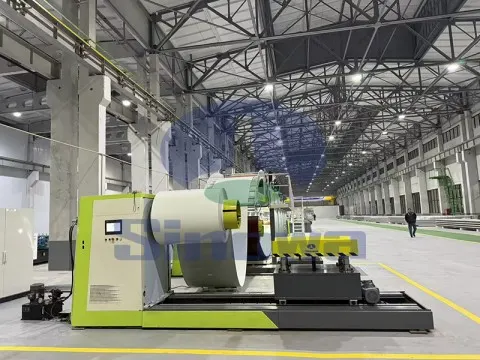
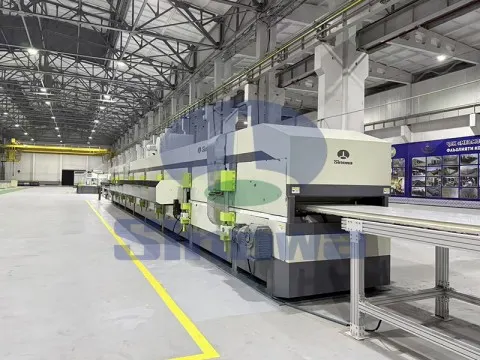
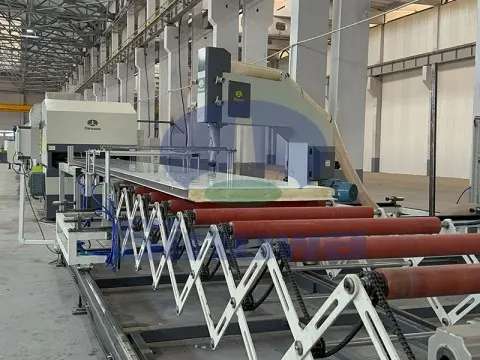
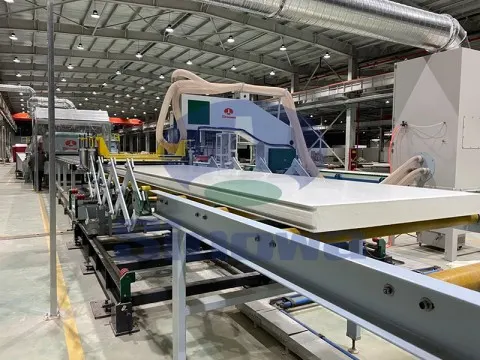
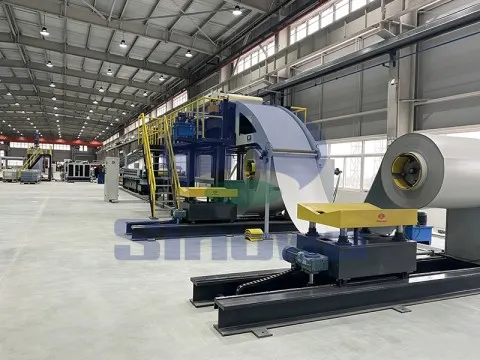
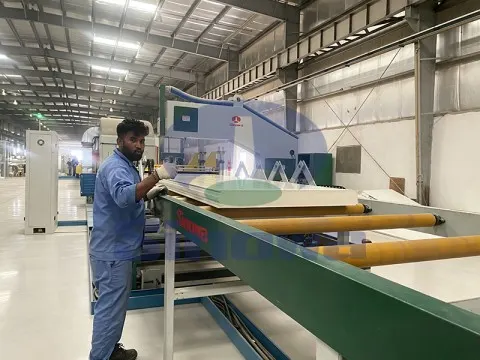
Sinowa is a professional manufacturer of sandwich panel machine in china, we provide diversified and high-performance sandwich panel production lines, including fully automatic continuous PU sandwich panel line and customized special lines to meet mass production and personalized order demands. These sandwich panel lines support processing multiple foam core materials, such as PU, PIR, mineral wool, rock wool and glass wool, covering different insulation and fireproof standards.
Featuring stable operation, high efficiency, energy saving and easy maintenance, our PU sandwich panel line deliver sandwich panels with excellent thermal insulation, fire resistance, sound insulation and lightweight durability. The finished panels are widely applied in industrial workshops, warehouse roofing and wall cladding, cold storage insulation, serving global construction and industrial insulation markets.
Main Products
-

Continuous PU Sandwich Panel Production Line
This continuous PU sandwich panel production line is an integrated automatic equipment. It covers uncoiling, forming, foaming, curing and cutting processes. With automatic raw material proportioning and precise temperature & pressure control, PIR sandwich panel production line continuously composites panels with double skins. Polyurethane sandwich panel production line stably produces steel and aluminum sandwich panels. Featuring high automation, the line makes fireproof and thermal-insulation panels for building enclosure and cold storage. -
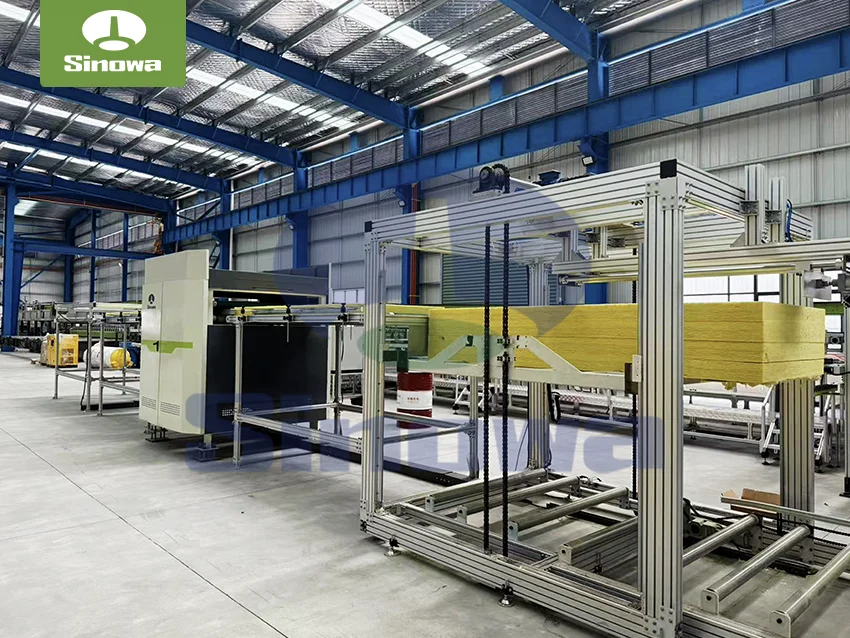
Rock Wool Sandwich Panel Production Line
Continuous rockwool sandwich panel production line is an automatic integrated production equipment, consisting of uncoiling, forming, gluing and compounding, heating curing, fixed-length cutting, automatic stacking and other modules. The mineral wool sandwich panel production line continuously conveys color steel plates and rock wool core materials to automatically complete lamination and curing, which can produce fireproof and thermal insulation sandwich panels. Featuring high automation degree and stable operation, this production line is suitable for mass production of panels used for building walls, roofs and other scenarios. -
Phenolic Insulation Board Production Line
This integrated automatic production line continuously manufactures PU and phenolic insulation boards. The insulation board production line covers raw material proportioning, high-pressure foaming, laminating, curing and fixed-length cutting. Featuring high automation and stable molding, the insulation panel production line supports various surface materials. PU boards offer excellent thermal insulation, while phenolic boards have superior fire resistance. These products are widely used in construction, cold chain, ventilation ducts and other thermal insulation fields.
Other FAQs
- How To Adjust The Foaming Ratio Of The PUR Sandwich Panel Production Line
- What Safety Protection Measures Are Needed For A Polyurethane Sandwich Panel Manufacturing Line
- What Regular Maintenance Does A Polyurethane Sandwich Panel Line Need
- How To Fix Uneven Foam Density On The PU Foam Production Line
- What Raw Materials Are Required For The PUR Sandwich Panel Production Line Operation
- Emergency Fault Handling Process For PU Sandwich Panel Line Shutdown
- Polyurethane Sandwich Panel Production Equipment Lubrication Maintenance Standard
- Troubleshooting For Sandwich Panel Production Line Frequent Shutdown Failure
- How To Maintain The Extrusion System Of Insulation Board Production Line
- How To Maintain The Mixing Head Of A PUF Sandwich Panel Production Line
Related Articles
- Polyurethane Sandwich Panel Making Machine For High Strength Composite Panel Production
- Sandwich Panel Forming Machine
- Insulation Board Production Plant
- PIR Sandwich Panel Machine For Prefabricated House Panels
- PU Sandwich Panel Manufacturing Machinery For Wall Panel Production
- Thermal Insulation Decorative Sandwich Panel Machine
- Energy-Efficient PU Sandwich Panel Making Line With Low Power Consumption
- PU Sandwich Panel Machine With Auto Packer
- PU Sandwich Panel Machine Manufacturer From China
- PU Sandwich Panel Machine With Fire Retardant Foam Core