How To Maintain The Continuous Running PUR Sandwich Panel Production Line
Oct 26, 2026
A stable continuous PUR sandwich panel production line lays the foundation for consistent product quality and long production cycles, and regular scientific maintenance can effectively reduce sudden shutdown risks, extend equipment service life and cut unnecessary operating losses. Proper maintenance covers daily inspection, component care, raw material management and staff operation norms, which requires persistent and standardized implementation in every production shift.
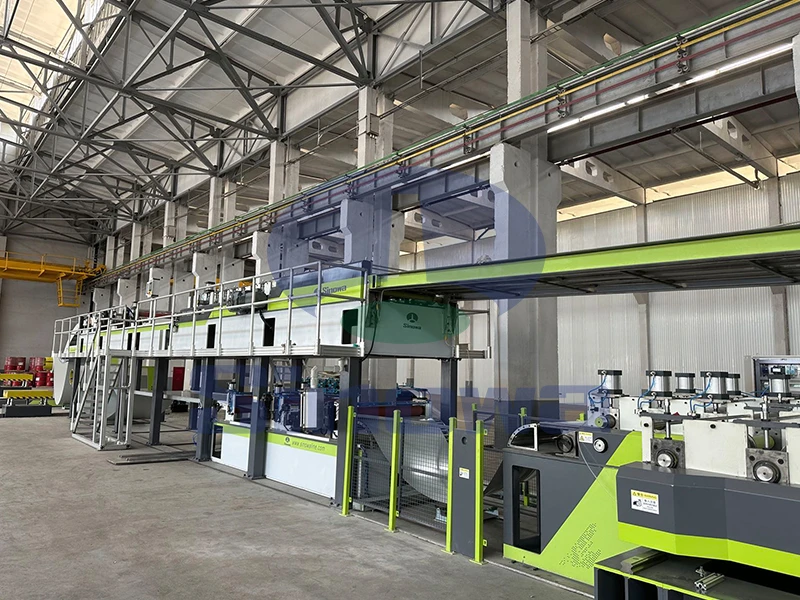
The first core part of daily maintenance is the routine inspection carried out before each production start. Operators need to walk through the whole line systematically and check the operating status of each functional section one by one. They should observe whether there are abnormal noises, unusual vibrations or strange smells from driving motors, transmission chains and roller groups. It is necessary to confirm that all connecting pipelines for PUR raw materials are free of bending, cracking and leakage traces, and check whether the surface of mixing parts is clean without residual cured adhesive. Fasteners on brackets and frames also need visual checking to find loose bolts in time. Any minor abnormal signs should be recorded immediately, and production can only be launched after hidden dangers are eliminated. Skipping this pre-start check often leads to small faults developing into serious breakdowns that interrupt continuous production for hours.
Cleaning work runs through the whole maintenance system of the PUR sandwich panel line and cannot be ignored at any time. PUR adhesive will cure rapidly once it reacts, and leftover adhesive attached to mixing heads, guide plates and conveying rollers will harden gradually if not removed in time. The hardened material will scratch panel surfaces, block material flow channels and affect the uniformity of glue coating during continuous operation. Operators need to use matching cleaning agents and special tools to clean the mixing unit after each batch of production, and avoid using hard sharp tools to scrape the precise inner wall of the mixing chamber. Dust and debris accumulated on the surface of conveyor equipment also need regular removal, because accumulated dirt will increase the running resistance of the transmission system and cause unstable panel feeding speed. Cleaning should follow a fixed sequence, so that no dead corner of the production line is left with stubborn residues.
Lubrication management is essential to keep all moving parts of the production line running smoothly for a long time. Different moving components have different lubrication requirements, and the type of lubricant and the lubrication interval cannot be mixed randomly. Transmission chains, bearing seats and rotating shafts need sufficient lubrication to reduce friction and wear during high-frequency continuous operation. Too little lubricant will generate excessive heat when parts rub against each other, accelerating metal aging and causing jamming; excessive lubricant may drip onto the panel surface and pollute finished products. Maintenance personnel should add lubricant according to the actual running load of the equipment, wipe away redundant lubricant overflow, and check whether the lubrication channel is unobstructed. They also need to observe the color and texture of old lubricant during inspection, and replace it when it becomes turbid, mixed with impurities or loses lubricating performance.
Temperature control systems of the PUR sandwich panel production line need focused maintenance, as temperature directly determines the reaction state of PUR adhesive. The heating units for raw material storage tanks, glue delivery pipelines and curing sections work continuously for long hours, and their temperature sensors and heating elements may drift or age slowly. Staff should verify the consistency between the displayed temperature data and the actual temperature regularly. If the temperature fluctuates sharply, the glue mixing ratio and curing effect will go wrong, resulting in unqualified bonding strength of sandwich panels. Dust covering the surface of heating parts will reduce heat transfer efficiency and increase the load of heating modules. In addition, cooling auxiliary parts also need inspection to guarantee stable working environment of electrical control cabinets, preventing high temperature from damaging electronic control components and triggering emergency stop of the whole line.
The glue supply and mixing system is the heart of the continuous PUR sandwich panel line, and its stable state determines the bonding quality of panels. The storage vessels for two-component PUR materials need regular inspection to prevent blockage of discharge ports caused by material precipitation. The pressure of glue delivery pumps should be monitored continuously to avoid unstable glue output caused by pressure deviation. The mixing core is a high-precision component, and slight abrasion of the mixing rotor will lead to uneven mixing of two raw materials. Operators should pay attention to the glue flow state and the texture of mixed glue in normal production. If the mixed glue shows color difference, poor fluidity or abnormal curing speed, the mixing assembly needs to be disassembled and checked. Sealing rings inside the mixing chamber are vulnerable consumables and should be replaced periodically before aging and leakage occur, rather than waiting for leakage to happen.
The conveying and forming section undertakes the continuous transmission and shaping of core materials and surface sheets, and its stable operation avoids panel deformation and position deviation. All rollers must keep parallel and rotate synchronously. Once individual rollers are stuck or run at inconsistent speeds, the panel will deviate from the preset track, resulting in wrinkled surface sheets or uneven glue layers. Maintenance personnel need to check the levelness of the rack regularly and adjust the position of guide baffles properly. They also check the wear degree of roller surfaces; seriously worn rollers will leave marks on panel surfaces and affect the appearance of finished products. The tension control devices for surface sheet unwinding also need calibration frequently. Improper tension will cause the sheet to be too loose or overly tight, bringing difficulties to continuous compounding and increasing the rejection rate in production.
Electrical and automatic control systems require careful maintenance to avoid unexpected line stoppage. The control cabinet contains circuit boards, contactors, frequency converters and various signal lines. Moisture, dust and loose wiring are common inducements for electrical faults. The cabinet door should be kept closed in daily production, and internal dust should be cleared regularly under power-off conditions. All wiring terminals need to be checked for looseness and oxidation, and damaged wires should be replaced promptly. The photoelectric sensors and position switches distributed along the line are responsible for sending feeding and positioning signals; their lenses are easy to be covered by glue mist and dust, which will cause signal loss and misjudgment of the control system. Maintenance workers must clean these sensing components gently and test signal response regularly to ensure the automatic control logic can respond accurately during continuous running.
Reasonable spare parts management and regular fault trend analysis greatly improve the sustainability of continuous production. Vulnerable parts such as sealing rings, filter elements, sensor probes and transmission belts should be reserved in proper quantity and stored in dry and shaded places to prevent premature aging before use. Maintenance records of every inspection, repair and part replacement should be kept completely. By sorting out these records, technicians can find out the frequent fault points of the production line and formulate targeted preventive plans, instead of only carrying out passive repair after failure. When the production line runs for a long time continuously, the maintenance team can arrange staggered inspection during the short switching interval of raw materials, which can discover potential problems without disrupting the overall production rhythm and maximize the continuous operation capacity of the equipment.
The professional ability and operation habit of on-site personnel are the last important guarantee for long-term stable operation of the PUR sandwich panel production line. All operators and maintenance staff need to master the normal operation characteristics of the equipment, distinguish normal operating sounds from abnormal fault signals, and be familiar with the correct shutdown steps when emergencies appear. Irregular operations such as forced feeding, random adjustment of parameter knobs or overload production will cause irreversible damage to the equipment. Enterprises should arrange regular skill communication for frontline staff to share maintenance experience and wrong operation cases. When new maintenance rules are updated, all relevant personnel need to understand and follow the requirements. A team with standardized operation awareness can cooperate with the maintenance system well, reduce human-caused faults, and support the continuous and reliable running of the PUR sandwich panel production line for a long period.
Gallery
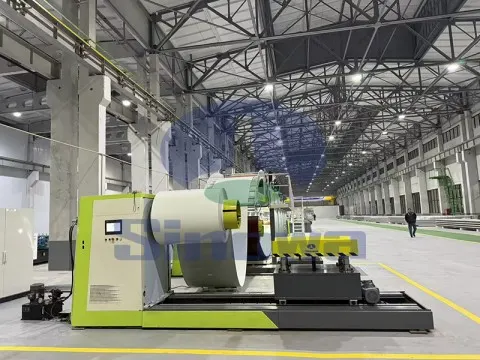
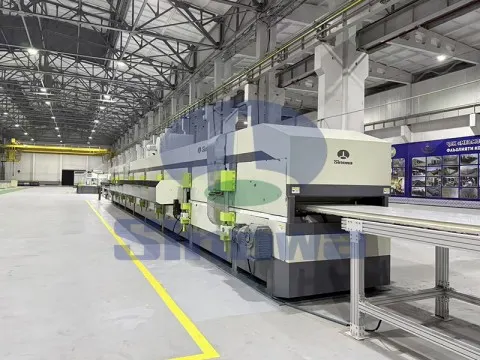
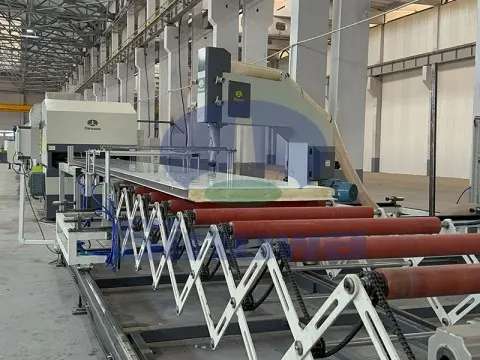
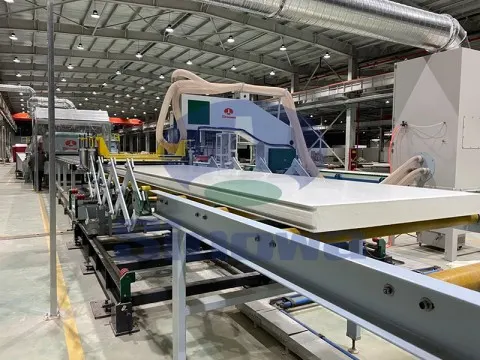
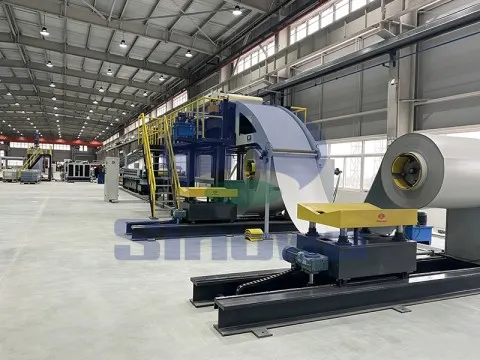
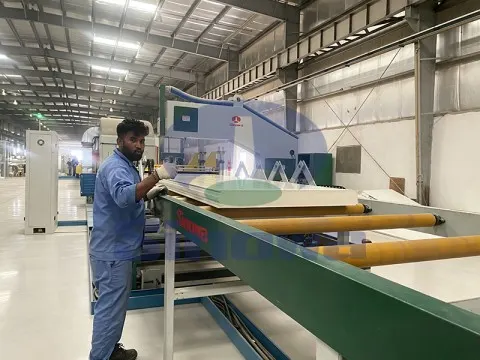
Sinowa is a professional manufacturer of sandwich panel machine in china, we provide diversified and high-performance sandwich panel production lines, including fully automatic continuous PU sandwich panel line and customized special lines to meet mass production and personalized order demands. These sandwich panel lines support processing multiple foam core materials, such as PU, PIR, mineral wool, rock wool and glass wool, covering different insulation and fireproof standards.
Featuring stable operation, high efficiency, energy saving and easy maintenance, our PU sandwich panel line deliver sandwich panels with excellent thermal insulation, fire resistance, sound insulation and lightweight durability. The finished panels are widely applied in industrial workshops, warehouse roofing and wall cladding, cold storage insulation, serving global construction and industrial insulation markets.
Main Products
-

Continuous PU Sandwich Panel Production Line
This continuous PU sandwich panel production line is an integrated automatic equipment. It covers uncoiling, forming, foaming, curing and cutting processes. With automatic raw material proportioning and precise temperature & pressure control, PIR sandwich panel production line continuously composites panels with double skins. Polyurethane sandwich panel production line stably produces steel and aluminum sandwich panels. Featuring high automation, the line makes fireproof and thermal-insulation panels for building enclosure and cold storage. -
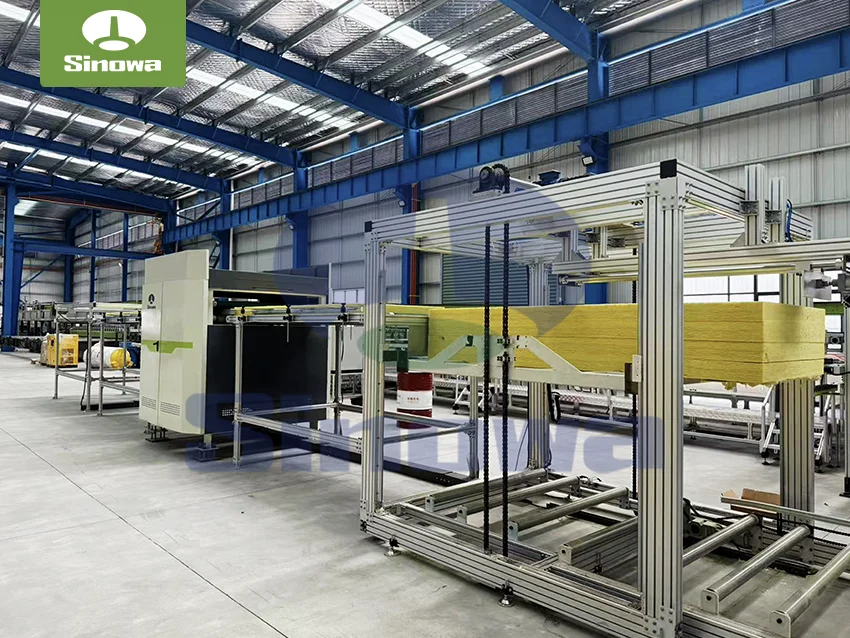
Rock Wool Sandwich Panel Production Line
Continuous rockwool sandwich panel production line is an automatic integrated production equipment, consisting of uncoiling, forming, gluing and compounding, heating curing, fixed-length cutting, automatic stacking and other modules. The mineral wool sandwich panel production line continuously conveys color steel plates and rock wool core materials to automatically complete lamination and curing, which can produce fireproof and thermal insulation sandwich panels. Featuring high automation degree and stable operation, this production line is suitable for mass production of panels used for building walls, roofs and other scenarios. -
Phenolic Insulation Board Production Line
This integrated automatic production line continuously manufactures PU and phenolic insulation boards. The insulation board production line covers raw material proportioning, high-pressure foaming, laminating, curing and fixed-length cutting. Featuring high automation and stable molding, the insulation panel production line supports various surface materials. PU boards offer excellent thermal insulation, while phenolic boards have superior fire resistance. These products are widely used in construction, cold chain, ventilation ducts and other thermal insulation fields.
Other FAQs
- How To Adjust The Foaming Ratio Of The PUR Sandwich Panel Production Line
- What Safety Protection Measures Are Needed For A Polyurethane Sandwich Panel Manufacturing Line
- What Regular Maintenance Does A Polyurethane Sandwich Panel Line Need
- How To Fix Uneven Foam Density On The PU Foam Production Line
- What Raw Materials Are Required For The PUR Sandwich Panel Production Line Operation
- Emergency Fault Handling Process For PU Sandwich Panel Line Shutdown
- Polyurethane Sandwich Panel Production Equipment Lubrication Maintenance Standard
- Troubleshooting For Sandwich Panel Production Line Frequent Shutdown Failure
- How To Maintain The Extrusion System Of Insulation Board Production Line
- How To Maintain The Mixing Head Of A PUF Sandwich Panel Production Line
Related Articles
- Energy Saving PU Foam Production Line
- Heavy-duty PU Sandwich Panel Production Line For Industrial Building Panels
- Continuous Sandwich Panel Production Line
- Continuous PU Sandwich Panel Line With Double Belt
- Sandwich Panel Machine For Construction
- Sandwich Panels Plant
- Continuous PU Sandwich Panel Line For Cold Storage
- PU Sandwich Panel Line
- Continuous Cold Storage Sandwich Panel Production Line
- Automatic Sandwich Panel Machines